The 2026 season of Formula 1 isn’t just another championship.
It’s a stress test.
A 274-day marathon.
A political chessboard.
A technological reset that could reshuffle the entire grid.
From record-breaking travel demands to a U.S. broadcast bombshell and whispers of Christian Horner plotting a dramatic return — here’s why insiders are calling 2026 “brutal.”
🌍 The 274-Day Grind


The season begins March 8 in Melbourne.
It ends December 6 in Abu Dhabi.
That’s 274 days — the longest campaign in F1 history.
And it’s not just the length. It’s the logistics:
-
Five standalone races
-
Two grueling triple-headers
-
A brutal Las Vegas → Doha turnaround
-
16-hour travel shifts
-
11-hour time differences
Burnout isn’t hypothetical. It’s inevitable.
With brand-new 2026 power units and aerodynamics, reliability will be under intense pressure. Insiders warn we could see an unusual spike in post-race disqualifications as teams push technical limits.
This isn’t just about fast cars.
It’s about survival.
🔥 Christian Horner’s “Revenge” Arc?
After seismic leadership changes at Red Bull Racing, Horner’s future has become the paddock’s juiciest rumor.
Reports suggest he may pursue involvement with Alpine F1 Team — potentially alongside the ever-controversial Flavio Briatore.
If Horner returns not as an employee, but as a stakeholder?
The political warfare would be seismic.
Red Bull vs. Horner-led Alpine would instantly become must-watch F1 drama.
🐎 Hamilton’s “Do or Die” Ferrari Chapter


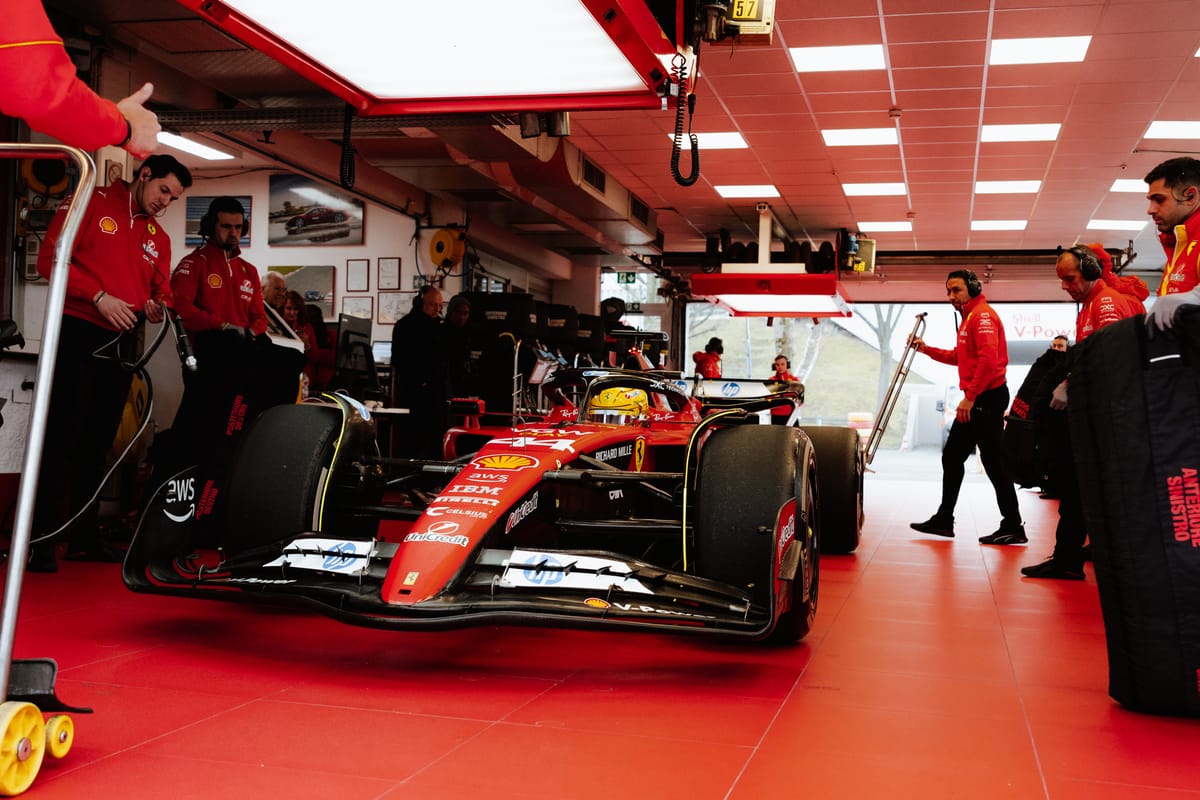
For Lewis Hamilton, 2026 could define his legacy.
After a turbulent 2025, the pressure at Scuderia Ferrari is immense.
Another winless campaign?
Some pundits suggest it could signal the end of his title ambitions.
Meanwhile, off-track headlines — including rumored links to Kim Kardashian — only add to the spectacle.
But Ferrari didn’t hire Hamilton for attention.
They hired him for trophies.
And 2026 offers one final shot at rewriting history.
📺 The Apple TV Bombshell
In a major U.S. media shake-up, Apple is reportedly taking over F1 broadcasting rights from ESPN.
Apple TV+ is said to be paying significantly more for the rights — a financial win for the sport.
But for American fans?
It likely means a streaming paywall.
Apple’s production quality is world-class.
But accessibility could take a hit.
At a time when F1’s U.S. popularity is surging, the move is bold — and risky.
🇺🇸 Cadillac’s Reality Check


The arrival of Cadillac brings fresh intrigue — with veterans Valtteri Bottas and Sergio Perez reportedly in the frame.
But early testing whispers suggest the car could be several seconds off the pace.
In a new regulation era, missing development windows can be catastrophic.
The American entry faces a steep learning curve.
⚙️ The 2026 Technical Brain Drain
The new cars are not just physically demanding.
They are mentally punishing.
With the removal of the MGU-H and greater battery reliance, drivers must:
-
Manage complex energy deployment
-
Toggle aero modes corner-by-corner
-
Time “boost” strategically
-
Execute racecraft under heavier cognitive load
This raises a fascinating question:
Do younger drivers like Oscar Piastri gain an advantage in tech adaptation?
Or do veterans thrive under pressure?
2026 could answer that decisively.
🏁 The Verdict: Survival of the Sharpest
This isn’t just another F1 season.
It’s:
-
The longest calendar ever
-
A broadcasting revolution
-
A potential Horner comeback
-
A legacy-defining year for Hamilton
-
A new manufacturer gamble
-
A radical technical reset
Only the strongest organizations — technically, politically, and mentally — will endure.
Melbourne awaits.
And once the lights go out on March 8, there will be no hiding.
