The floodlights of the Lusail International Circuit usually illuminate the pinnacle of automotive engineering and driver skill, but for Lewis Hamilton and Ferrari, they served only to spotlight a deepening crisis during the Qatar Sprint race weekend. While McLaren’s Oscar Piastri executed a flawless masterclass in speed and precision, the story tearing through the paddock is one of confusion, penalties, and a scarlet car that seems to have completely lost its way.
A Masterclass in the Desert
Before diving into the chaos unfolding in the Ferrari garage, credit must be given where it is undeniably due. Oscar Piastri, the young Australian sensation, turned the Qatar Sprint into a one-man show. From the moment the lights went out, Piastri didn’t just lead; he dominated. Securing Sprint Pole was just the opening act. He launched off the line with the confidence of a seasoned veteran, leading every single lap and maintaining total control while others floundered in his wake.
This victory is more than just a morale booster; it has serious implications for the championship standings. Piastri entered the weekend trailing his teammate, Lando Norris, by 24 points. By the time the chequered flag waved, that gap had narrowed to 22. In the high-pressure cooker of Formula 1, where every fraction of a second and every single point counts, chipping away at that deficit is crucial.
“It’s been a good weekend so far,” Piastri remarked coolly after the race, a stark contrast to the panic elsewhere on the grid. “Everything went smoothly in the sprint there, so I’m happy with how it’s been so far and just need to keep it rolling.” His comments highlight a driver at one with his machine, noting the high-speed, high-grip nature of the circuit as something he genuinely enjoys. While others fought their cars, Piastri was flowing with the track.
The Mid-Field Penalty Drama
However, behind the serene progress of the race leader, the stewards were kept incredibly busy. The Lusail circuit, famous for its high-speed sweeping corners, is a nightmare for track limits, and the drivers were pushing the boundaries—literally.
Yuki Tsunoda, who had been driving the race of his life, found himself at the center of a post-race penalty storm. Qualifying in an impressive P5, Tsunoda fought tooth and nail, getting his elbows out at the start and even challenging Lando Norris for position. He crossed the line in fifth, a heroic effort for the AlphaTauri driver. But the joy was short-lived. A five-second time penalty for repeated track limit offenses initially dropped him to sixth, promoting the young prodigy Kimi Antonelli.
But in a twist of irony that sums up the chaotic nature of the event, Antonelli himself was slapped with a five-second penalty for the exact same offense shortly after the race concluded. This double-penalty drama meant the positions flipped yet again, with Tsunoda reinstated to fifth and Antonelli dropping back to sixth. It was a dizzying exchange that highlighted just how difficult it is to keep a Formula 1 car within the white lines at such blistering speeds.

Ferrari’s Absolute Disaster
Yet, the true headline of the weekend, the story that has fans and pundits alike scratching their heads, is the catastrophic form of Ferrari. The Maranello team didn’t just have a bad day; they looked like they were driving a different category of car entirely.
The sprint race was, to put it mildly, a disaster for the Prancing Horse. The car appeared to be a handful to drive, unstable and unpredictable. Charles Leclerc struggled home in a lowly 13th place, but it was Lewis Hamilton’s weekend that truly imploded.
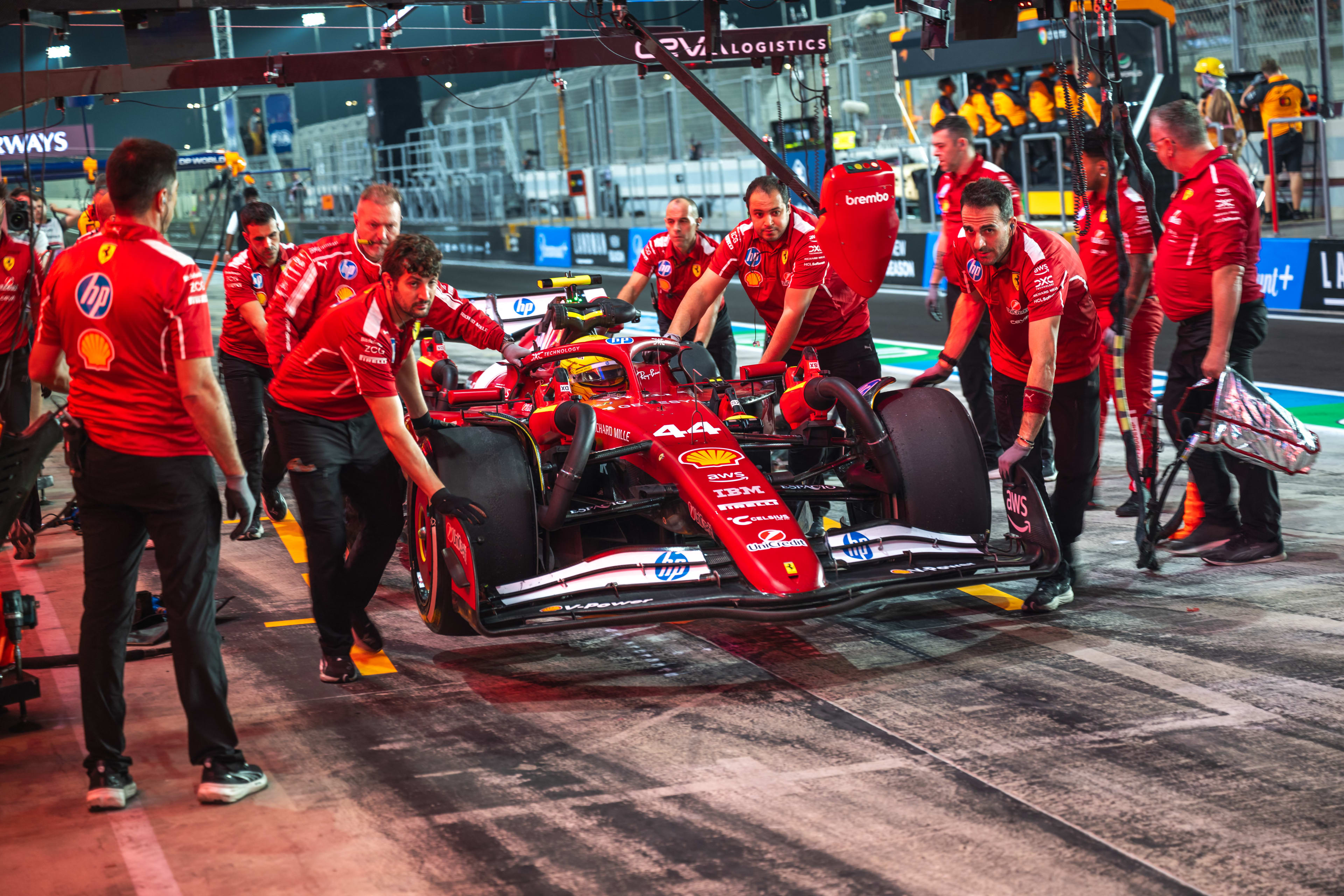
Hamilton’s troubles began long before the race started. Having qualified in a disappointing 18th place, things went from bad to worse when it was announced he would be starting from the pit lane. The reason? A breach of Article 40.9 of the FIA Formula 1 Sporting Regulations.
The official verdict from the stewards was damning in its simplicity. Ferrari had changed the suspension setup on Hamilton’s car (Car 44) under Parc Fermé conditions without the approval of the technical delegate. This is a cardinal sin in F1 regulations. By tinkering with the car after qualifying, they effectively broke the “lockdown” rules designed to keep competition fair. The penalty was automatic and severe: a pit lane start.
“I Don’t Know How We Made The Car Worse”
Starting from the pit lane leaves a driver with a mountain to climb, but usually, a driver of Hamilton’s caliber in a Ferrari can expect to make up some ground. Not this time. The pace simply evaporated.
Throughout the Sprint, Hamilton made almost no progress. At one point, he had fallen nearly three seconds behind the Haas of Nico Hulkenberg, a gap that would usually be unthinkable. The on-board footage painted a terrifying picture: the car was bouncing aggressively, snapping into oversteer, and washing out with understeer. It was a mechanical bull ride at 200 miles per hour.
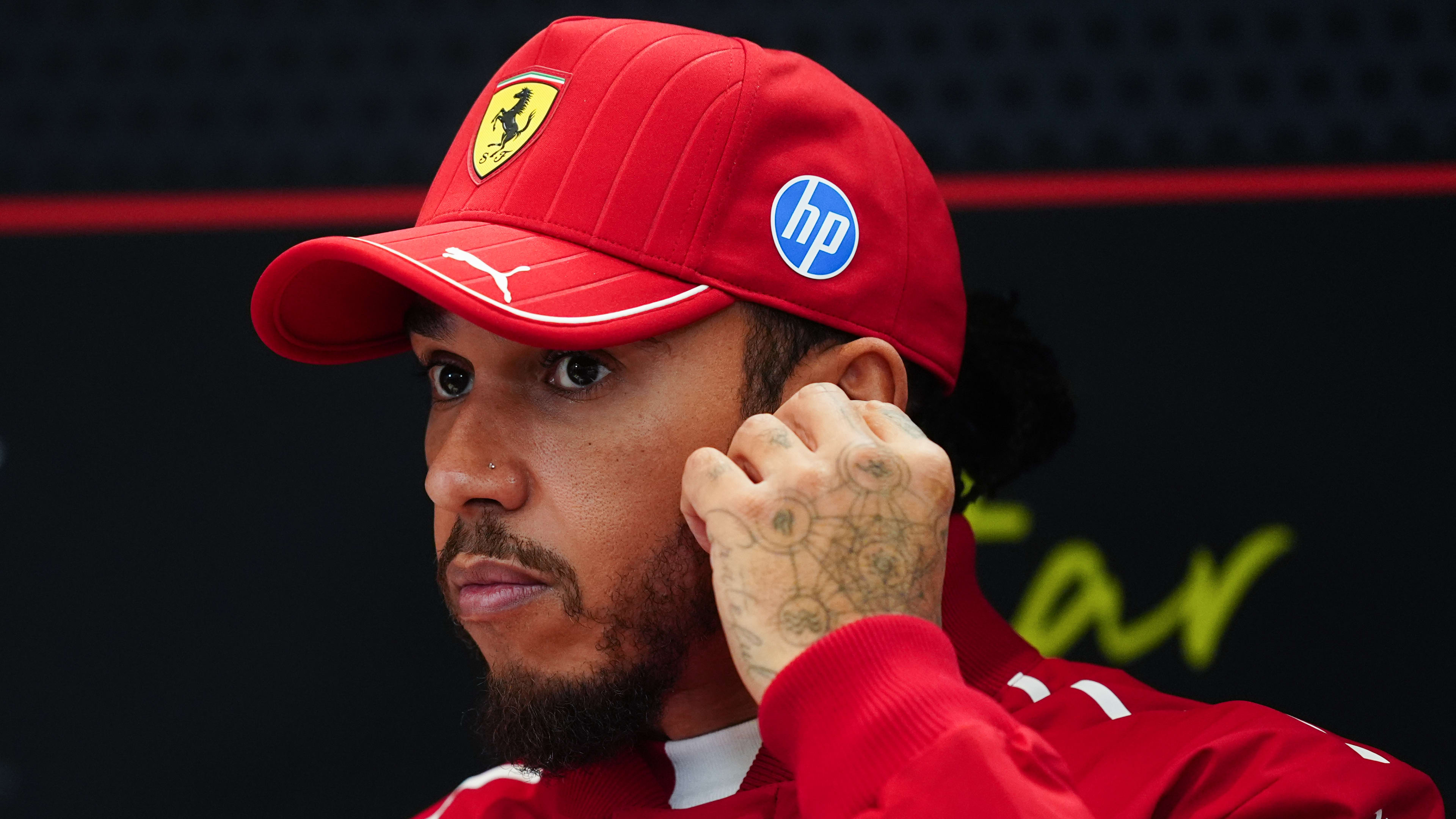
Hamilton’s post-race comments were raw and filled with disbelief. “I don’t know how we made the car worse,” he admitted, clearly baffled by the team’s trajectory.
He elaborated in an interview with Sky Sports F1, revealing the logic behind the failed gamble. “We started from the pit lane because we wanted to explore and make some changes,” Hamilton explained. “They had some things they found on the simulator last night, so we implemented those changes, and the car was really in the wrong direction.”
A Fight for Survival
The details Hamilton provided were alarming. He described a car with zero stability. “The rear end is not planted, so it’s sliding, snapping a lot,” he said. He detailed a handling characteristic that sounds like a driver’s worst nightmare: “We have a lot of mid-corner understeer, and then you apply the steering, and then it snaps, and you try to catch it.”
This “snapping” behavior, combined with the return of the dreaded “bouncing” in corners like Turn 10, meant Hamilton wasn’t racing the other drivers; he was fighting his own vehicle. “It’s a fight like you couldn’t believe,” he confessed.
The contrast between Piastri’s “smooth” weekend and Hamilton’s “fight” could not be starker. As the teams prepare for the main Grand Prix, the data from the Sprint suggests Ferrari has a mountain of work to do. They gambled on a simulator setup, broke Parc Fermé rules to implement it, took a penalty, and ended up with a slower, more dangerous car.
For Hamilton fans, the “awful news” isn’t just the penalty; it’s the realization that the team currently has no answers. With qualifying for the main race looming, the garage will be a scene of frantic analysis, but as the lights go down in Qatar, the mood in the Ferrari camp is darker than the desert night.
