The sun set over the Lusail International Circuit on November 28, 2025, casting long shadows not just over the track, but over the legacy of the sport’s most successful driver.
It was supposed to be the “Golden Hour” of Formula 1—a romantic final chapter where Lewis Hamilton, the seven-time world champion, returned glory to the Prancing Horse.
Instead, under the floodlights of Qatar, the dream didn’t just fade; it was dismantled, piece by painful piece, leaving behind a silence that was far louder than any V6 engine.
The statistics will record that Lewis Hamilton was eliminated in SQ1, qualifying 18th on the grid for the Sprint race. But the numbers fail to capture the visceral sense of finality that permeated the Ferrari garage. It wasn’t the result that sent shockwaves through the paddock; it was the resignation.
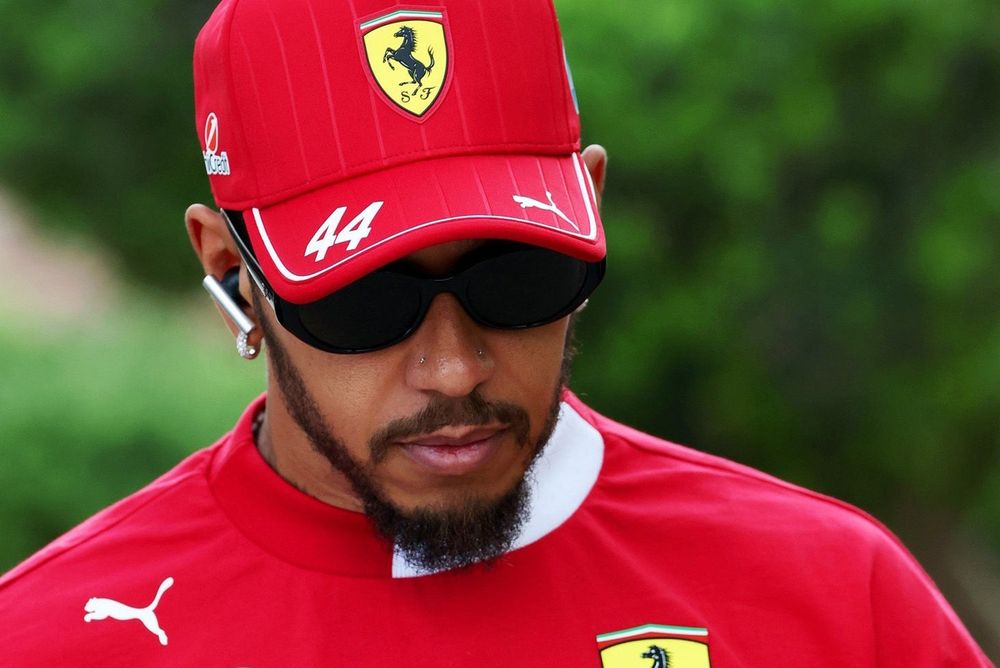
The Nine Words That Stopped the Paddock
In the high-stakes world of Formula 1, radio messages are usually fueled by adrenaline. We are used to hearing Hamilton’s voice crackle with intensity—demanding different tires, questioning strategy, or venting frustration at a rival. But on this Friday in Qatar, there was no fire.
“Man, the car won’t go any quicker.”
Nine words. Delivered not with rage, but with a hollow emptiness that sounded perilously like surrender.
According to telemetry data, the Ferrari SF25 was a beast refusing to be tamed. In the low-speed technical sections, particularly Turn 6, the car exhibited extreme understeer. The front end refused to bite, the rear wouldn’t settle, and the tires remained stubbornly outside their operating window. Yet, half a second down the road, his teammate Charles Leclerc dragged the same machinery to 9th place.
When Hamilton aborted his final flying lap, having lost over three-tenths to Leclerc in the final sector alone, the garage braced for the usual debrief—the demands for downforce, the critique of the setup. Instead, they got silence. And then, that single, devastating sentence. It was the sound of a driver who had reached the mechanical ceiling of his machine and, perhaps, the emotional ceiling of his patience.
A Romantic Illusion Shattered
To understand the gravity of this moment, one must look back at the narrative that brought us here. Hamilton’s move to Ferrari was billed as the “most romantic signing in modern F1.” It was meant to be the union of the greatest driver and the most iconic team, hunting one last title together. The expectations were sky-high.
Qatar has brutally exposed that narrative as an illusion. The problems plaguing Hamilton are not new; they are systemic. The SF25 fundamentally lacks the front-end precision that Hamilton’s driving style demands. It punishes him the moment he tries to attack with confidence.
While the car has shown glimpses of pace in race simulations—where Hamilton has managed tire wear beautifully—modern Formula 1 is a track position game. If you fail on Saturday (or Friday, in a Sprint weekend), Sunday becomes a salvage mission. Hamilton has spent the entire second half of the 2025 season climbing out of holes he didn’t dig, underequipped and now, seemingly, overwhelmed.

The “Weather” Defense
The behavior of a driver off the track often tells us more than their lap times. In the media pen, a place where Hamilton has historically used his platform to rally his team or dissect performance, he chose a new tactic: apathy.
When pressed by journalists for a technical breakdown or a glimmer of positivity from the disastrous session, Hamilton offered just three words: “The weather’s nice.”
It was a cutting line, delivered with a sarcasm that barely masked the pain. In a sport driven by data and accountability, choosing to talk about the weather is a form of protest. It signals a driver who is tired of repeating the same excuses for a car that refuses to evolve. He later admitted, with jarring candor, “I’m just slow. It’s the same every weekend.”
For a seven-time champion to publicly acknowledge stagnation is rare. For him to suggest he sees no way out is alarming. It suggests that the problem isn’t just a “bad setup” or an “off day”—it is a pattern.
A Tale of Two Drivers
The most damning contrast of the weekend wasn’t between Hamilton and Verstappen, but between Hamilton and Leclerc. Inside the Ferrari hospitality, the atmosphere was thick with tension. While Hamilton appeared emotionally disconnected, closing in on himself, Leclerc remained in the garage. The Monegasque driver poured over data, spoke with engineers, and looked for milliseconds to save.
This dichotomy is lethal for a team like Ferrari. Maranello feeds on passion and collective belief. When one driver is fighting to fix the car and the other has accepted it is broken, the foundation of the team fractures.
Sources indicate that the Ferrari Chairman is already questioning the performance, and the media sharks are circling. The fear among senior paddock figures is that Hamilton is no longer committed to the development of the car. An emotionally checked-out driver cannot lead a team out of a crisis.
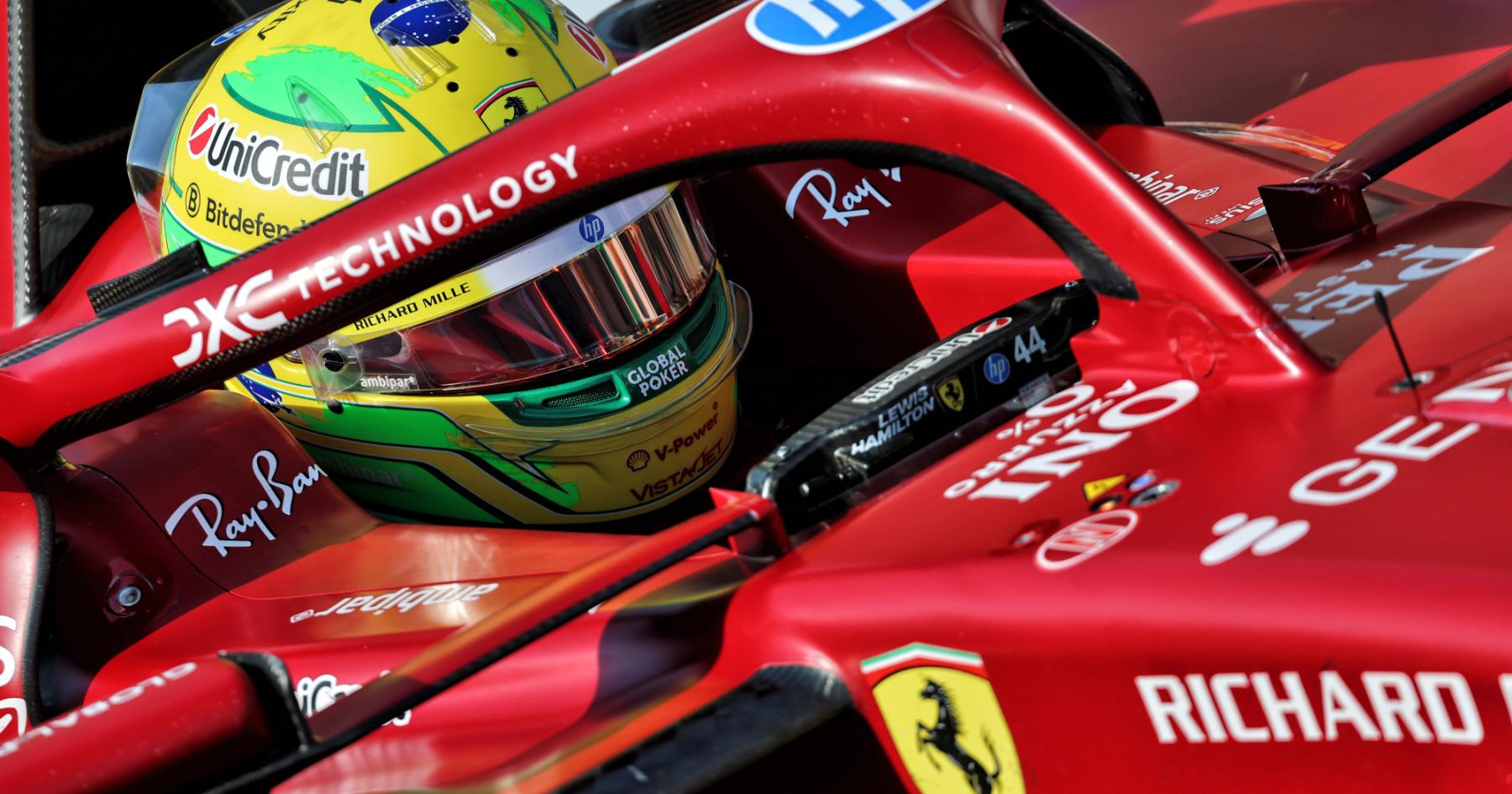
The Road to 2026
With only two rounds left in the season, the implications of Qatar extend far beyond the 2025 championship standings. If Hamilton finishes this season emotionally exhausted and stripped of confidence, Ferrari enters the critical 2026 regulation changes with a broken leader.
There are three scenarios on the table. In the first, Hamilton finds a rhythm in Abu Dhabi, delivers a moment of magic, and restores some faith. In the second, the disconnection deepens, and the relationship enters a cold war. The third, and most difficult path, requires Ferrari to make radical changes—redesigning their entire car concept around Hamilton’s feedback to rebuild his trust.
However, standing in the paddock in Doha, watching Hamilton walk away from his car without a backward glance, none of those redemption arcs felt likely. The “Red Dream” has turned into a recurring nightmare.
The next time Lewis Hamilton climbs into the cockpit of the SF25, the world won’t just be watching his sector times. We will be listening. We will be listening for the anger, the passion, the fire that defined a generation. But if we hear only silence, we will know the truth: The legend hasn’t just lost a race; he has lost his belief. And in Formula 1, that is the one thing you can never get back.
