Under the piercing floodlights of the Lusail International Circuit, the narrative of the 2025 Formula 1 season took its darkest turn yet for the Scuderia.
What was meant to be the year of the “Dream Team”—the union of Lewis Hamilton, the seven-time world champion, and Ferrari, the sport’s most historic constructor—has officially descended into a public nightmare.
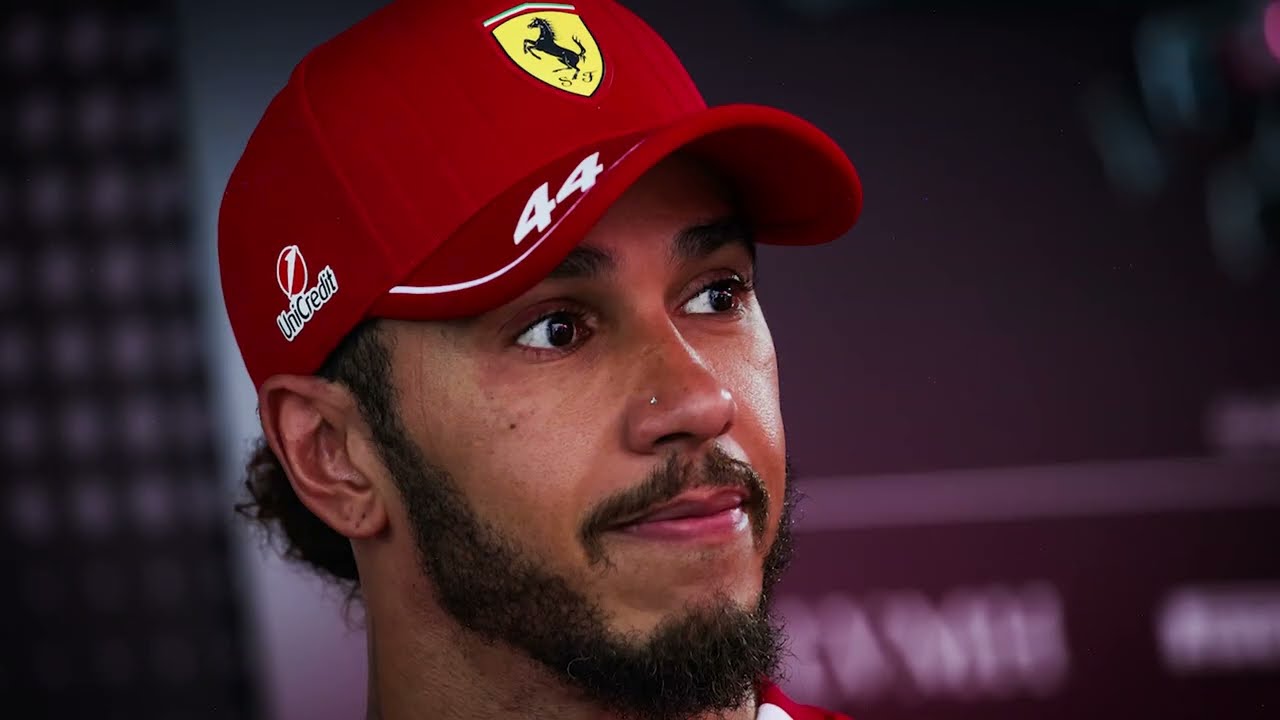
As the dust settled on a catastrophic Sprint Qualifying session on Friday, the image that defined the night was not of a prancing horse charging toward glory, but of a 40-year-old legend staring blankly at the timing screens, grappling with the reality of a car that has, in his own words, “betrayed” him.
But the on-track failure was merely the symptom of a much deeper institutional decision. In a revelation that has sent shockwaves through the paddock, Team Principal Fred Vasseur has confirmed what many feared: Ferrari gave up on this season long ago.

The Champion’s Agony
For Lewis Hamilton, the Qatar Grand Prix weekend was supposed to be a reset. Instead, it became a humiliation. Just seven days after qualifying dead last in Las Vegas, Hamilton found himself knocked out in SQ1, a result that would be disappointing for a rookie, let alone the most successful driver in the history of the sport.
The team radio captured the raw, unfiltered sound of a man running out of answers. “Oh man, the car won’t go any faster,” Hamilton lamented to his race engineer, Ricardo Adami. It wasn’t anger; it was resignation. The SF25, a car that has proven temperamental all season, simply refused to cooperate.
Speaking to the media afterward, the usually resilient Briton offered no corporate spin. When pressed on whether there was any hope for Saturday’s sprint or the main Grand Prix, his response was a flat, crushing negative. “The weather’s nice,” he quipped dryly—a deflection that spoke volumes. There was no talk of “fighting back” or “finding the limit.” There was only the “flat acknowledgement that little could be expected.”
This is not the script Hamilton signed up for when he left Mercedes. At 40, every race counts. To spend his debut season in red fighting to get out of Q1 is a scenario that few predicted, and one that visibly weighs heavily on his shoulders.
Leclerc’s Silent Scream
On the other side of the garage, Charles Leclerc fared marginally better but told an equally grim story. Qualifying ninth for the sprint, the Monegasque driver was visibly agitated, his session compromised by traffic and a car that he described as “very slow.”
Leclerc’s frustration boiled over regarding an incident with his former teammate, Carlos Sainz. “He had the right to do it, but it’s very annoying and in some cases not even necessary,” Leclerc noted, referring to Sainz’s positioning which compromised his final run. However, Leclerc was quick to pivot back to the root cause: the machinery.
“We are struggling once again,” Leclerc admitted, his tone reflecting the exhaustion of a driver who has spent another year waiting for a championship-caliber car. He pointed out that even a perfect lap would likely have only yielded a midfield start. “When you see the gap between us and the top five… we are very slow.”
For Leclerc, who has been the face of Ferrari’s “next generation” for years, hearing his new legendary teammate voice the same complaints validates his struggles but offers no solace. The car is simply off the pace, plagued by power steering issues in practice and a lack of aerodynamic efficiency that leaves its drivers exposed on high-speed circuits like Lusail.
The Bombshell Admission
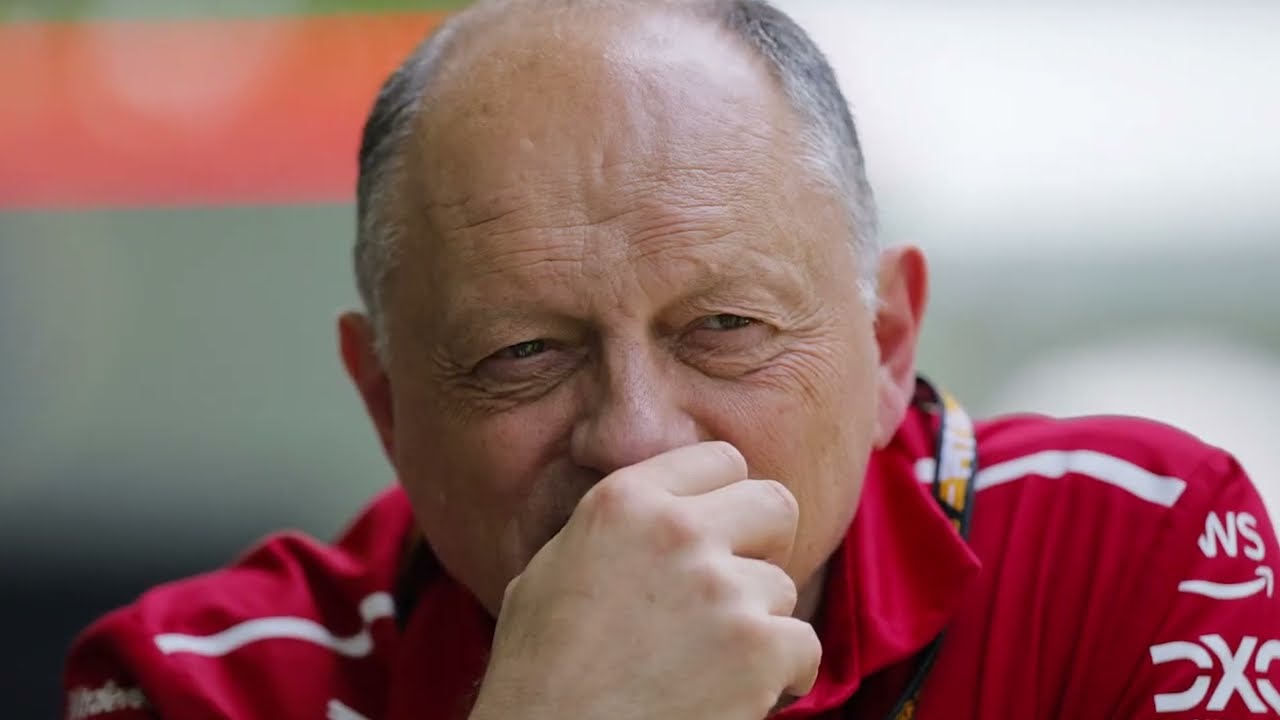
While the drivers battled the car on the track, the real story emerged from the press room. Ferrari Team Principal Fred Vasseur dropped a strategic bombshell that recontextualizes the entire struggles of Hamilton and Leclerc in late 2025.
Vasseur confirmed that the team made the executive decision to abandon the development of the SF25 all the way back in April.
“We realized it would be very difficult for 2025,” the French manager explained, citing the early dominance of McLaren as the catalyst. “This meant that we decided very early in the season—around the end of April, I believe—to focus on 2026.”
This admission is staggering. It means that for the vast majority of Lewis Hamilton’s debut season, he has been driving a “lame duck” car, one that the engineers back in Maranello had essentially archived in favor of preparing for the 2026 regulation changes.
Vasseur acknowledged the risk of this strategy. “It was a difficult decision and perhaps I underestimated the psychological impact a bit,” he confessed. “Because there were still 20 races to go and you know that no aerodynamic development will be brought.”
A Calculated Sacrifice or a Betrayal?
The logic behind the decision is cold and mathematical. With McLaren holding a significant performance delta and the points gap widening early in the year, Ferrari chose not to throw good money after bad. They shifted their wind tunnel resources and financial cap almost exclusively to the 2026 project.
“The most important part of this objective is that we agreed from the start that we would invest our maximum energy in the future,” Vasseur stated. He insisted that the drivers were part of this decision and “committed to the project.”
However, looking at Hamilton’s dejected figure in the paddock and hearing Leclerc’s weary analysis, one has to wonder if the reality of that sacrifice is harder to swallow than the theory. Asking two of the world’s best drivers to essentially “write off” a year of their prime is a massive ask.
The “psychological impact” Vasseur alluded to is now on full display. The team is going through the motions, turning up to race weekends knowing they are bringing a knife to a gunfight. While Vasseur spins this as “the best preparation for 2026,” the current optics are disastrous. Ferrari is not just losing; they are looking incompetent on the world stage, with their star driver languishing at the back of the grid.
The Long Road to 2026
As the Qatar weekend drags on, the mood within the Scuderia hospitality unit is somber. The focus has arguably shifted too far into the future, leaving the present in shambles. Vasseur points to mechanical updates and small improvements—like the podiums in Mexico and Austin—as proof of life, but the consistency is gone.
For the Tifosi, this is a bitter pill. They were promised a super-team. Instead, they are watching a transition year that has turned into a surrender. The question now is not whether Ferrari can salvage a result in Qatar or Abu Dhabi, but whether this gamble will pay off.
If the 2026 car is a world-beater, this year of pain will be a footnote in history. But if Ferrari arrives at the next era of regulations with anything less than a championship-winning machine, the sacrifice of 2025—and the humiliation of Lewis Hamilton’s debut year—will be viewed as one of the greatest strategic failures in modern Formula 1 history.
For now, Hamilton and Leclerc must endure the remaining laps of a season that their bosses gave up on six months ago. The car won’t go any faster, and no amount of driving genius can fix a machine that was left behind by its own creators.