On the evening of November 28, 2025, the Formula 1 circus descended upon the Lusail International Circuit for what was supposed to be a redemption arc. The desert air was thick, suffocatingly hot with track temperatures soaring above 40°C, and the wind whipped across the flat landscape, turning high-speed corners into treacherous lotteries of grip and courage.
But as the engines roared and the lights of the Sprint Qualifying session illuminated the night, a darker shadow fell over the Ferrari garage. What unfolded wasn’t just a sporting defeat; it was a psychological dismantling of one of the sport’s greatest narratives.
Lewis Hamilton, the seven-time world champion whose move to Ferrari was heralded as the romantic final chapter of a legendary career, found himself eliminated in SQ1. P18.
A result that, on paper, looks like a bad day at the office. But in the high-stakes, hyper-analyzed world of Formula 1, the numbers on the timing tower were secondary to the devastating story told over the radio waves.
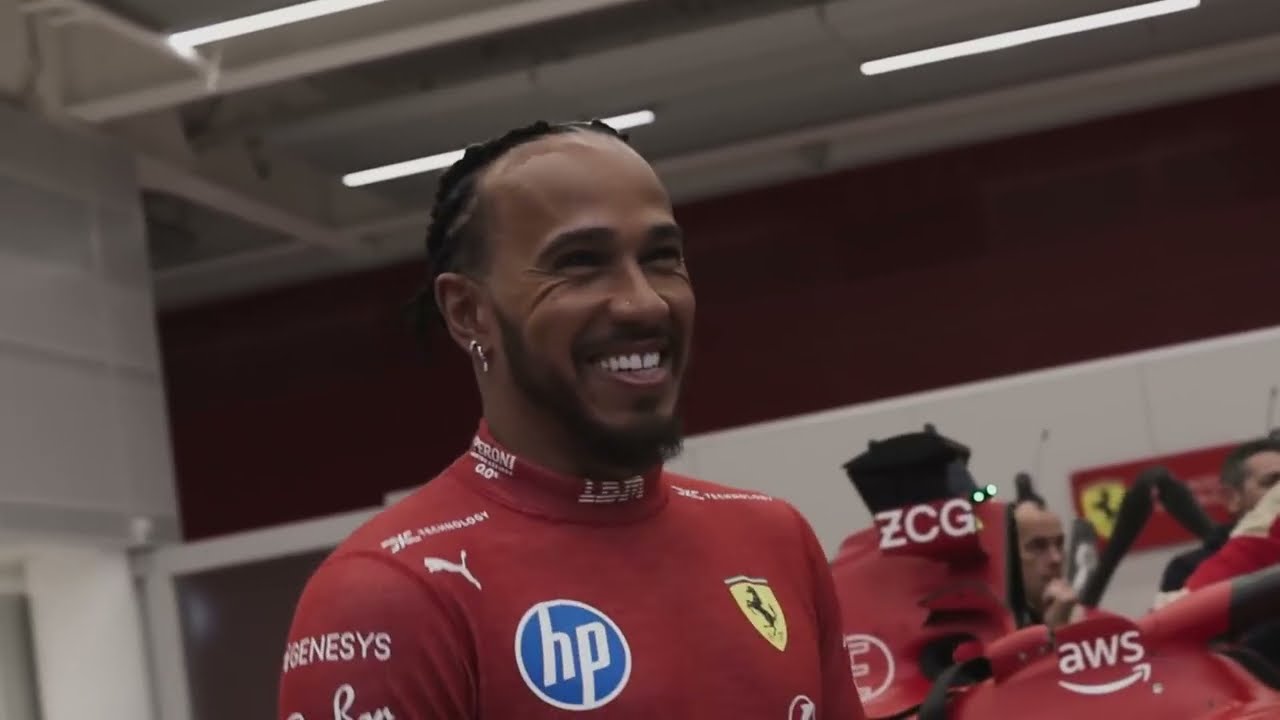
The Anatomy of a Disaster
From the moment the SF25 touched the scorching asphalt, it looked like a beast refusing to be tamed. The conditions were brutal—a narrow operating window made even tighter by the gusting winds. For a car to work here, it needed balance, compliance, and trust. Hamilton had none of these.
Telemetry data leaked in the aftermath painted a grim picture. The car was plagued by erratic behavior, particularly in the low-speed sectors. Turn 6 became a monument to frustration; lap after lap, the front end of Hamilton’s Ferrari washed out, forcing him into desperate corrections where he should have been powering through. The car was lazy on traction and unpredictable under braking—the two worst traits a driver can face on a technical circuit like Lusail.
Yet, across the garage, the story was confusingly different. Charles Leclerc, wrestling the exact same machinery, managed to coax a performance out of the SF25 that was, if not championship-winning, at least respectable. He qualified 9th, safely through to SQ3. The data showed a car that wasn’t perfect, but one that could be driven. This disparity opened a deep, jagged crack in the team’s internal narrative. Two identical cars, two radically different outcomes. And for Hamilton, the realization seemed to be instant and crushing: it wasn’t just the setup. It was structural.
The Radio Message That Stopped the Paddock
It was the end of the session that delivered the true shock. Hamilton had aborted his second flying lap after encountering traffic, but even his clean attempts were woefully off the pace. In the final sector alone, he was bleeding over three-tenths of a second to his teammate.
Usually, in moments like this, the radio waves explode. We are used to the Lewis Hamilton who demands perfection—the driver who questions tire pressures, critiques strategy, and demands to know where the time is being lost. We expect the fire.
Instead, we got ice.
As he crossed the line, sealing his elimination, the radio crackled to life. There was no shouting. No heavy breathing of a driver who had wrestled a car to its limit and failed. There was just a flat, monotone delivery:
“Man, the car won’t go any faster.”
On the surface, it’s a simple observation. But in the lexicon of an elite athlete, it was a tombstone. It was an existential statement. It wasn’t a technical complaint about understeer or oversteer; it was a total declaration of defeat. He was saying that he, Lewis Hamilton, the man with the most pole positions in history, had reached the absolute limit of the machinery, and it was simply not good enough. The barrier wasn’t mental, strategic, or tire-related. It was the car itself.
Even more disturbing than the message was the response. Or rather, the lack of one. The Ferrari pit wall, usually a hive of communication and reassurance, went silent. No engineer jumped in with a “Copy, Lewis, we’ll look at the data.” No strategist offered a glimmer of hope for the Sprint race. The phrase fell into the ether like a stone into a deep, dark well. That silence spoke louder than any argument could. It signaled a disconnect that goes far beyond a bad setup. It hinted at a team that didn’t know what to say to its star driver because they knew he was right.
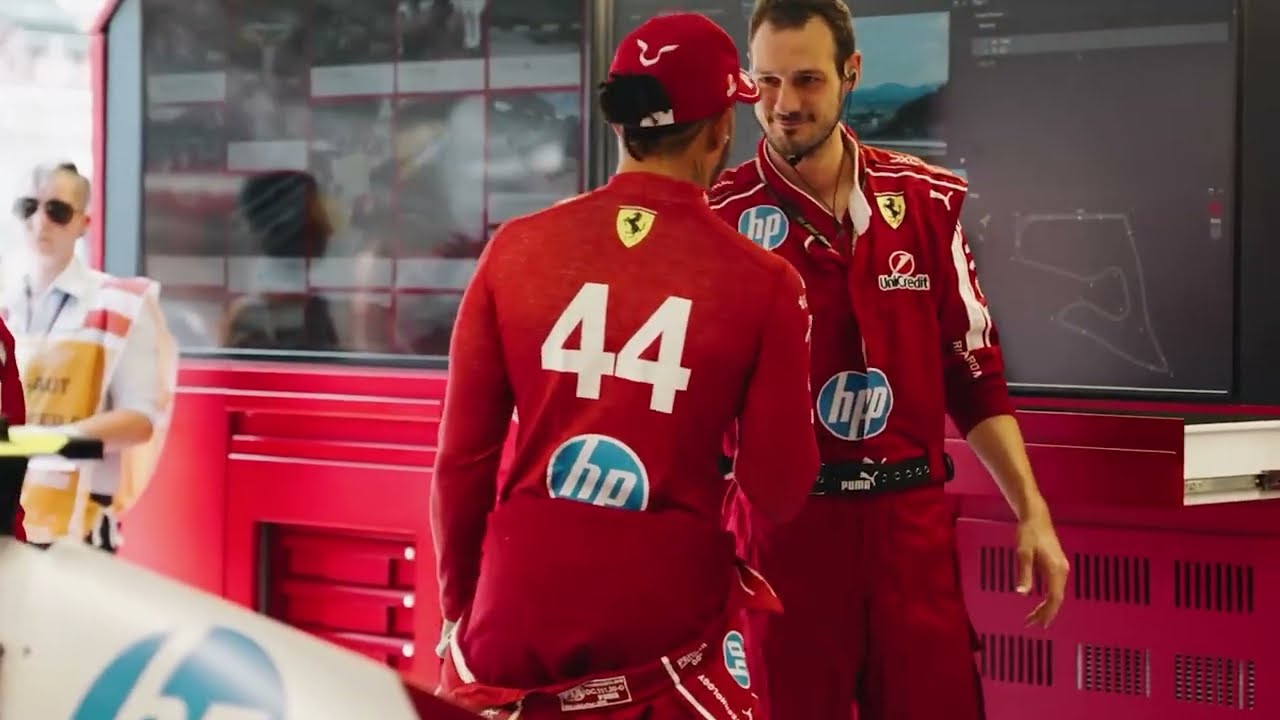
A Disturbing Disconnection
The drama didn’t end on the track. In the media pen, the area where drivers are expected to dissect their performance for the hungry press, Hamilton’s demeanor shifted from resigned to completely detached.
When asked the standard questions about what went wrong, he didn’t offer the usual technical paragraphs about tire graining or wind direction. He barely offered a sentence.
“Same as always,” he muttered, his eyes avoiding the cameras, gazing into a middle distance that seemed a thousand miles away from Qatar.
When a reporter, sensing the tension, tried to pivot with a softer question about how he was feeling, Hamilton delivered a line that was cutting in its banality: “The weather’s nice.”
For a driver who understands media responsibility better than anyone, this was a calculated protest. It was a wall of indifference. He wasn’t angry; he was checked out. In a sport where the symbiotic relationship between driver and engineer is the engine of success, Hamilton’s body language—lowered head, slow gestures, glazed eyes—was a siren blaring in the night. He looked like a man who had realized the promise of the “Prancing Horse” was a mirage.
The Dangerous Dichotomy
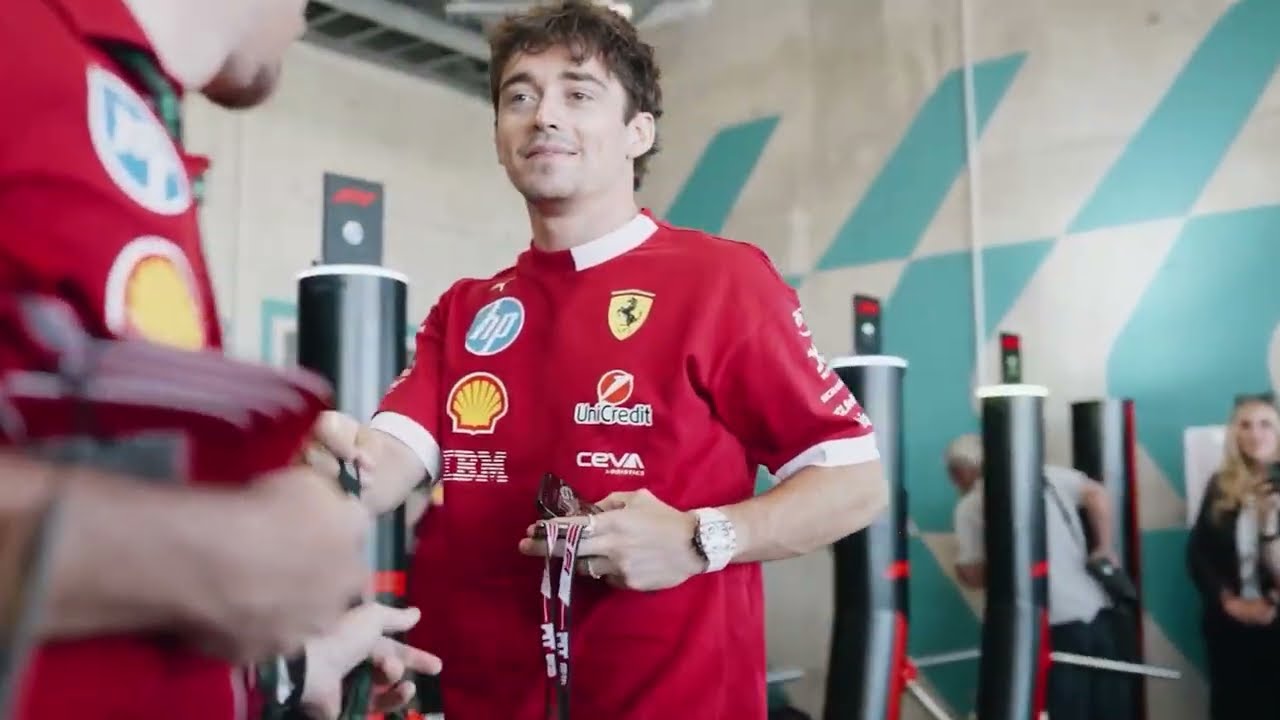
The contrast with Charles Leclerc frames the crisis in stark relief. While Hamilton was retreating into a shell of silence, Leclerc was in the engineering room, dissecting data, talking about high-temperature responses, and looking for solutions. Leclerc’s tone was one of work; Hamilton’s was one of surrender.
This is where the story becomes dangerous for Ferrari. When a team has two drivers on such emotionally divergent paths—one fighting resistance, the other succumbing to resignation—the internal fabric begins to tear. The engineers feel it. The mechanics see it. The belief evaporates.
The Ferrari project was built on the idea of a renaissance, a new era spearheaded by Hamilton’s winning DNA. But what happens when that DNA rejects the host? What happens when the star driver stops believing the car can be improved?
The End of Belief
“Man, the car won’t go any faster.”
Those nine words might be looked back upon as the turning point of the 2025 season, and perhaps the Hamilton-Ferrari partnership as a whole. It was the sound of a balloon popping. The air didn’t rush out with a bang; it hissed out slowly, leaving behind a limp, deflated reality.
Hamilton wasn’t asking for help. He was stating a fact. And in Formula 1, when a driver accepts a lack of speed as an unchangeable fact, they stop being a driver and start being a passenger.
The Lusail circuit has revealed a brutal truth that Ferrari must now confront. They don’t just need to fix the downforce on the SF25 or adjust the ride height for the bumps. They need to fix a broken heart. They need to find a way to make Lewis Hamilton believe again. Because right now, looking at the slumped shoulders of the man in the red suit, it looks like the belief has left the building, leaving only the scorching desert wind and a terrifying silence in its wake.