The anticipation was seismic. It was the Formula 1 transfer that promised to rewrite history: Lewis Hamilton, the sport’s statistical titan, uniting with Scuderia Ferrari, the sport’s spiritual home. It was meant to be a story of redemption, a late-career masterpiece culminating in a farewell championship, cementing the legacy of both driver and team.
Yet, as the sun set on the final race weekend in Abu Dhabi, what was supposed to be a legendary beginning was instead on the precipice of becoming one of the most painfully chronicled disasters in Formula 1 history.
In a pre-race interview that sent shockwaves through the paddock and across global motorsport headlines, Lewis Hamilton’s carefully chosen words and visibly drained demeanor painted a portrait of a champion pushed to the breaking point.
The narrative of expectation versus reality had reached a devastating climax, transforming what was meant to be a partnership of destiny into a case of what the transcript termed “chronic disillusionment.” The underlying message was clear: Lewis Hamilton, the man who once dominated the hybrid era, was not just struggling to win races; he was struggling to keep the faith in the project itself.
The Car of Chaos: An Unpredictable and Lethal Machine
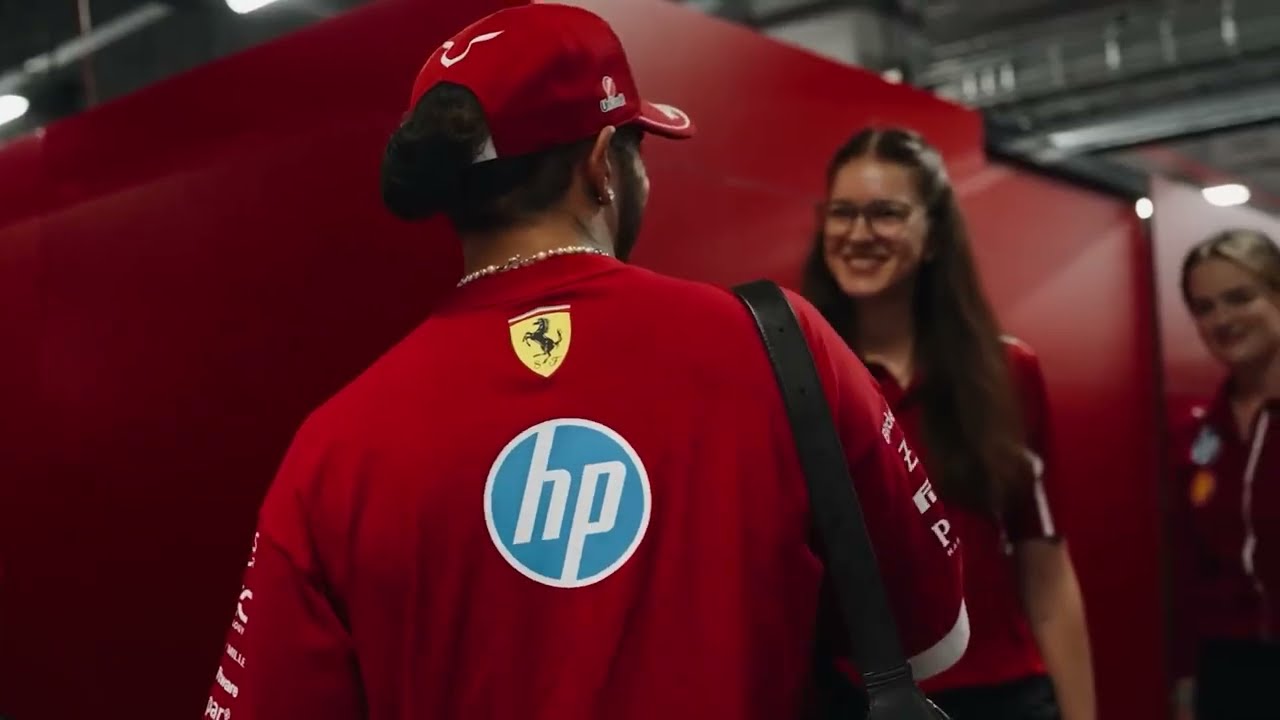
The heart of the crisis lay, unsurprisingly, with the machine beneath him: the SF25 single-seater. While every great driver has encountered a challenging car, the SF25 proved to be something more insidious. It wasn’t merely slow; it was fundamentally flawed. Hamilton’s assessment was brutal, describing the car as the “worst” he had experienced in Formula 1—a staggering statement coming from a seven-time World Champion whose career spans multiple generations of racing machinery.
The details of the SF25’s failings are crucial to understanding the psychological toll on its driver. The performance was “mediocre” and “inconsistent,” but the true killer was its unpredictability. Stability, that invisible but critical quality that allows a driver to operate at the absolute limit, was conspicuously absent. For a driver like Hamilton, whose success is built on a finely tuned symbiotic relationship with his machinery, piloting an unpredictable, almost feral car is a nightmare. It forces him to constantly adjust his driving style, braking approach, and corner layout, yielding little reward. The consequence was frequent finishes outside the top 10, turning the greatest champion of his generation into a shadow of himself, “crawling in the middle of the grid.”
The Cultural Disconnection: Passion vs. Structure
Beyond the aerodynamics and engine power, the transcript reveals a profound cultural clash that exacerbated the technical struggles. Hamilton’s previous home at Mercedes was described as a “surgically structured work environment”—a place where problems were met with systematic analysis, shared work philosophy, and clear, structured communication. Ferrari, on the other hand, is defined by “passion, yes, but it is also chaos when things don’t work out.”
This difference in philosophy created an “emotional and technical disconnection.” When the car was failing, the team was unable to provide “clear solutions.” The frustration was not just about lost points; it was the demoralizing sensation that the project was “poorly conceived from the beginning.” For Hamilton, who built his career on successful partnerships and pinpoint decisions, being forced to improvise every weekend, with setup changes made without “apparent logic,” was akin to “working against the grain” for the entire year. This lack of a “common language” with the engineers meant the collective effort was stalled, leaving the leader racing without direction.
The Emotional and Symbolic Toll
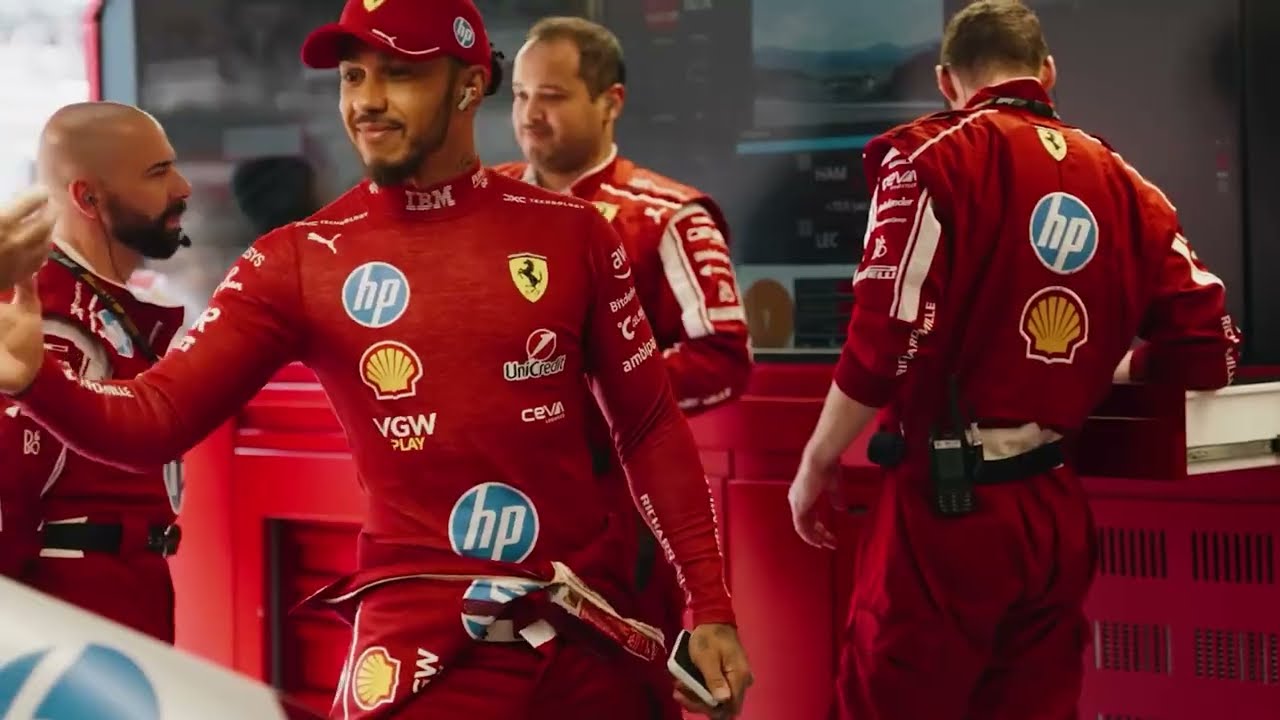
The pressure cooker reached boiling point in Abu Dhabi, not just with Hamilton’s public statements but with a specific, symbolic incident: being forced to give up his precious FP1 track time to Arthur Leclerc, the brother of his teammate Charles Leclerc.
At a technical circuit like Yas Marina, where FP2 at dusk is the only session mirroring race conditions, losing FP1 is a catastrophic blow to the setup program. For a driver already battling an unpredictable car all year, “every minute on the track was gold.” To sacrifice that time to a young driver, especially one linked to the Leclerc family lineage—in a team “obsessed with lineage, with surname, with history”—was interpreted by some Italian press sectors as a profound sign of disrespect or, worse, a statement about where the team’s loyalty and future focus truly lay. It was a final, frustrating layer of mismanagement atop a year of technical woes.
The result of this cumulative struggle was not anger, but a profound sense of emotional fatigue. In his statements before the Grand Prix, Hamilton’s famous “competitive gleam in his eyes” was gone. Instead, he spoke with “resignation,” revealing he had to “adjust my expectations” after it became evident early on that Ferrari was not “in that league.” His “body language, his pause between sentences, the almost robotic control” of his words conveyed a single, devastating sensation: exhaustion.
A Future Hanging in the Balance
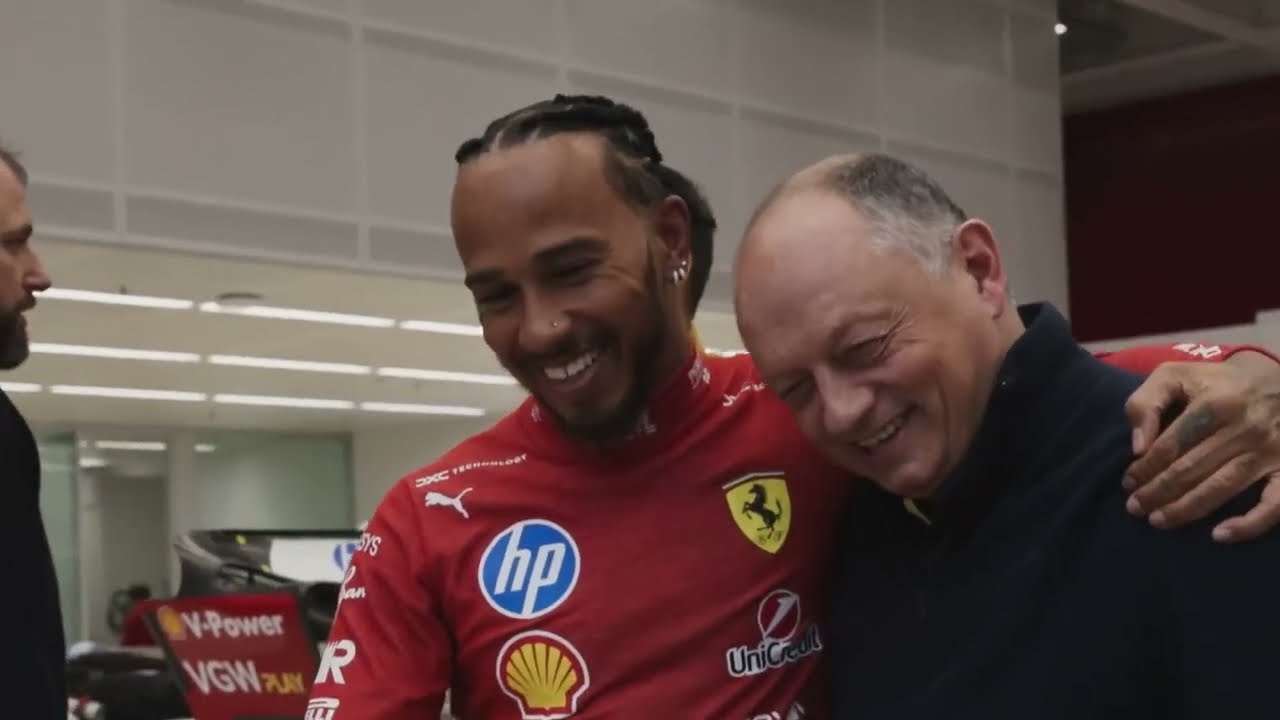
Hamilton’s current predicament is unique: he is not racing just to be on the grid; he races to win, to close his story at the summit. The implication of his Abu Dhabi interview is that if he feels Ferrari cannot offer him that possibility, this alliance is fundamentally compromised.
The burning question resonating through the paddock is simple, yet terrifying for Tifosi: “Does the Hamilton Ferrari project have a future beyond this initial disaster?”
The common, comforting logic suggests that F1 processes take time; even Michael Schumacher did not win immediately at Ferrari. But this is not a common situation. Hamilton is not just any pilot, and this is not a team with unlimited margin. The statements open multiple, urgent lines of questioning for the future and beyond:
Technical Reorganization: Can Ferrari execute the necessary “profound reorganization” in a single off-season to build a radically better car, when the current hierarchy and decision flows “have systematically failed”?
Strategic Leadership: Is Ferrari willing to break with its historical culture and hand over “technical leadership” of the project to Hamilton, granting him the operational autonomy necessary to rebuild the team as Mercedes once did? If the Scuderia insists on protecting its current structure, the relationship is unlikely to recover.
Lewis Hamilton’s statements in Abu Dhabi are more than just an end-of-season review; they are a public cry of frustration and a profound challenge to the Maranello establishment. The alliance was meant to be the final chapter in a legendary career. Instead, it has become a painful interrogation of the team’s ability to adapt, a showcase of chaos, and a brutal lesson in the difference between passion and structure. The world now waits to see if Lewis Hamilton will bet his legacy on Ferrari’s technical rebound in the coming seasons, or if his crushing honesty before the final race signals a premature end to F1’s greatest unfulfilled partnership.