The roar of the engines in Abu Dhabi marked the close of a Formula 1 season, yet for Lewis Hamilton, the sound was less a celebration and more a deafening echo of defeat. The 2025 championship, his first and most tumultuous chapter with Scuderia Ferrari, was statistically and emotionally the most punishing year of his legendary career.
The seven-time World Champion, a man whose name is synonymous with victory and dominance, finished the season sixth in the Drivers’ Championship—the lowest ranking he has ever endured—without a single podium finish to his name, a staggering first for the driver who has stood on the rostrum 197 times.
This nightmare, as Hamilton himself starkly labeled it, has done more than just challenge his driving skills; it has ignited a brutal and inescapable conversation about his future: Should the greatest driver of his generation retire?
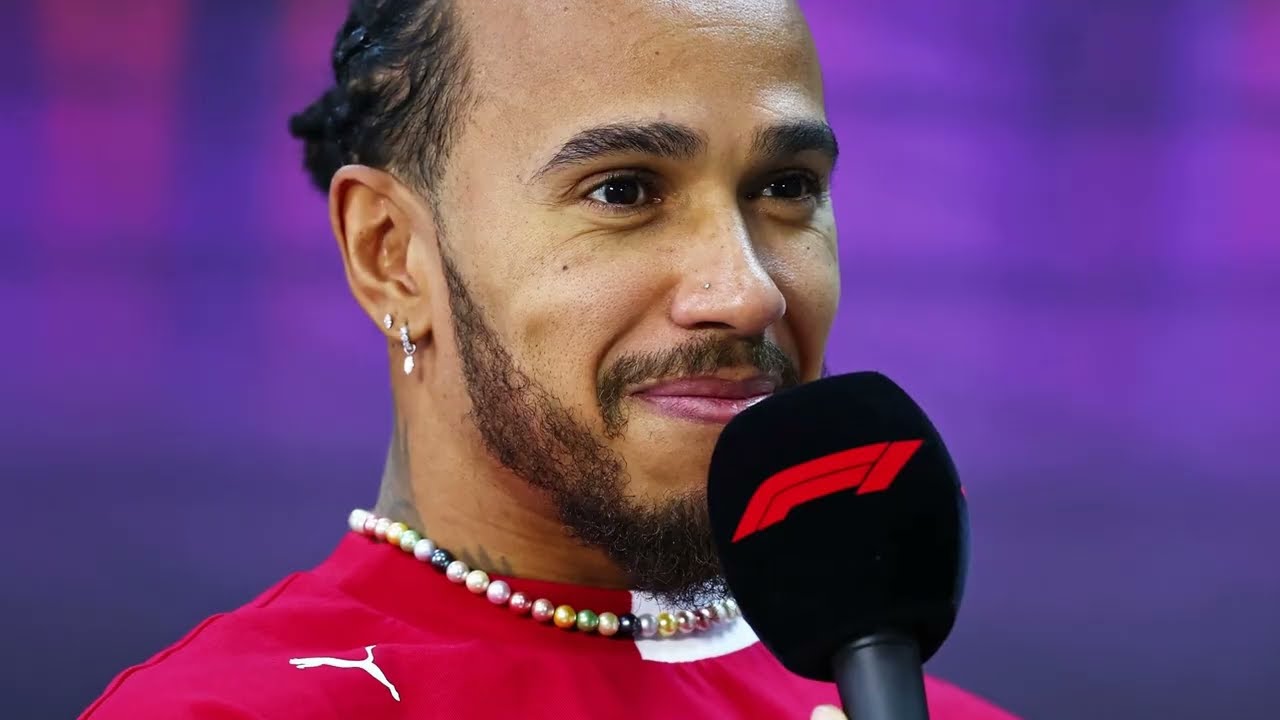
The Weight of a Wasted Year
To fully grasp the magnitude of the current crisis, one must look past the final standings and examine the raw, painful details. The 2025 Ferrari was a temperamental beast, but its handling issues seemed to amplify Hamilton’s frustration to unprecedented levels. The season was characterized by an almost unbelievable streak of failures, including three consecutive Q1 knockouts in Las Vegas, Qatar, and Abu Dhabi. In Las Vegas, his pure pace saw him starting from the back of the grid—a result unheard of for a driver of his caliber.
The contrast with his teammate, Charles Leclerc, was stark and demoralizing. Leclerc outqualified Hamilton in 19 of the 24 races, painting a clear picture of a champion struggling desperately to tame a car that simply did not conform to his instincts. The emotional toll was palpable, culminating in a raw, post-qualifying outburst where Hamilton admitted to feeling an “unbearable amount of anger and rage.” After the final race, his declaration that he “couldn’t wait to get away and unplug” was seen by many as a clear sign of mental fatigue—a weariness never before associated with the fiercely driven champion.
For the watching world, the sight was agonizing. The driver who made winning look easy was now struggling simply to score points. The once-unflappable force of nature seemed, at 40 years old, to be losing the battle with time and circumstance.
The Critics Demand an End
The poor performance provided immediate and heavy artillery for Hamilton’s critics. The most direct and stinging indictment came from former F1 driver Ralph Schumacher. Schumacher was unambiguous, suggesting that at almost 41, Hamilton lacked the necessary flexibility to adapt his driving style to the new generation of cars. His solution was ruthless: Ferrari should immediately look to the future, pairing the talented young driver Oliver Bearman with Leclerc.
The core of this argument is simple but devastating: Hamilton, by remaining on the grid, risks damaging a magnificent legacy. The narrative becomes one of a champion fading slowly, rather than retiring at the peak of his power. The fear is that the frustration, the mid-pack finishes, and the statistical lows will be the lasting memory for the next generation of fans, eclipsing the seven world titles and the hundreds of victories. For the critics, the probability of the upcoming 2026 car perfectly suiting Hamilton is too low, and the risk to the Ferrari brand is too high.
This pressure is the toughest psychological test of Hamilton’s career, asking him not whether he can still drive, but whether he knows when to stop.
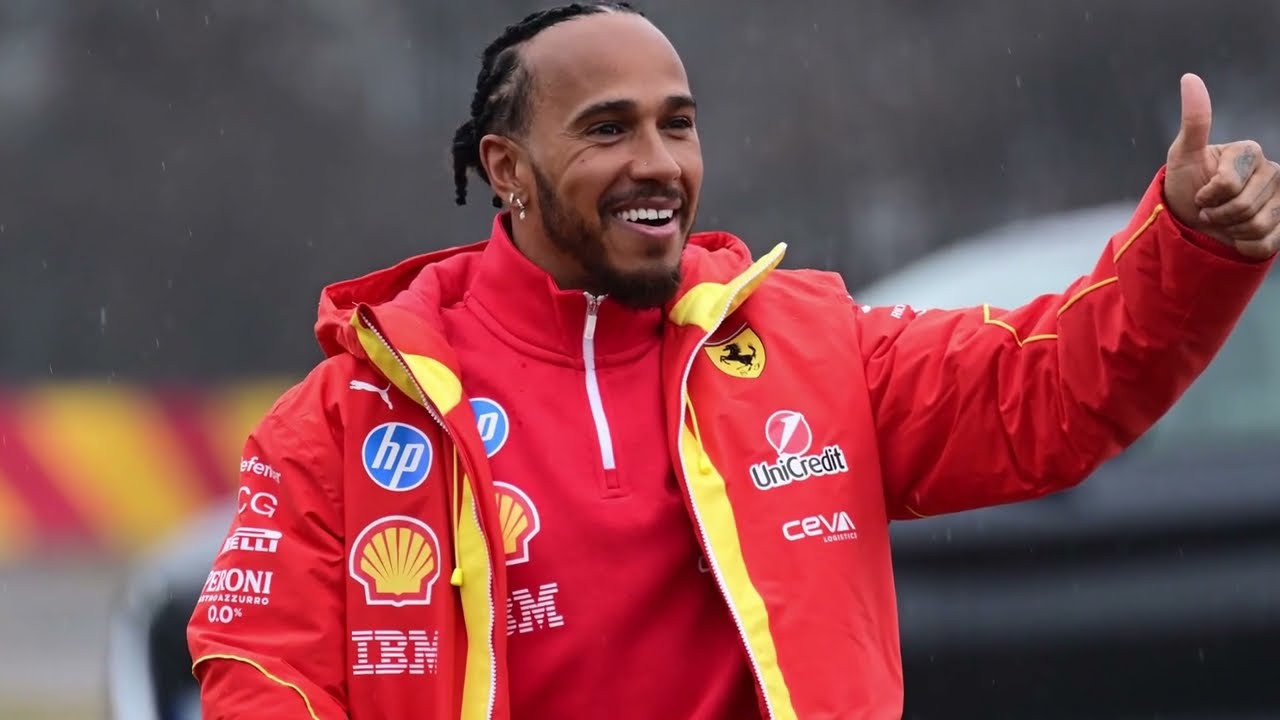
A Stand Against the Tide: The Inner Circle Speaks
Yet, the paddock is rarely unanimous, and many influential figures are pushing back forcefully against the retirement talk, demanding a sense of perspective. Nico Rosberg, Hamilton’s former teammate and fiercest rival, was quick to defend him, arguing that quitting after just one difficult year on a new, huge project like Ferrari would be a “loss of face.” Rosberg acknowledged the qualifying struggles but pointed to moments of brilliance visible during the races, calling the 2025 season a mere “scratch on his legacy,” not a career-ending injury.
Sky Sports commentator Martin Brundle echoed this sentiment, expressing genuine surprise if Hamilton were to quit over the winter break. The consensus among the sport’s most respected voices is that the driver must wait for the outcome of the 2026 technical revolution.
Perhaps the most significant support comes from inside the very garage where he has struggled. Charles Leclerc, the driver who soundly defeated Hamilton on pace throughout the year, offered glowing praise. “I’ve learned an enormous amount from Lewis,” Leclerc stated, highlighting Hamilton’s meticulous, precise approach. These comments are crucial, validating Hamilton’s continued role not just as a driver, but as a technical and intellectual asset to the team, even when results are scarce. It underscores a key truth: Hamilton’s talent has not vanished; he was simply imprisoned by a car that worked against his strengths.
The $100 Million Gamble: The 2026 Game Changer
The entire narrative hinges on a moment in time: the complete, seismic shift in Formula 1’s technical regulations set for the 2026 season. This is the crucial context that transforms Hamilton’s 2025 nightmare into a painful, but potentially necessary, sacrifice. The rules are changing completely, offering every team on the grid a total reset—a literal level playing field.
The new cars will be smaller, lighter by a significant 30 kilograms, and narrower. The hybrid power unit will undergo a dramatic transformation, with the electrical component becoming three times more powerful, shifting the balance of performance away from the internal combustion engine. Crucially, active aerodynamics will be introduced to reduce drag, and the controversial Drag Reduction System (DRS) will be replaced by a manual override button, giving drivers a temporary, powerful burst of energy for overtaking.
This combination of factors is not just a rule change; it is a fundamental shift in the philosophy of F1 racing. And it is a shift that appears custom-made for Lewis Hamilton.

The Perfect Formula for a Champion’s Return
Hamilton has always performed best in cars that are described as “nimble,” where the driver’s delicate input and mechanical grip can make the difference. The current generation of F1 cars—heavy, long, and highly sensitive to aerodynamic variations—have consistently failed to play to his core strengths.
The 2026 car, being lighter and relying more on the driver’s technical understanding and input, promises to restore a degree of control and feel that Hamilton thrives on. The increased reliance on the electrical side of the power unit, which requires a highly strategic and technically proficient approach, also favors an experienced champion who understands the fine margins of hybrid management.
Ferrari, it is now widely understood, placed a massive bet on this future. They made the calculated, painful decision to halt significant development on the 2025 car early in the season, diverting all their considerable resources and intellectual capital towards ensuring the 2026 car is a masterpiece. This was the “sacrifice” Hamilton and the team had to endure—a year of pain paid for with the promise of a glorious future.
The Spirit of a Gladiator
A single bad year cannot erase seven world championships and over 100 victories. The legacy of Lewis Hamilton is secured, just as the rocky return of Michael Schumacher to Mercedes did not diminish his status as a titan of the sport. What this tough period is proving is not a decline in skill, but a ferocious level of determination.
Hamilton is not passively waiting for the rules to change; he is actively involved, fighting like a champion, not giving up. Reports indicate he is delivering documents detailing his suggestions to team bosses and advocating for crucial personnel and structural changes to ensure Ferrari is ready for 2026. This level of ownership and foresight is the mark of a leader and a true competitor.
He has a dream he is actively pursuing, a final, towering ambition: that record-breaking eighth world title. He has committed himself to the Scuderia through 2026, meaning walking away now would mean quitting mere months before the starting gun fires on the massive reset he and Ferrari have planned for. It would be akin to a boxer quitting the day before the title match after months of grueling training.
Lewis Hamilton is taking the pressure, the anger, the frustration, and the humiliation of his worst-ever season, and channeling it into the final, high-stakes gamble of his career. The 2025 nightmare might just be the price of entry for the 2026 reckoning. Ferrari has made its bet, and the fate of the sport’s most decorated driver rests entirely on a lighter, nimbler car delivering the ultimate comeback.