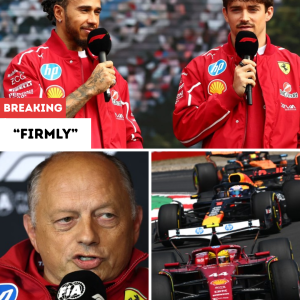
The world of Formula 1 has always been a high-speed cocktail of engineering genius, ruthless strategy, and high-stakes drama. But as the sport barrels toward the radical rule changes of 2026, the drama has officially spilled off the track and into the secret world of simulation.
Whispers and blurry images of the first next-generation cars—the machines that will rewrite the very physics of F1—have begun to circulate, sending seismic waves through the paddock. This isn’t just about a new season; it’s a total systemic reboot, a technical revolution where every assumption, every advantage, is being wiped clean.
The feeling among engineers, drivers, and fans is palpable: strange, new, and unbelievably exciting. What the leaked simulations suggest is a sport standing on the precipice of its most unpredictable era yet, defined not by the incremental gains of the past, but by the bold, often brutal, strategic gambles made by the sport’s biggest players today.
The Ferrari Ultimatum: A Champion Sacrificed for the Future
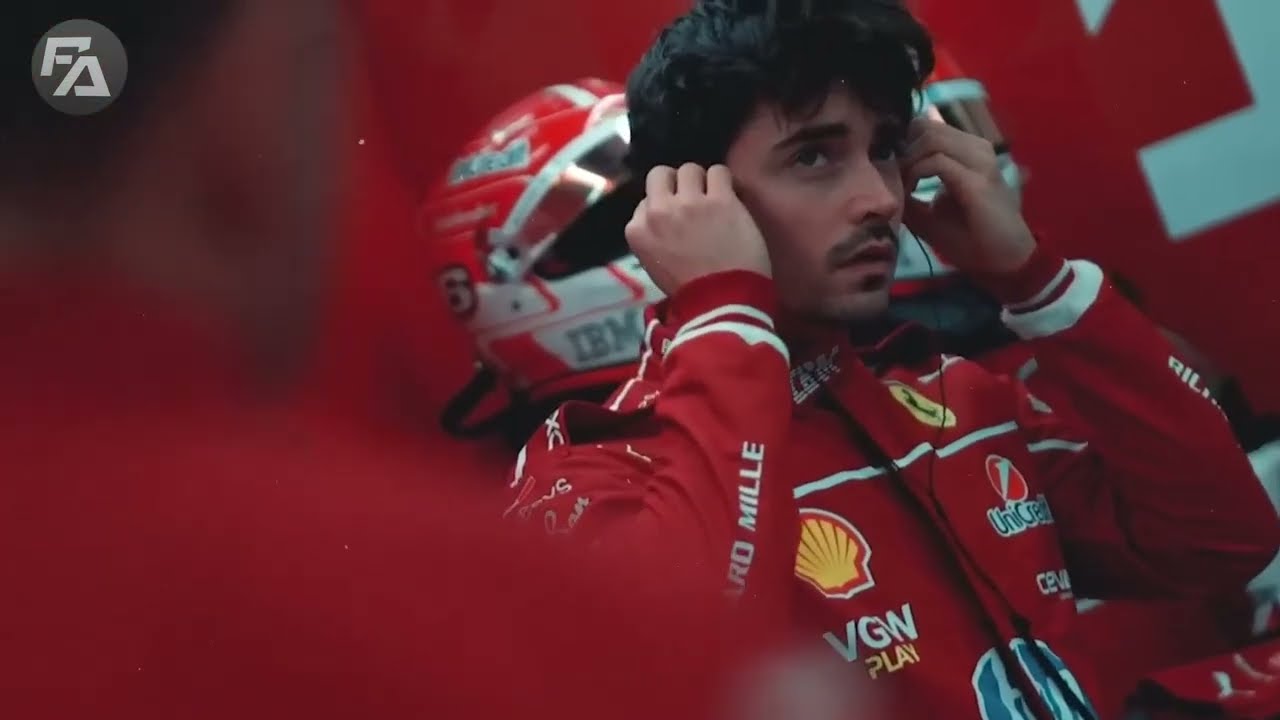
Nowhere is the cost of this future focus more apparent than at Maranello. For Scuderia Ferrari, the 2025 season was a painful lesson in strategic priorities. After a tough championship campaign that saw them finish fourth in the constructor standings, the team faced an agonizing decision. They pulled the plug. They stopped all development on their 2025 contender, the SF25, prematurely shelving upgrades and immediately allocating all wind tunnel resources to Project 678, the code name for their 2026 car.
This was not a minor adjustment; it was a devastating strategic blow to the current campaign, one that had immediate and tangible consequences. Ferrari’s dream of reaching second place in the constructors’ race was instantly compromised as rivals like Red Bull and Mercedes continued to refine and upgrade their machinery. For nearly six months, the SF25 sat frozen, unable to evolve while the competition sprinted ahead.
The SF25 was already a demanding beast. Designed with a heavily front-loaded chassis, it suited the daring, aggressive driving style of Charles Leclerc. However, it left his teammate, the seven-time world champion Lewis Hamilton, battling chronic instability, particularly in the rear. Mid-season adjustments, like a revised rear suspension system, offered only slight improvements in straight-line braking stability. The promised major performance leap never materialized.
Insiders at Maranello later admitted the regret: perhaps shelving key aerodynamic developments, like a crucial floor upgrade meant for the Azerbaijan Grand Prix, was a mistake made in the panicked rush to refocus. Hamilton himself, the champion whose relentless pursuit of performance is legendary, would have preferred to keep pushing the 2025 car. Yet, the Ferrari technical office, led by Loic Sera, called time. They concluded there was no viable path to salvage the SF25 and that every last resource had to be poured into the seismic shift of 2026. The final race in Abu Dhabi served as a harsh epitaph, where promising race pace was overshadowed by the car’s fundamental inability to stabilize the rear under high load—an inconsistency that remained stubbornly unsolved.
The 2026 Technical Revolution: Chaos by Design
The reason for this extreme, high-stakes maneuver lies in the sheer scale of the 2026 rule book overhaul. The cars themselves are being completely redesigned from the ground up: smaller, lighter, and more agile. This new generation will feature revolutionary active aerodynamics, introducing movable wings and systems that fundamentally alter a car’s behavior on straights and in corners. The wheelbase is shrinking, and the tires are narrower. Every team must now enter a forced state of amnesia, relearning the basic principles of speed, downforce, and balance.
Ferrari’s Project 678, according to the leaks, bears almost zero resemblance to the troubled SF25. Internal approval has already been given for the bodywork, with cooling volumes and gearbox design locked down. Simulator drivers are not just adjusting to new tire thermodynamics; they are adapting to a “hybrid driving style,” a blend of the high-downforce, ground-effect era of 2022 and the less aerodynamically sophisticated cars that preceded it. One source described the transition as akin to learning to ride a bicycle after only ever driving a car—a truly fundamental change in muscle memory and technique.
Further compounding the chaos is the engine. The power unit regulations have been drastically shifted to prioritize efficiency and electric support. This is no longer a horsepower race; it’s an intelligence race where the smartest, most reliable hybrid system will be king. The electric component is now 50% of the total power output. Ferrari, dealing with the internal restructuring following the departure of longtime engine architect Wolf Zimmerman to Audi, is furiously reorganizing its technical ranks to meet this strange, demanding new world. Team Principal Fred Vasseur has even held emergency meetings and brought in engineers from Renault’s closing F1 engine division, underscoring the severity of the challenge.

Red Bull and McLaren: The Winners’ Paradox
While Ferrari was forced into a desperate retreat, their rivals have faced their own difficult choices.
Red Bull, the sport’s recent dominator, is also preparing a radical technical shift. Rumors swirling around their new RB22 point toward a double push-rod suspension layout—a push rod at both the front and rear. This would be a massive departure from their ground-effect era tradition, which often favored pull-rod fronts. This design choice suggests a search for simplicity and predictability to accommodate the entirely new power unit packaging and the unknown quantities of the active aero rules. Tellingly, the simulations suggest Ferrari may also be moving back to a push-rod rear for the first time since 2010, indicating a convergent understanding of what the 2026 chassis demands.
Yet, Red Bull faces an even more monumental challenge than suspension geometry: power. For the first time in their history, Red Bull is building its own engine—the Red Bull Powertrains (RBPT) era, powered by Ford. This audacious, in-house endeavor is designed to challenge the elite manufacturers, but as Mercedes boss Toto Wolff famously put it, it is an “Everest to climb.” Red Bull’s new team principal, Laurent Mekies, did not shy away from the magnitude of the task, admitting, “It’s as crazy as it gets to take the decision to do your own power unit, that’s what it is.” He conceded that it would be “silly” to assume they would immediately be on par with the established engine giants like Ferrari or Mercedes from the start.
Then there is McLaren. Having emerged as the dominant force in 2025, securing both the Drivers’ and Constructors’ Championships, one would expect them to coast into the new era. Instead, team boss Andrea Stella made a famously cold, calculated decision: McLaren also stopped developing their 2025 car, the MCL39, throwing their full weight behind the 2026 project long before their rivals made the call. The team’s logic was that chasing the 2025 title would severely compromise their 2026 prospects. They won the title, a testament to their early gamble, but they are now paying the price. Under F1’s sliding scale rules, their championship success grants them the least amount of allowed wind tunnel time—a crippling disadvantage as the biggest technical shake-up in history looms. McLaren won too soon, and now they must innovate with one hand tied behind their backs.
The Lifeline and the Looming Fear
The scale of the technical unknown is so vast that the sport’s governing body, the FIA, has been forced to intervene quietly. They have created a safety net known as ADU—Additional Development and Upgrade Opportunities. This is a lifeline for engine manufacturers who find themselves struggling with the complex new power unit formula, offering quiet assistance without penalty or shame. This move alone speaks volumes: no one, not even the decades-old engine manufacturers like Ferrari and Mercedes, is entirely confident in how the new 50% electric power units will behave under competitive pressure.
The 2026 season will not be won by the team that simply builds the fastest car. It will be won by the team that adapts fastest to chaos.
The rules are shaking up everything from car design and suspension layouts to tire behavior and battery management. Every miscalculation, every misplaced decimal point in a simulation, will cost double or triple the normal price. Aston Martin, securing a Honda partnership from 2026, is rumored to be ahead of schedule, with whispers that legendary designer Adrian Newey’s fingerprints may still be on their AMR26 concept—a possibility that could see them leapfrog the field.
The dots are connected, forming a picture of beautiful, terrifying uncertainty: Red Bull builds its first engine, McLaren is deprived of wind tunnel time, Mercedes lurks in secret, and Ferrari sacrificed its present for a car we’ve only seen in leaked, grainy simulations.
Suspensions are flipping, power units are turning 50% electric, and engineers are working sleepless nights to crack a code they barely understand. The 2026 cars are not just coming; they are here, and in this high-stakes, technologically chaotic new era, no one is safe, and no one is certain. The only guarantee is that we are watching the world of Formula 1 unravel and spectacularly rebirth itself.