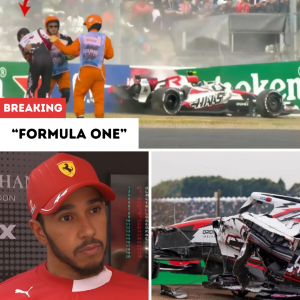
The storied world of Formula 1, typically a theatre of incremental development and high-tech secrets, has been stunned by news from Maranello. Ferrari, the most passionate and pressure-laden team in the sport, is not merely adapting to the upcoming rule changes; they are executing a complete, scorched-earth technical revolution.
This drastic move is more than a simple strategy; it is a profound admission of failure, a courageous act of corporate humility, and the ultimate high-stakes gamble to meet the expectations of their greatest signing: seven-time world champion Lewis Hamilton.
The scale of the internal crisis at the Scuderia became terrifyingly apparent during the current season. What was supposed to be a year of seamless transition and building momentum for their new star driver quickly devolved into a nightmare. The current car, shared by Hamilton and Charles Leclerc, was labeled by insiders as “beyond repair.” It was a car concept that had reached a dead end, plagued by a trio of crippling flaws that fundamentally undermined the drivers’ ability to compete.
At the core of the problem was the car’s chronic rear-end instability, coupled with an exasperatingly narrow performance window. The car was hypersensitive to ride height and tire pressure, demanding perfection that was simply unattainable in the heat of a race weekend. Ferrari’s engineers attempted emergency mid-season solutions, including changes to the rear suspension geometry, but these efforts yielded only minimal relief. The car became slightly more stable during straight-line braking but remained perilously unstable when entering fast corners. This chaotic scenario reached an ultimate, symbolic irony at a major Grand Prix, where the team secured a sprint victory only to be disqualified from the main race the next day for a critical breach of car height regulations. This moment was emblematic of a season completely derailed by technical shortcomings and chaotic execution.

The Lewis Hamilton Effect: A Catalyst for Change
The driver most acutely affected by this engineering failure was undoubtedly Lewis Hamilton. For a champion whose greatness is built on late braking, aggressive corner entry, and razor-sharp sensitivity to car balance, the current chassis was an instrument designed to mute his specific strengths. The situation was strikingly reminiscent of his difficult, transitional period with Mercedes at the dawn of the ground effect era. He was once again wrestling with a machine that fundamentally refused to obey his driving style.
The external perception fueled inevitable rumors of a rift between the superstar driver and his new Italian home. The media storm suggested a partnership already fracturing under the pressure. Yet, Ferrari’s Track Engineering Manager, Matteo Tanali, vehemently denied these allegations, emphasizing that while the adaptation was difficult, the relationship between Hamilton, the engineers, and the mechanics was “far more positive than the public perception.”
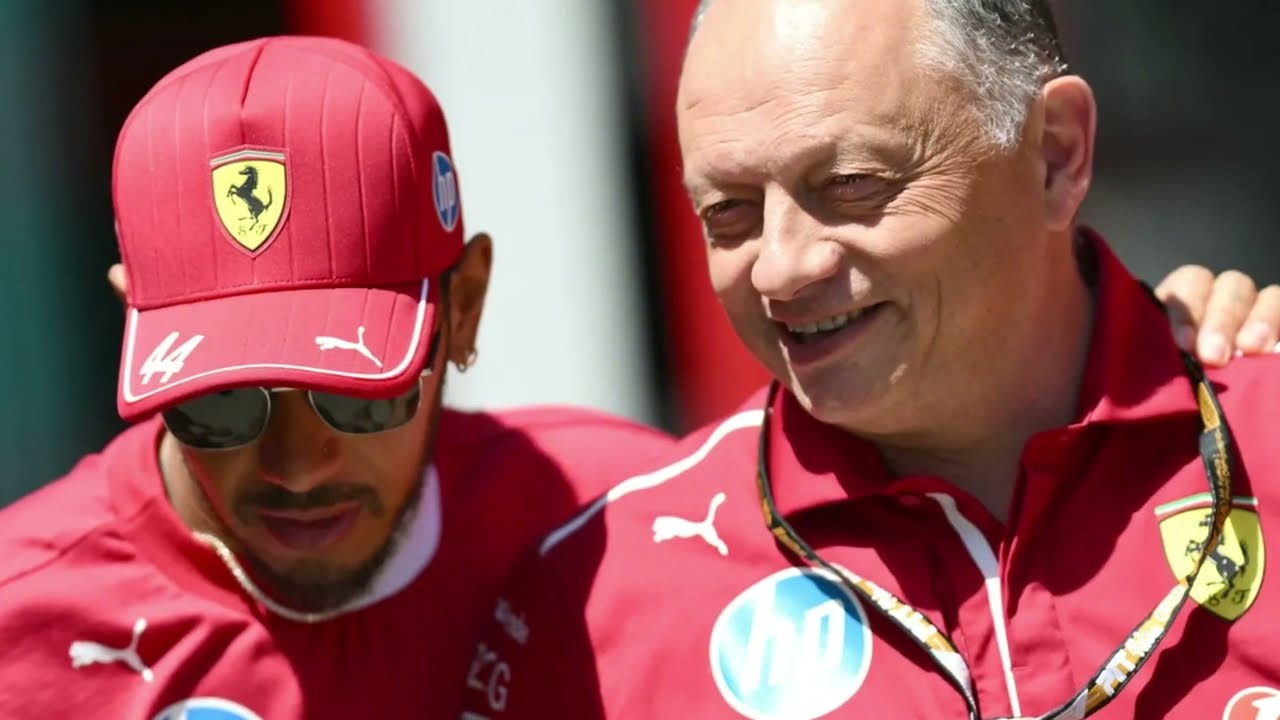
It was Hamilton himself who provided the most definitive confirmation of the internal struggle and, crucially, the path forward. “This season has clearly not been what we expected,” he admitted, detailing the significant challenges with rear-end stability and the limited performance window. However, his frustration was swiftly followed by praise for the team’s decisive action. He championed their “courage in admitting that this concept isn’t working and opting for a complete overhaul focusing fully on the upcoming regulations.” His arrival at Maranello was about building something competitive for the new era, and the team’s extreme decision to close current development early and divert all resources was the ultimate validation of that commitment.

The Radical Technical Blueprint: Abandoning Maranello’s Legacy
The consequences of this decision are nothing short of monumental. Ferrari has confirmed that the new car will bear almost no resemblance to the failed design of the current chassis. This isn’t just an adaptation to the new regulations that radically alter aerodynamics, power units, and energy systems; it is a complete abandonment of the “legacy concepts” that had been the foundation of their development for years.
The blueprint for the challenging new car is packed with revolutionary technical solutions:
Active Aerodynamics as the New DRS: Ferrari has developed an entirely new aerodynamic design that includes the implementation of an active front wing and the outright elimination of the conventional Drag Reduction System (DRS) concept. This new system is designed to be far more dynamic, utilizing actuators on both the front and rear wings that move automatically. Their goal is clear: to optimize performance and maintain energy efficiency as the car transitions instantaneously from high-speed straights to cornering phases, meeting the much stricter power unit demands of the future.
The Electronic Gamble: The team is experimenting with electronic actuators as an alternative to traditional hydraulic systems. This is a dramatic step intended to significantly reduce weight. While this pursuit of lightness is essential in modern F1, it introduces significant challenges regarding reliability, response speed, and performance consistency in the extreme conditions of a Grand Prix. The paddock is rife with speculation that a top team—be it Ferrari, Mercedes, or Red Bull—is secretly developing a fully electronic system, which, if successful, could become the ultimate secret weapon for supremacy in the new era.
The Suspension Betrayal: Aligning with Red Bull: Perhaps the most philosophically shocking move is the new suspension geometry design. Ferrari will reportedly adopt a front and rear push rod configuration. For decades, the Scuderia has followed a different path, often to its detriment, while Red Bull, under the mastery of Adrian Newey, made its particular suspension configuration the gold standard. This decision signifies an outright capitulation to the dominant engineering philosophy of their rivals and an unprecedented willingness to sacrifice their own historical approach for a proven, winning solution that both Maranello and Milton Keynes now agree is the best configuration for the new regulations.
The Strategic Advantage: Turning Failure into Fuel
Despite the crushing performance of the current car, Ferrari enters the new era with one crucial, hard-won strategic advantage: development time and regulatory flexibility. Finishing lower in the constructor’s standings grants them a crucial regulatory bonus—approximately 15% more wind tunnel and CFD hours than their higher-placed rivals in the first half of the season governed by new rules.
This advantage is magnified exponentially by their radical decision to close the current car project early. This bold move has freed up invaluable space for engineers at Maranello to experiment with radical concepts, conduct multiple validation tests, and refine the very foundations of the new car, all free from the relentless, short-term pressure of race-by-race development.
The feedback loop is already in motion. The driver simulator has been adjusted to reflect the new approach, focusing on the hybrid system management and power response during critical cornering phases. This is where the narrative comes full circle: the characteristics of the new car are expected to closely resemble those of a past chassis that perfectly suited Hamilton’s aggressive style. The new machine is being fundamentally designed to handle aggressive driving, prioritizing the late braking and corner-entry control where Hamilton’s strengths are truly unmatched.
Ferrari has now aligned its resources, its engineering philosophy, and its strategic gamble with the strengths of its star driver. The overhaul is complete, the risk is absolute, and the entire structure of the team is now geared toward securing that elusive eighth world championship for Lewis Hamilton. The question now looms large over Maranello: will this extraordinary revolution return the Scuderia to the pinnacle of Formula 1, or will it merely add another dramatic, unfulfilled chapter to their history? Only time will tell if this shocking reset button was the move of genius or the height of folly.