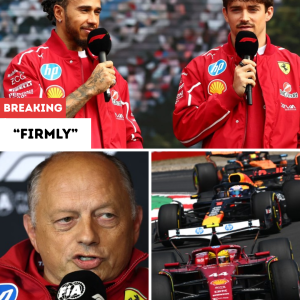
It was supposed to be the fairytale ending to the greatest career in Formula 1 history. Lewis Hamilton, the seven-time world champion, donning the legendary scarlet overalls of Ferrari to chase an elusive eighth title. Instead, the 2025 season will be remembered not for glory, but for a statistic so bleak it hasn’t been seen in Maranello for 33 years.
Not a single trip to the rostrum in 24 races. You have to go back to Ivan Capelli in 1992 to find the last time a driver joined Ferrari at the start of a season and failed to bring home a single trophy. Hamilton finished the year a staggering 86 points behind his teammate, Charles Leclerc, having been outqualified 19-5 and beaten in races 18-3. It was, by his own admission, his “worst season ever.”
But numbers only tell half the story. To understand why the most successful driver-engineer partnership in history collapsed into confusion and failure, you have to look beyond the track and listen to the airwaves. The disaster of 2025 wasn’t just about pace; it was about a voice that went missing.
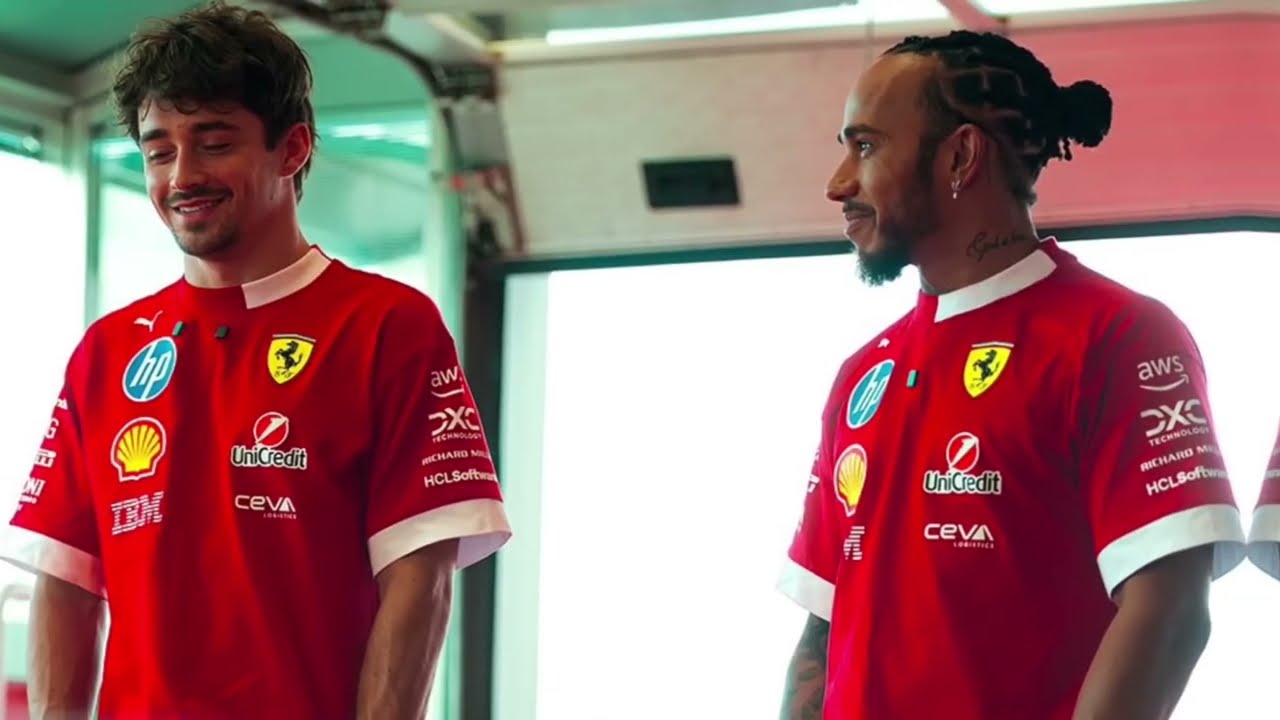
The Ghost of “Bono”
For 12 years, Lewis Hamilton didn’t just drive a Mercedes; he operated as one half of a telepathic organism. His race engineer, Peter “Bono” Bonington, was the calm amidst the chaos. Phrases like “It’s Hammer Time” weren’t just marketing slogans; they were coded triggers built on over a decade of trust. They knew what the other was thinking before a button was even pressed.
When Hamilton shocked the world by announcing his move to Ferrari, the first question on everyone’s lips was, “Is Bono coming?”
The answer, buried deep in a Mercedes contract clause from 2023, was a definitive no. A strict non-poaching provision barred Hamilton from taking any of his trusted inner circle with him. The door was slammed shut. Bono stayed at Brackley to guide young Kimi Antonelli, leaving Hamilton to walk into Maranello alone.
A Clash of Cultures
Hamilton’s new voice in his ear was Riccardo Adami, a highly experienced engineer who had previously worked with Sebastian Vettel and Carlos Sainz. On paper, it seemed like a solid pairing. In reality, it was oil and water.
Adami has spent his entire 23-year career within the Italian motorsport bubble—Minardi, Toro Rosso, and Ferrari. While he speaks English, the “working language” and cultural nuance of his engineering style are distinctly Italian. Hamilton, conversely, has spent his entire life in British teams—McLaren and Mercedes—where communication is famously concise, precise, and unemotional.
This cultural friction sparked almost immediately. At the season opener in Melbourne, cracks appeared. By Monaco, the dam broke.
During the Monaco Grand Prix, a series of communication breakdowns turned a difficult weekend into a nightmare. First, misinformation in qualifying led to Hamilton impeding Max Verstappen, earning him a grid penalty. Then came the race.
“Push now, this is our race,” Adami instructed.
To Hamilton, accustomed to fighting for wins, this meant, “We are racing for the victory, burn your tires and go.” He pushed flat out, destroying his rubber. In reality, Adami simply meant, “You are free to run your own race without team orders.” A simple linguistic ambiguity ruined his strategy.
Later in the same race, when Hamilton asked for the gap to the cars ahead, Adami responded with tire compounds and lap times of rivals—information Hamilton hadn’t asked for and didn’t need. The frustration in Hamilton’s voice was palpable. “I just want to know if I’m a minute behind or not,” he snapped.
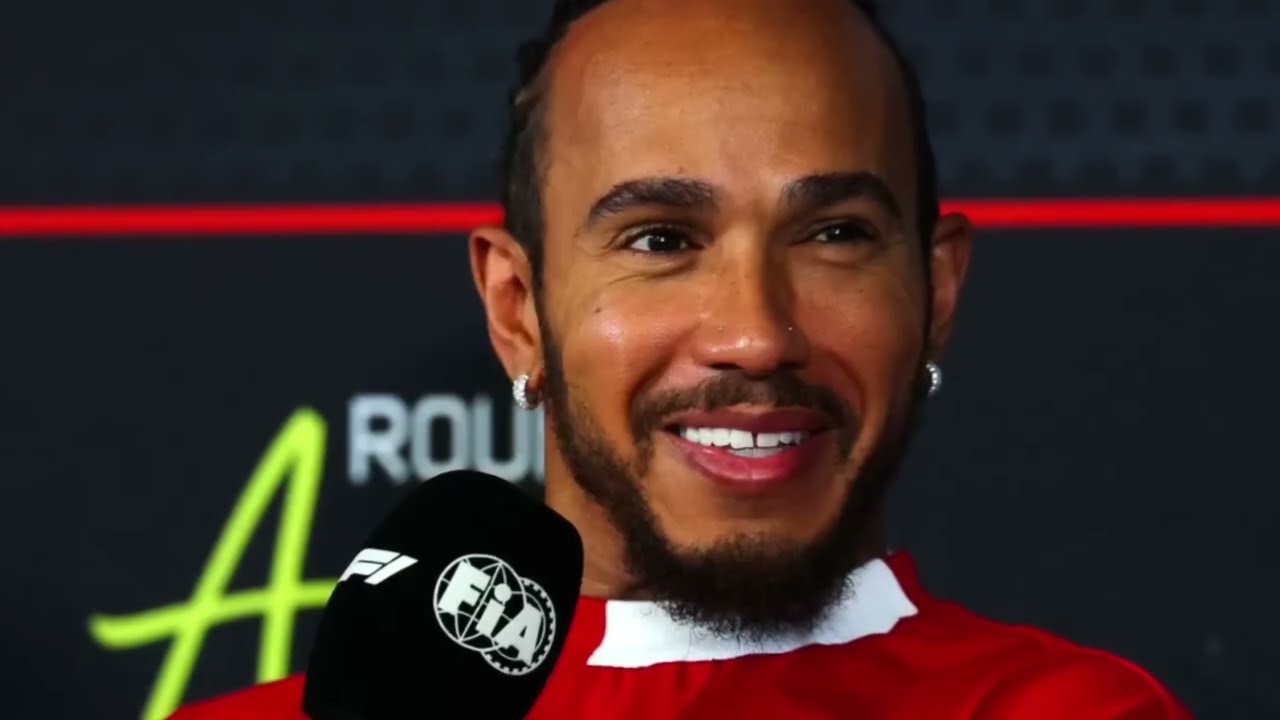
The Sound of Silence
Perhaps the most painful moments weren’t the misunderstandings, but the silence.
Mercedes was the gold standard of radio comms—delivering the right info at the exact right second. Ferrari, by contrast, often left Hamilton in the dark. After crashing in practice at Monaco, Hamilton thanked the team for the repairs on the cool-down lap. He was met with silence. In Abu Dhabi, after an awkward “thank you” message to end the season, Hamilton actually had to ask, “Did you get that?” because nobody replied.
A nervous laugh eventually came back from the pit wall, but the damage was done. The psychological safety net Hamilton had relied on for a decade was gone.
The Leclerc Factor
The failure is even more glaring when compared to the other side of the garage. Charles Leclerc, in his seventh year with the Scuderia, thrived. Even when he switched engineers in 2024 to Bryan Bozzi, the transition was seamless. Why? Bozzi, though Italian, was educated in England and had worked closely with Leclerc for five years prior. They already spoke the same language—literally and metaphorically.
Leclerc finished the season with seven podiums and 242 points. He understood the car, the culture, and the communication. Hamilton, isolated by language barriers and a lack of familiar support, floundered.
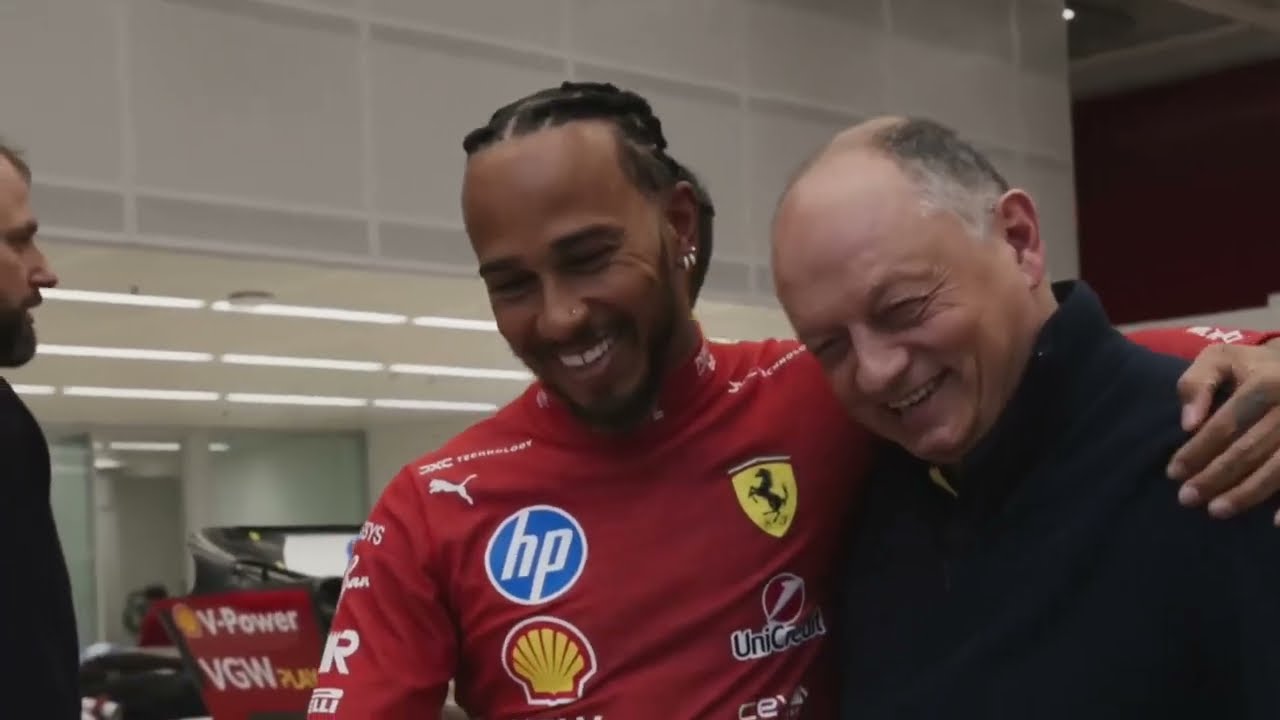
Can It Be Fixed?
As the dust settles on a disastrous 2025, the 41-year-old legend faces a crossroads. The 2026 regulations offer a fresh start with new cars and engines, but the human element remains unsolved.
Experts suggest Hamilton needs to take a page out of George Russell or Max Verstappen’s book—drivers who explicitly trained their engineers on how to speak to them. Verstappen’s relationship with his engineer, Gianpiero Lambiase, is often fiery and blunt, but it works because they have a shared understanding. Hamilton and Adami currently have politeness, but no connection.
Unless Hamilton can reconstruct that “telepathic” bond he left behind at Mercedes, his dream of an eighth world title may remain just that—a dream. The 2025 season proved that even the greatest driver of all time cannot win in silence. The question now is whether he has the time, or the energy, to teach a new dog old tricks before the clock runs out on his career.