It started quietly. There was no flashy press release, no dramatic teaser video featuring a silhouette of a car speeding through the Italian countryside. Instead, the revelation that has sent shockwaves through the Formula 1 paddock came during a simple Christmas lunch in Maranello.
Amid the clinking of glasses and festive cheer, a few careful words from inside Ferrari painted a picture of a future so radically different that it threatens to turn the sport upside down.
What Ferrari has discovered about its 2026 challenger isn’t just a minor technical hiccup or a clever loophole.
It is a fundamental shift in the DNA of Grand Prix racing. As the sport barrels toward the most significant regulatory overhaul in recent history, the team’s findings suggest that the old rules of engagement—where bravery and raw horsepower reigned supreme—are effectively dead.
The End of the Horsepower War
For decades, the formula for winning in F1 was relatively straightforward: build the biggest, baddest engine and strap it to the most aerodynamic chassis you can design. But the 2026 regulations have thrown that playbook into the fire. The new rules are not a mere update; they are a hard reset. Ground effect is out, active aerodynamics are in, and most critically, the power unit is undergoing a metamorphosis.
For the first time, the electric component of the engine will be just as powerful as the internal combustion engine—a 50/50 split delivering roughly 1,000 horsepower in total. On paper, it sounds like the perfect marriage of petrol and electric power. But as every race fan knows, paper doesn’t race on Sundays.
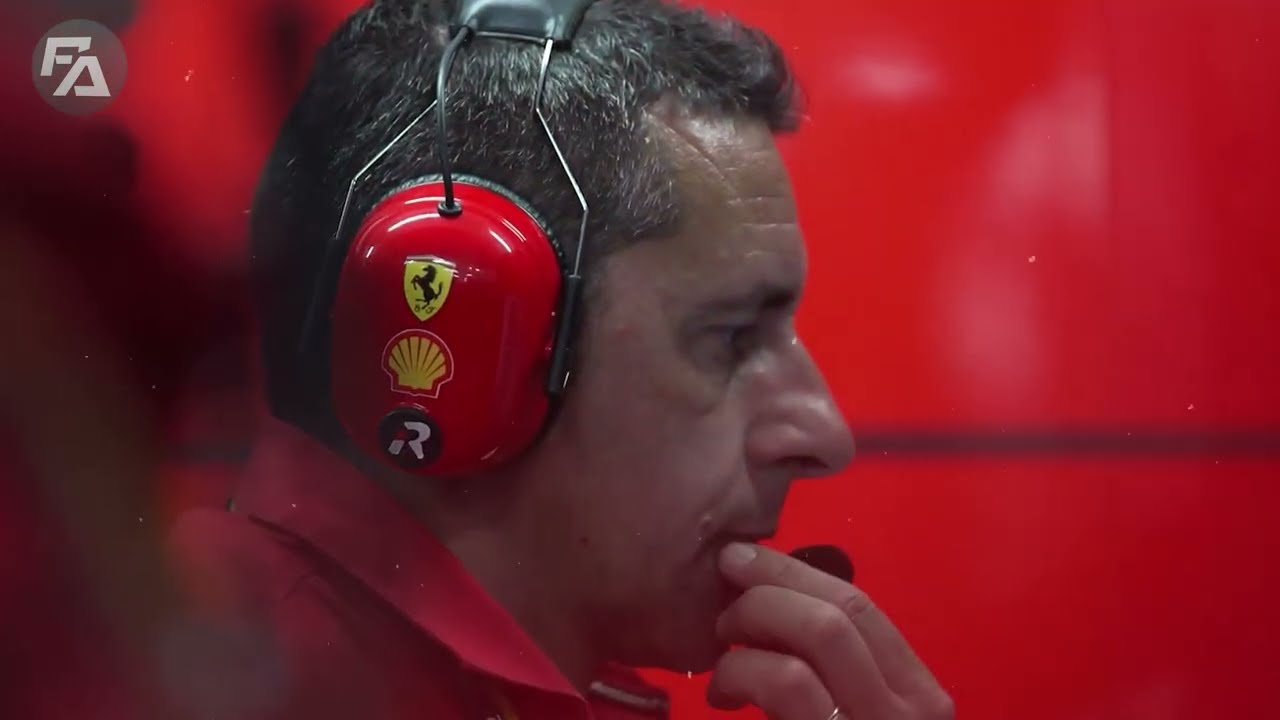
Enrico Gualtieri, Ferrari’s Power Unit Technical Director, dropped the bombshell that this single change turns the entire philosophy of engine building on its head. The MGU-H—the complex piece of engineering wizardry that used exhaust heat to recharge the battery—is gone. That safety net, which teams have relied on for years to keep the energy flowing, has been ripped away.
Now, drivers are left with only the MGU-K and braking zones to harvest energy. The problem? The new batteries, while physically larger, drain at a terrifying rate. On high-speed tracks with long straights and few braking zones—tracks where Ferrari has historically struggled—the fear is that cars will run out of juice, forcing drivers into a humiliating game of “lift and coast” just to make it to the finish line.
Software: The New Battleground
This is where Ferrari’s “discovery” changes everything. Gualtieri made it clear that the answer to this crisis isn’t found in hardware anymore. You can’t just bolt on a bigger turbo or a lighter piston. The savior of 2026 will be software.
Ferrari is pivoting its entire focus to developing aggressive, intelligent algorithms that decide when to harvest energy and when to unleash it. The active aerodynamics won’t just be there to make the cars go faster; they will be used to compensate for energy shortages, reducing drag when the battery runs dry. It’s a game of 4D chess played at 200 miles per hour.
This shift explains why Ferrari isn’t chasing raw speed anymore. They are chasing control. The team that masters the code will master the championship. It’s a realization that strips away the romance of the sport; the roaring V12s of the past have been replaced by lines of code and energy deployment maps.
The Hamilton Warning
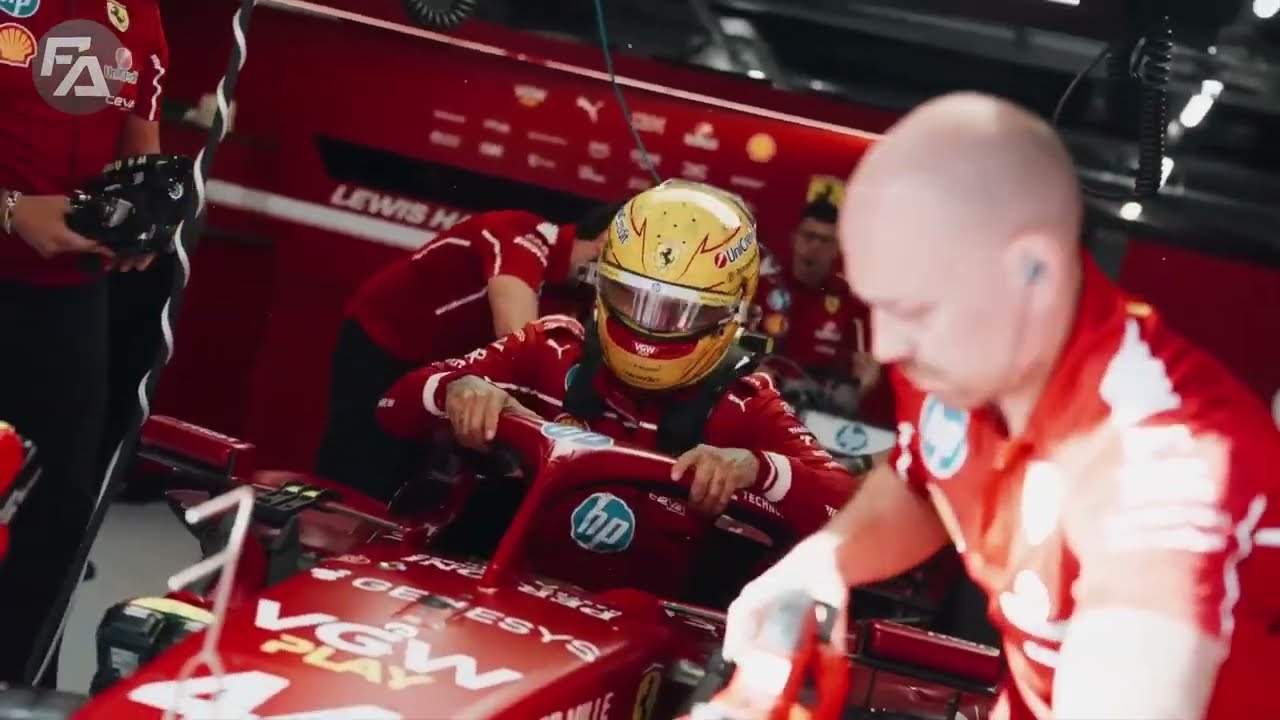
While Ferrari fights to control the future, they are also struggling to understand the present—a struggle personified by Lewis Hamilton. His high-profile transfer to the Scuderia was supposed to be the final glorious chapter of a legendary career. Instead, it has been a season of frustration. No Grand Prix wins, no consistent podiums, and a painful deficit to his teammate Charles Leclerc.
Ferrari Team Principal Fred Vasseur openly admitted a hard truth: he underestimated the challenge. “It’s not that we are doing things worse or better,” Vasseur explained. “It’s that we are just doing things differently. Different software, different systems, different people.”
For Hamilton, who spent two decades inside the Mercedes ecosystem, the shock was profound. In modern F1, missing a setting or misunderstanding a system by a fraction of a second is the difference between pole position and the midfield. Vasseur recalled a painful memory from Budapest, where a single tenth of a second separated Hamilton from Leclerc—and destroyed the Briton’s entire weekend strategy.
This is the warning for 2026. If a seven-time world champion can struggle to adapt to a new system today, what happens when the entire grid is thrown into the chaos of the new regulations?
Verstappen’s Brutal Truth
Adding salt to the wound, Max Verstappen offered a candid analysis of Hamilton’s situation that borders on cruel but rings true. The reigning champion noted that leaving a “second family” like Mercedes for a completely foreign environment is incredibly difficult. But then came the line that hurt the most: “Age is not on your side.”
Verstappen pointed out that while Hamilton isn’t necessarily getting slower, he isn’t getting faster either—whereas his younger teammate Leclerc is still on the ascendancy. It’s a stark reminder that in F1, time waits for no one. Ferrari’s new obsession with “systems” and “control” over raw driver instinct seems to validate Verstappen’s point. If the car requires a PhD in software management to drive, the instinctive brilliance of the older generation might be neutralized by the tech-savvy adaptability of the new guard.
Panic Behind the Scenes?
Despite Gualtieri’s calm demeanor, rumors have swirled that panic has set in at Maranello. Stories of failed material choices—switching cylinder heads from steel to aluminum due to reliability issues—and the departure of senior figures have painted a picture of a team under siege.
Gualtieri insists the project is on schedule, but he admits the engineering reality is “brutal.” Every manufacturer is struggling. The new sustainable fuel burns hotter and offers less cooling, putting immense stress on engine components. Combined with a lower minimum car weight, parts are failing, overheating, and breaking on test benches across the world.
The Silent War Begins
As the F1 world looks toward the car launches in January, fans will be scrutinizing the bodywork, the wings, and the sidepods. But the real Ferrari—the one that will decide the fate of the 2026 championship—will be invisible. It will be hidden deep within the electronic control unit, a ghost in the machine.
Ferrari knows that the learning curve will be vicious. Teams will fail fast, and those who cannot fix their flaws immediately will be left behind permanently. The days of winning by bravery alone are over. The 2026 season won’t be won by the driver with the heaviest right foot, but by the team that understands its own weaknesses the best.
It is a cold, calculated future for a sport built on passion. But as Ferrari has found, in the new era of Formula 1, losing by a tenth isn’t just unlucky—it’s fatal.