The paddock at the Yas Marina Circuit has always been a place where dreams are either forged in gold or shattered into carbon fiber shards. On this particular Sunday, under the blinding glare of the desert floodlights, the air was thick enough to choke on.
It was the season finale of 2025, a moment poised on a knife-edge of history. But amidst the roar of engines and the frenetic energy of mechanics scrambling over the grid, a quiet, almost invisible moment of profound significance took place—a passing of the torch that would only be revealed after the champagne had dried.
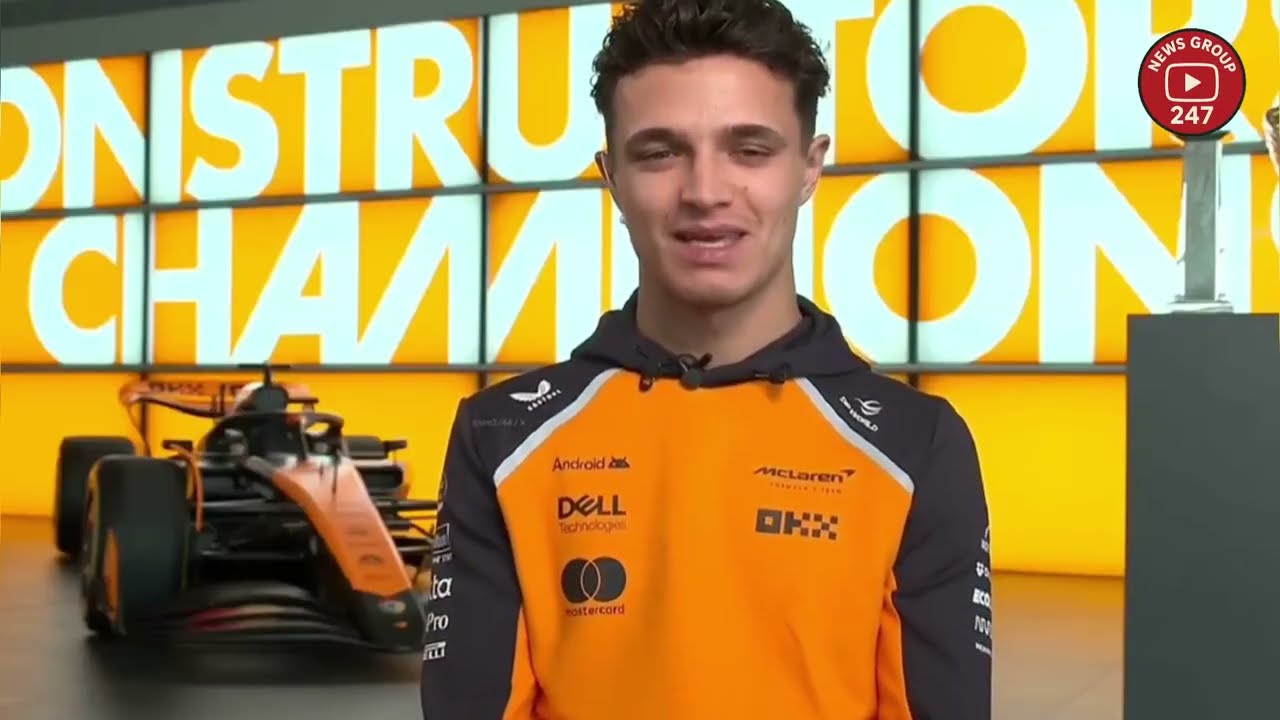
As Lando Norris crossed the finish line to claim his first-ever Formula 1 World Championship, ending McLaren’s agonizing 17-year drought, the cameras focused on his jubilant screams and the tearful embrace of his team.
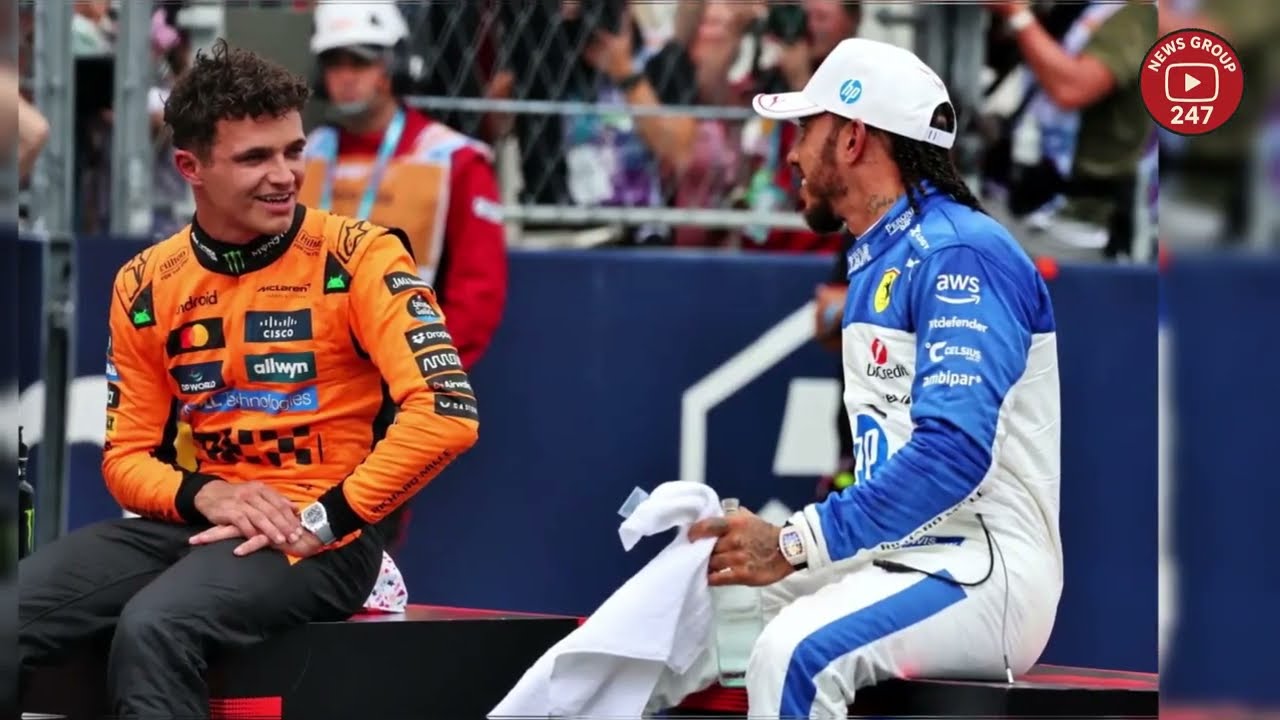
Yet, the foundation for this victory had been laid hours earlier, in the stillness of the eve of the race, by the only man on the grid who truly understood the weight on Norris’s shoulders: Lewis Hamilton.
The Elder Statesman’s Intervention
Lewis Hamilton, now the elder statesman of the sport and a seven-time world champion, has long transcended the role of a mere competitor. He has become a custodian of the sport’s legacy. Seeing a younger version of himself—a British driver in a McLaren, staring down the barrel of his first title decider—stirred something deep within him.
In a revelation that has since captivated the motorsport world, Hamilton disclosed the details of a private conversation he had with Norris just before the weekend reached its fever pitch. It wasn’t a lecture on tire management or fuel loads. It was a psychological anchor thrown to a man drowning in expectations.
“I told him going into the weekend just to continue doing you,” Hamilton revealed, his voice warm with the pride of a mentor. “What you’ve been doing works, so don’t change it. Just take it one corner at a time.”
The Power of Simplicity
In a sport that is obsessed with data, reinvention, and micro-adjustments, Hamilton’s advice was haunting in its simplicity. It cut through the noise of the media frenzies and the strategic complexities. The message was clear: Do not chase the moment. Do not fight the fear. Trust the process that brought you here.
For Norris, whose season has been a masterclass in speed but occasionally plagued by self-doubt, these words likely acted as a shield. When the pressure peaked in the final laps, when every vibration in the steering wheel feels like a catastrophic failure and every shadow looks like a rival overtaking, Norris didn’t crumble. He drove with a clarity and restraint that mirrored the man who had advised him. He took it one corner at a time, just as he was told, and let the championship come to him.
Echoes of 2008: A Symmetry Impossible to Ignore
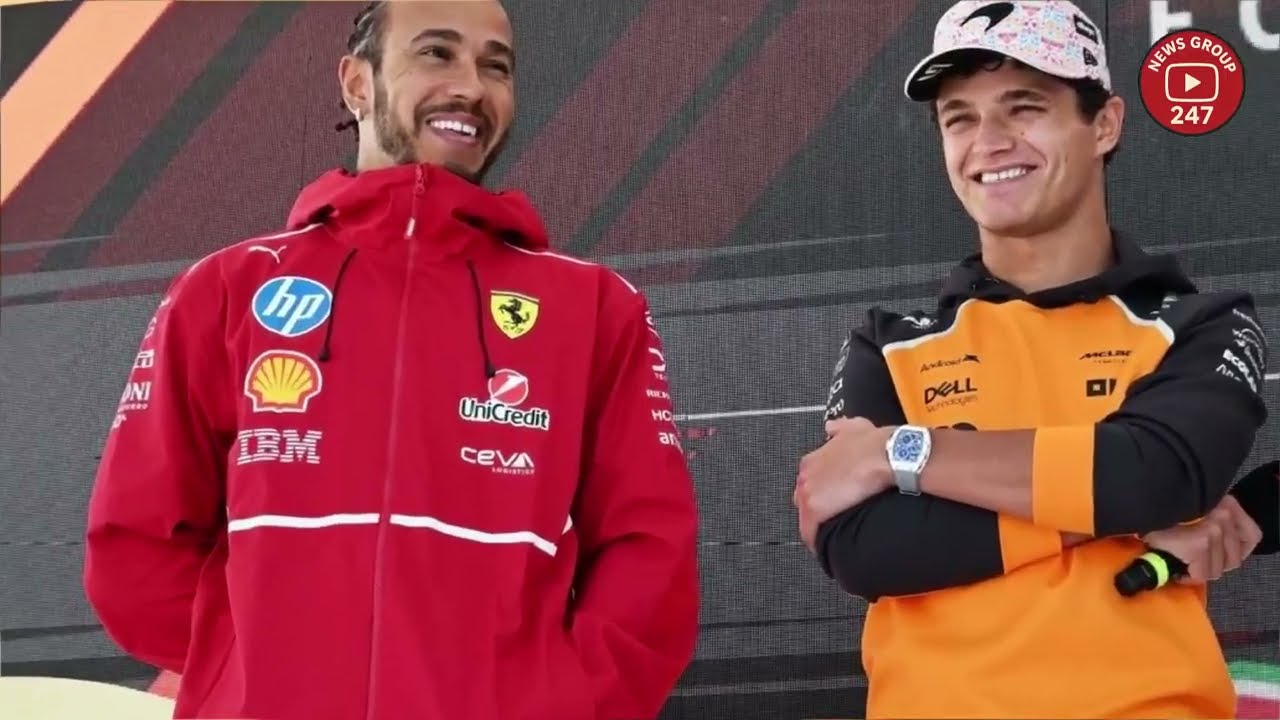
The symbolism of the moment is staggering. The last time McLaren lifted the Drivers’ Championship trophy was in 2008, in Brazil, when a young Lewis Hamilton snatched victory from the jaws of defeat in the final corner. That win defined a generation. Now, seventeen years later, it is Hamilton watching another British talent achieve the same feat in the same papaya colors.
Hamilton acknowledged this symmetry with a touch of nostalgia. “It’s great to see McLaren back up there,” he said, a sentence that carried the weight of closure. For years, Hamilton was the anomaly—the last champion of a fallen giant. Now, the burden is shared. The exile is over.
The Unique Terror of the “First Time”
Speaking to the press after the race, Hamilton opened up about the “unique terror” of fighting for a first championship. It is a feeling he knows better than perhaps anyone else alive.
“Winning your first world championship is truly special,” Hamilton reflected, his eyes scanning the celebration from a distance. “I know what the feeling is when you’re coming into this race and fighting for your first championship. It’s nerve-wracking.”
He noted that the nerves were visible on Norris all weekend. The tension, the weight of expectation, the terrifying knowledge that a single mistake—a locked wheel, a slow pit stop—could erase a lifetime of sacrifice. “I feel like you got to… be not afraid of crashing,” Hamilton mused, touching on the razor-thin line between aggression and caution that a champion must walk.
Hamilton has lived that fear. He has conquered it seven times. But to see it in another, and to offer the steadying hand that guides them through it, suggests a new chapter in his own legacy. He is no longer just the hunter; he is the sage.
A Quiet Torch Passing
As the fireworks detonated over the Yas Marina skyline, painting the night in bursts of neon, Hamilton stood slightly apart from the chaos of the McLaren garage. He was smiling. There was no jealousy, no bitterness about the shifting tides of time.
“He did such a great job this season,” Hamilton said, praising Norris’s consistency and growth. “It’s great to see another Brit win a championship.”
The torch was not passed in a grand, televised ceremony. It wasn’t handed over with a handshake on the podium. It was passed in silence, in trust, in those few words spoken before the storm arrived. Formula 1 has found its new champion in Lando Norris, a worthy heir to the throne. But in the background, Lewis Hamilton remains an integral part of the story—not just as the man in the Mercedes, but as the voice that helped steady the hands on the wheel when it mattered most.
In the high-octane world of Formula 1, where friendships are often fuel for the fire, this moment of genuine mentorship stands as a testament to the character of both men. Norris listened. Hamilton shared. And together, they closed the loop on a story that began nearly two decades ago. The King is still here, but the Prince has finally claimed his crown.