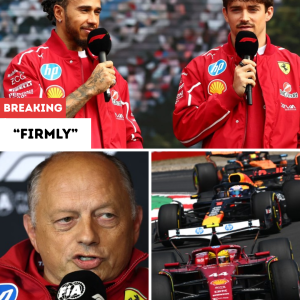
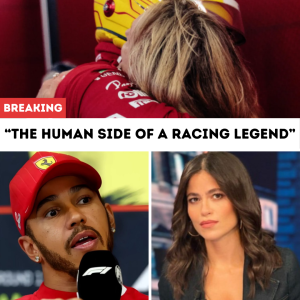
It is often said that in the high-stakes world of Formula 1, the car is king. But on December 10, 2025, amidst the heat haze of the Yas Marina Circuit, a different truth emerged from the garage of the Prancing Horse.
As the post-season tests concluded, the narrative that had plagued Lewis Hamilton throughout his debut season with Ferrari—that the car was simply too slow or the driver past his prime—was shattered. The real enemy wasn’t aerodynamic drag or tire degradation. It was a profound, systemic failure of human connection that nearly cost Hamilton his safety and his reputation.
For months, the media had speculated on the cause of the British champion’s lackluster performance in red. Was it the culture shock? The language barrier? The pressure of the Tifosi? The answer, revealed in the quiet aftermath of the Abu Dhabi test, was far more unsettling.
The 2025 season had been sabotaged from the inside, not by malice, but by a catastrophic breakdown in communication between the driver and the one man he relies on most: his race engineer, Ricardo Adami.
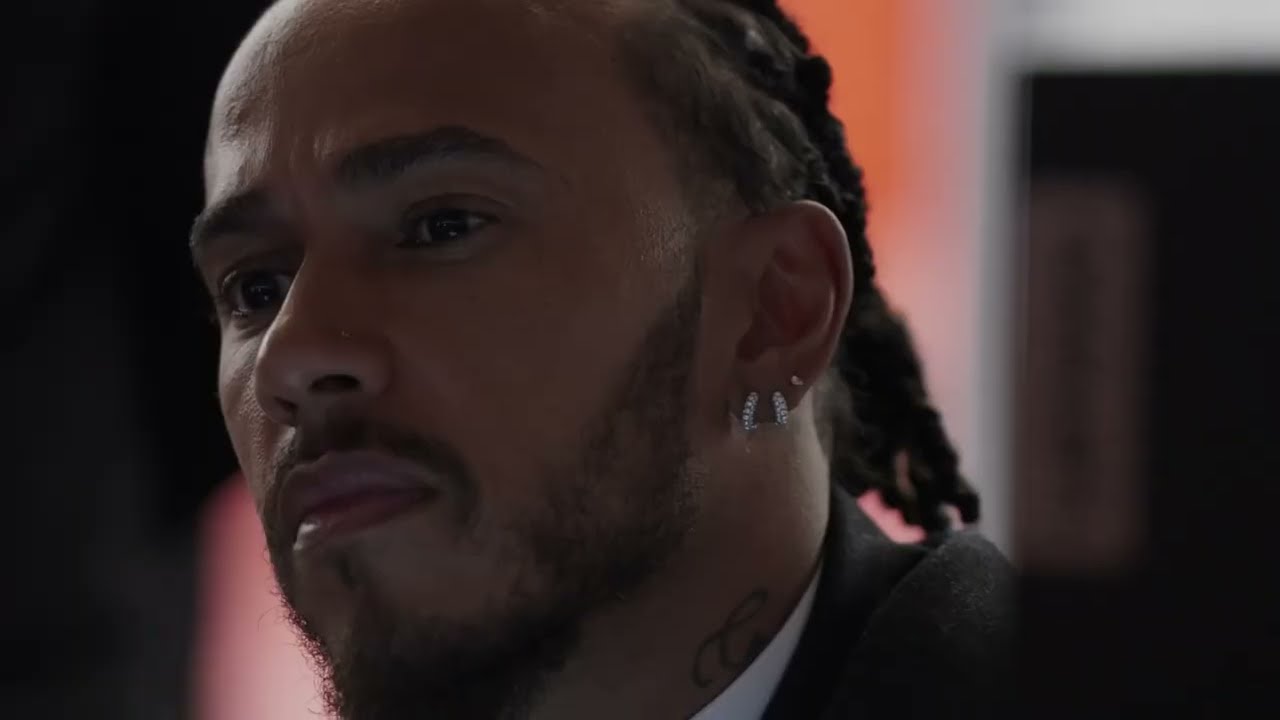
The Invisible Wall on the Radio
In Formula 1, the relationship between a driver and their engineer is often described as a marriage. It requires intuition, trust, and a shorthand language that transcends mere data. For years, Hamilton had this with Peter “Bono” Bonnington at Mercedes. At Ferrari, however, that synergy was replaced by a sterile, disjointed friction.
The signs were there, buried in the radio chatter that broadcasters often overlooked. Phrases like “You don’t need to confirm everything I say” or the chilling “Did you get the message? The only time you don’t respond,” were not merely the ventings of a frustrated athlete. They were the desperate signals of a pilot operating in a vacuum. During the Abu Dhabi tests, free from the frenzy of a race weekend, this disconnect became undeniable. Hamilton wasn’t just fighting the track; he was fighting to be understood by his own wall.
Martin Brundle, the veteran voice of F1, did not mince words when analyzing the data. “Hamilton deeply misses Bono,” Brundle noted, highlighting that the issue wasn’t a clash of personalities but a failure of operation. Every misinterpreted message regarding tire temps or gap management was a fraction of a second lost, bleeding time that no amount of driving talent could staunch. The “silence” from the pit wall was not golden; it was a lead weight around the neck of the SF25.
The Crash That Exposed the Lie
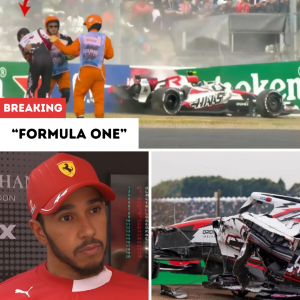
If the communication breakdown was the slow poison, the accident in Free Practice 3 was the antidote that forced the patient to vomit up the truth. At Turn 9, Hamilton’s SF25 snapped. The car went straight on, a bizarre trajectory that looked clumsy to the untrained eye. But to those watching the telemetry, it was terrifying.
Hamilton had not pushed too hard. He hadn’t missed his braking point. The car had simply failed him.
For the first third of the championship, Hamilton had reported strange vibrations and “erratic responses” from the chassis. These reports were dismissed by the team as minor setup grievances. The crash at Yas Marina changed that. It was the smoking gun. The subsequent investigation by the FIA, though resulting in no sporting penalties for the driver, issued a stark formal warning to Ferrari. The telemetry revealed what Hamilton had felt in his hands for months: the SF25 suffered from fundamental structural instability.
Ferrari had been gambling with safety to save face. They had closed development on the car, effectively ignoring their star driver’s warnings because admitting the flaw would mean admitting a wasted season. The crash was a technical judgment delivered at 200 mph. It forced Maranello to archive the data and, more importantly, to look their driver in the eye and apologize.
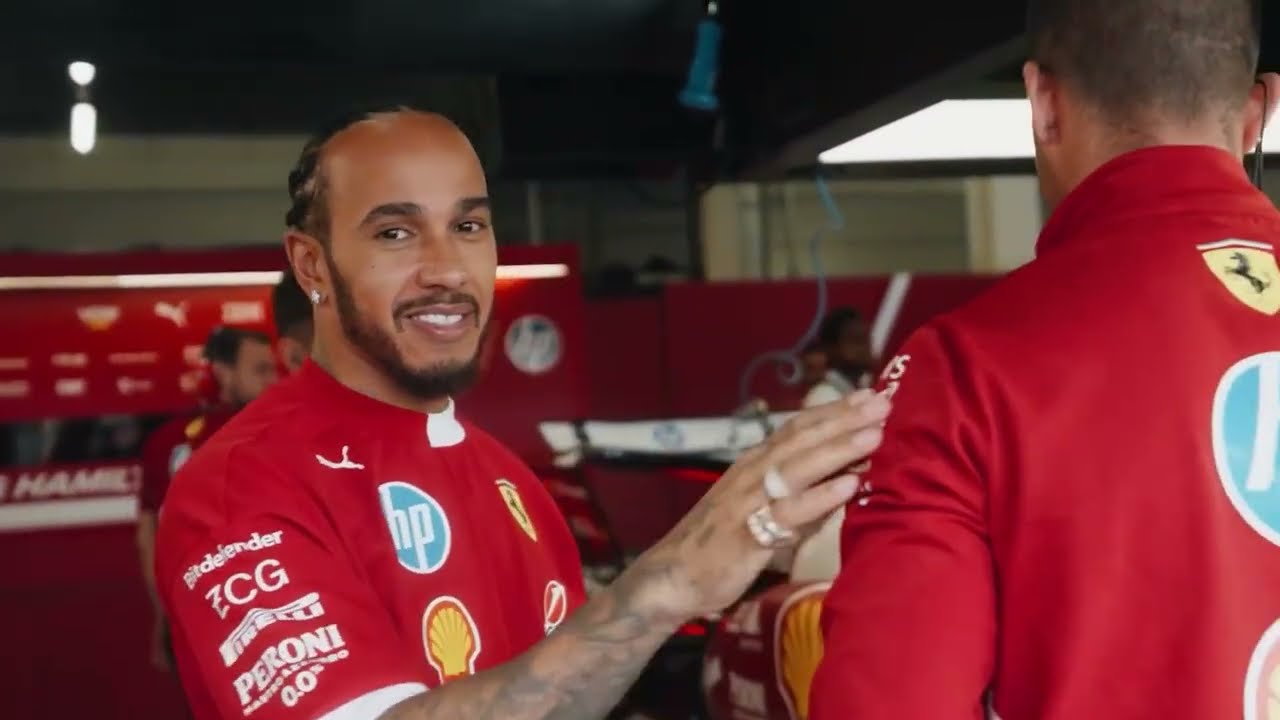
Redemption in the Suspension
The December 10th test was supposed to be a routine tire collection exercise for Pirelli. Instead, it became the first day of Lewis Hamilton’s real career at Ferrari. With the truth laid bare, the dynamic in the garage shifted seismically.
For the first time all year, the team stopped telling Hamilton how to drive the car and started building a car that Hamilton could drive. The focus of the test shifted entirely to a new technical direction for 2026—a philosophy centered on the British driver’s specific needs.
Engineers introduced prototypes for a redesigned front suspension architecture. The goal was specific and surgical: reduce the delay between the steering wheel input and the front axle’s response. This “lag” had been the silent killer of Hamilton’s confidence, robbing him of the razor-sharp front-end bite he is famous for. They tested new composite materials for greater chassis rigidity and validated concepts like a higher upper arm to stabilize the car in medium-speed corners.
The results were immediate. The “ghost” movements in the steering vanished. The braking distribution was reconfigured to match Hamilton’s aggressive entry style. It wasn’t just a tune-up; it was a submission. Ferrari finally understood that you cannot give a generic machine to a generational talent.
A New Hierarchy
Perhaps the most significant development was not mechanical, but political. Charles Leclerc, the beloved Prince of Maranello, watched these developments with a quiet acceptance. In Qatar, Leclerc had already hinted that the car had “safety problems,” a subtle nod of solidarity to his teammate. Now, seeing the team pivot to Hamilton’s philosophy, Leclerc didn’t resist. He endorsed it.
Leclerc recognized that a car built for Hamilton’s precision is a faster car, period. The “two incompatible styles” approach had failed. The team needed a single, clear direction, and after the revelations of Abu Dhabi, that direction is undeniably Lewis Hamilton.
During the post-test meetings, the atmosphere was transformed. Hamilton was no longer the “guest pilot” navigating a foreign culture. He was the axis around which the 2026 project would revolve. He quizzed engineers, demanded comparisons, and led the debriefs. The diffidence was gone.
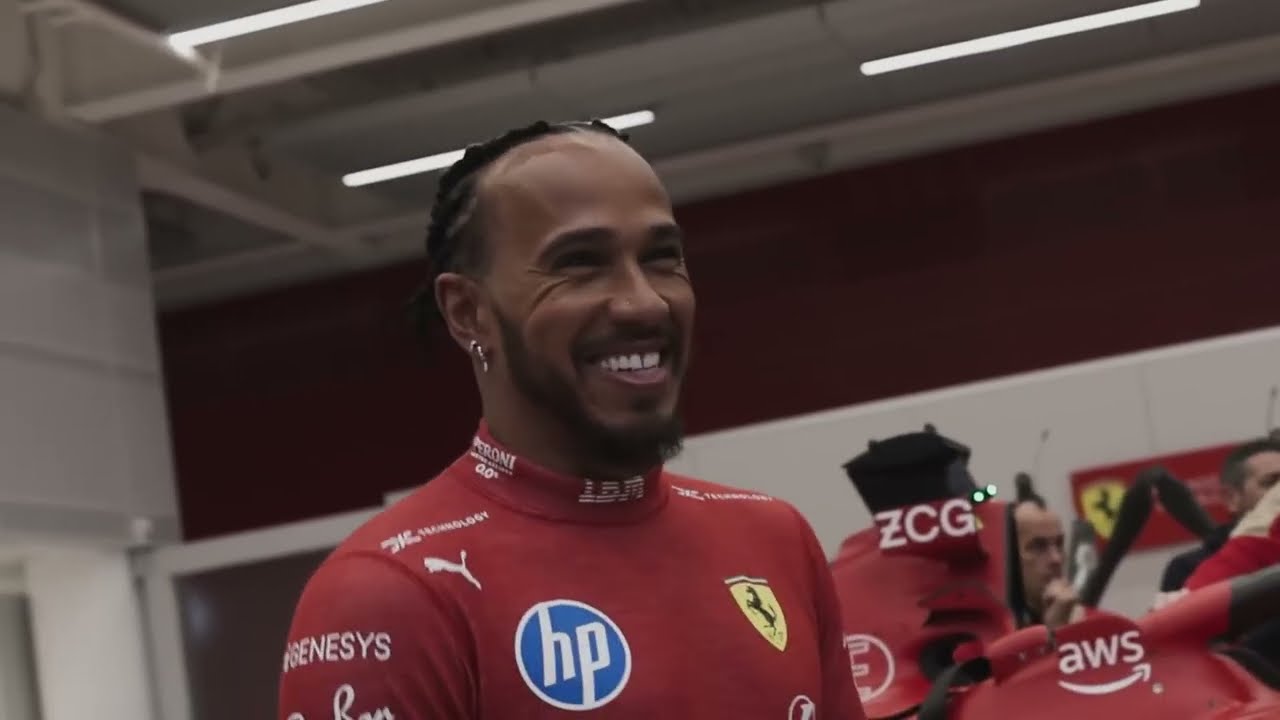
The Verdict
As the sun set over the Yas Marina circuit, the mood in the Ferrari garage was one of exhausted relief. The 2025 season will go down in history as a failure, a year lost to arrogance and deafness. But the crash, the arguments, and the eventual exposure of the truth may have saved the future.
What happened in Abu Dhabi was a symbolic rupture. It was the moment Ferrari stopped being a team that hired Lewis Hamilton and started being a team led by Lewis Hamilton. The disconnect with Ricardo Adami remains a scar that needs healing—or perhaps replacing—but the technical arrogance that blinded the team has been broken.
Championships are not won on Sunday afternoons; they are won in the uncomfortable meetings on a Tuesday, in the trust between a voice on the radio and a pair of hands on the wheel. Ferrari learned this the hard way. They nearly broke their driver to protect their ego. But in the wreckage of the SF25, they found the blueprint for 2026. The silence is over. Now, finally, they are listening.