In the high-octane world of Formula 1, drivers are often viewed as gladiators of the asphalt—masked figures encased in fireproof suits and carbon fiber, visible only as helmets blurring past at 200 miles per hour. We know them for their ruthlessness on the track, their split-second decision-making, and their unyielding desire to win. However, a different side of these racing icons emerges when the engines are cut and the visors come up. It is a side characterized by humor, immense generosity, and a surprising knack for theatrics.
Across the globe, from the sun-drenched streets of Monaco to bustling schoolyards in Texas, F1 drivers like Lewis Hamilton, Max Verstappen, Daniel Ricciardo, and Lando Norris have been stepping out of their cockpits to deliver shocks of a lifetime to their unsuspecting supporters. These interactions, ranging from elaborate undercover pranks to deeply emotional meetings with children facing life-threatening illnesses, reveal the beating human heart beneath the machine. They remind us that while these athletes may be gods on the grid, they are also people who understand the profound impact they have on the lives of others.
The Masters of Disguise: When Heroes Go Undercover
One of the most entertaining trends in fan interactions involves the drivers shedding their celebrity skins—sometimes literally—to walk among us unnoticed. The sheer absurdity of a world-famous athlete serving you coffee or selling you a phone without you realizing it creates a comedic tension that is delightful to watch.
Take Daniel Ricciardo, the Australian driver known for his infectious grin and “Honey Badger” persona. In a stroke of comedic genius, Ricciardo donned the uniform of a phone store clerk, complete with a name tag reading “Zach.” For hours, he engaged with customers, offering bizarre advice—like suggesting a customer put their phone in rice immediately—and fumbling through transactions with the awkward charm of a new hire. The brilliance of the prank lay in his ability to act like it was “business as usual.” Customers came and went, oblivious to the fact that they were being served by an F1 race winner. When the realization finally hit—often sparked by his distinct accent or that unmistakable smile—the reactions were chaotic. “No way! Yes! Yes!” one woman screamed, her confusion melting into pure ecstasy. It wasn’t just a meeting; it was a shared moment of laughter that dismantled the pedestal usually separating the star from the fan.
Even more elaborate was the stunt pulled by seven-time World Champion Lewis Hamilton. Partnering with Mercedes, Hamilton underwent a full prosthetic transformation to become an elderly engineer. With wrinkled skin, grey hair, and a convincing old-man shuffle, he guided a group of young fans on a tour of the Mercedes facility. The children, wide-eyed and reverent, listened as this “old man” talked about the W12 car with surprising authority. “This is Lewis’s car, nobody touches this car,” he scolded playfully.
The reveal was a masterclass in timing. As he peeled off the mask, the children’s jaws hit the floor. “I’m dreaming, I’m literally dreaming!” one fan exclaimed, looking as if he might faint. Another simply covered her mouth, eyes filling with tears. It was a testament to Hamilton’s playfulness, proving that despite the immense pressure of his career, he retains a childlike joy in surprising those who look up to him.
Dreams on Wheels: The Ultimate School Run
For a young F1 fan, the morning commute to school is usually a mundane affair involving a bus or a parent’s sedan. But for one lucky student, Lando Norris decided to rewrite the script. The McLaren driver, known for his youthful energy and massive online following, showed up at a fan’s house not just to say hello, but to act as a personal chauffeur.
“Your chauffeur is here,” Norris announced casually, standing in the doorway. The shock on the boy’s face was palpable. Instead of the school bus, a supercar awaited him in the driveway. Norris didn’t just drive; he engaged, asking about school, handing out gifts to the boy and his sister, and treating them like peers rather than just fans. As they pulled up to the school, the scene was electric. Friends and classmates gawked as the F1 star rolled up “in style,” turning a regular Tuesday into a core memory that the student will likely recount for decades.
This theme of “surprise transport” is a favorite among drivers. Sebastian Vettel, a four-time world champion, once surprised a journalist by taking the wheel for a few laps. The reporter, expecting a calm interview, was instead treated to the visceral G-force of an F1 driver pushing a car to its limits. The mixture of terror and thrill on the passenger’s face perfectly encapsulated the difference between watching the sport and feeling it. Similarly, Charles Leclerc gave a fan a ride while discussing the history of Monaco drivers, blending education with adrenaline in a way only a hometown hero could.

The Digital Bridge: Connecting Through Screens
In an era where digital presence is as important as physical presence, F1 drivers have utilized technology to breach the distance between the paddock and the living room. The transcript highlights numerous instances where video calls turned into life-altering surprises.
Imagine joining a Zoom call, expecting to talk to a producer or a friend, and suddenly seeing the face of George Russell or Lando Norris pop up on the screen. The delay in realization is often the sweetest part. “Hi Kie,” Norris says, casually interrupting a fan. The fan pauses, confused, before the reality sets in. These digital ambushes are particularly poignant because they happen in the fans’ personal spaces—their bedrooms, their living rooms—making the connection feel incredibly intimate.
One particularly touching digital moment involved a young boy showing off his racing simulator setup. “Little McLaren fan, I see,” the driver noted, spotting the papaya orange colors. The interaction didn’t stop at a simple greeting; the drivers often engaged in real conversations, asking about the fans’ lives, their favorite races, and their own aspirations. For a child dreaming of a career in motorsport, hearing “I need to get you a proper F1 wheel” from a current driver is not just a gift; it is a validation of their passion.
Emotional Resilience: When Racing Means Hope
While the pranks and rides are entertaining, the most powerful segment of these surprises lies in the interactions with fans facing profound hardships. The video touches on a heart-wrenching story involving Lewis Hamilton and a young boy named Harry, who was fighting for his life.
The setup was extraordinary: a Formula 1 car parked outside the boy’s garage. But the true gift was the message from Hamilton himself. “I’m very proud of you,” Hamilton told the boy. For a child in the midst of a terrifying health battle, these words serve as a lifeline. They provide a distraction, yes, but also a source of strength. The transcript notes that this moment would “stay in the hearts of the boy’s parents forever.” It is a somber reminder that for many, these drivers are more than athletes; they are symbols of resilience and fighting spirit.
Similarly, we see the softer side of the grid when drivers visit hospitals. Chloe Chambers and others visiting children’s wards bring a brightness to sterile environments. The drivers drop the competitive facade entirely, becoming gentle, attentive listeners. Whether it is signing a cast, holding a hand, or simply sitting by a bedside, these quiet moments of empathy often go unnoticed by the cameras but leave the deepest marks.
Small Gestures, Massive Impact
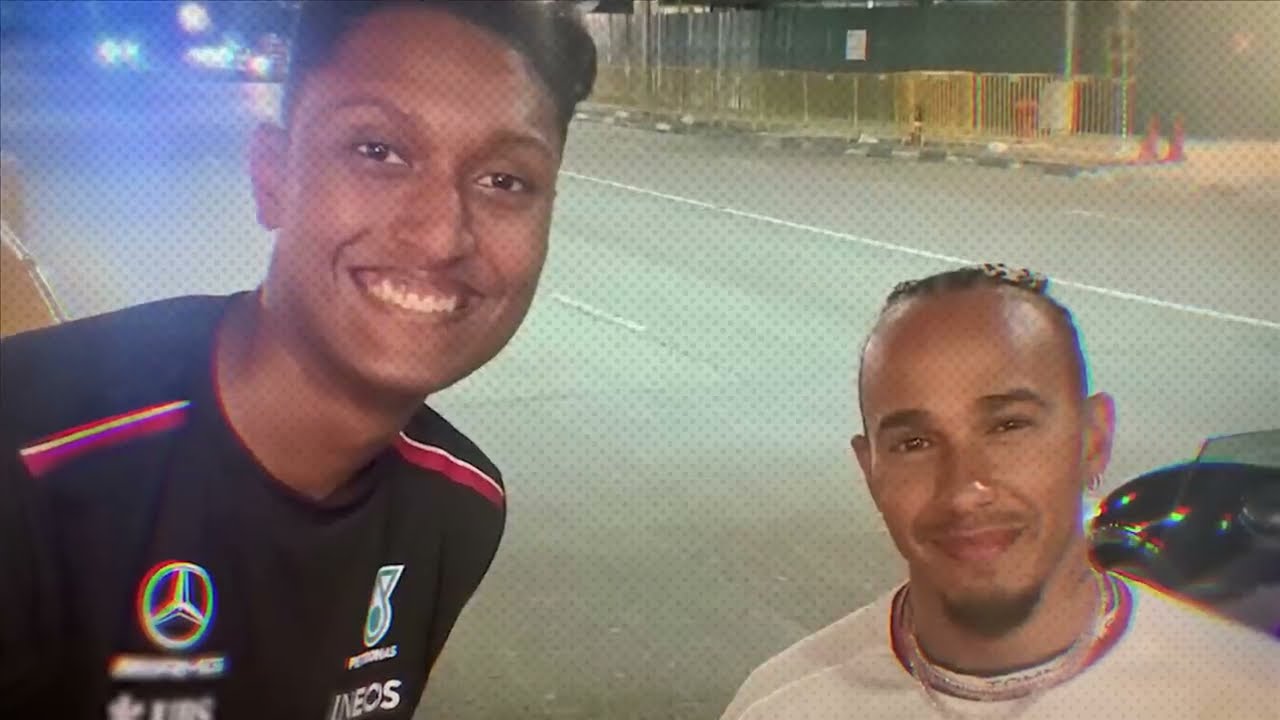
Not every surprise requires a prosthetic mask or a supercar. Sometimes, it is the smallest gestures that resonate the loudest. The video captures a beautiful candid moment where Lewis Hamilton stops to give coffee and chocolate to a woman working at the track. “I always see you smiling,” he tells her. “You always bring such light to everyone.”
This interaction is profound in its simplicity. It wasn’t a PR stunt for a contest winner; it was an act of noticing someone who is usually in the background. The woman’s reaction—pure, unadulterated gratitude—showed how much it means to be seen by someone you admire.
Max Verstappen, often characterized by his steely focus, showed a similar warmth when he visited a campsite at the Belgian Grand Prix. Walking among the tents and the mud, he didn’t act like a superstar; he acted like a guest, shaking hands and acknowledging the dedication of fans who brave the elements to watch him race. In Texas, he and Ricciardo joined a school football team, throwing passes and laughing at their own lack of American football skills. These moments strip away the “superhuman” aura and show the drivers as guys just looking to have a bit of fun.
The Unbreakable Bond
What makes these surprises so compelling is the genuine joy visible on the faces of the drivers. They aren’t just going through the motions. When Lando Norris sees a fan freak out, he laughs with them. When Lewis Hamilton sees the shock on the kids’ faces after removing his disguise, he beams with delight.
F1 is a sport of numbers—lap times, tire compounds, championship points. But the true value of the sport is found in the community it builds. These surprises are the glue that binds the high-tech world of the paddock to the passionate world of the grandstands. They turn distant idols into tangible heroes.
From the little boy crying in the stands who gets to meet Kimi Räikkönen, to the woman hyperventilating in a phone store because “Zach” is actually Daniel Ricciardo, these stories weave a rich tapestry of human connection. They teach us that kindness costs nothing but is worth everything. They remind us that no matter how fast you go, you should always slow down enough to make someone’s day.
In the end, the trophies gather dust and the records are eventually broken. But the memory of a favorite driver taking the time to say “hello,” to drive you to school, or to tell you to keep fighting? That lasts forever.