The air inside the Gestione Sportiva is different this winter. It is not the fresh, hopeful breeze of a new beginning, but the heavy, electric static of a storm about to break. After the catastrophe of the 2025 season—a year that saw Lewis Hamilton, the seven-time world champion, finish without a single podium for the first time in his illustrious career—Ferrari has stopped looking for silver linings. They are no longer interested in “improvements” or “evolution.”
Instead, under the code name Project 678, they have built a monster.
The Ferrari SF26 is not just a new car; it is a desperate, violent shove against the limits of Formula 1 regulations. It is a machine born from a “cold, laboratory-like” philosophy that has stripped away the romance of Italian racing to reveal something far more terrifying: a car designed not to be driven, but to dominate. For Hamilton, now a wounded warrior facing the twilight of his career, this car represents the ultimate ultimatum. It is his sword, his shield, and quite possibly, the most dangerous challenge he has ever faced.
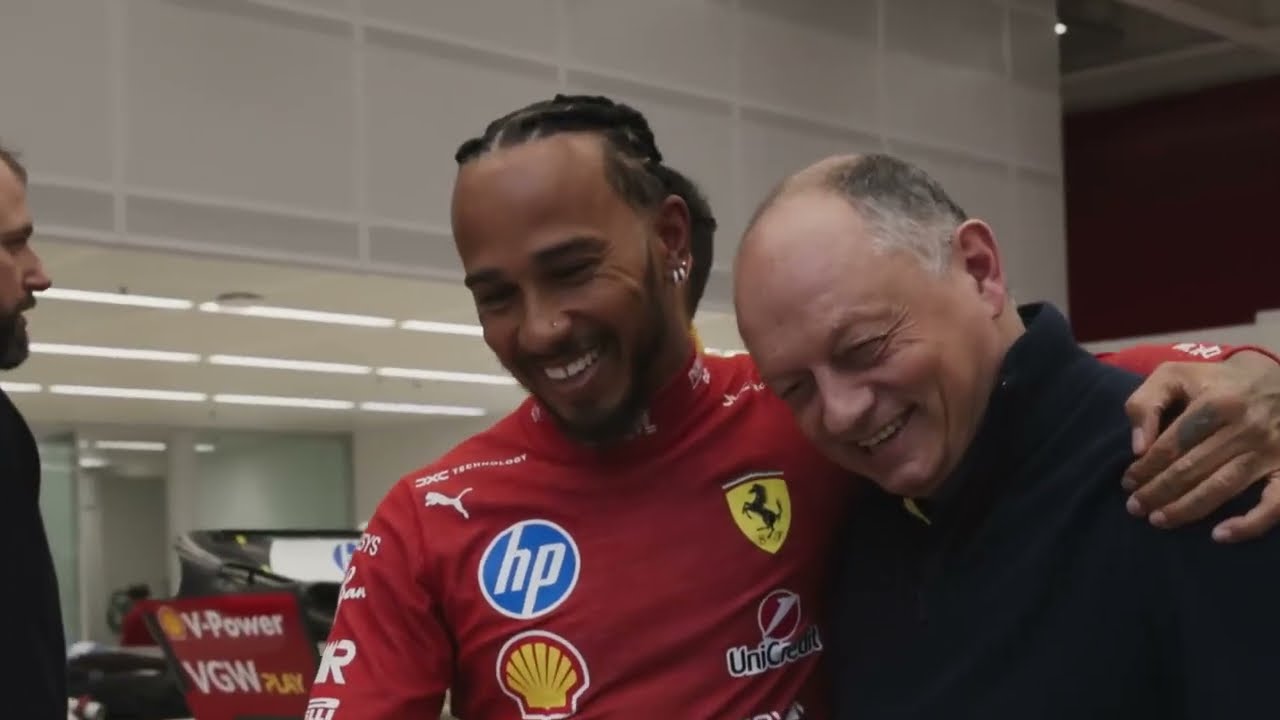
The “Legal Trick” That Has Rivals Panicking
If there is a single component that defines the radical nature of the SF26, it is the suspension. For over 15 years, Ferrari has adhered to tradition, but the SF26 shatters it with a dual push-rod configuration front and rear. Yet, the geometry is merely the cover story. The real revolution lies in the material itself.
In a move that has already whispered of controversy down the pit lane, Ferrari has utilized a specific type of carbon fiber with anisotropic properties. In lay terms, this means the material behaves differently depending on the direction of the force applied to it. It can be rigid as stone in one axis to pass the FIA’s static load tests, yet flexible and organic in another when subjected to the immense g-forces of a corner.
This is not just engineering; it is a “legal trick” that borders on alchemy. This material property allows the SF26 to passively modify the camber angle of its wheels mid-corner, dynamically optimizing the tire’s contact patch with the asphalt. It creates a “Holy Grail” of mechanical grip—maximizing traction without shredding the tires, a problem that has plagued the Scuderia for a decade.
There are no sensors. No hydraulic actuators. No electronic brains. The car’s suspension relies purely on the internal geometry of its fibers and the laws of physics. It is an innovation so bold and so precarious that it has rivals looking at the rulebook with trembling hands.
A Machine That Breathes
Under the skin, the SF26 is even more alien. The new hybrid power unit has been shrunk, not just to save weight, but to facilitate a completely new aerodynamic philosophy. The car has no superfluous wings, no messy appendages. Instead, the SF26 is described as a “living surface.”
Thanks to the ultra-tight packaging of the engine, the aerodynamicists have sculpted the bodywork to create efficient low-pressure zones that generate downforce without the drag penalties of large wings. The air intakes are sculpted to accelerate flow; the halo has been profiled to act as a vortex generator.
The result is a car that “breathes.” It doesn’t just cut through the air; it manipulates it. Its behavior changes depending on the load, the speed, and the state of the electric motor. It is an organic, integrated system where the exhaust seals the diffuser and brake temperatures manage the rear wing’s performance. It is a masterpiece of integration, reminiscent of the “living” nature of a biological organism rather than a modular machine.
Cold, Clinical, and Unforgiving
However, this brilliance comes with a jagged edge. The mastermind behind this philosophy is Loic Serra (referred to internally as the “technician with no sentiment”), whose approach is clinical and absolute. For Serra, the driver’s comfort is irrelevant. The priority is the air.
The SF26 is not an adaptable car. It does not care about a driver’s preferences or “feel.” It is designed to operate within a millimeter-perfect aerodynamic window. If the car is in that window, it is unbeatable. If it leaves that window, performance falls off a cliff.
This has profound implications for Lewis Hamilton. The Briton has built his legend on his ability to feel the car, to dance with it, to adapt to its needs. But the SF26 does not want a dance partner; it wants a programmer. It demands to be driven in a specific, counter-intuitive way to maintain that aerodynamic platform. It is a car that says: “Do it my way, or do not do it at all.”
“Either you dominate it, or it dominates you,” is the whisper from the simulator rooms. There is no room for tuning errors or personal driving styles. It is a surgical tool, and in the hands of the clumsy, it will cut the user.
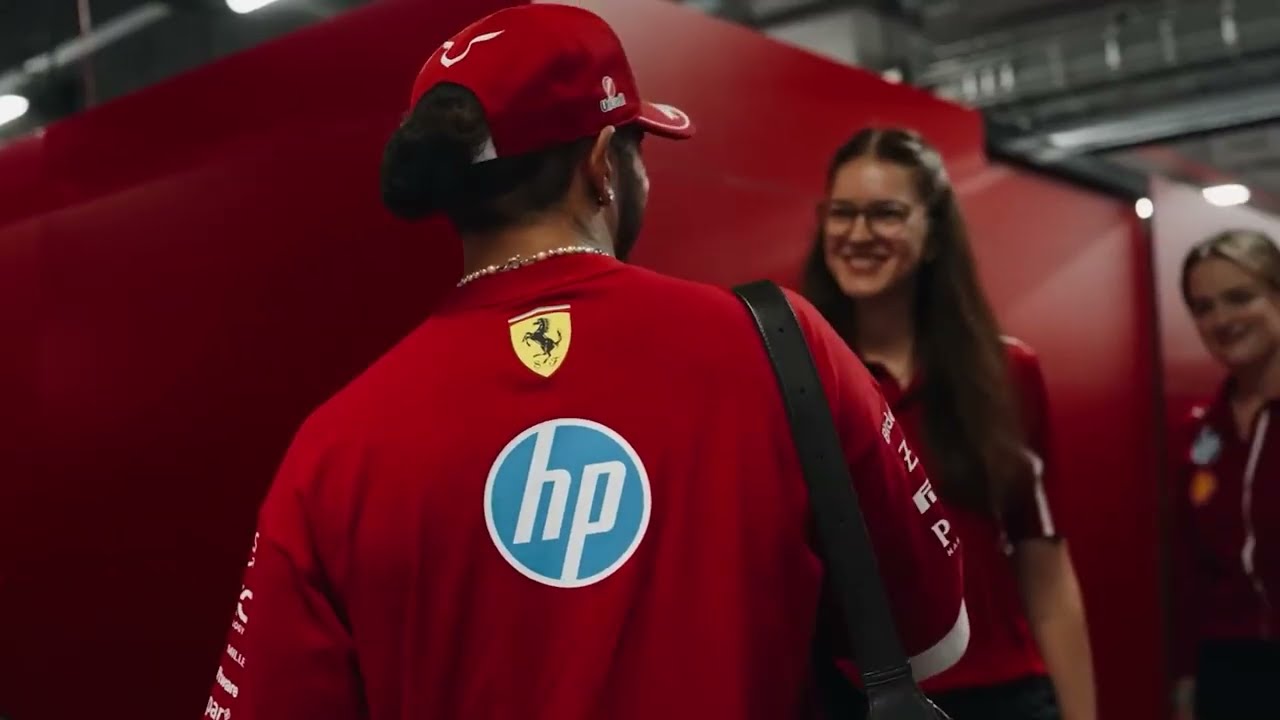
Hamilton’s Last Stand
For Lewis Hamilton, the stakes could not be higher. His arrival at Maranello was supposed to be a fairytale—the return of glory to the Prancing Horse. Instead, 2025 was a nightmare of irrelevance, chaos disguised as hope. He finished the season frustrated, disconnected, and sounding more like a man searching for an exit than a title contender.
But he didn’t run. He didn’t retire. He stayed.
The SF26 is his response to the critics who say his time has passed. It is his answer to Max Verstappen, Lando Norris, and Oscar Piastri—the new generation that believes they have already inherited the throne. But to wield this weapon, Hamilton must change. He cannot rely on the muscle memory of the last 18 seasons. He must become a student again. He must break his own instincts to suit the machine.
If he can connect with the SF26—if he can find the rhythm of this “breathing” monster—we may witness the greatest version of Lewis Hamilton yet: a driver with the experience of a veteran, the hunger of a rookie, and the deadliest car on the grid. He is not just looking for a win; he is looking for the win. The eighth crown. The definitive closure to the greatest story in motorsport history.
But if the SF26 rejects him? If the car demands more than he can give? The story will not end in glory, but in a slow, painful fade to black.
The winter silence in Maranello is deceptive. Inside the garage, the beast is waking up. The SF26 is ready. The question is: is Lewis Hamilton?