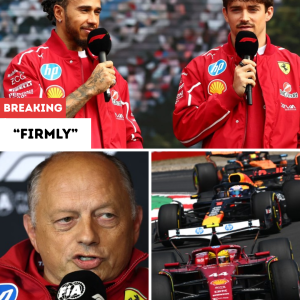
This is not merely a personnel change; it is a seismic cultural shift within the Scuderia. It is a public admission that the “Dream Team” of 2025 was, in operational terms, a tactical mismatch.
For a driver who spent over a decade synced to the singular frequency of Peter “Bono” Bonington, the transition to Adami’s traditional Italian working style proved not just difficult, but detrimental.
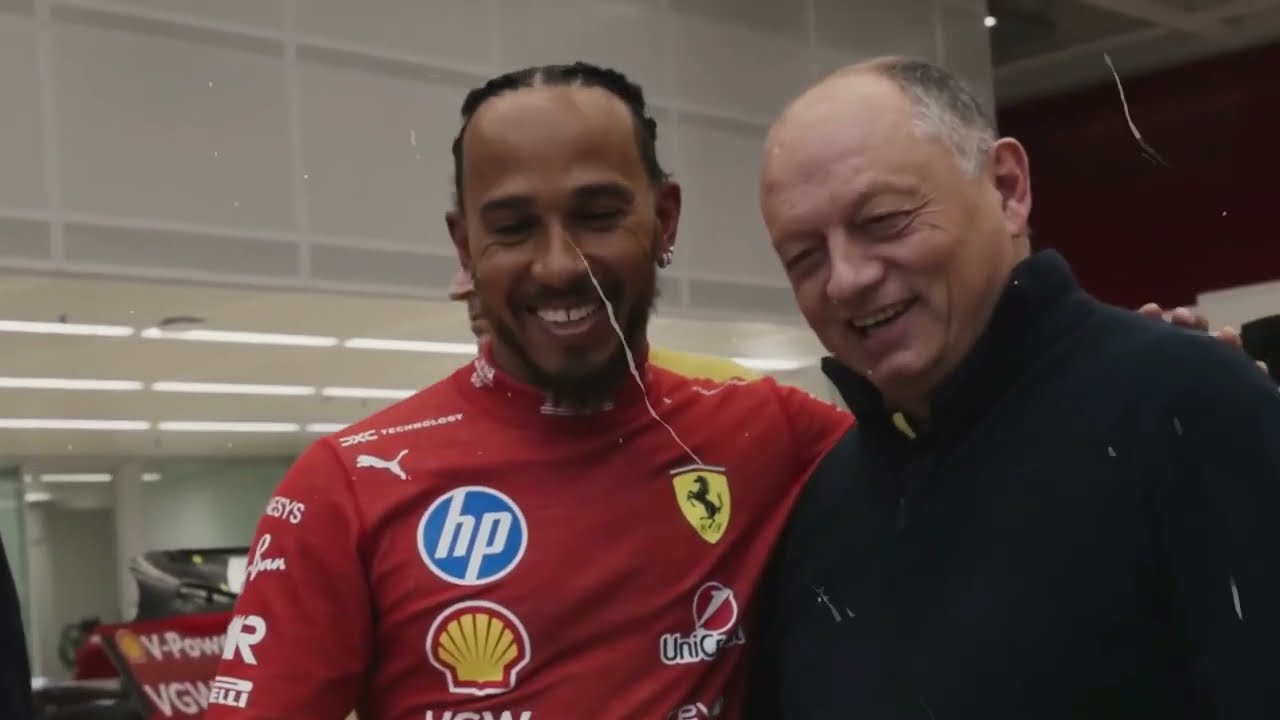
The Anatomy of a Breakdown
To understand why this decision was inevitable, one only needs to rewind the tape on the 2025 season. It was a year defined not by podiums, but by awkward silences, missed cues, and palpable friction over the team radio. The cracks were visible early and widened with every Grand Prix.
The nadir arguably came at the Miami Grand Prix, a moment that is now etched in F1 folklore. Trapped in a strategic limbo and watching rivals pull away, a frustrated Hamilton sarcastically suggested Adami take a “tea break” while the team dithered on a decision. It was a biting remark that laid bare the fundamental disconnect: Hamilton, an instinctive racer who thrives on rapid-fire, decisive information, was paired with a pit wall that often felt hesitant and reactive.
The friction continued in Monaco, where a lonely Hamilton, driving blind without crucial data on gaps and tire wear, heartbreakingly asked, “Are you upset with me?” The silence that greeted him wasn’t malicious, but it was symptomatic of a partnership that lacked the intuitive shorthand required at 200 mph. By the time Hamilton snapped “Just leave me to it” at the Abu Dhabi finale, effectively shutting down communication to drive alone, the writing was on the wall. You cannot win world championships when the driver isolates himself from his engineer.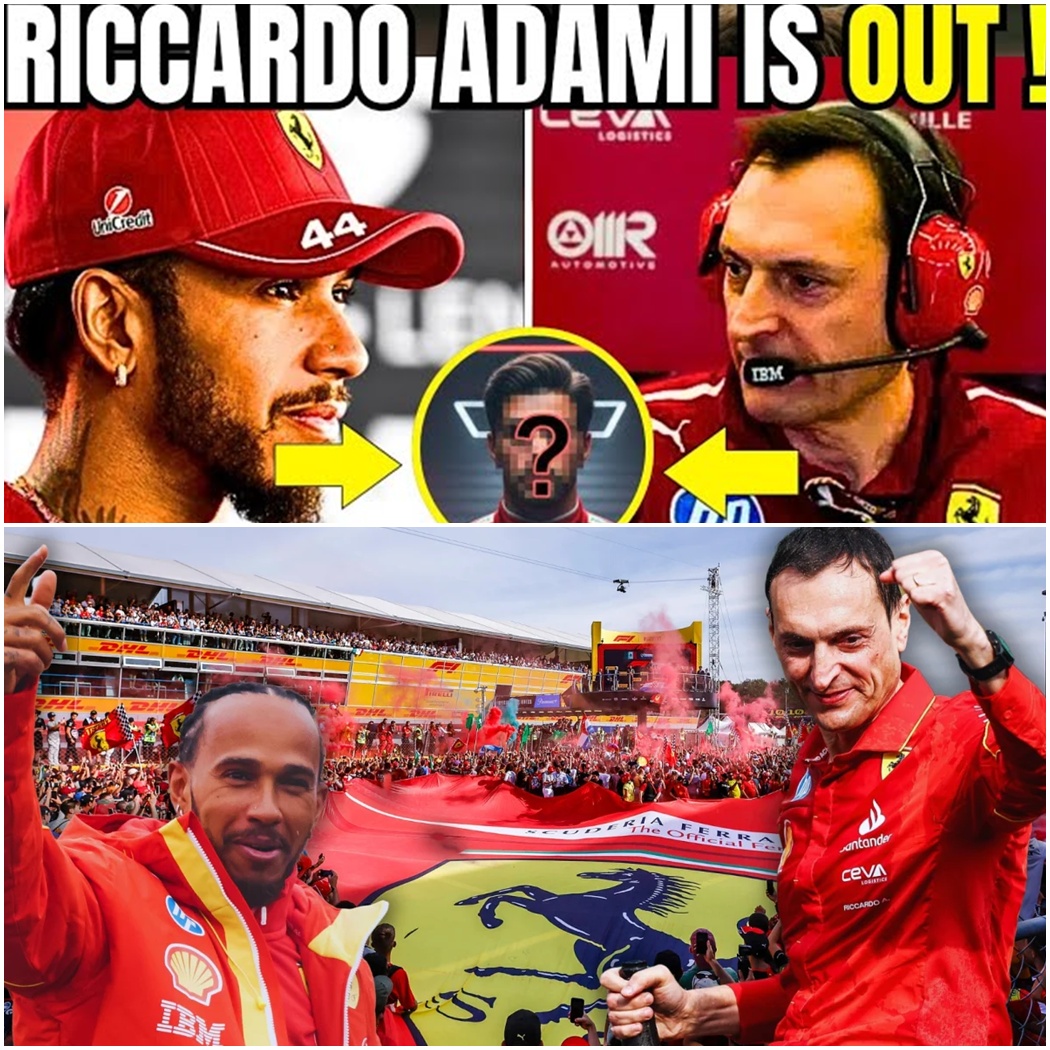
The 2026 Catalyst: Why Now?
Critics might argue that one bad season deserves a second chance, but Ferrari Team Principal Fred Vasseur knows that 2026 offers no margin for error. We are standing on the precipice of the most radical technical overhaul in modern F1 history. The 2026 regulations are not just an update; they are a redefinition of the sport.
The new cars will feature a power unit split 50/50 between the internal combustion engine and electrical power, with an MGUK three times more potent than today’s. Drivers will no longer just be pilots; they will be systems managers, manually toggling “Active Aero” modes (Z-mode for corners, X-mode for straights) and managing complex energy deployment maps while battling wheel-to-wheel.
In this high-workload environment, the link between driver and engineer transcends communication—it becomes a survival mechanism. If Hamilton has to ask for information, it’s already too late. Ferrari realized that asking a 41-year-old champion to master a complex new hybrid beast while simultaneously translating his needs to an engineer he doesn’t fully click with was a recipe for failure. The “reset” had to happen now, ensuring trust is absolute before the first shakedown in Barcelona.
The “Secret” Weapon: Enter Luca Diella
While Ferrari’s official statement notes that a replacement will be named “in due course,” the paddock knows the plan. The chessboard was set months ago. The man poised to step into the hot seat is Luca Diella, a name that might be unfamiliar to casual fans but is legendary within the Mercedes data rooms.
Diella is not a random hire. He was a key performance engineer for Hamilton during his dominant Mercedes years, a man who speaks the specific dialect of “Hamiltonian” performance. Ferrari quietly poached him in early 2025, embedding him first in the test team and then fast-tracking him to Hamilton’s garage as a performance engineer post-Spa.
Promoting Diella to the lead race engineer role is a masterstroke. He already knows exactly how Lewis prefers his brake migration to feel, how he wants the torque delivery out of slow corners, and crucially, the precise cadence of information he needs in the heat of battle. By elevating Diella, Ferrari is bypassing the “getting to know you” phase that doomed 2025. They are effectively transplanting a piece of the Mercedes “Strike Team” directly into the heart of Maranello.
Adami’s “Soft Landing” and the Future
It is important to note that Riccardo Adami has not been fired from Ferrari. A veteran of the sport since the Minardi days of 2002, his institutional knowledge is irreplaceable. In what can be described as a respectful lateral move, he will take on a strategic leadership role overseeing the Ferrari Driver Academy and the “Testing of Previous Cars” (TPC) program.
This allows Ferrari to have their cake and eat it too: they retain Adami’s immense technical wisdom to mold the next generation of talent (like Oliver Bearman and potential future stars), while simultaneously clearing the decks for Hamilton’s specific needs. It is a ruthless but necessary optimization of human resources.
The Final Roll of the Dice
Ultimately, this shake-up is Ferrari admitting that they must adapt to Lewis Hamilton, not the other way around. The “Italian Way” didn’t work for the seven-time champion, so Vasseur is building a “Hamilton First” culture.
The stakes could not be higher. The 2026 season represents almost certainly the final window for Lewis Hamilton to capture that elusive eighth world title. By severing ties with Adami and betting on a familiar face in Diella, Ferrari has removed the last excuse. The car will be new, the engine will be a monster, and the voice in his ear will finally speak his language.
For Lewis Hamilton, the silence of the 2025 off-season is over. The noise of 2026 is about to begin, and this time, he intends to be heard.