The trucks are packed, the logistics are finalized, and the gleaming machinery of Formula 1 is heading toward the Circuit de Barcelona-Catalunya. To the casual observer, the buildup to pre-season testing looks like business as usual: a period of optimism, fresh liveries, and the nervous energy that precedes a new championship campaign.
But scratch beneath the surface, and a very different picture emerges. According to emerging reports from within the paddock, the sport is facing a silent crisis—one that has nothing to do with sidepod designs or suspension geometry, and everything to do with the liquid flowing through the fuel lines.
As the sport shifts toward a mandate of 100% sustainable fuels, what was intended to be a progressive evolution has reportedly morphed into a logistical and technical nightmare.
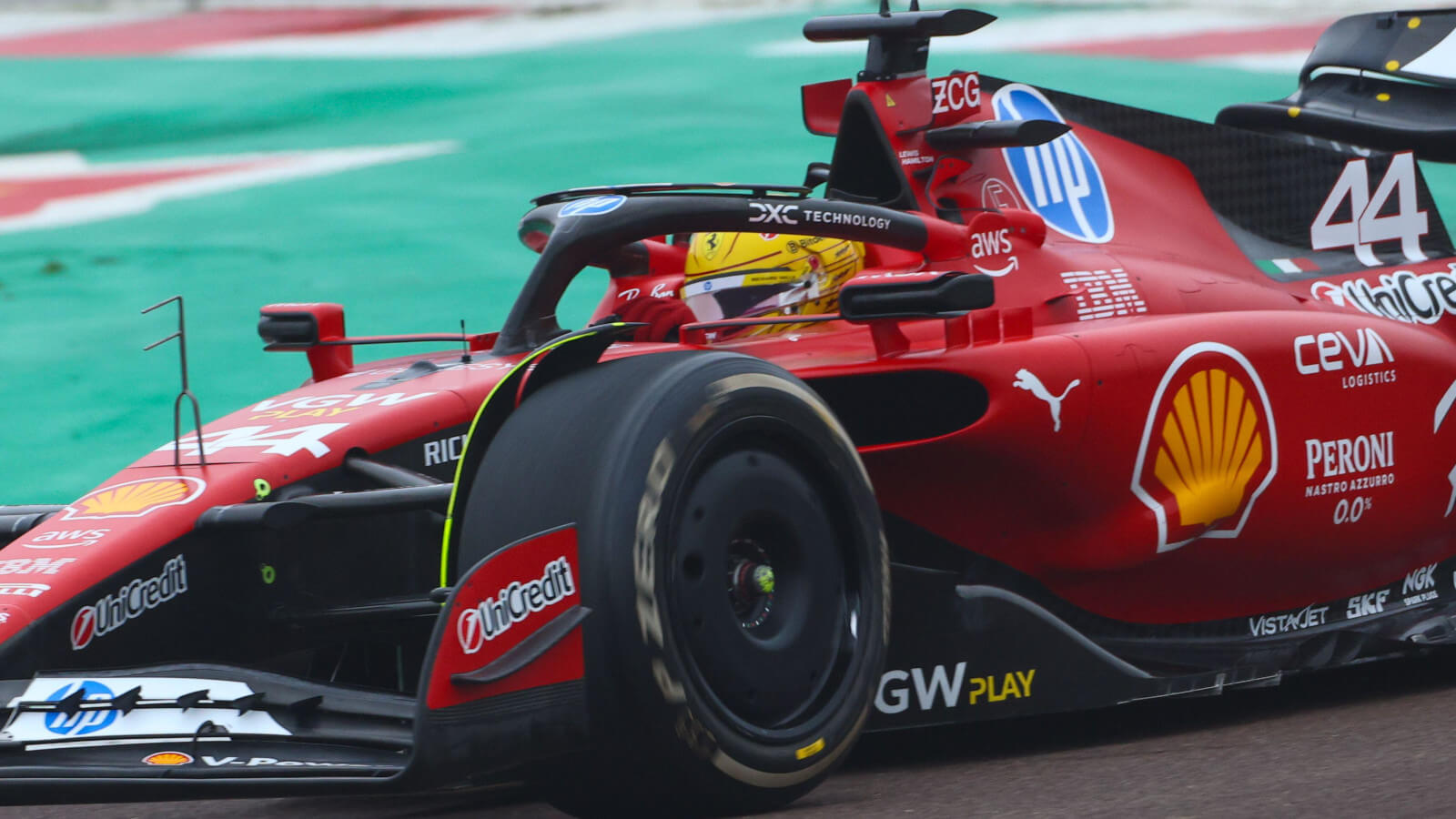
The complexity of manufacturing these advanced fuels is proving so difficult that several teams may arrive in Barcelona without the correct specification of fuel to run in their cars. This isn’t just a minor administrative hiccup; it is a fundamental problem that threatens to invalidate the critical data gathered during testing and could leave championship contenders like Ferrari vulnerable to catastrophic reliability failures.

The Fuel Paradox: Bio vs. Synthetic
At the heart of this chaos lies a divergence in philosophy that has split the grid. The new regulations require sustainable fuel, but how teams achieve that is open to interpretation. This freedom has led to a high-stakes technical war between fuel suppliers, with Ferrari and its partner Shell taking a radically different path compared to their rivals.
Ferrari has reportedly bet the house on a biofuel-based solution derived from organic waste materials. On paper, the logic is seductive. Organic feedstocks naturally contain complex hydrocarbon chains that closely mimic the behavior of traditional fossil fuels during combustion. Theoretically, this would allow Ferrari to maintain familiar engine characteristics and extract maximum performance without a total redesign of the combustion chamber. It is a strategy built on the promise of “plug-and-play” power.
However, reality has been far less kind. The inherent problem with organic waste is variability. Unlike a laboratory-controlled synthesis, organic matter changes. Reports indicate that Shell is struggling to produce fuel batches that behave identically. One batch might offer spectacular performance, while the next falls off a cliff, altering how the engine reacts to temperature, pressure, and oxidation.
For an F1 engine operating at the absolute limit of physics, this inconsistency is lethal. Ferrari’s test benches have reportedly seen engines behaving erratically solely due to fuel variations, raising alarm bells about reliability. If the fuel cannot be trusted to perform the same way twice, the engine cannot be tuned to its maximum potential.
In sharp contrast, manufacturers like Mercedes have leaned toward fully synthetic fuels. While these may initially lack the raw peak performance potential of biofuels, they offer one chaotic variable that Ferrari lacks: consistency. Synthetic fuels are built molecule by molecule in a lab. They are identical every single time. In a season looming with uncertainty, Mercedes’ choice to prioritize predictability over peak potential could be the masterstroke that defines the early championship battle.
The “Garbage Data” Trap
The implications of this fuel crisis extend far beyond the factory walls. The most alarming rumor circulating the paddock is that due to production delays, teams may be granted leeway to use fossil-based or mixed fuels during pre-season testing just to get mileage on the cars.
This scenario creates a dangerous “garbage in, garbage out” loop for engineers. The entire purpose of testing is to validate the power unit’s reliability and cooling systems under race-representative conditions. If a team calibrates their engine using a fossil-fuel blend in Barcelona, they are effectively gathering data for a phantom engine. The moment they switch to the mandated 100% sustainable fuel for the first race, the chemical environment inside the combustion chamber changes.
This switch—potentially happening just days before the season opener—could trigger a wave of reliability issues that no amount of wind tunnel time can predict. Misfires, unexpected knock, and thermal management issues could plague teams that were forced to test with the “wrong” fuel. The terrifying prospect for engineers is that they might not know their engine is fragile until they are in the middle of a Grand Prix.
Mercedes: Stumbling or Strategizing?
While Ferrari battles chemistry, Mercedes is facing its own scrutiny. The Silver Arrows are widely rumored to have developed a robust power unit, possibly utilizing a clever compression ratio manipulation to harvest energy more efficiently and deploy it longer throughout a lap. If true, this “trick” wouldn’t just add horsepower; it would fundamentally change how the car manages its race pace, allowing for more aggressive defensive and offensive driving.
However, even the German giants are not immune to the gremlins of a new era. Reports suggest that the initial fire-up of the new Mercedes unit did not go to plan, with the engine failing to start properly on the first attempt. While such teething issues are not uncommon, in the cost-cap era where dyno time is restricted, every lost hour hurts. Yet, if the rumors of their synthetic fuel consistency hold true, Mercedes may still hold the upper hand. A slightly temperamental engine running on consistent fuel is a fixable engineering problem. A perfect engine running on inconsistent fuel is a strategic dead end.
The Weight of Expectations: Audi’s Surprise
Away from the fuel wars, another battleground is emerging: weight. In modern Formula 1, weight is the silent lap-time killer. The regulations have tightened, making the minimum weight limit an incredibly difficult target to hit.
Aston Martin is reportedly one of the casualties of this struggle, with rumors placing their new challenger significantly over the weight limit. In a sport where 10kg can cost three-tenths of a second per lap, carrying “dead weight” is disastrous for tire life and acceleration, particularly in the slow-speed corners where mechanical grip is king.
Conversely, a surprising name is making waves for the right reasons: Audi. Despite being a newcomer with questions hanging over their absolute engine power, leaks suggest the German manufacturer has already hit the minimum weight threshold. This is a monumental engineering achievement for a new entrant. Even if the Audi power unit lacks the sheer grunt of a Ferrari or Mercedes, a lighter car offers benefits that horsepower cannot buy—better braking, sharper change of direction, and kinder tire degradation. If Audi has indeed built a “skinny” car, they could be the wildcard that upsets the established pecking order in the opening rounds.
A Season of Unknowns
As the Formula 1 circus descends on Spain, the narrative is no longer just about who has the fastest car, but who has the most functional one. The 2026 season is shaping up to be a war of attrition where survival is the first prerequisite for victory.
For Ferrari, the next few weeks are critical. If they cannot stabilize their fuel consistency, they risk handing the advantage to Mercedes before the lights even go out. For the rest of the grid, the challenge is to ensure that the data they gather in testing is actually real.
Fans looking for a clear favorite will be disappointed, but for those who thrive on drama, the stage is set perfectly. We are looking at a grid where the fastest engine might explode, the slowest car might be the lightest, and the championship could be decided by a fuel mixture in a laboratory. The only certainty is chaos.