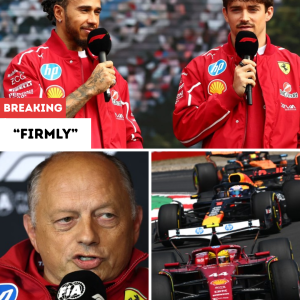
If you were anywhere near the gates of Ferrari’s legendary headquarters this week, you wouldn’t have just heard an engine; you would have heard a statement of intent. The Prancing Horse has officially fired up its 2026 power unit, sending a raw, unfiltered message to the rest of the Formula 1 grid. But while the technical world is buzzing over the harmonics of this new beast, a quieter, perhaps more decisive revolution is taking place behind the garage doors—one that involves Lewis Hamilton and a ruthless reshuffling of the deck that proves the Fred Vasseur era is truly underway.
The Sound of Survival: Why the 2026 Fire-Up Matters
Winter in Maranello is traditionally a time of silence, secrecy, and the occasional controlled leak to the press. But this week, that silence was shattered by the distinct, aggressive growl of Ferrari’s 2026 challenger. For the casual fan, it’s a cool sound clip. For the paddock, it is a terrifying signal of readiness.
The 2026 regulations represent the most significant technical overhaul in modern Formula 1 history. We aren’t talking about a simple aerodynamic tweak or a fuel-flow adjustment. This is a fundamental rethink of how a race car generates speed. The new regulations demand a power unit where the electric motor (MGU-K) delivers nearly 500 horsepower—roughly half the total output—while the internal combustion engine runs on 100% sustainable fuel.
To fire up a full system this early in the development cycle is rare. It suggests that Ferrari has moved past the dreaded “does it work?” phase and straight into performance optimization. In a sport where time is the only currency that matters, Ferrari has just bought themselves a massive head start.
The sound itself tells a story. With the removal of the MGU-H (Motor Generator Unit – Heat), the engine is no longer electronically “polished.” The result is a V6 that sounds rawer, louder, and more mechanically honest. But for the engineers, that noise is data. A clean fire-up means the harmonics are stable, the crankshaft is holding up against the insane torque of the electric motor, and the integration philosophy is sound. They haven’t just built an engine; they’ve solved the complex puzzle of making an internal combustion engine shake hands with a high-voltage electrical system without tearing itself apart.
The Human Reset: Hamilton and Adami Part Ways
While the dyno rooms were vibrating with success, the human side of the garage witnessed a surgical strike. Reports confirm that Lewis Hamilton and race engineer Riccardo Adami are officially parting ways.
Adami is an institution at Ferrari. He was the calm voice in Sebastian Vettel’s ear for years, a stabilizing force known for his methodical, driven approach. But Formula 1 is not a sport for the sentimental, and under Fred Vasseur’s leadership, it seems “good enough” is no longer acceptable.
The split wasn’t born out of a dramatic fallout or a shouting match. Instead, it appears to be a calculated decision based on compatibility. Lewis Hamilton operates on a different frequency than most drivers. He doesn’t just need data; he needs anticipation. He requires a race engineer who can translate tire feel and car balance into strategy in real-time. In 2025, observers noted that Hamilton and Adami, while respectful, were often slightly out of sync—two brilliant minds speaking different dialects of the same language.
By moving Adami to a senior role within the Ferrari Driver Academy, the team has retained his immense institutional knowledge while clearing the seat next to Hamilton. It’s a “promotion” that doubles as a strategic reset. It signals that Ferrari is finally building the team around Lewis, rather than expecting Lewis to simply fit into an existing slot.

The Era of the “Energy Strategist”
Why is this engineer change so critical right now? Because the role of the race engineer is about to change forever.
In the current era, a race engineer is part psychologist, part traffic controller, and part technician. But in 2026, they will effectively become real-time energy strategists. With 50% of the car’s power coming from the battery, the management of energy deployment will be the difference between winning and losing.
Drivers will need to know exactly when to deploy that 500-horsepower electric kick, when to harvest energy, and when to conserve. A communication delay of even one second could leave a driver derated (out of battery power) halfway down a straight, effectively a sitting duck for an overtake.
The level of trust required for this dance is non-negotiable. Hamilton needs a voice in his ear that he trusts implicitly—someone who understands his “operating system” and can make split-second decisions without hesitation. Ferrari’s decision to replace Adami now, rather than wait for the pressure of the 2026 season, shows a foresight that has been lacking in previous years.
Vasseur’s Ruthless Pragmatism
This entire sequence of events—the aggressive engine timeline, the personnel changes—bears the signature of Team Principal Fred Vasseur. Since taking the helm, Vasseur has slowly but surely dismantled the “culture of fear” and replaced it with a culture of ruthless clarity.
In the past, Ferrari might have kept a veteran engineer in place out of respect or tradition. Vasseur, however, looks at the lap times. If a relationship isn’t yielding maximum performance, it is changed. Full stop.
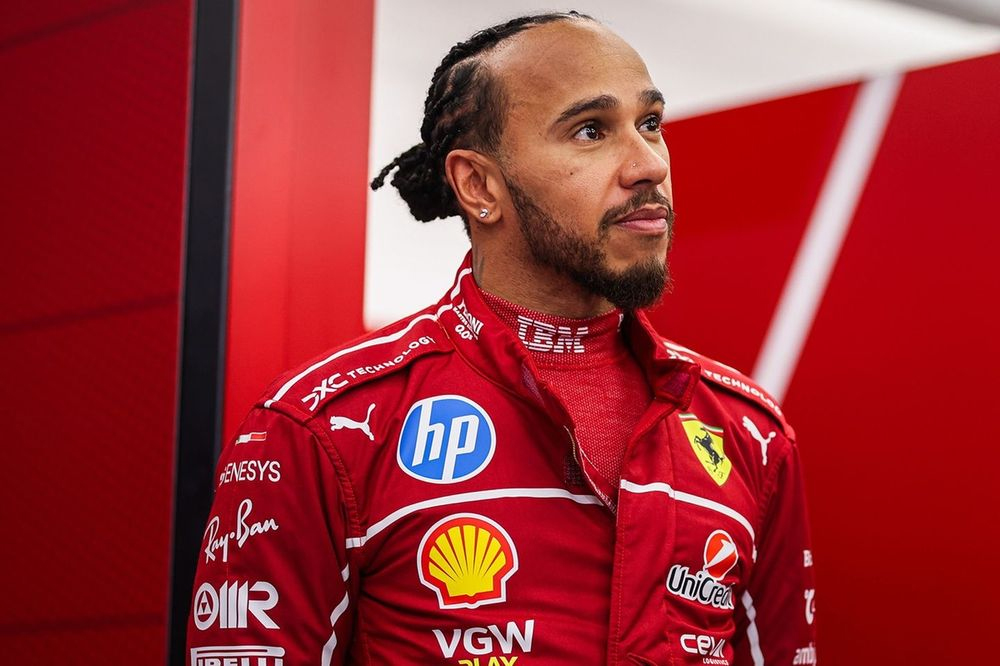
This “performance over sentiment” approach is exactly what Lewis Hamilton has been craving. His move to Ferrari was never just about wearing red; it was about finding a team willing to do whatever it takes to win. By proactively fixing a dynamic that wasn’t 100% perfect, Ferrari is proving to Hamilton that they are as hungry for that eighth title as he is.

The 2026 Gamble: Engineering a Miracle
When you zoom out, the engine fire-up and the engineer swap are not separate stories. They are two sides of the same coin. Ferrari is attempting to align its hardware and its “software” (the people) perfectly for the start of the new regulation cycle.
The 2026 project is being treated as a blank slate. The car is designed around low drag and aggressive energy deployment. The team structure is being streamlined for faster decision-making. The “legacy” ways of doing things are being challenged.
For fans, the question remains: Can they pull it off? Early success on the dyno is promising, but it doesn’t guarantee a championship. Mercedes and Red Bull are undoubtedly working just as hard in their own factories. However, Ferrari’s willingness to disrupt its own stability in search of higher performance is a terrifyingly positive sign.
The roar from Maranello this week was more than just combustion. It was the sound of a giant waking up—electric-focused, unsentimental, and done with waiting. Ferrari isn’t hoping for a miracle in 2026; for the first time in a long time, they look like they are actively engineering one.
Lewis Hamilton knows his window is closing. But with a beast of an engine behind him and a fresh voice in his ear, he might just have found the weapon he needs to kick the door wide open one last time.