The deep, haunting silence that has lingered over Maranello since 2007 was shattered last Friday. It wasn’t just the sound of an engine firing up on the Fiorano asphalt; it was the roar of a declaration. When the Ferrari SF-26 rolled out of the garage, it didn’t just signal the start of a new season—it signaled the end of an era of compromise.
For nearly two decades, the Tifosi have waited. They have watched seasons start with hope and end in heartbreak. But as the engines cool and the data uploads from the first shakedown, the mood in Italy is different this time. It’s electric. The SF-26 isn’t a tweak. It isn’t a polish of last year’s mistakes. It is a 99% overhaul, a radical reinvention designed with a singular, obsessive purpose: to bring the World Championship back to Maranello.
With the 2026 regulations introducing shorter, narrower, and lighter cars, Ferrari saw more than just a rule change—they saw a blank sheet of paper. And on that paper, they have drawn a machine that experts are already calling a “championship contender.”
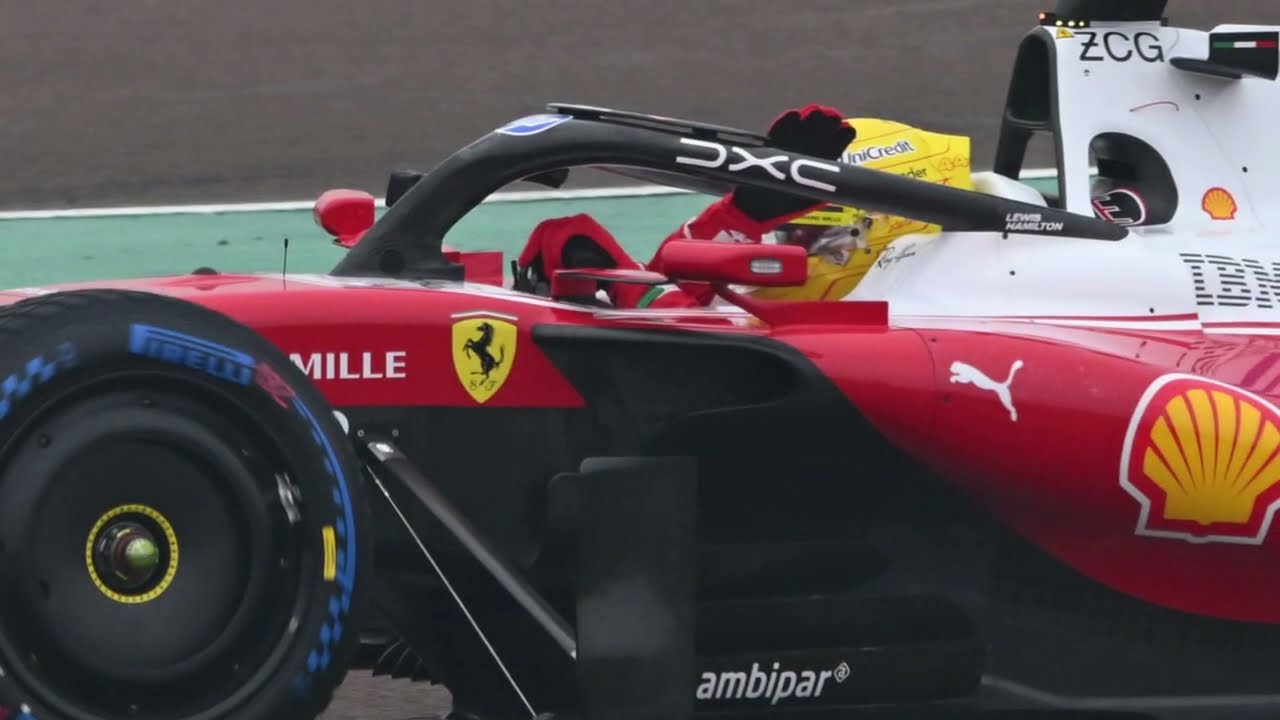
The “Zero-Compromise” Philosophy: Engineering as Art
To understand why the SF-26 is terrifying the paddock, you have to look beneath the famous red livery. In modern Formula 1, success is a game of millimeters, and Ferrari has played this hand aggressively.
The most striking feature of the new car is its “ultra-compact” engine architecture. In previous years, aerodynamicists often had to work around the bulky power unit, compromising the car’s shape to fit the engine. Not this year. For 2026, Ferrari’s engine department was given a brutal directive: make it small.
The result is a packaging miracle. The engine cover features one of the narrowest “coke bottle” structures ever seen in the paddock. This isn’t just for aesthetics. By shrinking the cooling system and packaging the engine so tightly, Ferrari has opened up vast channels of clean air to flow directly to the rear wing and diffuser. While rivals are struggling to balance cooling needs with aerodynamic drag, Ferrari has seemingly solved the puzzle. They have made the engine a “slave to aerodynamics,” prioritizing cornering speed and balance over everything else.
This compact design does double duty. It optimizes the center of gravity, a critical factor in the new, narrower 2026 chassis. It proves that Ferrari is no longer just an engine manufacturer trying to build a car; they are a cohesive design powerhouse where every department works in total unison.
The Great Suspension Gamble
If the engine packaging is a marvel, the suspension is a revolution. For years, the debate between push-rod and pull-rod suspension has dominated technical discussions. This season, Ferrari has made a definitive choice that has raised eyebrows across the pit lane.
The SF-26 has abandoned the traditional pull-rod system entirely, adopting a push-rod geometry on both the front and rear axles.
This is not a decision made lightly. It is a pure aerodynamic play. By positioning the push-rod arms higher, engineers can direct airflow from the front wing directly into the sidepod inlets and the critical underfloor Venturi ducts with surgical precision. They have even moved the front wheels forward by a few millimeters, a subtle tweak that completely optimizes how air travels over the chassis.
The goal? To push the turbulent “wake” generated by the spinning wheels away from the car’s sensitive aerodynamic zones. This decision came after thousands of hours in the wind tunnel. It suggests that Ferrari is looking for a wider operating window—a car that is easier to tune and reliable across different track surfaces, something that has plagued them in the past.
The Hamilton Factor: Braking Bad
When Lewis Hamilton announced his move to Ferrari, the world gasped. But now, we are seeing the technical impact of that transfer. One of the biggest questions was how the seven-time world champion would adapt to Ferrari’s equipment, specifically the brakes.
At Mercedes, Hamilton used Carbon Industries brakes, known for a specific feel and bite. Ferrari has been married to Brembo for 50 years. Would the British legend force a switch?
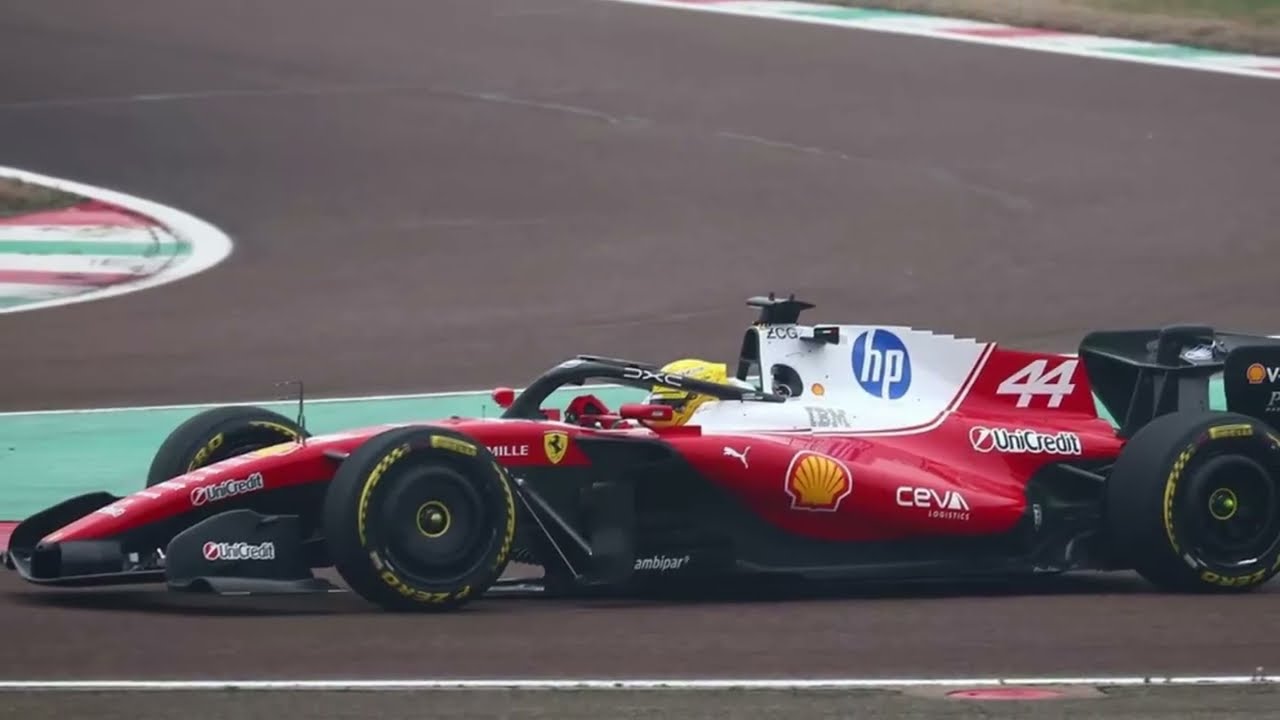
The answer is a testament to Hamilton’s adaptability and Ferrari’s commitment to him. After extensive testing and feedback, the decision was made to stay with Brembo, but with a twist. The braking system has been optimized specifically for Hamilton’s aggressive style. During the Fiorano shakedown, observers noted Hamilton stopping frequently on the start-finish straight. It wasn’t a malfunction. It was a deliberate “stop-start” test to calibrate the synchronization between the new Brembo calipers and the hybrid energy recovery system.
Every stop was data. Every launch was a lesson. Hamilton isn’t just driving the car; he is engineering it from the cockpit.
The Weight War: Ferrari’s Secret Advantage
In the new era of F1, weight is the enemy. The 2026 rules set a minimum weight limit of 768 kg. It sounds generous, but with the new hybrid systems, it is a nightmare target for engineers.
Rumors from the paddock suggest a startling reality: most teams are struggling, sitting roughly 10 kg over the limit. In a sport where 10 kg can cost three-tenths of a second per lap, that is a lifetime.
Ferrari, however, seems to have pulled a rabbit out of the hat. Reports indicate the SF-26 is hovering just a few kilograms above the minimum. This is a massive strategic advantage. While Mercedes and Red Bull may have to spend their development budget and upgrade tokens just to put their cars on a diet, Ferrari can focus purely on performance. They don’t need to make the car lighter; they just need to make it faster. This “readiness” allows them to be agile, bringing aerodynamic updates while others are still trying to shed fat.
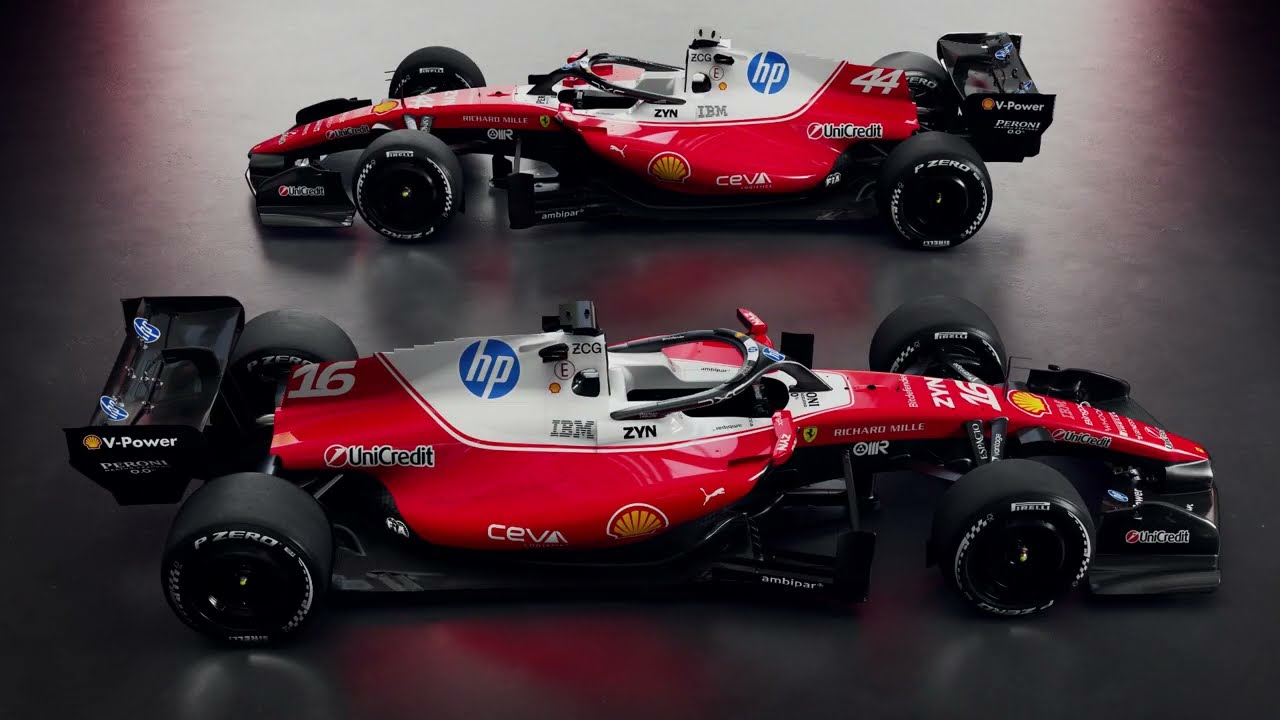
Strategic Masterclass: The Barcelona vs. Bahrain Plan
Ferrari is also playing a long game with their testing schedule. As the Barcelona tests kick off today, don’t expect to see the full potential of the SF-26 immediately.
Ferrari is deploying a rational, gradual strategy. The car in Barcelona is an “A-spec” model—simple, robust, and focused on reliability. The goal is to check the harmony between mechanical parts and validate the wind tunnel data. They want to log thousands of kilometers without a breakdown.
The real fireworks are reserved for the Bahrain tests. That is where the aggressive aero updates and full power unit optimizations will be bolted on. By the time the lights go out in Melbourne, the car will be fully evolved. This contrasts sharply with rivals who might rush a “B-spec” car to Barcelona, risking reliability nightmares. Ferrari is building a house on a rock, not on sand.
The Rivalry: Chess in the Grey Areas
Of course, the competition is not sleeping. Mercedes has unveiled the W17 with a stunning livery, but the real story is their engine. Speculation is rife that Mercedes and Red Bull Powertrains have found a loophole regarding the compression ratio rule (set at 16.1). There are whispers that they comply in static tests but boost the ratio at high track temperatures.
Ferrari and other manufacturers are unsettled, lodging complaints with the FIA. But Ferrari isn’t waiting for a ruling. Their answer to Mercedes’ potential engine power advantage is their superior efficiency. If Mercedes has the brute force, Ferrari has the slippery shape and the tire management.
Conclusion: A Golden Age Reborn?
The 2026 season won’t just be a battle of drivers; it will be a chess match of engineers. Ferrari has placed its pawns strategically. They have removed the MGU-H, boosted electrical power to 350 kW, and redesigned their software to deploy that energy with surgical precision.
As the SF-26 takes to the track in Barcelona today, January 26th, the pieces are set. The car is light. The engine is compact. The suspension is revolutionary. And in the cockpit, they have the experience of Lewis Hamilton and the speed of Charles Leclerc.
For the first time in 20 years, Ferrari isn’t just hoping for a miracle—they have engineered one. The wait for the Tifosi might finally be over. This isn’t just a launch; it’s a ticket back to the golden age.
Safe exits from the pit.