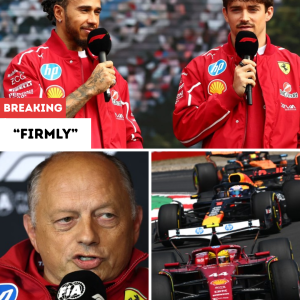
The pristine, polished world of Formula 1 is designed to keep its dirty laundry well-hidden behind the closed doors of motorhomes and the impenetrable walls of factories. Dismissals, particularly at a team as storied and image-conscious as Ferrari, are typically clinical affairs. There are polite press releases, carefully worded statements about “new challenges,” and a disciplined silence from all parties involved. But this week, that script was not just discarded; it was shredded.
Ricardo Adami, the veteran race engineer recently removed from Lewis Hamilton’s side of the garage, has reportedly refused to fade quietly into the background. Instead, what began as a standard internal restructuring ahead of the 2026 season has spiraled into one of the most volatile off-track dramas of the modern Ferrari era. It is a saga characterized by bruised egos, leaked grievances, and a public blame game that has entangled pundits, drivers, and the team’s leadership in a web of controversy.
The Engineer Strikes Back
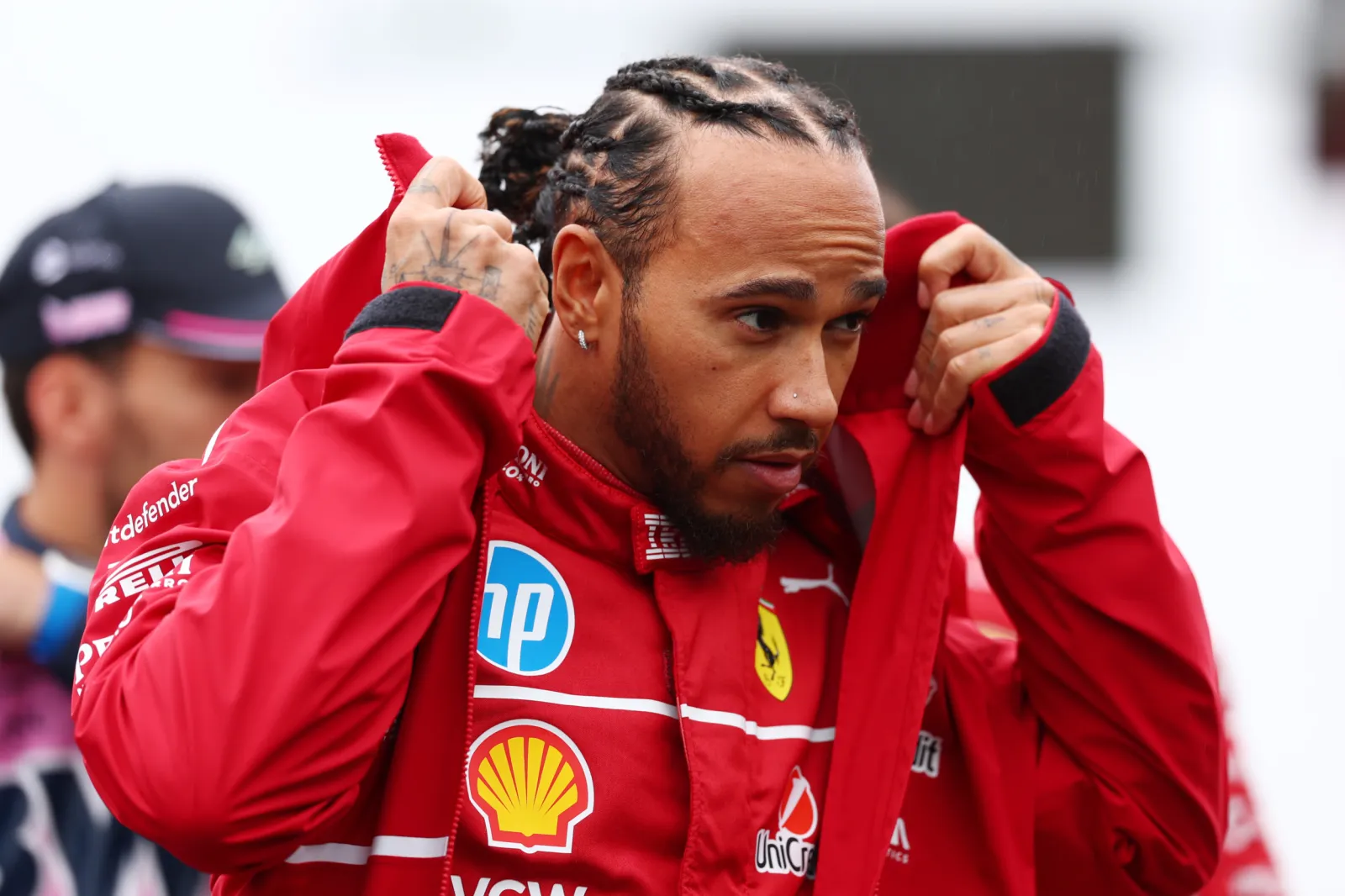
The narrative seemed set: Ferrari confirmed Adami’s removal from the prestigious role of race engineer for Lewis Hamilton, reassigning him to the Driver Academy. The implication was clear to outsiders—the partnership hadn’t worked, and a change was necessary to unlock Hamilton’s potential. However, Adami’s reaction has been anything but compliant.
Resurfacing with a defiance that has stunned the paddock, Adami has reportedly launched a counterattack against the narrative that he was the weak link in the chain. His comments, directed at multiple media outlets, paint a picture of a man who feels scapegoated by a system prioritizing political optics over engineering reality.
The most shocking aspect of this fallout is not the criticism of the decision itself, but the direct targeting of Lewis Hamilton. In a sport where engineers rarely speak out against their drivers, Adami’s alleged assessment of the seven-time world champion is withering. “Hamilton adapted poorly and was slow at Ferrari,” Adami reportedly declared, describing the British driver as “rigid and conservative” when receiving technical instructions.
This assertion flips the established script on its head. For months, the prevailing wisdom has been that the Ferrari ecosystem failed to support Hamilton—that the car, the strategy, or the communication was lacking. Adami is arguing the opposite: that the driver himself was the hurdle, unable or unwilling to mold himself to the technical requirements of the Scuderia’s machinery.
The “Malicious” Influence of Martin Brundle
The drama extends beyond the walls of Maranello, dragging in one of the sport’s most respected voices: Martin Brundle. The former driver and Sky Sports broadcaster has been vocal about the Hamilton-Adami dynamic, arguing that the pairing was flawed from the start and that Ferrari waited far too long to intervene.
Brundle’s critique focused on the lack of a shared “Lewis Language”—the intuitive, shorthand communication Hamilton enjoyed for over a decade with Peter “Bono” Bonnington at Mercedes. Brundle argued that without this instinctive connection, small misinterpretations compounded into lost performance.
To Adami, however, these were not the objective observations of a pundit but a targeted campaign. He has reportedly accused Brundle of being “malicious” and deliberately escalating the situation to cause chaos within the team. This reaction reveals a deep-seated paranoia often found in high-pressure environments; Adami appears to believe that the media narrative, shaped by influential figures like Brundle, effectively sealed his fate before the technical data was even reviewed.

Politics Over Performance?
At the heart of Adami’s grievance is the accusation that Ferrari “capitulated.” By claiming that the team “made a mistake in firing me and flattering Hamilton,” the engineer is striking at a sensitive nerve within the organization. Ferrari has long struggled with the tension between its identity as a racing team above all drivers and the immense gravitational pull of superstar talent.
Adami’s words suggest that Ferrari leadership chose the path of least resistance—appeasing their star driver rather than addressing uncomfortable technical truths. Whether this is a factual assessment of the 2025 season or the bitter lash-out of a dismissed employee is almost beside the point. The damage lies in the perception it creates: that Ferrari is currently a team ruled by driver influence rather than engineering autonomy.
This is a dangerous narrative for Ferrari. The team prides itself on the Enzo Ferrari philosophy that the team is greater than any individual. To be accused of compromising its structure to “flatter” a driver—even one as decorated as Hamilton—undermines the authority of Team Principal Frédéric Vasseur and the technical directors.
The Radio Tapes and the Reality of 2025
Retrospective analysis of the 2025 season’s radio transmissions adds a layer of complexity to these claims. Throughout the year, listeners heard exchanges that were polite but permeated with an undercurrent of friction. There were repetitions, delays in feedback, and moments of restrained frustration.
At the time, Ferrari insisted this was part of the learning curve. Now, in the harsh light of Adami’s outburst, those tapes sound different. To Hamilton’s camp, they are evidence of a driver struggling to be understood by a team that wasn’t on his wavelength. To Adami’s defenders, they represent a champion refusing to adapt to a new method of working.
Brundle’s assessment that the “working relationship was not functioning as intended” seems undeniable, regardless of who is to blame. The strategy calls were often out of sync, and the feedback on car balance frequently got lost in translation. The tragedy for Ferrari is that they allowed this dysfunction to fester for an entire season before acting, a delay that Brundle rightly critiqued as a failure of management.
Silence and Its Consequences
Perhaps the most telling aspect of this entire saga is Ferrari’s response—or lack thereof. The team has not issued a public rebuttal to Adami’s reported comments. This silence is deafening. In the high-stakes game of Formula 1 PR, silence is often interpreted as an inability to defend one’s position or a hope that the news cycle will simply move on.
However, this dispute is unlikely to fade quickly. By attacking the “myth” of Hamilton at Ferrari, Adami has ensured that every interaction between Hamilton and his new engineer in 2026 will be scrutinized under a microscope. If Hamilton struggles early in the 2026 season, Adami’s words—”rigid,” “slow,” “conservative”—will be resurrected as a prophecy.
Ferrari wanted a clean slate for the new regulation era. They aimed to enter 2026 with a cohesive team united behind their lead driver. Instead, they are entering the new year with the baggage of a messy divorce and a public questioning of their internal hierarchy.
The Road Ahead
As we look toward the 2026 season, the pressure on Lewis Hamilton has compounded. He is no longer just fighting for an eighth world title; he is fighting to prove that the problem really was the engineer. With Adami gone, there are no more excuses. The “Lewis Language” must now be fluent, and the performance must be immediate.
For Ferrari, the challenge is to close ranks and shield the team from the toxicity of this fallout. They must prove that the decision to replace Adami was based on data and future potential, not just the whims of a star driver. The transition to a new race engineer needs to be seamless, or the ghost of this controversy will haunt the pit wall for arguably the most critical season in the team’s recent history.
In Formula 1, the most dangerous battles are rarely fought on the asphalt. They are fought in the briefing rooms, the media pens, and the minds of the competitors. Ricardo Adami may have lost his seat on the pit wall, but he has ignited a fire that Ferrari will be fighting to extinguish long after the lights go out in Bahrain.