The Formula 1 world has been thrown into a frenzy with the unveiling of Ferrari’s 2026 challenger, the SF-26. This isn’t just a new coat of paint or a subtle evolution; it is a complete, tear-it-down-and-start-again reset that has left analysts stunned and rivals scrambling. From a suspension philosophy abandoned nearly two decades ago to whispers of a secret engine innovation so radical the team won’t publicly acknowledge it, Ferrari is betting the house on a revolution.
But amidst the technical deep dives, social media exploded with panic after Lewis Hamilton was spotted stopped on the track at Fiorano. Was the new car already failing? Is the “Prancing Horse” limping before the race even starts? The truth, as it turns out, is far more calculated—and far more interesting—than the rumors suggest.
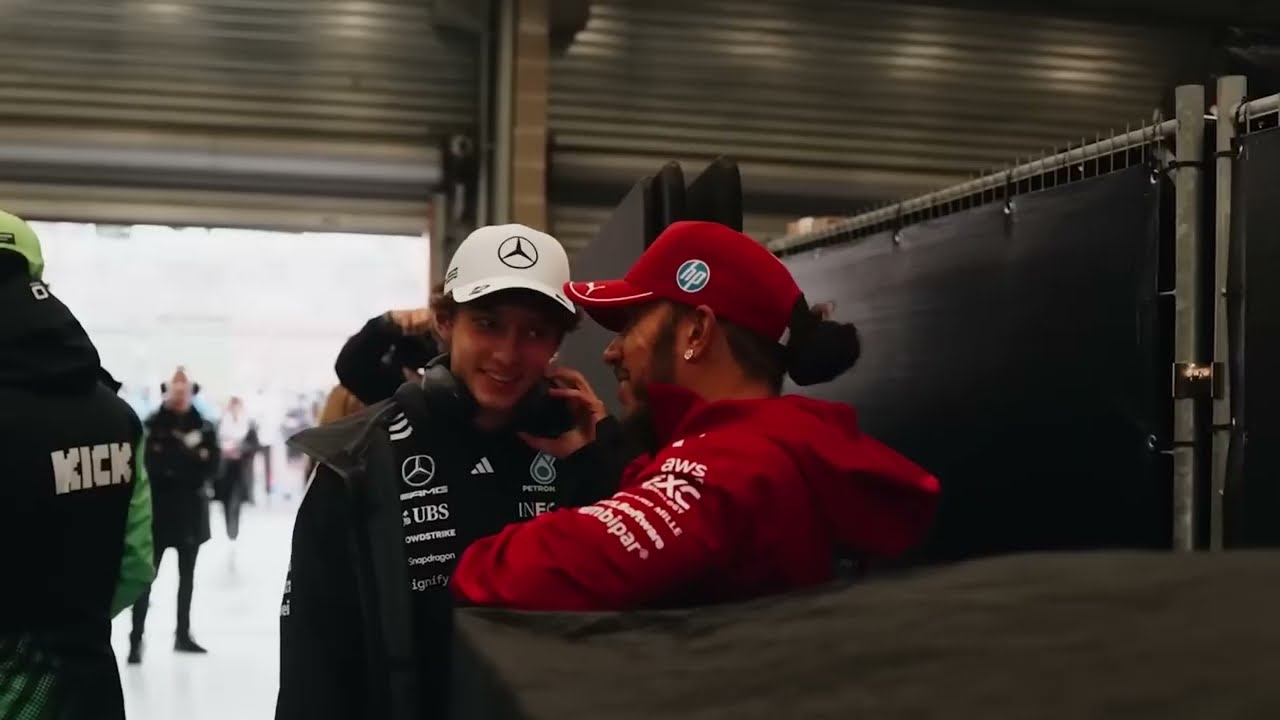
The “Steel” Secret: A Game-Changing Engine Innovation?
The most electrifying whisper circulating the paddock concerns the heart of the SF-26. Under the new 2026 regulations, the power unit landscape has shifted dramatically, with a 50/50 split between combustion and electric power and the removal of the MGU-H (the component that harvested energy from exhaust gases). Every team is starting from scratch, but Ferrari may have found a loophole that no one else saw coming.
Multiple insiders report that Ferrari has developed a steel alloy cylinder head incorporating copper and ceramic composites. In the modern era of F1, where lightweight aluminum is the gold standard, switching to steel sounds like madness. However, this “madness” might be pure genius. Steel can withstand combustion pressures and temperatures that would melt aluminum, potentially allowing Ferrari to extract significantly more performance from the internal combustion side of the power unit.
The Italian motorsport media is treating this as an established fact, and paddock insiders are speaking about it openly. Yet, Ferrari maintains a stoic, complete silence. Why? Because if they confirm it, they hand their rivals a roadmap. If this gamble works, Ferrari could hold a fundamental engine advantage that cannot be easily copied. If it fails, they have built their championship campaign around a flawed, heavy concept. It is a high-stakes poker game, and Ferrari is all in.
Resurrecting the Past: The Suspension Gamble
If the engine rumor is the hidden ace, the suspension is the visible shock. For the 2026 season, Ferrari has completely reversed their suspension philosophy, switching to a “push rod” configuration at both the front and rear axles. To understand how drastic this is, you have to look back in time. The last Ferrari to run this setup was the F10 in 2010—the car Fernando Alonso drove to within four points of a championship.
For the past few years, “pull rod” suspension was the standard because it worked perfectly with ground-effect venturi tunnels. But the 2026 rules have eliminated those tunnels, prompting Ferrari to look backward to move forward. The push rod setup offers better access for mechanics and superior flexibility for track setups, addressing historic weaknesses Ferrari has faced at certain circuits.
However, this wasn’t a simple swap. It forced engineers to redesign the entire gearbox from scratch, relocating suspension kinematics and creating a packaging nightmare. They have effectively bet their season on a design they haven’t used in 16 years. It’s a bold move that signals Ferrari is no longer content to follow trends—they are trying to set them.
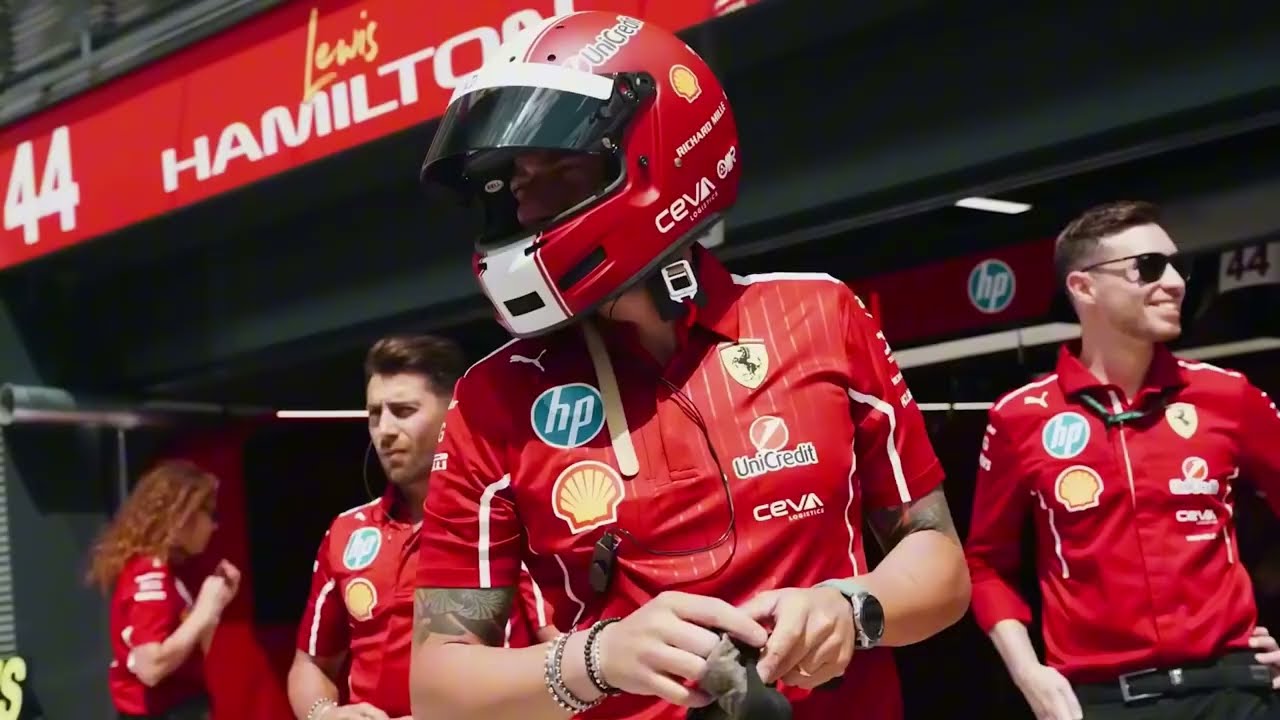
Debunking the “Breakdown” Panic
During the car’s shakedown at the Fiorano circuit, videos emerged of Lewis Hamilton’s SF-26 stopped on the track. The internet immediately lit up with doomsday predictions: “The car is broken!” “Reliability crisis!”
The reality was far more mundane—and strategic. Ferrari confirmed there were absolutely no mechanical issues. The stoppage was planned from the very beginning.
Teams are strictly limited to a 15km demonstration allocation for these events. At Fiorano’s short circuit, that translates to roughly five laps. Hamilton drove three laps, performed a practice start, and then simply stopped. Why? To save the remaining two laps of mileage. Mechanics manually recovered the car rather than having Hamilton drive it back to the pits, which would have burned precious kilometers. It wasn’t a breakdown; it was extreme mileage management. This level of attention to detail shows just how tight the margins are for 2026.
Active Aero and the Driver Challenge
Another massive change for 2026 is the death of DRS (Drag Reduction System). In its place comes “Active Aerodynamics.” Both the front and rear wings now feature movable elements that drivers can control.
Unlike DRS, which required you to be within one second of a rival, Active Aero is available to everyone, regardless of gaps. It features three modes: “Corner” (high downforce), “Straight” (low drag), and “Partial” (a mix for tricky conditions).
Lewis Hamilton was seen frantically activating and deactivating the system during the shakedown, experimenting with the car’s balance before even hitting top speed. Drivers now have to manage the car’s shape in real-time, closing wings automatically when braking. It adds a layer of complexity that goes beyond just driving fast; it’s about managing systems. The drivers who master this first will have a massive advantage in the opening races.
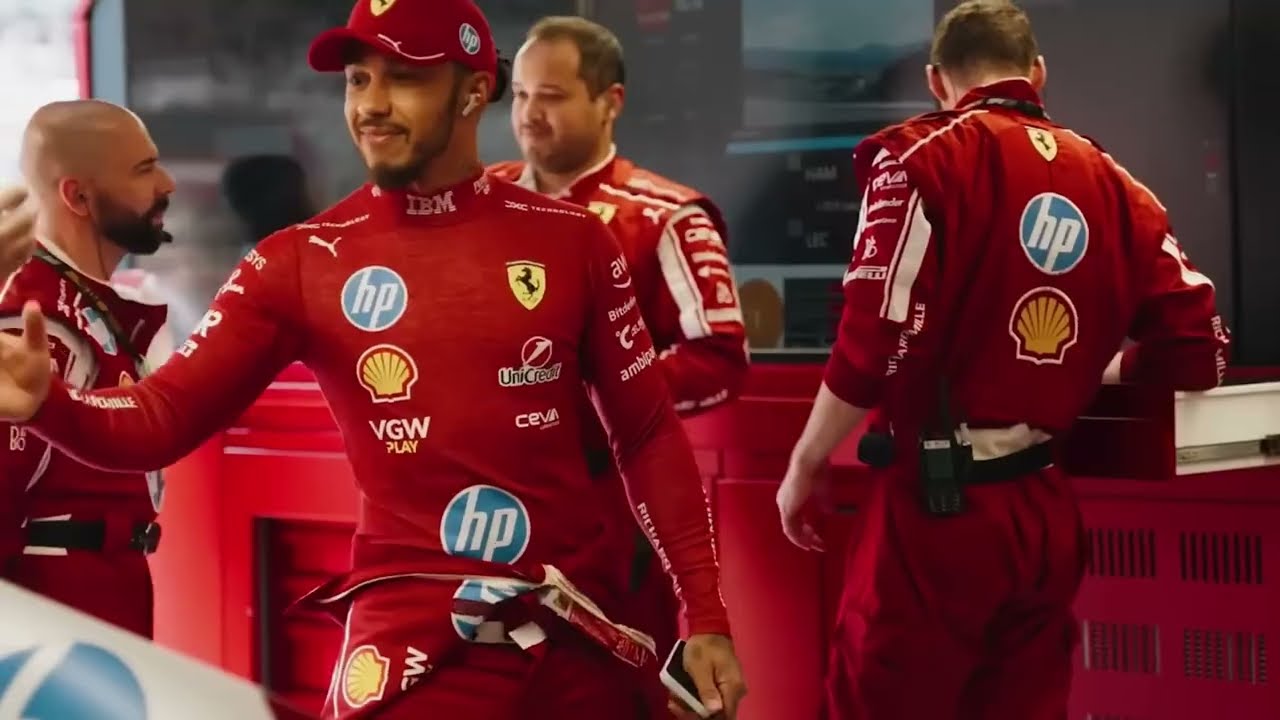
Hamilton’s Verdict: “Massively Excited”
For Lewis Hamilton, the move to Ferrari coincides with the biggest regulatory change in Formula 1 in 25 years. Every driver is essentially a rookie again, relearning how to race. Far from being daunted, Hamilton seems rejuvenated.
After his first run, he described himself as “massively excited,” using phrases like “new beginnings” that he admits he hasn’t felt in years. The challenge of a completely new car, a new team, and a new era of the sport seems to have reignited a fire. He isn’t just stepping into a new car; he’s stepping into a project that is being built around him and Charles Leclerc from the ground up.
Mercedes vs. Ferrari: The Philosophical Divide
Comparing the SF-26 to the new Mercedes W17 reveals two completely different interpretations of the same rules.
The Nose: Mercedes has gone for an extreme undercut to channel air, while Ferrari has taken a different approach.
Cooling: Ferrari is using a tiny, triangular airbox—the smallest seen so far—while Mercedes has opted for a larger, multi-purpose inlet.
Active Aero: Ferrari moves two flaps on the front wing; Mercedes moves only one.
These aren’t minor tweaks; they are fundamental disagreements on how to build a fast race car. Both teams cannot be right. One of them has likely misinterpreted the regulations, and we won’t know who until the lights go out in Melbourne.
The Verdict
The Ferrari SF-26 is a car of contradictions. It looks to the past for its suspension but looks to a sci-fi future for its engine materials. It looks “broken” on track to the untrained eye, but is actually being managed with surgical precision.
Ferrari didn’t play it safe. They didn’t just evolve the previous car. They looked at the 2026 rulebook and decided to swing for the fences. With a steel heart, a retro suspension, and a rejuvenated Lewis Hamilton behind the wheel, the Scuderia is sending a clear message: they aren’t here to participate; they are here to revolutionize.