In the high-stakes world of Formula 1, silence is rarely a good sign. Usually, it indicates a problem—a frantic scramble behind closed garage doors, a mechanic’s head in hands, or a driver’s thousand-yard stare. But this week at the Fiorano circuit, the silence surrounding the debut of Ferrari’s 2026 challenger, the SF26, was different. It was heavy, deliberate, and undeniably confident. While the internet erupted with rumors of breakdowns and panicked late-night builds, the reality on the tarmac was a masterclass in disciplined engineering that could signal a terrifyingly prepared Ferrari for the new regulation era.
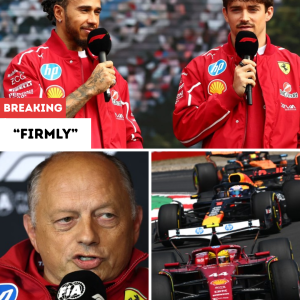
The debut of the SF26 was arguably the most anticipated moment of the pre-season. With seven-time world champion Lewis Hamilton donning the scarlet overalls for the first time alongside Charles Leclerc, the world was watching.
Yet, what unfolded wasn’t a blaze of glory or a lap-record attempt. It was a methodical, almost underwhelming display of precision that left fans baffled and pundits scrambling for answers. But look closer, and you’ll see that Ferrari isn’t just building a car; they are crafting a championship-winning siege, and the SF26 shakedown was the opening shot.

The “Disaster” That Wasn’t: Debunking the Fiorano Panic
Almost immediately after the SF26 took to the track, social media platforms lit up with grainy footage and frantic captions. The car had stopped. To the untrained eye, seeing a brand-new F1 car grind to a halt on its debut run screams reliability issues. “Ferrari is broken already!” cried the comments sections. “The engine failed!” shouted the forums.
The truth, however, is far less dramatic but infinitely more impressive. The stoppage was not a mechanical failure; it was a procedural choice. Ferrari’s run plan was executed with military precision. At the end of specific runs, the engine was intentionally cut to test system shutdowns and recovery procedures. There were no plumes of smoke, no frantic radio calls, and no panic in the garage.
This disconnect between the online hysteria and the calm reality in Maranello highlights a critical theme for the 2026 season: the separation of signal from noise. Ferrari knew the optics of a stopped car would look bad, but they simply didn’t care. They prioritized data validity over public perception. This level of focus—ignoring the external noise to ensure the internal systems are bulletproof—is the hallmark of a team that is done with fragility. They weren’t interested in showing off; they were interested in making sure that when the lights go out in Bahrain, the car finishes the race.
A Tale of Two Drivers: The Symmetry of Hamilton and Leclerc
One of the most telling aspects of the shakedown was the almost robotic symmetry between the run plans of Lewis Hamilton and Charles Leclerc. In previous years, one might expect the team to cater to driver preferences early on, tweaking setups to make their stars comfortable. Not this time.
Hamilton took the wheel first, heading out into the damp, misty morning on wet tires. His runs were short, sharp, and entirely procedural. Later in the afternoon, Leclerc stepped into the cockpit and executed the exact same program. Same laps, same procedures, same feedback loops.
This wasn’t about letting the drivers have fun; it was about scientific control. By keeping the variables identical, Ferrari wasn’t testing the drivers—they were validating the machine. This approach speaks volumes about the culture Fred Vasseur is instilling in the team. The car comes first. The foundation must be solid before the nuances of driving style can be applied. For Hamilton, accustomed to the rigorous engineering dominance of Mercedes, this methodical approach must feel like a reassuring sign that his new team is serious about giving him a title contender.

The Mystery of the “Secret Hole”
No F1 launch is complete without technical conspiracy theories, and the SF26 delivered its fair share. Eagle-eyed fans spotted a distinct cutout in the engine cover near the air intake, sparking wild theories about revolutionary aerodynamic venting or secret cooling tricks. Was this the “magic bullet” that would give Ferrari an edge?
The reality is hilariously pragmatic. The “secret hole” is nothing more than a lifting point for cranes. It allows marshals to safely remove the car from the track if it stops in a dangerous position. It’s a safety feature, not a speed secret.
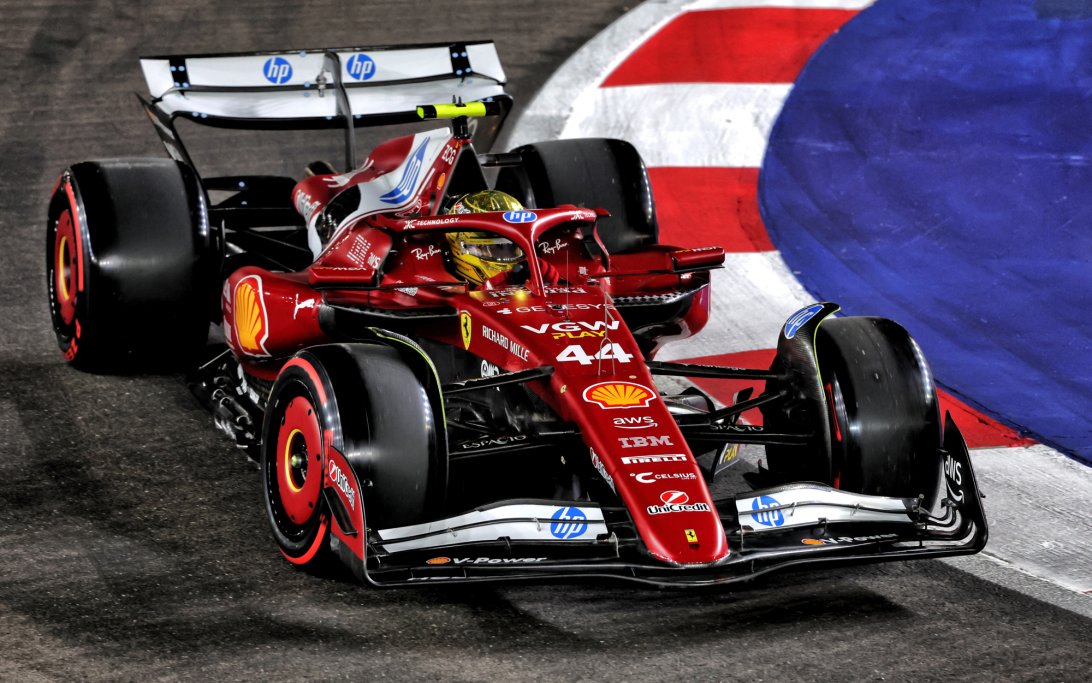
While this revelation might disappoint those hoping for a warp-drive intake, it serves as a reminder of how feverish the pre-season scrutiny has become. Every bolt, every curve, and every shadow is analyzed for meaning. But here’s the irony: while the internet obsessed over a crane hook, they missed the real technical gem. During Hamilton’s run, we caught the first real glimpse of Ferrari’s active DRS system for the 2026 regulations. Unlike the Mercedes concept seen elsewhere, Ferrari’s implementation appears unique, hinting that while the crane hook is mundane, the aerodynamic philosophy underneath the carbon fiber is anything but.
The Late-Night Build: Chaos or Calculation?
Rumors swirled that the SF26 was being assembled deep into the night before its debut, painting a picture of a team in disarray, frantically bolting parts together as the clock ticked down. In the past, this might have been a sign of poor management. In 2026, it’s a sign of aggression.
In a new regulation cycle, development curves are steep. Every hour spent in the wind tunnel or on the simulator yields performance. By pushing the final assembly to the absolute last minute, Ferrari maximized their development time. They didn’t build it late because they were behind; they built it late because they refused to stop improving until they absolutely had to.
The proof is in the pudding: despite the “rushed” assembly, the car rolled out on time and ran without a hitch. If the build had been chaotic, we would have seen delays, loose bodywork, or system errors. We saw none of that. We saw a car that was pushed to the limit of the timeline and arrived ready to work. It was a calculated risk that paid off, trading sleep for speed.
The “Guinea Pig” Strategy: Why Ferrari is Skipping Monday
Perhaps the most genius—and controversial—move is Ferrari’s plan for the upcoming pre-season testing in Barcelona. While most of the grid will be pounding the asphalt on Monday, desperate to log mileage, Ferrari is reportedly opting to sit out the first day, starting their program on Tuesday instead.
On the surface, giving up a day of testing seems insane. But look at the chessboard. Ferrari supplies power units to multiple customer teams. These teams will be on track on Monday. By letting them run first, Ferrari effectively uses them as canaries in the coal mine. If there are early software glitches, integration issues, or reliability gremlins with the new 2026 power units, the customer teams will find them first.
Ferrari can then spend Monday analyzing that data, tweaking their own parameters, and hitting the track on Tuesday with a more refined and reliable package. They are sacrificing quantity for quality, avoiding the “teething problems” that often plague the first day of running. It’s a strategy that requires nerves of steel—watching your rivals log laps while your car sits in the garage takes supreme confidence—but it could be the difference between a wasted Monday chasing sensors and a productive Tuesday chasing lap times.
Quiet Confidence in a Loud World
As the F1 circus moves from the private silence of Fiorano to the public bustle of Barcelona, Ferrari stands in a fascinating position. They have ignored the bait of setting “glory runs” to top the timesheets. They have ignored the pressure to run maximum mileage just to look busy. Instead, they have executed a concise, disciplined, and technically rigorous start to their campaign.
The SF26 era hasn’t begun with a scream, but with a whisper—a whisper that says, “We know what we’re doing.” In a sport defined by noise, Ferrari’s silence might just be the loudest warning to their rivals. The prancing horse isn’t just galloping; it’s stalking its prey. And for the first time in a long time, it looks like it knows exactly how to kill.