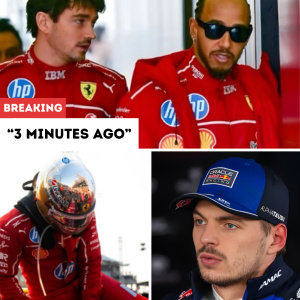
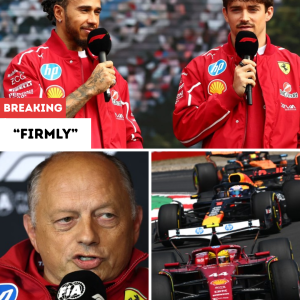
The dawn of a new era in Formula 1 is rarely quiet, but for Lewis Hamilton and Ferrari, the start of the 2026 campaign has been nothing short of thunderous. As the engines fired up at the Circuit de Barcelona-Catalunya for the highly anticipated shakedown of the next-generation challengers, the headlines were dominated not just by lap times, but by a brewing storm of technical controversy and organizational confusion.
The scrutiny surrounding Ferrari’s radical new challenger, the SF-26, has intensified dramatically, with the FIA reportedly “applying the brakes” on the project to investigate its aggressive aerodynamic concepts. Simultaneously, a growing chorus of concern from paddock insiders and pundits is highlighting a potentially critical void in Hamilton’s support network: the baffling absence of a dedicated race engineer.

The SF-26: A Radical Departure Under the Microscope
The arrival of the 2026 regulations marks the most significant overhaul of the Formula 1 rulebook in recent history, introducing new chassis, aerodynamic, and engine parameters designed to reshape the sport. Ferrari, looking to bounce back from a turbulent 2025, has clearly decided that fortune favors the brave. The team arrived in Barcelona not with a timid evolution, but with a revolutionary machine that has immediately caught the eye of the governing body.
The SF-26 features a baseline version of the car intended to keep the team’s “real” design secrets under wraps for as long as possible. However, even this initial iteration has raised eyebrows. The car boasts incredibly compact sidepods and, most notably, a controversial hole integrated into the rear diffuser. This design innovation is intended to accelerate airflow and recoup downforce lost by the new simplified floor regulations.
However, innovation often invites suspicion. Reports indicate that the FIA wants a “closer look” at just how aggressive the engineers in Maranello have been. There are genuine concerns regarding the legality and interpretation of these new aero concepts. The governing body has reportedly intervened, slowing down the approval process for the SF-26.
Compounding this bureaucratic hurdle is a staffing crisis within the FIA itself. The resignation of Jason Somerville, the FIA’s head of aerodynamics, in late November has created a significant bottleneck. Somerville, who previously oversaw the technical review of all team submissions, is currently on “gardening leave” before an expected move to the Alpine F1 Team. His departure has left a vacuum, causing delays in the vetting of 2026 proposals. For Ferrari, who have pushed the boundaries with their “refined engine packaging” and aerodynamic tricks, this delay adds an unwelcome layer of uncertainty to their pre-season preparations.
The “Alarming” Engineer Vacuum
While the technical drama plays out in the scrutineering bay, a more human concern is brewing in the Ferrari garage—one that could have far-reaching implications for Lewis Hamilton’s adaptation to his new team.
The relationship between a driver and their race engineer is often described as the most important marriage in Formula 1. It is a bond built on intuitive trust, shorthand communication, and emotional management. For years, Hamilton relied on the steady voice of Peter “Bono” Bonnington at Mercedes. At Ferrari, however, that voice is currently missing.
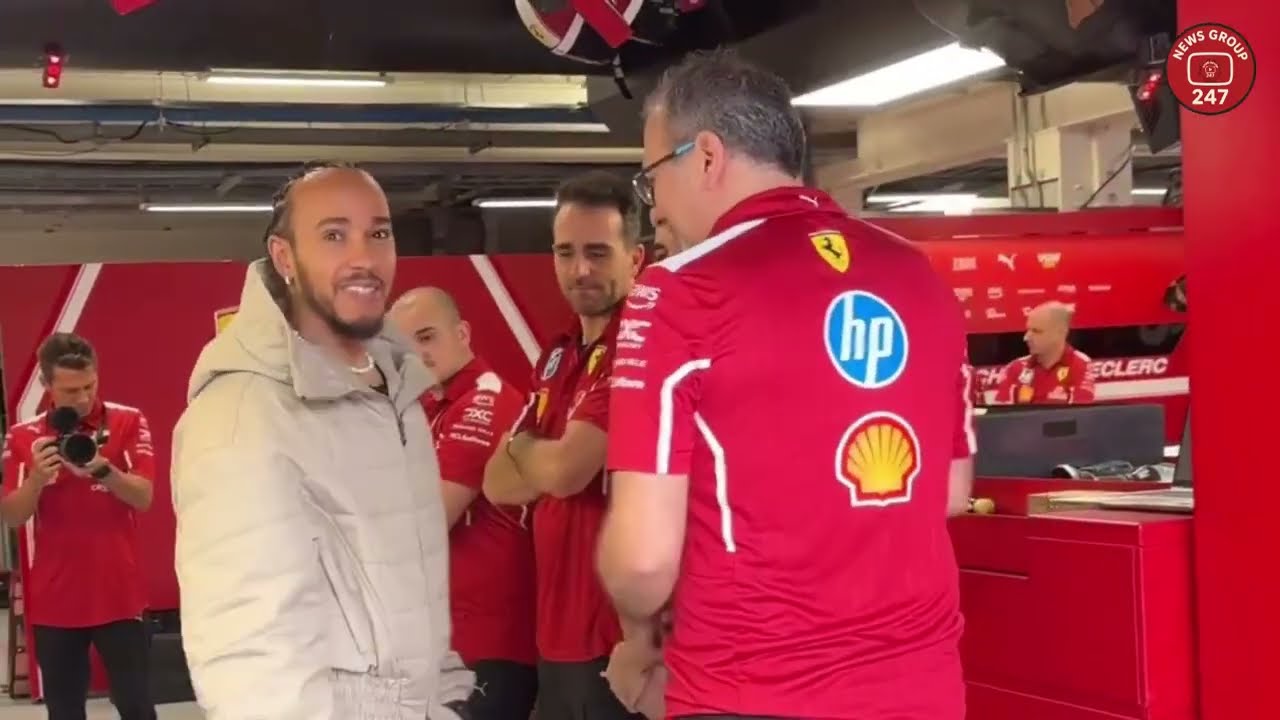
Hamilton took to the track in Barcelona working with Bryan Bozzi, the race engineer for his teammate Charles Leclerc. This interim arrangement has been necessitated by the reassignment of Riccardo Adami, Hamilton’s engineer during the difficult 2025 season, to the Ferrari Driver Academy. While Bozzi is highly capable, the situation has confused observers.
Sky Sports pundit Karun Chandhok expressed deep concern over the setup, stating that “alarm bells” are ringing.
“The other thing that’s ringing alarm bells for me is his engineer situation,” Chandhok noted during the shakedown recap. “As far as we understand, Bryan Bozzi was running the car today, including for Lewis. That confuses me if I’m perfectly honest. That relationship between driver and race engineer is so, so important.”
Chandhok argues that Ferrari is wasting precious time. The winter months and early tests are the critical window for a driver and new engineer to bond, establish communication protocols, and understand each other’s nuances. By using an interim solution, Hamilton is effectively losing weeks of integration time.
“They haven’t created a situation where Lewis is building that relationship over the winter,” Chandhok added. “I would have loved to see him doing simulator days, go and get a TPC car. You need to integrate that person into the engineering setup of the race team… To me, I’m slightly confused that as we sit here, we’ve already started testing, that bonding and relationship building hasn’t started.”

The “Gardening Leave” Complication
The root of this issue appears to be contractual. Ferrari is widely expected to sign Cedric Grosjean, formerly an engineer for Oscar Piastri at McLaren, to be Hamilton’s new voice on the radio. However, Grosjean left McLaren in December 2025 and is currently serving a mandatory period of gardening leave.
While this explains the physical absence, critics argue that Ferrari should have managed the transition better. Ivan Capelli, a former Ferrari driver, voiced his skepticism to journalist Leo Turrini. Capelli believes it is “strange” that the appointment hasn’t been officially clarified, leaving Hamilton in a state of limbo during his first outings in red.
“I find it strange that his new race engineer hasn’t yet been officially appointed,” Capelli said. “Maybe it’s just a matter of hours, but certain things should be clarified in advance.”
This lack of stability is particularly risky given the context of Hamilton’s arrival. He is joining Ferrari off the back of a season where he failed to score a single podium—a “bad year” by his lofty standards. He is seeking redemption, and to find it, he needs a stable platform, not a rotational cast of engineers.
On Track: Gravel Trips and Red Bull Pace
Amidst the off-track politics, there was actual running to be done. The Barcelona weather was far from ideal, with rain disrupting the sessions, but Ferrari joined Red Bull in braving the conditions while many other teams sat out.
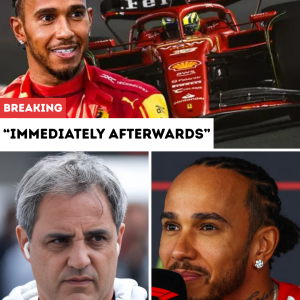
Charles Leclerc debuted the SF-26 in the morning, recording laps in both dry and wet conditions. Hamilton took over in the afternoon, facing a wet track. His session was not without drama; the seven-time world champion had a “trip through the gravel” on his first run, a heart-in-mouth moment that fortunately resulted in no damage. He eventually completed 57 laps, contributing to a healthy team total of 123 laps for the day.
However, the timesheets—unofficial as they are—provided a sobering reality check. In comparable wet conditions, Red Bull’s junior driver Isack Hadjar, driving the RB22, outpaced Hamilton by nearly a full second. Hadjar clocked a 1:31.891 compared to Hamilton’s best of 1:32.872.
While fuel loads and run plans are unknown variables, the gap is a reminder of the mountain Ferrari has to climb. Hadjar’s day ended in the barriers with a significant crash, proving that the Red Bull is fast but perhaps tricky to handle, but the raw pace of the Milton Keynes squad remains the benchmark. Max Verstappen’s earlier dry lap was also significantly faster than Leclerc’s best effort.
The Ghost of Adrian Newey
Adding a final layer of intrigue to the Ferrari narrative is the revelation regarding Adrian Newey. The car Hamilton is driving today could have been the brainchild of the legendary designer. It was confirmed that Newey held talks with Ferrari after leaving Red Bull, but negotiations collapsed.
According to Capelli, the deal fell through because Newey demanded too much autonomy. “He was asking for room for maneuver within the company that his interlocators didn’t see fit to grant him,” Capelli explained. Essentially, Newey wanted “carte blanche,” a level of power Ferrari was unwilling to cede. Newey has since joined Aston Martin as Team Principal, leaving the SF-26 to be designed chiefly by Loic Serra, an aerodynamicist recruited from Mercedes.
Conclusion: A Fragile Beginning
As the paddock packs up in Barcelona, the narrative surrounding Ferrari is one of high potential mixed with high anxiety. The SF-26 is clearly an ambitious step forward, aggressive enough to worry the FIA and innovative enough to feature radical airflow solutions. But a fast car is of little use if the operational structure supports it is fractured.
Lewis Hamilton has come to Maranello to make history, to capture an eighth world title in the twilight of his career. But with the FIA investigating his car’s legality and his garage missing the crucial linchpin of a permanent race engineer, the dream start is currently clouded by uncertainty. The next few weeks leading up to the Bahrain test will be critical. Ferrari must resolve the aero queries and, more importantly, settle the engineer situation, or risk derailing their superstar’s campaign before the lights even go out.