In yet another headline-grabbing moment that has left royal watchers shaking their heads, Prince Harry has once again reignited controversy by repeating his claim that members of the British Royal Family were jealous of Meghan Markle because she could “do the royal thing better” than those born into the institution.
According to Harry’s narrative, Meghan wasn’t merely adapting to royal life — she was outperforming it, dazzling the public so effectively that it allegedly unsettled the very people raised for the role. For many observers, however, this story feels less like truth and more like a convenient myth, one designed to shift blame away from the Sussexes’ own actions and decisions.
The claim traces back to Harry’s Netflix docuseries and earlier interviews, particularly his reflections on the couple’s 2018 Australia tour. Meghan was warmly received, crowds were enthusiastic, and press coverage was glowing. Harry framed this moment as a turning point, suggesting that the family suddenly “saw how incredible she was at the job,” and that her success triggered resentment.
In his words, when someone “marrying in” begins to outshine those “born to do this,” it inevitably causes tension. To supporters of the Sussexes, this sounded like proof that Meghan was targeted because of her popularity. To critics, it sounded like an oversimplified explanation for a far more complicated breakdown.

Royal commentators and insiders were quick to push back. One observer dryly remarked that the idea of senior royals being threatened by a newcomer was “almost comical,” noting that the monarchy is built on hierarchy, duty, and structure — not celebrity competition. Another royal analyst put it more bluntly: “This isn’t Hollywood. You don’t get promoted for charisma.” The institution has survived wars, abdications, scandals, and global change; the suggestion that it would be destabilized by one popular duchess struck many as wildly implausible.

Behind palace walls, a different version of events has long circulated. Rather than jealousy, insiders have spoken of friction caused by clashing expectations, difficulties with protocol, strained staff relations, and the Sussexes’ contradictory demands for both privacy and global media attention. One former aide, quoted by commentators in the past, described the environment as “exhausting,” saying it felt less like envy and more like damage control. “People weren’t intimidated,” one source reportedly said, “they were overwhelmed.”
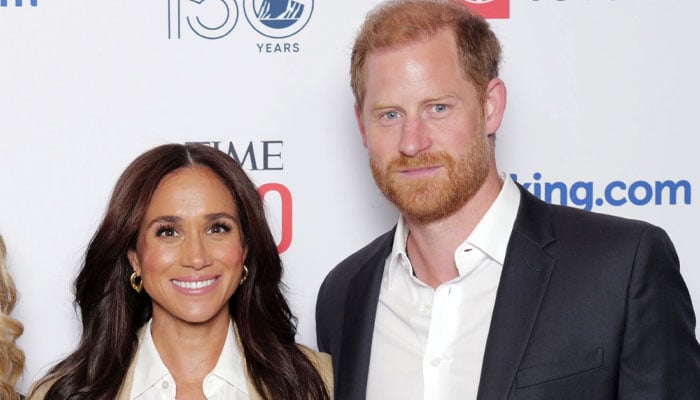
Public reaction has been even less sympathetic. On social media, the claim has been met with sarcasm rather than support. “Who exactly was jealous?” one user scoffed. “The Queen? Princess Anne? Women who’ve spent decades doing duty without applause?” Another commenter wrote, “If Meghan was truly doing it better than everyone else, why couldn’t they make it work for more than two years?” Such reactions reflect a broader sentiment: early popularity does not equal long-term commitment to service, and royal life is measured in decades, not headlines.
Some observers have also flipped the narrative back onto Harry himself. Many point to his own admissions in Spare about growing up as the “spare,” living in the shadow of Prince William, and feeling secondary within the royal hierarchy. To them, Harry’s insistence that Meghan was “better” than those born royal feels like projection — a way to rewrite old resentments through his wife’s story. A royal commentator put it pointedly: “By elevating Meghan above the institution, Harry is really expressing his lifelong frustration with it.”
There is also the issue of timing and credibility. Since leaving royal life, Harry and Meghan’s commercial ventures have faced mixed success, with several high-profile deals failing to deliver the impact once expected. Critics argue that this weakens the image of a couple supposedly “too good” for the monarchy. One media analyst noted, “If they were truly unstoppable inside the system, it’s hard to understand why everything outside it has been so unstable.”
Meanwhile, the Royal Family has continued its work with little reference to the Sussexes. King Charles, Prince William, and Princess Catherine have maintained a steady public presence, focused on duty rather than narrative battles. The contrast has not gone unnoticed. “One side keeps talking,” a columnist observed, “the other side just keeps working.”
At its core, Harry’s jealousy claim reframes the Sussexes as victims of institutional insecurity rather than participants in a mutual breakdown of trust. It suggests they were pushed out by envy instead of stepping away by choice. But as time passes, fewer people seem willing to accept that version of events. The dominant public perception is shifting toward a simpler conclusion: this wasn’t about jealousy, but incompatibility — between celebrity culture and royal duty, between personal ambition and institutional service.
In the end, the idea that the Royal Family was threatened because Meghan could “do the royal thing better” is being received less as a revelation and more as a rewrite of history. For many, the real issue was never about who shone brightest, but about whether the role was understood at all. Royal life, critics argue, isn’t about stealing the spotlight — it’s about disappearing into service. And in that quiet, unglamorous definition of duty, the monarchy has always valued endurance over applause.