They say money can’t buy happiness, but as the old adage goes, it is certainly more comfortable to cry in a Ferrari than on a bicycle. In the high-octane world of Formula 1, crying in a Ferrari—or a Red Bull, or a McLaren—comes with a price tag that most of us can barely comprehend.
As the engines fire up for the 2026 season, the financial landscape of the grid has been laid bare, revealing a billion-dollar sport where the wealth gap is as dramatic as the racing itself.
From rookies earning what can only be described as “paid internship” wages (in the warped reality of F1 economics) to titans of the sport commanding GDP-sized salaries, the 2026 payroll is a fascinating study in value, legacy, and ruthless negotiation.
We have analyzed the figures, verified the rumors, and broken down the bank accounts of the 22 drivers lining up on the grid this year. The results? Some are bargains, some are gambles, and some are simply astronomical.

The “Interns”: Welcome to the Big Leagues
At the bottom of the financial food chain, the dreams are big, but the bank balances are comparatively modest. For the class of 2026, breaking into Formula 1 is a privilege that comes with a “take it or leave it” paycheck.
Franco Colapinto and the brand-new F1 debutant Arvid Lindblad find themselves in this bracket. Both youngsters, hungry to prove their worth, have signed contracts that pay between $500,000 and $1 million per year. To the average person, earning half a million dollars is a dream come true—more than most university graduates will earn in a decade. But in the shark tank of the Paddock, where private jets are the equivalent of a bus pass, this is the bottom rung. It is the price of entry. They are essentially on a paid internship with a view to a permanent contract. The message from the teams is clear: prove you belong here, and the real money will follow. until then, keep your head down and drive.
Slightly above them sits the “One Million Club.” Liam Lawson and Oliver Bearman have secured deals worth $1 million. It’s enough to rent a nice, albeit small, apartment in Monaco—assuming they are willing to split the rent with a flatmate. It paints a grounded picture of the sport’s rising stars: talented, famous, but not yet wealthy enough to live the full playboy lifestyle.
The Middle Class: Talent vs. Paychecks
One of the biggest shocks of the 2026 financial dossier is the salary of Mercedes’ golden boy, Kimi Antonelli. Dubbed a “super talent” and the future of the Silver Arrows, one would expect his compensation to match the hype. The reality is a stark contrast.
Antonelli is earning just $2 million per year, the same figure as Audi’s Gabriel Bortoleto. It is a brutal reminder that in F1, potential does not pay the bills—points do. Mercedes is clearly banking on Antonelli proving his mettle before handing over the keys to the vault. It’s a “prove it” deal that likely stings a little when he looks across the garage at his competitors.
Moving up the ladder, we find the seasoned campaigners and the promoted stars. Valtteri Bottas, now in what many are calling an “early retirement package,” and newly promoted Red Bull driver Isack Hadjar are both taking home $5 million annually. For Hadjar, this is a life-changing step up. For Bottas, however, it represents a significant pay cut compared to his glory days at Mercedes and Alfa Romeo, where he earned more than double. The Finn’s salary trajectory is a sobering lesson in the sport’s fading loyalty to veterans who aren’t fighting for titles.
The Experience Tax: Paying for Consistency
There is a bracket of drivers who are paid not for flash, but for safe hands. Nico Hülkenberg and Esteban Ocon fall squarely into this category. With two-year contracts guaranteed, they are each earning $7 million per year. Teams pay this premium for experience—for the guarantee that the car will be brought home in one piece and the setup data will be accurate. They are the reliable rocks of the midfield.
Then there is Sergio “Checo” Perez. The Mexican driver has survived another winter, but his wallet has felt the squeeze. After a year on the sidelines, Perez has had to tighten his belt. Once commanding over $10 million at Red Bull, he now makes do with $8 million annually. It’s a significant drop, one that might force him to “skip the guacamole,” figuratively speaking. It is a harsh market correction for a driver who was once crucial to Red Bull’s constructors’ bids.
The Double-Digit Club: Where Life Changes
Breaking the $10 million barrier is a significant milestone in an F1 driver’s career. It signifies status, security, and usually, a bit of leverage.
Lance Stroll remains the anomaly of the grid. As the only driver with an open-ended contract—a perk of having your father own the team—he earns a comfortable $12 million per year. He is a decent employee, sure, but his job security is the envy of the grid.
Meanwhile, Alex Albon and Pierre Gasly, despite driving for different bosses, have found parity at $12 million as well. They are established team leaders now, paid to carry their respective squads.
Interestingly, Oscar Piastri, a driver with “future World Champion” written all over him, is earning $13 million. While substantial, it feels like a bargain for McLaren given his performance. He earns the same as Carlos Sainz, who has seen his earnings plateau after leaving Ferrari. Piastri is undoubtedly in line for a massive raise soon, but for 2026, he is arguably the best value-for-money driver on the grid.
Then there is the Lion, Fernando Alonso. In what could very well be the winter of his illustrious career, the two-time World Champion is earning $20 million. Unless Aston Martin builds a rocket ship, 2026 might be his swan song. But with a $20 million retirement fund being topped up this year alone, he can drive into the sunset with a smile.
The Top 5: The Stratosphere of Wealth
Now, we enter the realm of the ridiculous. The top five earners in 2026 are in a league of their own, commanding salaries that rival the GDP of small island nations.
5. Lando Norris – $30 Million The 2025 World Champion has cashed in. Lando Norris, the “Papaya King,” is guaranteed $30 million this year. It is a fitting reward for bringing the title back to Woking. With bonuses included, this figure will likely balloon, solidifying his status as one of the sport’s elite.
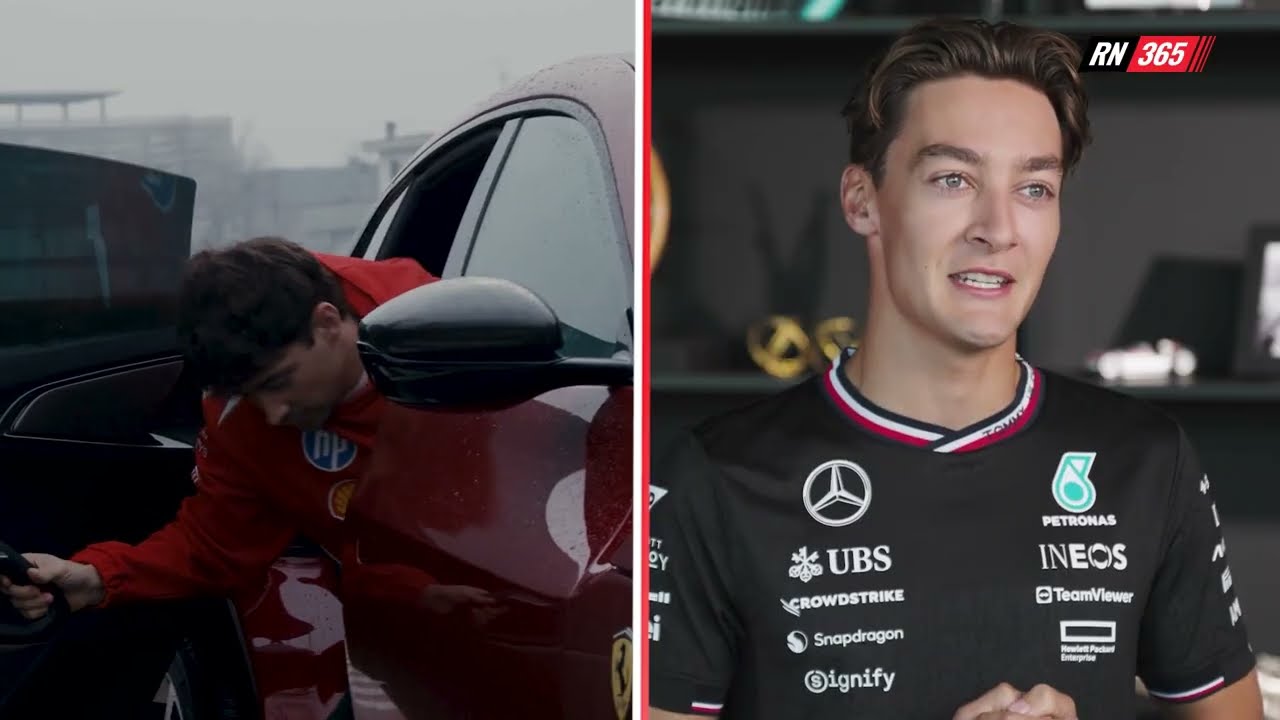
3. (Tie) George Russell & Charles Leclerc – $34 Million Tied for third place are the men carrying the hopes of Mercedes and Ferrari (alongside their superstar teammates). George Russell, desperate for his own title, and Charles Leclerc, the Prince of Maranello, both take home $34 million. The pressure on them is immense. For Leclerc, the mission is to make Ferrari cheer again; for Russell, it’s to prove he is the true heir to the Mercedes throne.
2. Lewis Hamilton – $60 Million The shock of the season isn’t just the car Lewis Hamilton is driving, but the check he is cashing. Despite what many considered a “worst year ever” in 2025, Ferrari has doubled down on the seven-time champion. They are paying him $60 million per year—treating him like Michael Schumacher 2.0. It is a massive gamble. For the price of one Lewis Hamilton, you could pay for Norris, Piastri, Hülkenberg, Perez, and Antonelli combined. Ferrari is betting on magic, not just metrics.
1. Max Verstappen – $70 Million He may not be the reigning champion officially, but his bank account is undefeated. Max Verstappen remains the highest-paid driver in Formula 1 history. Even without his performance bonuses for wins and poles, the Dutchman is guaranteed a staggering $70 million base salary. When you factor in his personal sponsorships and external deals, insiders suggest his total income could easily surpass $100 million. It is a figure that commands total respect and illustrates just how highly Red Bull values their talisman, regardless of the championship standings.
The Verdict
The 2026 salary list is more than just numbers; it is a narrative of the sport’s current state. It tells stories of rising stars fighting for recognition, veterans clinging to their value, and a top-tier elite that operates in a different financial reality.
As the lights go out this season, remember: while they are all racing for the same checkered flag, the stakes—at least financially—are vastly different. For Arvid Lindblad, a win means survival. For Max Verstappen, it’s just another day at the office.