In the high-stakes theater of Formula 1, the drama rarely ends when the checkered flag waves. Often, the real race is just beginning—not on the asphalt, but in the sterile, tension-filled rooms of the FIA stewards. A race win can evaporate in five seconds.
A championship can be decided by a document signed hours after the podium ceremony. In a sport defined by milliseconds, penalties are the invisible hand that can rewrite history, punishing mistakes and, at times, igniting fierce debates about fairness and consistency.
To the casual observer, the application of penalties can feel arbitrary, even chaotic. One driver might receive a five-second penalty for a minor infraction, while another escapes punishment for a seemingly identical move.
Suddenly, the entire race result flips, leaving fans bewildered and teams furious. But beneath this apparent randomness lies a complex, rigorous system designed to maintain order in a sport that teeters on the edge of dangerous chaos.
The Volunteer Guardians of a Billion-Dollar Sport
At the heart of every decision are the FIA stewards—a rotating panel of officials tasked with interpreting the rulebook at each Grand Prix. Typically, this panel includes a former racing driver, a national steward from the host country, and a permanent FIA steward. Each member holds an international Grade A license, a testament to their deep understanding of the regulations.
However, there is a detail that often shocks fans: these stewards are not full-time professionals. They are classified as volunteers. While their expenses are covered, they do not receive a salary for their role. This fact sits uncomfortably within the context of modern Formula 1, a multi-billion-dollar global enterprise where teams spend hundreds of millions on technology and drivers earn fortunes.
This volunteer status is often cited as a root cause of one of the sport’s most persistent issues: inconsistency. Because different stewards rotate through the role at different races, the interpretation of rules can vary from weekend to weekend. A move deemed legal in Silverstone might be penalized in Monza, creating a landscape of uncertainty that frustrates drivers and fans alike. The call for a permanent, professional panel of stewards is growing louder, with many arguing that a sport of this magnitude demands full-time referees to ensure consistency.
The Anatomy of an Investigation
How does a penalty actually come to be? Incidents are brought to the stewards’ attention in two ways: either reported by the Race Director or noted by the stewards themselves. Once an investigation is launched, the process is thorough and data-driven. The stewards have access to a wealth of information that fans at home never see. They analyze multiple angles of TV footage, onboard cameras, telemetry data showing throttle and brake inputs, team radio communications, and even statements from the drivers involved.
If the evidence is inconclusive, the verdict is “no further action.” But when a rule is broken, the consequences can range from a slap on the wrist to a career-altering disqualification.
The Ladder of Consequences
The penalty system is structured like a ladder, with severity increasing with the offense. At the bottom are warnings and reprimands. A warning is typically issued for minor infractions like track limits or procedural errors. A reprimand is more serious, and they accumulate. If a driver receives five reprimands in a season, they are automatically hit with a grid penalty. It is a system designed to punish repeat offenders, ensuring that even small mistakes have long-term consequences.
Fines are another common tool, often used for procedural mistakes, behavioral issues, or pit lane incidents. While some fines are symbolic, others can be astronomical. The most infamous example remains the “Spygate” scandal of 2007, where McLaren was fined a staggering $100 million—one of the largest financial penalties in the history of sports.
Time: The Ultimate Punishment
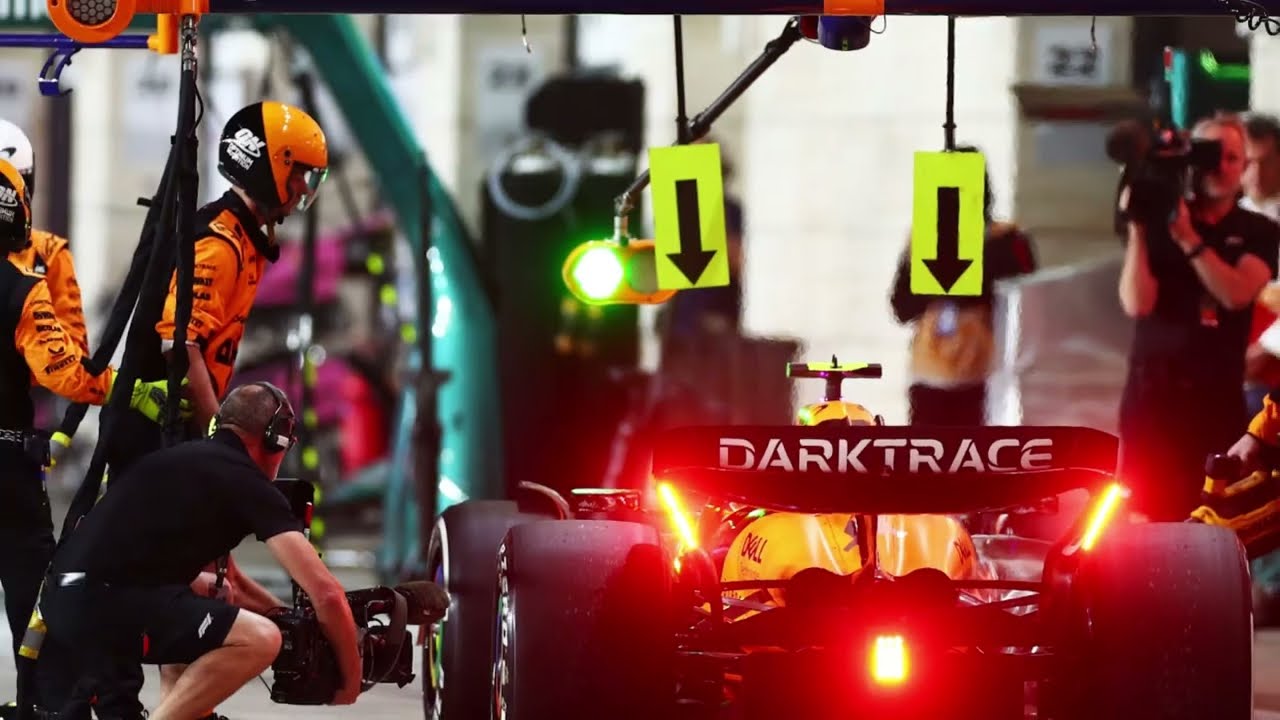
In a race, time is the only currency that matters, making time penalties the most common and effective punishment. A five or ten-second penalty is standard for on-track collisions or gaining an unfair advantage. If a driver still has a pit stop to make, they must serve the penalty there, sitting stationary for the duration before mechanics can touch the car. If no stops remain, the time is added to their final race time, potentially dropping them down the order long after they have crossed the line.
For more severe offenses, the penalties become brutal. A “drive-through” penalty forces a driver to drive through the pit lane at a reduced speed, losing valuable track position. harsher still is the “stop-and-go” penalty, where a driver must stop in their pit box for ten seconds without any work being done on the car. In modern F1, where gaps are measured in tenths of a second, a stop-and-go is effectively a race-ending sentence.
The Nuclear Option: Disqualification
At the extreme end of the spectrum lies disqualification. This is usually reserved for technical violations—an illegal car setup, a fuel irregularity, or failing post-race scrutineering. When a disqualification is issued, the results change instantly and irrevocably. A driver who stood on the top step of the podium can be stripped of their win hours later, a harsh reminder that in F1, you must win not just on the track, but in the technical inspection bay as well.
The Hidden License: Penalty Points
Running quietly in the background is the penalty points system, effectively a driver’s license for F1. Drivers who accumulate 12 penalty points within a 12-month period face an automatic race ban. Points expire after a year, but the threat forces drivers to think long-term. A reckless move in the first race of the season could haunt a driver for months, potentially costing them a seat at a critical moment in the championship.
Can You Appeal History?
Is a steward’s decision final? Yes, but with caveats. Teams can appeal, but only under strict conditions. They must present “new and significant” evidence that was not available at the time of the original decision. Even then, overturning a result is incredibly difficult. Time penalties served during a race are almost impossible to reverse, as the race has already been run under those conditions. History, once written on the track, is stubborn.
The Future of Fairness
As Formula 1 continues to evolve, the debate over penalties and stewarding will only intensify. The sport is faster, safer, and more professional than ever before, yet the systems governing it often feel like relics of a bygone era. Critics argue that relying on volunteer stewards in a billion-dollar industry is unsustainable and that professionalizing the role is the only way to achieve true consistency.
Penalties are part of Formula 1’s DNA. They exist to protect drivers, ensure fairness, and uphold the credibility of the competition. But they also serve as a reminder that in this sport, the race doesn’t always end at the checkered flag. For the fans, the drivers, and the teams, the real story often happens behind the scenes, where a signature on a piece of paper can be just as powerful as an overtake on the final lap.