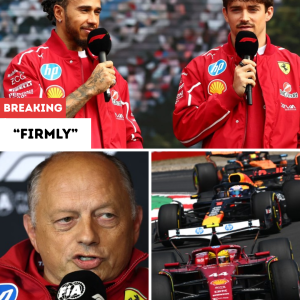
When the timing screens lit up during the second week of Formula 1’s preseason testing in Bahrain, one number captured the immediate attention of the global motorsport community: 1 minute and 31.9 seconds. That was the blistering lap time set by Charles Leclerc in the brand-new Ferrari SF-26.
To the casual observer, it was a spectacular display of raw speed, a fiery declaration that the Scuderia was back and ready to fight for pole positions. But for former World Champion Nico Rosberg, whose analytical eyes have dissected the sport’s most intense intra-team rivalries, that solitary lap time was merely the superficial layer of a much deeper, far more compelling narrative unfolding within the storied Italian team.
What Rosberg saw behind that impressive stopwatch figure was not just a successful time attack on soft tires under the fading desert sun. It was a profound psychological message, an internal declaration of hierarchy, and, most importantly, the quiet birth of an incredibly dangerous dynamic between Leclerc and his new, seven-time World Champion teammate, Lewis Hamilton.
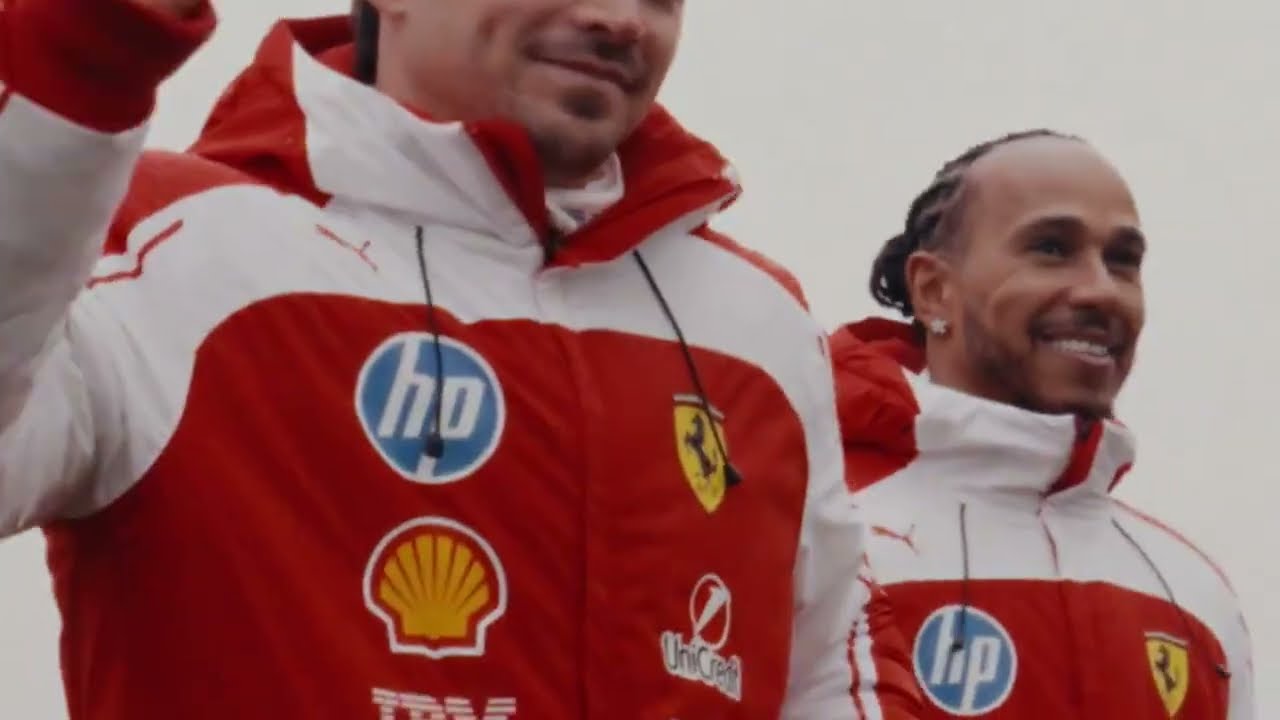
The second week of testing in Bahrain did not commence with the explosive fireworks of outright qualifying simulations. Instead, it was defined by meticulous data gathering, exhausting long runs, and microscopic setup adjustments. Ferrari operated with a chilling, purposeful silence while the rest of the paddock desperately tried to decipher if the pace shown in the initial days was genuine or merely a strategic mirage. However, as the laps accumulated around the Sakhir circuit, a definitive and highly threatening pattern began to emerge—a pattern that Nico Rosberg was incredibly quick to identify and dissect.
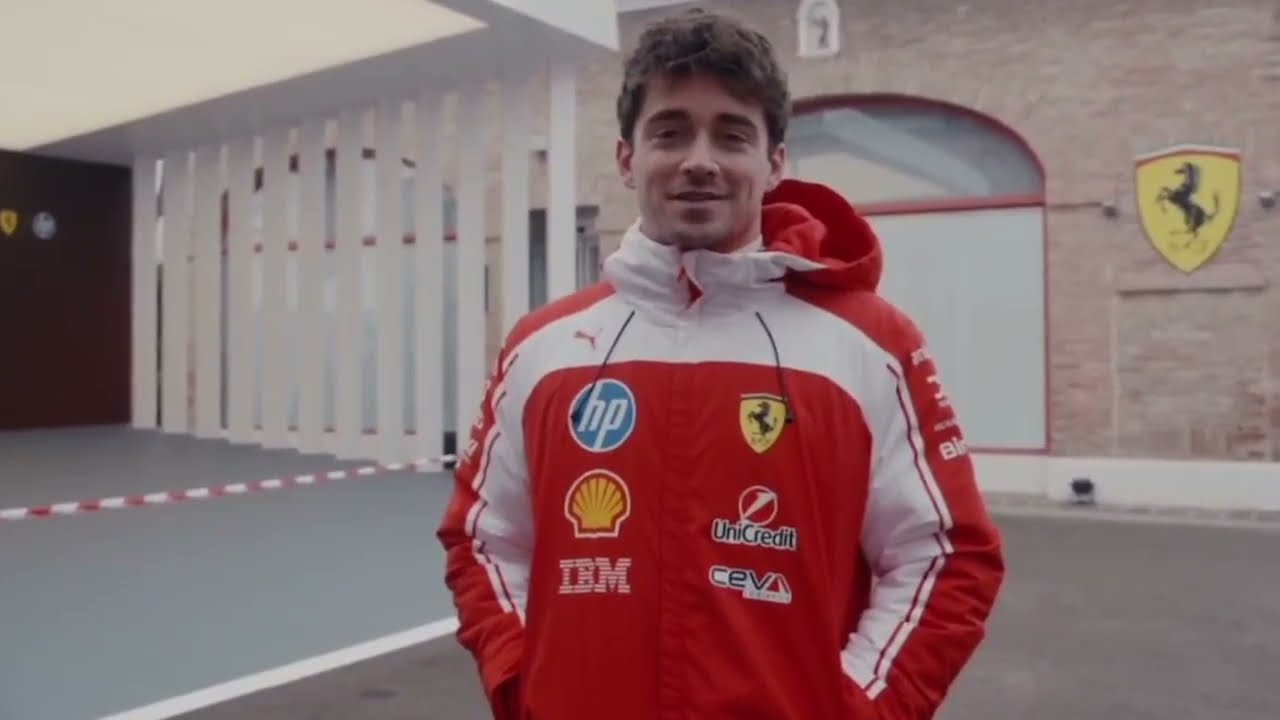
The 2026 Ferrari challenger, the SF-26, was not simply fast; it was fundamentally coherent. Charles Leclerc was the first to demonstrate this newfound harmony with aggressive authority. His adaptation to the new machinery appeared entirely natural, almost instantaneous. Observers at trackside watched in awe as the Monegasque driver attacked Sakhir’s notoriously tricky high-speed corners with absolute, unshakeable confidence in the front axle.
For years, Ferrari has been plagued by cars that exhibited a hesitant, unpredictable turn-in, forcing drivers into constant micro-corrections that bled precious lap time and destroyed tire life. The SF-26, however, rotated with surgical precision. When a driver of Leclerc’s caliber can brake incredibly late, release the pedal, and inherently trust that the nose of the car will eagerly dive toward the apex without introducing terrifying oversteer, lap time simply materializes. His 1:31.9 lap was not a frantic, overdriven act of improvisation. It was the calculated culmination of a flawless testing program: C5 compound tires, optimal track temperatures in the late afternoon, and a perfectly balanced chassis that seamlessly complemented his naturally aggressive driving style. Sector by sector, Leclerc constructed a ruthlessly clean lap, free of dramatic steering inputs or frantic corrections.
Yet, this is exactly where Rosberg’s expert analysis pivots away from the blazing speed of Leclerc and focuses squarely on the other side of the legendary red garage.
Publicly, Lewis Hamilton maintained his trademark stoic calm as his younger teammate rocketed to the top of the timesheets. Leclerc was undeniably in “leader mode,” sending a massive, direct message to both the grid and his new partner. But according to Rosberg, what Hamilton was quietly constructing during those same testing sessions was infinitely less spectacular for the cameras but strategically terrifying for his rivals.
While the world obsessed over Leclerc’s qualifying simulation, Hamilton was deeply immersed in heavy-fuel long runs. What Rosberg noted in the telemetry and onboard footage was a steering wheel that was remarkably, almost unusually, stable in the hands of the British champion. There were significantly fewer micro-corrections mid-corner. The agonizing struggle during the transition from heavy braking to lateral cornering support—a phase that has haunted Mercedes drivers in recent years—was entirely absent. The SF-26 did not seem to surprise Hamilton on corner entry or rudely dislodge him on the exit.
For someone like Nico Rosberg, who shared a garage with Hamilton during the most intensely toxic and competitive years of their Mercedes dominance, understanding Hamilton’s body language is second nature. Rosberg knows exactly what Hamilton looks like when he is uncomfortable, fighting a recalcitrant chassis, and crucially, what he looks like when he begins to truly merge with a machine. The difference is night and day.
In Bahrain, Hamilton was not desperately chasing the fastest lap of the test. He simply didn’t need to. He was fully engaged in a phase of profound, foundational understanding. He was clinically analyzing how the rear axle responded under the immense load of deep trail-braking, testing the exact limits of front-end bite without sacrificing crucial rear stability, and observing how the aerodynamic platform behaved during grueling stints exceeding ten laps.
This silent, methodical construction is what makes Lewis Hamilton arguably the most dangerous driver in the modern era. When Hamilton achieves total connection with a car, his pace ceases to be intermittent and becomes relentlessly, suffocatingly consistent.
The fascinating dynamic revealed during this crucial week of testing shows two phenomenal drivers operating at the peak of their respective powers, but in entirely different phases of their championship campaigns. Charles Leclerc is at his absolute most mature. He exudes high confidence, controlled aggression, and possesses an intimate, absolute knowledge of Ferrari’s operational DNA. He is ready to fight for pole position tomorrow.
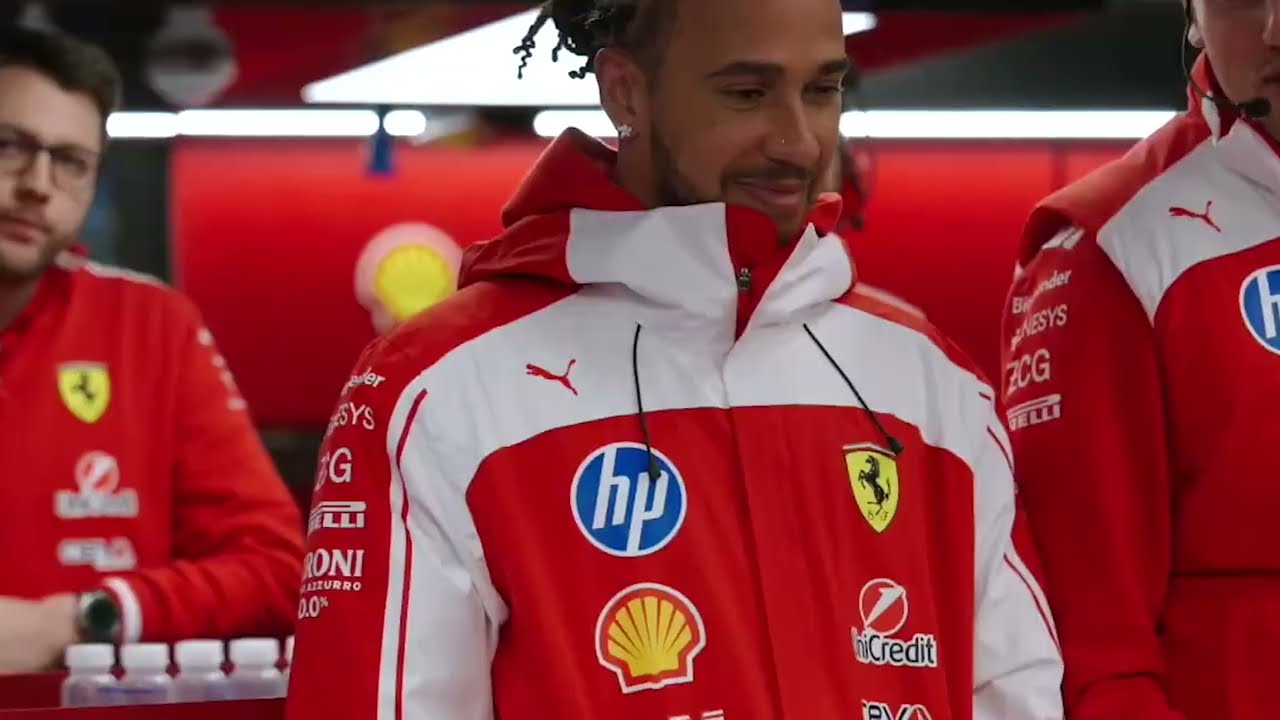
Hamilton, on the other hand, although undoubtedly hyper-aware of his teammate’s blistering pace, did not react with the frantic anxiety of a driver feeling threatened. He reacted methodically. This drastically alters the entire complexion of the 2026 season. If the SF-26 is a car that allows Leclerc to extract maximum performance over a single lap while simultaneously offering Hamilton the rock-solid stability necessary to build devastating race pace, Ferrari is no longer fielding a capricious, temperamental machine. They have built a weapon.
This is the core of Rosberg’s warning. Ferrari appears to have finally cured its most crippling historical illness: the agonizing contradiction between qualifying brilliance and race-day degradation. The telemetry data highlights a track cleanliness in Hamilton’s long runs that is profoundly worrying for Red Bull and Mercedes. The car no longer relies on a microscopic, knife-edge temperature window. It does not possess a fragile aerodynamic balance that completely vanishes the moment the fuel tank is filled to the brim.
Hamilton is a driver whose entire style is predicated on absolute trust in the rear end of the car. When he knows the rear tires will gracefully absorb the transition from braking to cornering force without snapping violently into oversteer, he can delay his braking points to an absurd degree, perfectly modulate the pedal, and carry immense minimum speed through the apex without ever compromising his exit trajectory. The fact that the SF-26 is already providing this foundational trust in February means the Formula 1 world has not even come close to seeing Hamilton’s real ceiling in red.
While Leclerc was generating the headlines, Hamilton was busy adjusting suspension geometries, exploring the ultimate limits of the balance window, and engaging in structural, progressive engineering. It is a frighteningly intelligent strategy. Rosberg understands this because he lived through it. He knows that when Hamilton stops questioning the car and starts blindly trusting it, his precision multiplies, his tire management becomes supernatural, and his strategic vision sharpens to a razor’s edge.
This creates an incredibly complex and potentially explosive internal conflict within Maranello. Leclerc enters the season at his absolute mental and physical peak. This is his team; he understands the culture, the people, and the genesis of the car. Yet, he now shares the most famous garage in the world with a man who understands that you do not need to be the fastest driver in February to be the most lethal driver in April.
Ferrari now possesses two wildly different, yet equally devastating paths to maximum performance. Leclerc represents the immediate, explosive, and aggressively instantaneous strike. If the car is in the window, he will wring its neck for every last thousandth of a second. Hamilton represents the surgical, cumulative, and progressively overwhelming siege. If he solidifies his stable base, he will turn it into a platform of unrelenting Sunday regularity.
If Leclerc dominates Saturdays by marking his territory in qualifying, and Hamilton dominates Sundays by ruthlessly executing superior race pace, Ferrari will morph from a competitor into a systemic, unsolvable problem for the rest of the grid.
The second week of testing in Bahrain did not officially crown a champion, nor did it definitively establish who the ultimate alpha is within the Ferrari garage. But it did leave a profound, chilling warning hanging in the desert air. Ferrari is no longer a team desperately searching for answers to fundamental aerodynamic questions. With Leclerc’s raw speed and Hamilton’s terrifyingly methodical preparation, Ferrari is now the team imposing the questions. And the rest of the Formula 1 grid should be deeply terrified of what the answers might be.