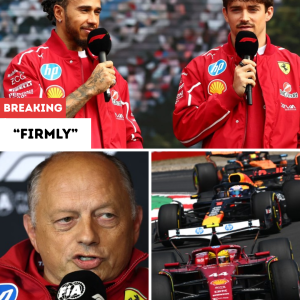
The dawn of a new era in Formula 1 is usually accompanied by a sense of optimism and excitement. However, as the engines cooled following the first three days of pre-season testing in Bahrain, the prevailing mood among the world’s elite drivers was not one of joy, but of deep concern.
According to veteran F1 photographer and paddock insider Kym Illman, the 2026 regulations have birthed “complicated beasts” that are leaving drivers frustrated, teams anxious, and fans wondering if the sport has taken a wrong turn.
The 2026 rules were designed to shake up the grid, introducing sustainable fuels and a heavier reliance on electrical power. But if the early data from Sakhir is any indication, the shake-up has resulted in a shattered field where the gap between the haves and the have-nots has widened to a terrifying degree.

The 6-Second Chasm
Perhaps the most alarming takeaway from the test is the sheer disparity in performance. In recent seasons, Formula 1 has enjoyed a golden era of closeness, with the entire field often covered by less than a second in qualifying. That parity appears to be dead.
“There is a huge difference between the fastest and the slowest cars on track,” Illman reported from the paddock. “It’s in the order of four to six seconds.”
To put that figure into perspective, a six-second gap per lap translates to a difference of roughly 10% in performance. In a standard 57-lap Grand Prix, the leader would lap the backmarkers not just once, but three or four times. One driver confessed to Illman that he wouldn’t be surprised to see such massive gaps in qualifying come Australia. If teams cannot close this deficit in the final three days of testing, the sport faces the prospect of a two-tier championship where half the grid is merely traffic for the leaders.
The “Dynamo” Effect: A Driving Nightmare
The source of the drivers’ frustration isn’t just the stopwatch; it’s the physical sensation of driving the cars. The new power units feature a 50/50 split between internal combustion and electric power, with a significantly smaller fuel tank (75 liters compared to the previous 90 liters). This forces the cars to harvest energy aggressively, a process Sky Sports’ Ted Kravitz likened to a bicycle dynamo.
“If I wanted the light on, I’d have to flick this little bezel over… what it did was provided friction,” Illman explained, recounting a conversation with Kravitz. “In doing that, it slowed my progress down.”
This “friction” is now being felt on the race track. On long straights, such as those in China or Bahrain, drivers are finding that their cars are effectively braking themselves mid-straight to recharge the battery. This creates a bizarre tactical dilemma. If a pack of four cars all harvest energy at the same time, the status quo is maintained. But if one driver decides to sacrifice efficiency for position, they could breeze past three rivals in one go—only to likely be re-passed immediately once their battery is drained.
Drivers are predicting “queues” at the final corners in qualifying as everyone tries to maximize their battery charge for a flying lap. It is a fundamental shift from “pushing flat out” to managing a complex mathematical equation at 200 mph, and the drivers are visibly struggling to adapt.
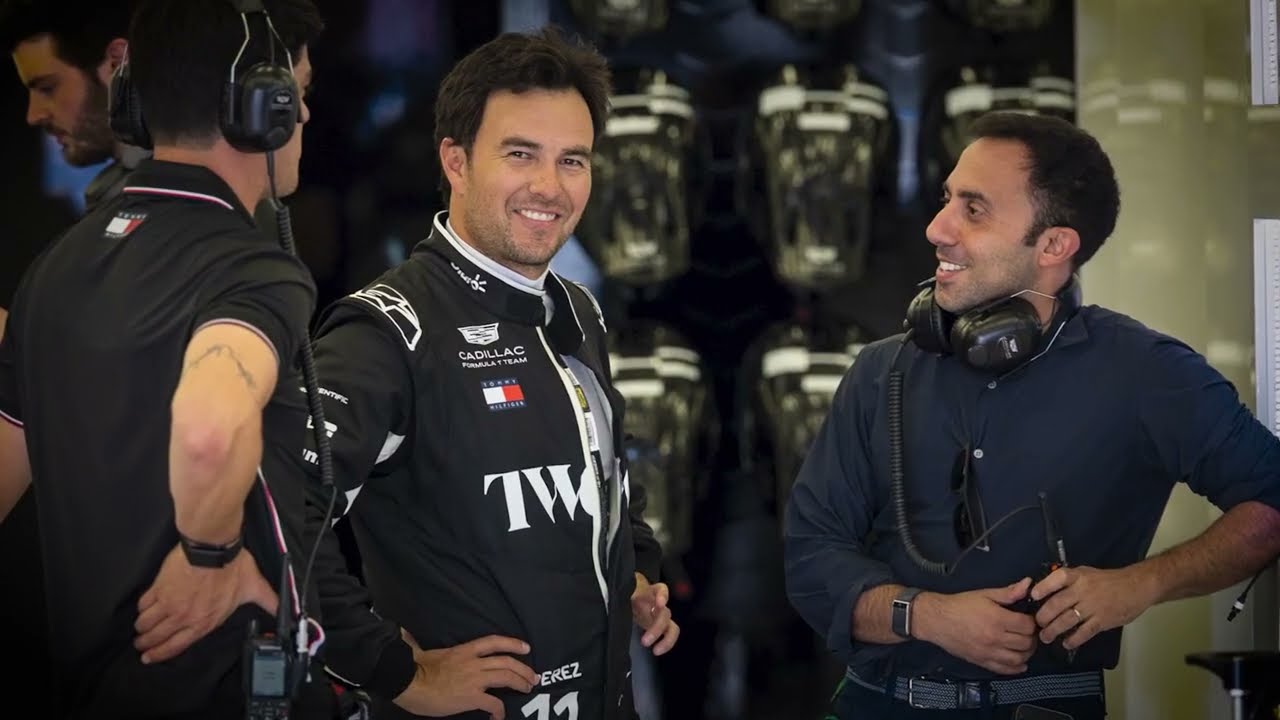
Winners and Losers: The Garage Mood
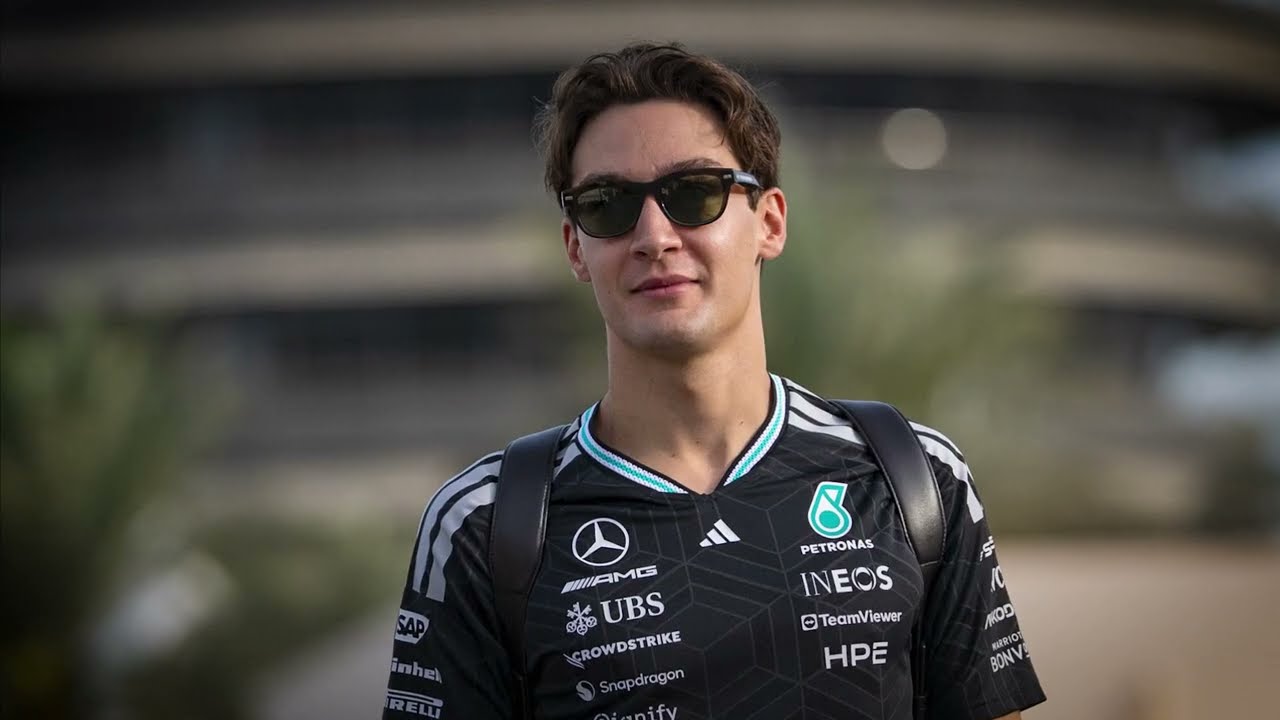
While the regulations are the same for everyone, the mood varies wildly from garage to garage. At the sharp end of the grid, the mind games have already begun. Mercedes finished the test with a 1-2 on the timing sheets, with rookie Kimi Antonelli and George Russell showing blistering pace. However, Russell was quick to downplay the Silver Arrows’ speed, heaping praise on the Red Bull Ford powertrain instead.
“He seems to think they are the team to beat,” Illman noted, suggesting a classic case of pre-season sandbagging. “Nobody wants to be the favorite.”
Indeed, despite Max Verstappen’s public complaints about the cars feeling like “Formula E on steroids,” the Red Bull Ford partnership appears to be in a strong position, with the power unit looking reliable and potent.
At the other end of the pit lane, the atmosphere is somber. Aston Martin, a team with high hopes for the new era, appears to be in crisis. Fernando Alonso was spotted outside the garage looking “most concerned” as mechanics swarmed over Lance Stroll’s car.
“They are four-plus seconds behind the leaders,” Illman revealed. “I imagine things aren’t too happy in that camp at the moment.”
Similarly, Pierre Gasly and Alex Albon were overheard having a candid discussion with Williams Team Principal James Vowles, appearing “miffed” at how the cars were handling. With reliability issues forcing several cars to stop on track, the anxiety is palpable.
The Human Cost
The pressure on the drivers is further compounded by the brutal nature of their contracts. Illman noted that 15 of the 22 drivers on the grid have performance clauses in their contracts. In a season where the car’s driveability is unpredictable, job security is at an all-time low.
“There’s no guarantee that those good drivers driving good cars last year will be able to replicate it this year,” Illman warned. “That could well be a crazy situation come the summer break.”
The cars also demand new skills. A new “boost button” on the steering wheel allows for short bursts of overtaking power, while the launch procedure has become a “lengthy” and complex routine that many drivers struggled to execute without excessive wheel spin.
A Leap into the Unknown
As the F1 circus packs up and prepares for the final days of testing, the sport is staring into the abyss of the unknown. The cars are behaving differently in the heat of Bahrain compared to the cooler European shakedowns. Reliability remains a massive question mark. And the racing spectacle itself hangs in the balance.
Will the Australian Grand Prix be a thrilling opener, or a procession of broken cars and frustrated drivers? One thing is certain: the 2026 regulations have not just changed the cars; they have changed the game. And right now, the players are not happy.