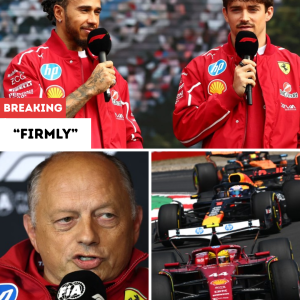
The first morning of a new Formula 1 regulation cycle is traditionally a time of cautious optimism, hidden agendas, and technical mystery. Yet, as the sun rose over Albert Park for the 2026 Australian Grand Prix, Ferrari decided that the time for mystery was over.
In a display of raw performance that felt more like a statement of intent than a mere practice session, Charles Leclerc and Lewis Hamilton didn’t just top the timing sheets; they effectively reset the expectations for the next decade of the sport. The 2026 regulations were designed to bring the field together, but after the first two hours of running, it appears Ferrari may have found a way to tear the field apart.
To understand the magnitude of what unfolded in Melbourne, one must first appreciate the scale of the 2026 technical revolution. This isn’t a mere evolution of the previous cars; it is a ground-up redesign of the very DNA of Formula 1. With smaller, lighter chassis, active aerodynamics that adjust in real-time, and a power unit that splits its performance equally between internal combustion and electrical energy, the 2026 cars are a different breed of animal.
Historically, when the rulebook is rewritten this drastically, the team that strikes the first blow often maintains that advantage for years to come. In 2026, that first blow was delivered with the force of a sledgehammer by the Scuderia.

The Leclerc Benchmark and the Hamilton Debut
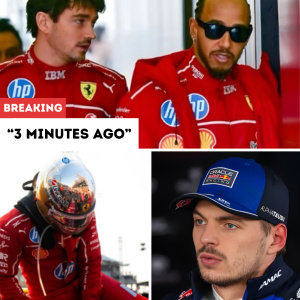
The headline from Free Practice 1 was as simple as it was devastating: Charles Leclerc, P1. A lap time of 1:20.267. On its own, the number is just a data point, but the context is what sent ripples of anxiety through the Red Bull and McLaren garages. Leclerc was four-tenths of a second clear of his teammate, Lewis Hamilton, and half a second clear of Max Verstappen. In a sport where teams usually spend the first session “sandbagging” or running conservative engine modes, Ferrari looked like they were already operating at 95% of their potential.
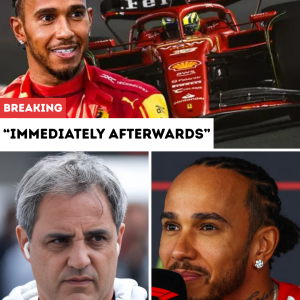
For Lewis Hamilton, the session was the culmination of a journey that began with the shock announcement of his departure from Mercedes in 2024. Seeing the seven-time world champion in Ferrari red was a surreal sight for fans, but his performance proved that the move was motivated by more than just romanticism. Hamilton finished second, immediately comfortable in a car that appears to have the front-end bite he has craved for years. The fact that he was within striking distance of Leclerc—a man who has practically lived at Maranello for the last six years—suggests that the SF26 is an incredibly intuitive machine to drive.
The Home Hero and the Mercedes Resurgence
If Practice 1 belonged to the Prancing Horse, Practice 2 saw the “Home Hero” ignite the grandstands. Oscar Piastri, driving for a McLaren team that looked lost in the opening session, suddenly found a vein of form that placed him at the top of the pile with a 1:19.729. The roar from the Australian crowd was audible even over the whine of the new turbo-hybrid engines. Piastri’s pace served as a vital reminder that while Ferrari looks dominant, the “Big Three” of 2025 haven’t disappeared.
However, the real surprise of the afternoon was the silver cars. Kimi Antonelli, the teenage sensation tasked with the impossible job of replacing Lewis Hamilton at Mercedes, finished the day in second place. To see a rookie step into the most scrutinized seat in racing and immediately challenge for the top spot is a testament to both his talent and the resilience of the Mercedes engineering team. With George Russell following closely in third, the “Silver Arrows” have signaled that they are far from being the third-best team on the grid.

A Red Bull in Retreat?
The most jarring sight of the day was the lack of presence from the reigning world champion. Max Verstappen, a man who has made a habit of making Formula 1 look easy, finished the day in sixth place, more than six-tenths of a second adrift. While Verstappen is known for hiding his true pace on Fridays, the body language of the RB22 on track told a different story. The car looked nervous under braking and struggled for traction in the slow-speed exits of the technical middle sector.
There is a growing theory in the paddock that Red Bull may have struggled with the transition to the new power unit regulations, particularly the increased reliance on electrical deployment. If Ferrari has indeed nailed the “Lightning Start” strategy—a rumored internal philosophy focused on maximum energy harvesting and deployment efficiency—then Red Bull could be facing their first genuine “out-machined” season in the hybrid era.
The Civil War Within Maranello
While the technical battle between teams is fascinating, the human drama unfolding inside the Ferrari garage is the story that will define the 2026 season. Ferrari has chosen to pair the most successful driver in history with the fastest natural talent of the current generation. It is a gamble that could lead to a world championship or a total internal collapse.
In Practice 1, Leclerc was the clear master, using his intimate knowledge of the team’s development cycle to squeeze every ounce of performance from the car. In Practice 2, Hamilton closed the gap, finishing ahead of his teammate as he began to master the nuances of the Ferrari power delivery. Ferrari Team Principal Fred Vasseur has insisted that there is no “Number One” driver, but in the ruthless world of F1, that status is earned on the track. If the SF26 is as dominant as it appears, every qualifying session will become a psychological battleground between two titans. The internal politics that have famously sabotaged Ferrari title bids in the past are the only thing that might be able to stop them in 2026.

The New Guard: A Rookie Revolution
The 2026 season opener has also highlighted a significant shift in the grid’s demographics. Beyond Antonelli’s heroics at Mercedes, the performance of Isack Hadjar for Racing Bulls and Arvid Lindblad was nothing short of spectacular. Hadjar finished fourth in the opening session, comfortably ahead of more experienced veterans, while Lindblad hovered around the top five.
These young drivers are entering the sport at a time when the “reset” of the regulations has leveled the playing field. They don’t have to “unlearn” the habits of the previous generation of ground-effect cars; they are learning the 2026 machines with a fresh perspective. This “Rookie Revolution” is putting immense pressure on established veterans like Fernando Alonso, who had a difficult Friday plagued by technical gremlins at Aston Martin.
Conclusion: A Season for the Ages
As the teams analyze the mountain of data gathered from the first two practice sessions, one thing is certain: Formula 1 has entered a new golden age of competition. Ferrari has clearly done their homework, designing a car that excels under the smaller, more agile 2026 framework. Their “Lightning Starts” and aerodynamic philosophy have given them a head start, but McLaren, Mercedes, and a wounded Red Bull are already beginning to close the gap.
The question that remains is whether Ferrari can maintain this level of execution under the pressure of a full race weekend. Practice is for the engineers; qualifying and the race are for the warriors. With Leclerc and Hamilton leading the charge, the “Year of the Horse” may well become a reality. If you aren’t watching the 2026 season, you are missing the most significant shift in the power balance of motorsport in a generation. The Prancing Horse is back, and it looks hungrier than ever.