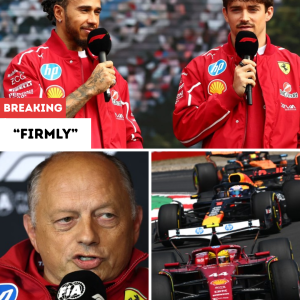
In the high-stakes, hyper-competitive world of Formula 1, records are meant to be broken. However, there are certain milestones, etched deeply into the history books, that acquire a mythical status. They become untouchable, looming over every new generation of drivers as an impossible standard. For exactly seventeen years, one such record stood as a monument to youthful brilliance: the youngest pole position in the history of the sport.
It was a record set by a young German driver who would go on to become a legend. But today, the entire motorsport world has been forced to recalibrate its understanding of what is possible, because an eighteen-year-old rookie named Andrea Kimi Antonelli just did the unthinkable.
He didn’t just break that legendary record; he absolutely shattered it in a breathtaking display of raw speed, fearless aggression, and supernatural talent, completely dethroning the reigning king of the sport, Max Verstappen, in the process.
The Weight of a Seventeen-Year-Old Legacy
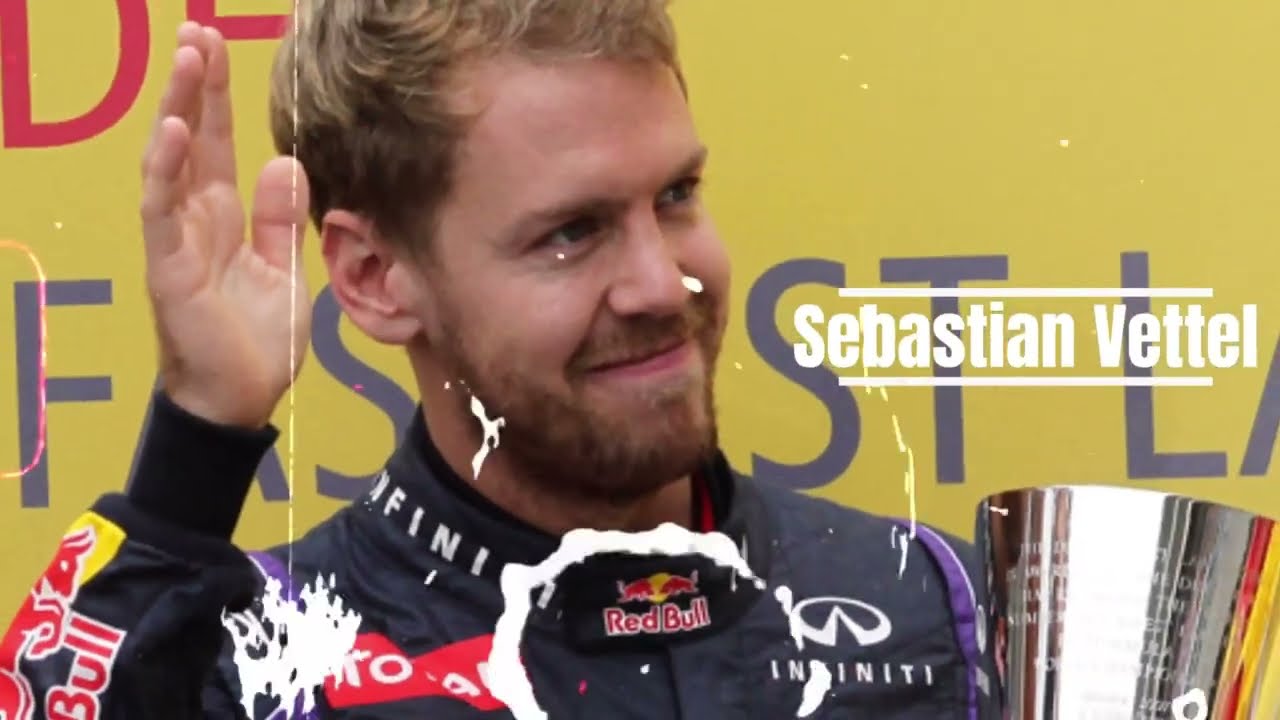
To truly appreciate the sheer magnitude of what just transpired under the searing sun of the Miami Grand Prix, we must first travel back in time to the rain-soaked asphalt of the Autodromo Nazionale Monza in 2008. The Italian Grand Prix that year was defined by torrential downpours that terrified even the most grizzled veterans of the grid. Yet, amidst the spray and chaos, a twenty-one-year-old Sebastian Vettel stunned the world. Driving for the tiny, underfunded Toro Rosso team, Vettel masterfully navigated the treacherous conditions to grab pole position. At 21 years and 72 days old, he became the youngest pole sitter in Formula 1 history. It was a lap that defied logic, a lap that launched a phenomenal career culminating in four consecutive World Championships.
For nearly two decades, that Monza masterclass looked completely untouchable. Generations of highly touted young drivers entered the sport, hailed as the “next big thing,” yet none of them could even come close to eclipsing Vettel’s youthful benchmark. The physical demands of the cars, the extreme complexity of the hybrid power units, and the intense psychological pressure of modern Formula 1 made it seemingly impossible for a driver so young to outqualify the entire grid. That was the accepted reality—until the 2025 season dawned, bringing with it a driver who was determined to completely rewrite the script.
The Grooming of a Generational Prodigy
Andrea Kimi Antonelli is not just another talented rookie who got lucky on a Saturday afternoon. He is a generational phenomenon, a driver whose path to Formula 1 was meticulously engineered by the brilliant minds at Mercedes. He had been on their official radar since he was just twelve years old. By the time most children his age were struggling with middle school algebra and playing video games, Antonelli was already being groomed, trained, and prepared to become a future Formula 1 superstar. The pressure placed upon his young shoulders was immense from the very beginning, yet he carried it with a quiet, unnerving confidence.
His rapid rise through the junior motorsport categories was nothing short of brutal for his competitors. He didn’t just participate in these series; he completely annihilated them. Italian F4 Champion. ADAC F4 Champion. Formula Regional European Champion. Every single step of the traditional racing ladder was conquered with a level of dominance that left talent scouts speechless. Mercedes firmly believed in his transcendent abilities so much that they made a shocking, unprecedented decision: they allowed him to skip the fiercely competitive FIA Formula 3 Championship entirely, pushing him straight into the shark-infested waters of Formula 2.
And then, just one season later, the truly unthinkable happened. Following the earth-shattering news of Lewis Hamilton’s departure, Mercedes confidently announced that this untested eighteen-year-old teenager would be the one to replace the seven-time World Champion. The global F1 community was divided. Some hailed it as a stroke of visionary genius, while others called it absolute madness. The pressure was enormous, suffocating, and unrelenting. The entire Formula 1 world watched with bated breath, waiting to see if the young Italian prodigy would crack under the impossible weight of the Mercedes legacy.

The Crucible of the Miami Street Circuit
The moment of truth finally arrived at the heavily anticipated Miami Grand Prix. This is not a traditional, forgiving European circuit with vast tarmac run-off areas. It is a brutal, unforgiving street circuit tightly wrapped around the colossal Hard Rock Stadium. It features long, flat-out straights where slipstreaming is crucial, combined with painfully slow, highly technical chicanes that demand absolute mechanical precision. And most dangerously, the unforgiving concrete walls are constantly waiting to punish even the slightest millimeter of misjudgment.
To compound the immense challenge, this was a designated Sprint weekend. In modern Formula 1, Sprint weekends are notorious for their chaotic, high-pressure nature. Antonelli had almost no practice time to dial in the complex setup of his Mercedes. There was just one solitary, frantic sixty-minute practice session before the cars were thrown straight into meaningful qualifying. One minor lock-up, one brush with the barrier, and the entire weekend’s opportunity would instantly disappear in a cloud of carbon fiber dust.
But the real, palpable tension began building in the final, decisive session of qualifying (Q3). Whispers began spreading through the paddock like wildfire because the mathematical reality had suddenly dawned on everyone: if Andrea Kimi Antonelli somehow managed to pull this off, he wouldn’t just be claiming his maiden pole position. He would become the youngest pole sitter in the history of Formula 1 by a staggering margin of more than two full years. He was on the precipice of achieving something that had been deemed statistically impossible.
A Showdown for the Ages
As the final runs commenced, the atmosphere was electric. The reigning, undisputed World Champion, Max Verstappen, hit the track first. As he has done countless times before, the Dutch maestro delivered an absolute masterclass. He wrestled his Red Bull around the grueling circuit, smashing in a blistering lap time and immediately grabbing provisional pole position. To the casual observer, it looked like business as usual. It looked like another inevitable Verstappen pole, firmly establishing the established hierarchy of the sport.
But then, the timing screens across the pit lane abruptly lit up in a different color. Antonelli was out on track, beginning his final flying lap, and suddenly, something entirely unbelievable appeared on the monitors. Sector 1: Purple. The absolute fastest of anyone through Miami’s incredibly tight, technical opening section. The young Italian was throwing the heavy Mercedes machinery toward every single apex with a terrifying, aggressive confidence. There was no hesitation in his steering inputs, no fear in his braking points. He was driving entirely on instinct, deeply connected to the grip limit of his Pirelli tires.
Sector 2: Purple again. A collective gasp echoed through the media center. Now, the entire paddock was standing completely still, mesmerized by the data feeds. The rookie was undeniably faster than the reigning World Champion Verstappen. He was faster than the mighty Ferraris. He was faster than the resurgent McLarens. Everything suddenly came down to the final, treacherous sector of the lap. One tiny throttle application error, one small lock-up under heavy braking, and the magical lap would completely collapse.
The Heart-Stopping Climax
Approaching the final corner, the tension was unbearable. Antonelli aggressively threw the Mercedes into the apex, carrying an astonishing amount of entry speed. For a terrifying split second, the laws of physics seemed to catch up with him. The rear of the car abruptly stepped out, threatening to snap into a catastrophic spin. From the onboard camera, it looked like the lap was undoubtedly gone, a heartbreaking end to a miraculous effort.
But with lightning-fast reflexes that defy human comprehension, Antonelli caught the vicious slide perfectly. He modulated the throttle with surgical precision, straightened the car out, and aggressively pinned the accelerator to the floor, charging across the finish line.
The timing screen flickered green for a fraction of a second, before finally settling on the ultimate color of speed: Purple. Fastest overall. Pole Position.
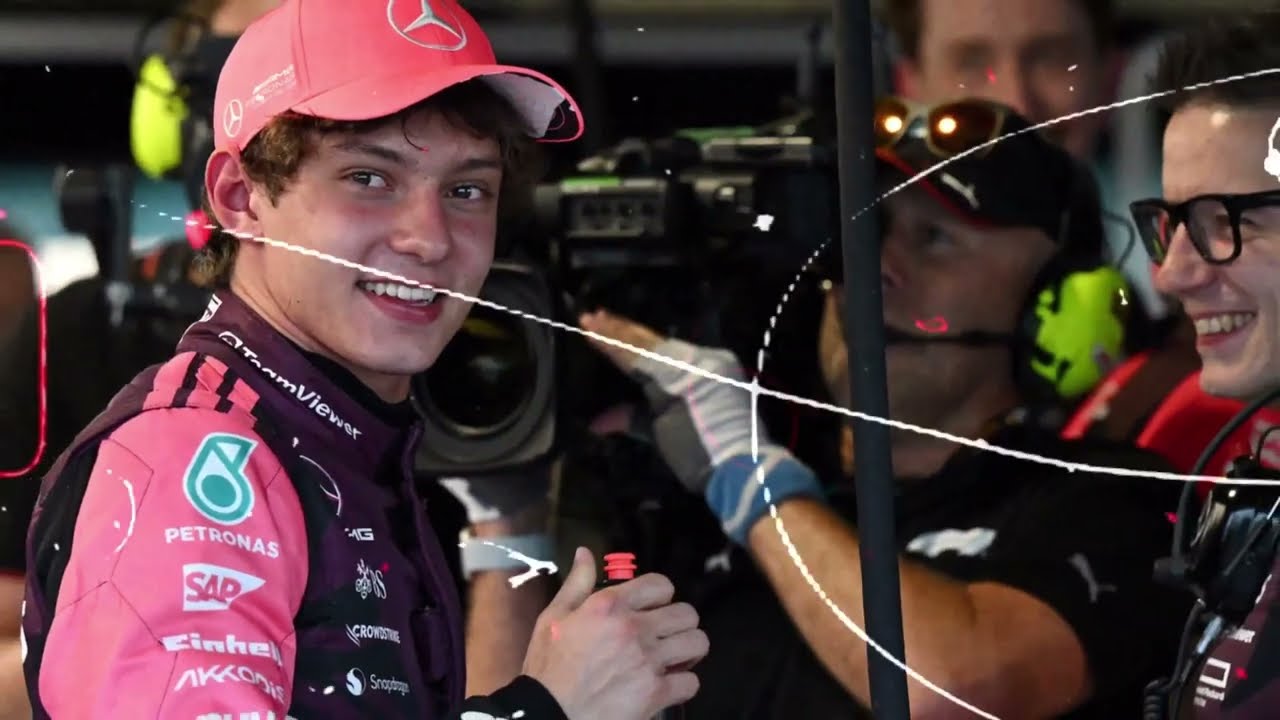
The Mercedes garage instantly erupted into a state of absolute pandemonium. Engineers who had spent their entire lives analyzing data violently screamed into their headsets, throwing their hands into the air in pure disbelief. Toto Wolff, a man who has seen it all in this sport, stood utterly shocked by the sheer magnitude of the performance. On the cool-down lap, Antonelli keyed his team radio, his voice trembling heavily with adrenaline and emotion. He could barely string together a coherent sentence. Just two minutes earlier, he was a laser-focused driver chasing a lap time; now, he was an eighteen-year-old kid who had just completely rewritten the seventy-plus-year history of Formula 1.
Sebastian Vettel’s legendary, seemingly untouchable record had finally fallen after exactly seventeen years. And the phenomenal driver who broke it wasn’t an established veteran or a seasoned World Champion. Not yet, at least. He was just a teenager who refused to bow to the immense pressure of his circumstances. Moments like this do not just create fleeting headlines that are forgotten by the next race weekend; they create enduring legends. Because what happened under the intense pressure of Miami wasn’t just a spectacularly fast lap. It was a massive, undeniable signal. It was a terrifying warning shot fired directly at the rest of the Formula 1 establishment. A brand new, fiercely talented generation has officially arrived to conquer the pinnacle of motorsport, and the most frightening part for the current champions? Andrea Kimi Antonelli is only eighteen years old. His incredible journey has only just begun.