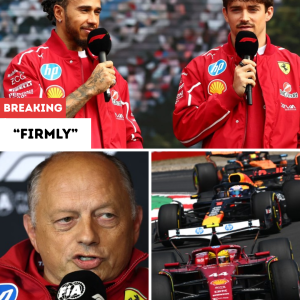
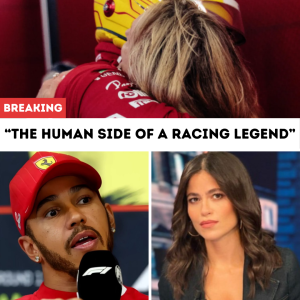
The roar of the crowd at the Shanghai International Circuit carried a different tone this time—not just excitement, but recognition. After months of doubt, adaptation, and quiet determination, Lewis Hamilton finally stood tall again. Not at the very top, not yet—but close enough to remind the world that he is far from finished.
The 2026 Chinese Grand Prix may not have delivered him victory, but it delivered something perhaps even more important: validation.
For Hamilton, this third-place finish with Ferrari was more than just another podium. It was the end of a long, uncomfortable wait—the longest in history for a driver of his stature joining the legendary Italian team. Twenty-six races had passed since he first put on the red suit. Twenty-six weekends of questions, pressure, and growing whispers that perhaps the magic had faded.
But in Shanghai, something shifted.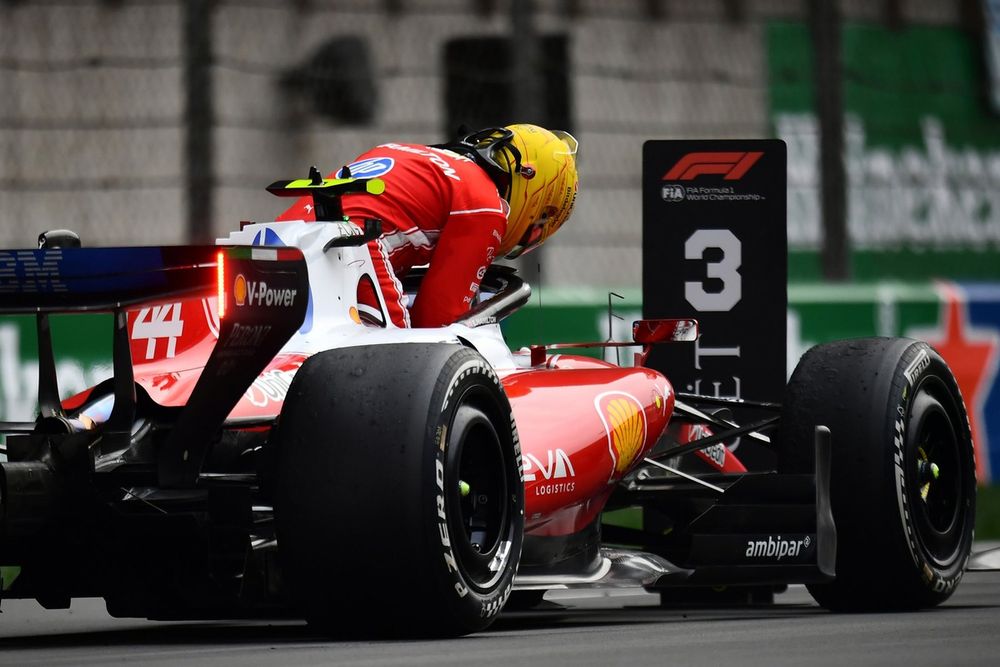
From the very beginning of the weekend, Hamilton looked different—sharper, more precise, more controlled. He outperformed his teammate Charles Leclerc in both qualifying sessions, sending a subtle but unmistakable message within the garage. And when Sunday came, the tension escalated into a fierce on-track battle between the two Ferrari drivers.
Lap after lap, they pushed each other to the edge, but Hamilton held firm. It wasn’t just skill—it was composure. The kind that defined his championship years. The kind many feared was slipping away.
By the time the checkered flag waved, Hamilton had secured third place, finishing behind the dominant Mercedes duo. He climbed out of the car, not with wild celebration, but with a quiet, almost relieved smile. This wasn’t the end goal—but it was proof he was back in the fight.
“I feel like I’m back to my best,” Hamilton admitted afterward. “Mentally and physically.”
It was a bold statement—but not an empty one.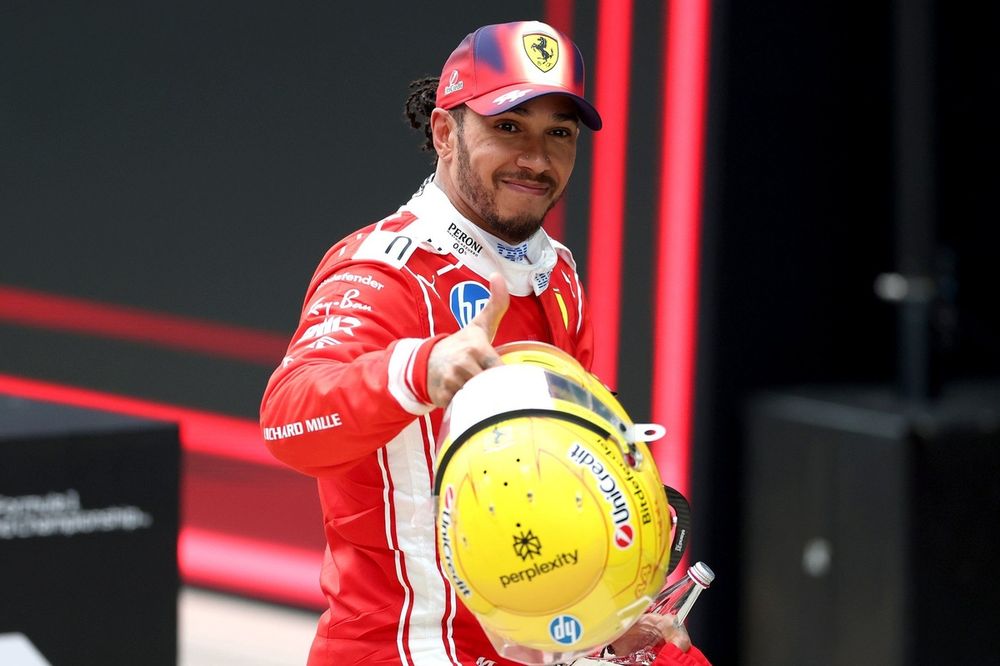
Behind the scenes, the transformation had been anything but easy. At 41, Hamilton is no longer the youngest driver on the grid, and the physical demands of Formula 1 have only intensified with the new regulations. Over the winter, he pushed himself harder than ever before.
By his own admission, it was the most intense training period of his entire career.
Long days. Relentless workouts. Recovery sessions that took longer than they used to. Every detail mattered. Every weakness had to be addressed. There was no room for complacency—not in a team like Ferrari, and certainly not at this stage of his career.
But physical preparation was only part of the equation.
Equally crucial was his growing connection with the team. When Hamilton first arrived in Maranello in early 2025, he stepped into a project that was already well underway. The car had been designed without his input. The systems, the setup philosophy—none of it was truly his.
Now, that has changed.
Over the past year, Hamilton has worked closely with engineers, spending countless hours in the simulator and at the factory, shaping the development direction of the car. He began to speak up more, to demand specific characteristics—balance, deployment behavior, responsiveness.
And this time, Ferrari listened.
That collaboration is now starting to show on track. The car feels more aligned with his driving style, more predictable, more competitive. And perhaps most importantly, Hamilton feels like he belongs.
“It makes you feel more united,” he said. “Like everyone is moving in the same direction.”
A key figure in this renewed momentum is his new race engineer, Carlo Santi. Previously associated with Kimi Räikkönen, Santi brings a different approach—calm, methodical, and deeply analytical. Their partnership is still evolving, described as “provisional” for now, but early signs suggest a strong foundation is forming.
Communication, once a potential weakness, is becoming a strength.
Even so, Hamilton is not declaring victory just yet.
Despite the podium, despite the renewed confidence, he insists there is still more to come. There are areas where he knows he can improve—fine margins in performance, deeper understanding of the car’s systems, better extraction of pace over a full race distance.
“I’m still learning,” he admitted. “There’s more performance I can find.”
That mindset—restless, never satisfied—is what has defined Hamilton’s career. It’s also what makes this comeback feel real, not temporary.
Team principal Frédéric Vasseur isn’t surprised by the improvement. From his perspective, this was always part of the plan.
The first year was about adaptation. The second is about execution.
“When you join a team late, you’re always playing catch-up,” Vasseur explained. “Now he’s part of the project from the beginning. That makes a huge difference.”
And perhaps that’s the most intriguing part of this story.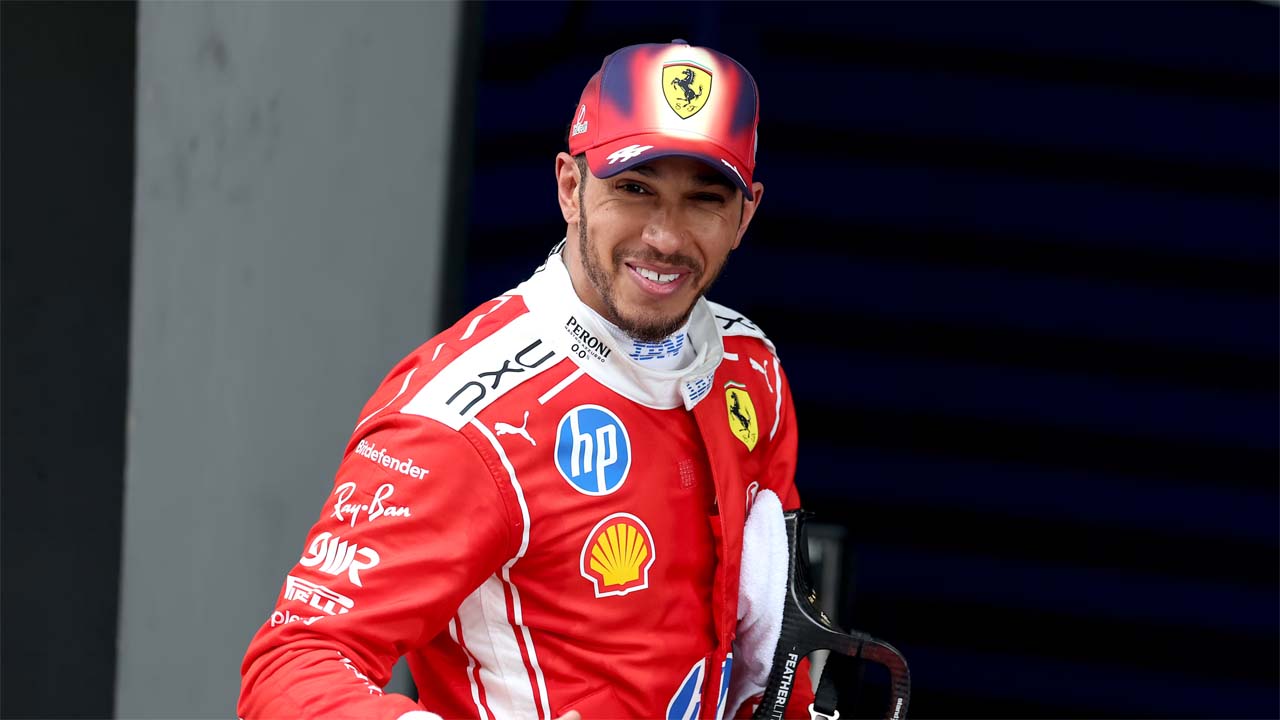
Because while Mercedes currently appears untouchable, and younger talents are rising fast, Hamilton is quietly rebuilding. Not chasing headlines, not making excuses—just working, refining, evolving.
The question now isn’t whether he can reach the podium again.
It’s whether this is the beginning of something bigger.
Because in Formula 1, momentum is everything. And if Shanghai proved anything, it’s that Lewis Hamilton—written off by some, doubted by others—is still capable of generating it.
The fire, it seems, never really went out.
It was just waiting for the right moment to burn again.