The atmosphere inside the iconic factory walls of Maranello has shifted from quiet confidence to absolute, unapologetic madness. It is midnight in Italy, but the lights are blazing, and the engineers are absolutely not sleeping. They are desperately rewriting the aerodynamic and mechanical rulebooks, one gear shift at a time. To understand the sheer magnitude of the internal revolution currently sweeping through Scuderia Ferrari, we must first look back at the dangerously deceptive narrative that dominated the winter break.
On paper, Ferrari looked genuinely terrifying. When the heavily anticipated SF26 chassis was officially launched in January, it weighed in at a miraculously lean 770 kilograms—merely two measly kilograms over the absolute minimum weight limit mandated by the FIA. While bitter rivals like Aston Martin were reportedly scrambling in a total panic, fighting a car that was a catastrophic 40 kilograms overweight, Ferrari looked incredibly lean, highly dangerous, and entirely prepared to dominate the 2026 Formula 1 World Championship.
That intoxicating confidence lasted for exactly one qualifying session. When the cars finally hit the asphalt in Melbourne for the season opener, the brutal reality of the stopwatch completely shattered Ferrari’s winter illusions. The front row was aggressively locked out by the works Mercedes team, and the gap was not just a narrow margin. It was a humiliating eight-tenths of a second. Not eight-hundredths. Eight-tenths. In the hyper-competitive, razor-thin world of modern Formula 1, that is not a gap; that is an absolute chasm.
So, here is the multi-million dollar question that the broader motorsport paddock is simply not asking loudly enough: How on earth does a legendary team that looked this incredibly prepared fall this astonishingly far behind their rivals? And more importantly, what exactly are they doing behind closed doors to fix it? Because what is actively happening inside Maranello right now is absolutely not a disorganized panic. It is a highly calculated, ruthlessly aggressive mechanical revolution.
To truly understand Ferrari’s precarious position, you have to look precisely at where that massive lap time gap is actually being born. The deficit is not occurring in the twisting, highly technical corners; it is happening brutally and visibly on the long straights. Mercedes has brilliantly cracked a complex engineering code that Ferrari simply has not. Their specific hybrid “harvest-to-deploy” loop is exponentially more efficient. When George Russell and the young prodigy Kimi Antonelli blast onto a straight, they are not just fundamentally faster—they are faster for a much longer period. Their rear wing violently snaps open, the massive electrical boost aggressively kicks in, and the gap to the trailing cars just grows and grows.
Ferrari’s incredibly frustrated drivers can physically see the silver cars effortlessly pulling away, and there is absolutely nothing they can do with the throttle pedal to stop it. The highly technical engineering term for the specific phenomenon that is severely hurting Ferrari right now is “super clipping.” As the SF26 accelerates down the straight, the internal battery prematurely hits its maximum deployment limit. The electrical power abruptly and sharply drops off, and suddenly, any mechanical advantage that Ferrari possessed at the very start of the straight completely evaporates into thin air.
However, this is exactly where the internal story gets profoundly interesting. Instead of foolishly chasing Mercedes by trying to blindly replicate the W17’s highly successful straight-line harvesting approach, Ferrari’s bold engineering leadership made the exact opposite call. Enrico Gualtieri’s dedicated powertrain team aggressively doubled down on their own unique philosophy. The brand new Ferrari 0676 power unit utilizes a significantly smaller Honeywell Garrett turbine that mathematically spools up vastly faster than the much larger unit utilized by Mercedes. That significantly faster spool-up time means that vastly less raw electrical energy is wastefully spent just trying to spin the heavy turbocharger during heavy acceleration zones.

Ferrari’s grand theory is aggressively simple on paper but incredibly difficult in execution: Recover maximum electrical energy much more efficiently during the slow corners, and then violently deploy it all on the long straights to artificially compensate for their undeniable raw power deficit. And to actively push that extreme philosophy to its absolute physical limit, they made a strategic driving decision that sounds completely insane to any traditional racing purist. They instructed their drivers to start deliberately dropping to an unnaturally lower gear in the slowest corners of the track.
They are not doing this because the gearbox is struggling or because the drivers are making mistakes. They are doing it because they actively want the internal combustion engine spinning aggressively faster when the car itself is physically traveling much slower. By forcefully holding a lower gear through incredibly tight corners like the famous Hairpin at Suzuka, Ferrari keeps the MGU-K (Motor Generator Unit – Kinetic) furiously recovering kinetic energy at a significantly faster rate. Under the sweeping new 2026 regulations, that specific electrical system produces a mind-bending 350 kilowatts. That equates to roughly 470 horsepower of pure electrical output—more than triple what the old hybrid systems delivered just a few years ago.
The physical trade-off for this extreme driving style is incredibly real and deeply punishing. It generates significantly more intense heat, places terrifying mechanical stress on the drivetrain components, and demands completely different, highly unnatural braking points for the drivers. Lewis Hamilton and Charles Leclerc actively had to trust the complex mathematics on the simulator before fully committing to these bizarre, violent downshift points at full racing speed.
But manipulating the gearbox was just the mere beginning of this revolution. Ferrari did not just show up to the upcoming rounds with a brand new energy strategy; they brought a terrifying new aerodynamic weapon. They affectionately, and somewhat jokingly, named it “The Macarena,” coined by Team Principal Fred Vasseur due to its bizarre, dance-like flipping motion. This radical new rear wing is a marvel of modern engineering. Both of the massive upper rear wing profiles physically rotate approximately 270 degrees when forcefully activated by the driver. They effectively flip entirely inverted, deliberately producing massive aerodynamic lift instead of traditional downforce when the car is blasting down the straights.
During the secretive Bahrain testing sessions, Lewis Hamilton reportedly gained roughly 10 kilometers per hour in absolute top speed with the Macarena system fully active, compared directly to running a conventional rear wing. It sounded like the ultimate silver bullet. Then, the chaotic Shanghai race weekend happened. During the very first free practice session, Hamilton aggressively entered the incredibly heavy braking zone at Turn 6, and the car violently snapped out of his control. The front movable wing element was physically closing vastly faster than the rear Macarena wing could complete its complex rotation. That tiny, split-second timing mismatch drastically lightened the rear axle at the exact microsecond Hamilton desperately needed maximum mechanical stability under heavy braking. He spun wildly. His radio message back to the pit wall was immediate and entirely devoid of panic: “Brakes locked up.”

Ferrari wisely pulled the highly experimental system off both cars entirely after just that single, chaotic session. Hamilton later openly questioned to the media whether the radical wing should have been deployed at the incredibly tricky China circuit at all, heavily suggesting the desperate engineering team had aggressively rushed it and that the Macarena wasn’t originally scheduled to appear until round four or five of the championship. But here is the most fascinating underlying truth: Even without the massive straight-line advantage of the trick wing, Hamilton drove brilliantly and finished squarely on the podium. That single result tells you absolutely everything you need to know about the phenomenal underlying mechanical pace of the SF26 chassis.
Furthermore, the highly valuable telemetry data meticulously collected during that one chaotic, spin-filled practice session quickly became the structural foundation for a heavily revised version that is now officially heading to the demanding Suzuka circuit. This represents a much more sophisticated Macarena wing, featuring incredibly complex, differentiated closing times strictly dependent on the specific type of corner approaching. It is a highly dangerous, real-world calibration experiment that a sterile wind tunnel simply cannot accurately replicate. If it actually works without throwing the cars into the tire barriers, the mathematical championship picture changes dramatically.
However, absolutely none of this incredible technical ambition ultimately matters without the right man sitting in the cramped cockpit. And after enduring what Lewis Hamilton himself openly described as his absolutely least successful racing season in decades, something fundamental has entirely shifted within the legendary driver. He recently spoke very openly about desperately needing to completely unplug and detach from the sport after the grueling Abu Dhabi finale. He quietly undertook what he officially called the most intense, punishing physical training program of his entire career, starting bright and early on Christmas Day. He seamlessly integrated a brand-new race engineer into his inner circle and adopted a completely different, highly aggressive mental framework.
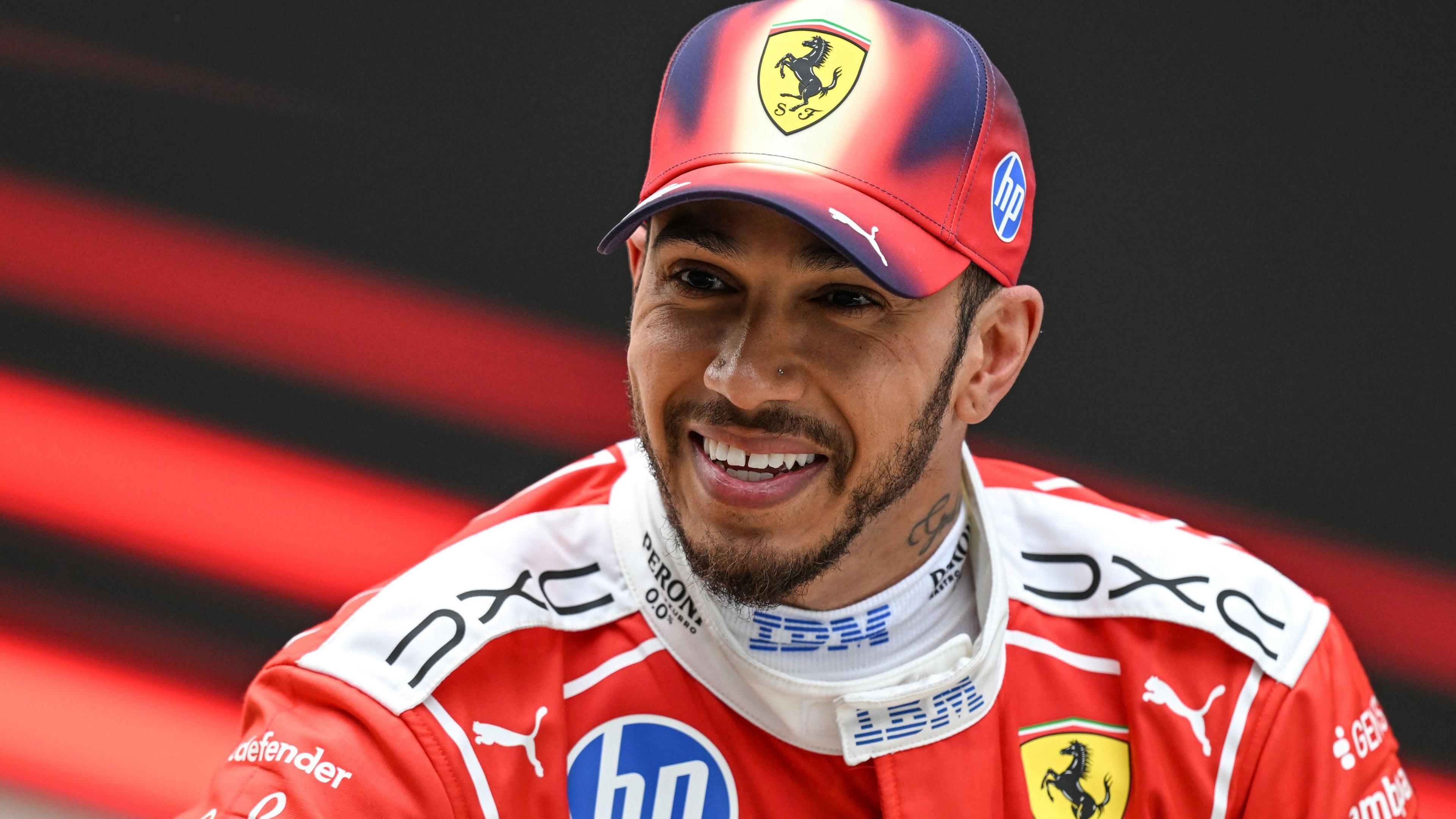
The undeniable result? In China, he proudly stood on the podium for the very first time wearing the iconic red overalls of Ferrari. His words afterward carried a quiet, terrifying certainty for the rest of the grid: “I definitely feel like I’m back to my best, both mentally and physically. I do think there’s more to come.” That very last line matters the most because the ultimate performance ceiling of this brand new partnership hasn’t even been discovered yet.
The radical 2026 regulations—featuring significantly narrower, vastly lighter cars with a much more balanced hybrid power distribution—appear to genuinely suit Hamilton’s natural, aggressive driving style far more intuitively than the heavy, cumbersome ground effect era that immediately preceded them. Leading motorsport analysts have consistently pointed out that the sweeping new regulations have effectively reset the baseline conditions in a specific way that perfectly plays to his historical strengths. And internally at the Maranello factory, the political dynamic has visibly shifted. In 2025, Charles Leclerc held a massive, clear advantage simply through sheer familiarity with the complex Ferrari systems. Today, that massive gap has been significantly and ruthlessly reduced.
The fierce intra-team battle is now far more evenly matched, and Hamilton has deeply emphasized just how much it has genuinely meant to have his incredibly valuable feedback actively integrated into the SF26’s ongoing development. Unlike his incredibly frustrating first season, where he helplessly inherited a flawed aerodynamic package built entirely without his input, he finally feels heard by the engineering staff. “To see them listen and put some of those things I’d asked for on the car,” he warmly stated, “I’m incredibly grateful.”
But lurking quietly underneath all of this positive momentum, three massive fault lines are silently widening, threatening to tear the entire Ferrari campaign apart. The first major crack is the raw performance gap itself. Hamilton honestly acknowledged that in pure race trim, the ultimate deficit to Mercedes still sits uncomfortably around four to five-tenths of a second per lap. That is absolutely not marginal. While it is true that the massive gap successfully narrowed from eight-tenths in Melbourne qualifying to roughly four-tenths in Shanghai, and the rapid rate of convergence matters more than any single race snapshot, Ferrari is absolutely not yet in a position to confidently dictate terms on a Sunday afternoon.
The second, and perhaps most terrifying fault line, is the highly controversial issue of fuel chemistry. The sweeping 2026 regulations officially mandate fully sustainable fuel for the very first time in Formula 1 history. Ferrari, alongside their long-term partner Shell, aggressively chose the biological biofuel route. Meanwhile, Mercedes and Petronas confidently chose advanced synthetic e-fuel—and so did the primary fuel suppliers for massive competitors like McLaren, Williams, and Alpine. As it currently stands, Ferrari and the Haas team are the absolute only two teams on the entire grid currently running Shell’s specific biofuel formulation.
Behind closed executive doors, the incredibly stressful question of whether Shell’s specific biofuel blend can realistically keep pace with the highly advanced Petronas synthetic blend has become increasingly difficult to ignore. The estimated raw power deficit stemming from the fuel chemistry alone currently sits somewhere between a staggering 15 and 20 horsepower. Crucially, this massive deficit is concentrated precisely at the highest engine speeds, exactly where Ferrari already violently struggles against Mercedes. And under the intensely strict current sporting regulations, Ferrari absolutely cannot legally change fuel suppliers mid-season. The absolute only mitigation path runs directly through heavily optimized engine calibration and radical energy management—which brings us right back to the dangerous, transmission-stressing lower gear strategy.
The third and final fault line threatening the Scuderia is the creeping issue of physical weight. At its glorious winter launch, the SF26 sat a beautiful two kilograms over the minimum weight limit—a genuinely impressive engineering figure. However, by late March, that optimistic picture had drastically changed. The addition of necessary development components, the heavy twin Macarena wing actuators, and various desperate aerodynamic additions have caused the car to creep well above its incredibly lean launch specification. In a brand-new formula where electrical systems now contribute nearly half the total power output, every single added kilogram inherently costs vastly more lap time than it ever did before. The theoretical aerodynamic gains of the trick wing absolutely have to justify their severe mass penalty. That highly complex calculation has absolutely not yet been fully resolved by the stressed engineers at Maranello.
So, as the global Formula 1 circus rapidly heads into the legendary high-speed sweeps of Suzuka, three highly distinct paths open up for Ferrari. Scenario one: The heavily revised Macarena wing runs completely clean without incident. The brutal lower gear harvesting strategy aggressively delivers measurable lap time results. Another vital tenth of a second permanently disappears from the Mercedes advantage, and Ferrari proudly leaves Japan with genuine, terrifying momentum heading directly into their massive planned Miami B-SPEC upgrade package. In this scenario, the entire championship picture begins to look radically different by mid-season.
Scenario two is vastly darker: The compounding weight problem severely limits the chassis. The highly complex revised Macarena wing catastrophically fails under intense race conditions once again. The 20-horsepower fuel chemistry gap tragically proves vastly larger than Maranello originally estimated, and Ferrari’s massive aerodynamic gamble—desperately waiting for the FIA’s strict development window to officially open after six grueling races—becomes the absolute only remaining card they have left to play. It is a highly patient, agonizing strategy in a season that may already be violently slipping through their fingers.
Finally, there is Scenario three: Ferrari’s unique, highly aggressive corner-harvesting philosophy miraculously proves perfectly suited to Suzuka’s specific, demanding high-speed layout. Lewis Hamilton brilliantly wins at a legendary circuit he intimately knows like the back of his hand. Charles Leclerc flawlessly completes his total adaptation to the SF26’s violent quirks, and suddenly, the iconic team that was broadly supposed to be one massive step behind takes an incredible leap forward at exactly the right historical moment.
Because the reality of Suzuka is that it doesn’t just ruthlessly test straight-line pace; it brutally tests aerodynamic precision, absolute driver confidence, and an engineering team’s ability to perfectly hold every single fragile thread together at 200 miles per hour. Ferrari undeniably possesses the brilliant chassis, they clearly have the legendary driver, and they possess limitless ambition. But does the complex math close fast enough? Can a radical corner harvesting philosophy built entirely around a smaller turbo miraculously overcome a massive fuel chemistry gap that absolutely no one in management can officially admit exists?
One thing is absolutely certain as the tension violently mounts: this upcoming season isn’t simply being decided out on the long straights alone. It is actively being decided in the sterile laboratories, within complex gear selection algorithms, inside secretive fuel blending plants in Hamburg, and deep within the revitalized mind of a seven-time world champion who genuinely believes, for the very first time in years, that he is finally back. The ultimate question remains: Is Ferrari genuinely closing the gap, or are we simply witnessing the most beautifully engineered mirage in modern Formula 1?