Something is fundamentally off with Formula 1 right now, and if you have been watching the sport closely this season, you have almost certainly felt it. Even if you could not quite put your finger on what was missing, the subtle shift in the atmosphere is undeniable. We have heard the best drivers in the world taking to their team radios and post-session interviews to call the new 2026 cars strange, heavily counterintuitive, and frankly, deeply confusing.
At first glance, this kind of feedback sounded like the typical early-season adjustment period. After all, new regulations bring new cars, new aerodynamic philosophies, and new engineering challenges. That is perfectly normal; it is the natural evolutionary cycle of the sport. But then came the turning point. What we witnessed recently did not just raise a few technical questions—it exposed a severe, underlying problem that threatens the very DNA of Formula 1.
It all comes down to a single lap. One highly pressurized qualifying lap from Ferrari’s Charles Leclerc that suddenly made all the puzzle pieces click into place, and unfortunately, not in a good way. Before we dive into the microscopic details of that specific incident, we need to address the elephant in the room: qualifying just does not feel the same anymore.
Have you noticed it? The drivers no longer seem to be pushing the absolute, razor-thin limit like they used to. The visceral thrill of watching a car dance on the edge of adhesion seems to have been replaced by a cautious, almost robotic approach. What started as minor confusion during the opening race of the season has quickly mutated into something much bigger and far more concerning. Teams were actively struggling to understand their own energy deployment maps, drivers were blindly experimenting with completely different cornering approaches, and honestly, nobody on the pit wall had a clear, definitive picture of what was actually happening beneath the engine covers. It was as if everyone was learning how to race all over again, completely on the fly.

Australia gave the paddock its first real hint of trouble. Teams were acting incredibly cautious, tentatively dipping their toes in the water to figure out exactly how these incredibly complex power units behave under intense, high-stakes pressure. But then the circus arrived in China, and suddenly, the confusing fog lifted, revealing a reality that was a lot clearer and infinitely more worrying. With more track time, the intensity of sprint qualifying, and multiple practice sessions to comb through the telemetry, teams finally began to grasp the true, terrifying complexity of these new energy systems. What they found hidden in the data was something that even they could not fully explain. Just think about that for a second. We are talking about the smartest, most advanced, and highly paid engineers in the entire world of motorsport, and even they were desperately struggling to decode what their own creations were doing out on the asphalt.
This is the exact moment when the situation stopped being brushed off as a mere “new era adjustment” and started looking like a fundamental, structural crisis. Formula 1, at its absolute core, has always been about control. It is about the greatest drivers on the planet extracting every last ounce of performance from the car, violently dancing on the edge of grip, and finding those final, magical tenths of a second through nothing but pure, unadulterated human skill. But what happens to the sport if that control starts to slip away? What happens when the final outcome of a blistering qualifying lap is no longer determined by the driver’s sheer talent, but by an invisible software parameter that they cannot even feel?
That is exactly the dark reality that Charles Leclerc’s qualifying lap revealed to the world. And trust me, once you understand the mechanics of what actually transpired, it completely changes the way you look at the modern era of Formula 1 qualifying.
Let us break down the lap that changed everything, taking this narrative from slightly confusing to downright unbelievable. The situation was tense: during sprint qualifying, Leclerc goes out for his final, decisive flying lap. This is the run that will ultimately dictate his starting grid position. Everything looks perfectly normal at first. In fact, he is actually setting green sectors in the early part of the lap. He is finding time, pushing the Ferrari hard, and doing exactly what you would expect a generational talent to do in a crucial, high-pressure moment. And then, without any warning, his advantage completely disappears. Out of nowhere, while rocketing down the massive back straight, he just loses speed. And we are not talking about a fractional loss; we are talking about a massive, crippling drop. The telemetry showed a staggering difference of up to 15 kilometers per hour compared to his previous lap. In the hyper-competitive world of Formula 1, a 15 km/h deficit on a straight is practically a death sentence. That is the kind of catastrophic time loss that drops a driver multiple rows down the starting grid.
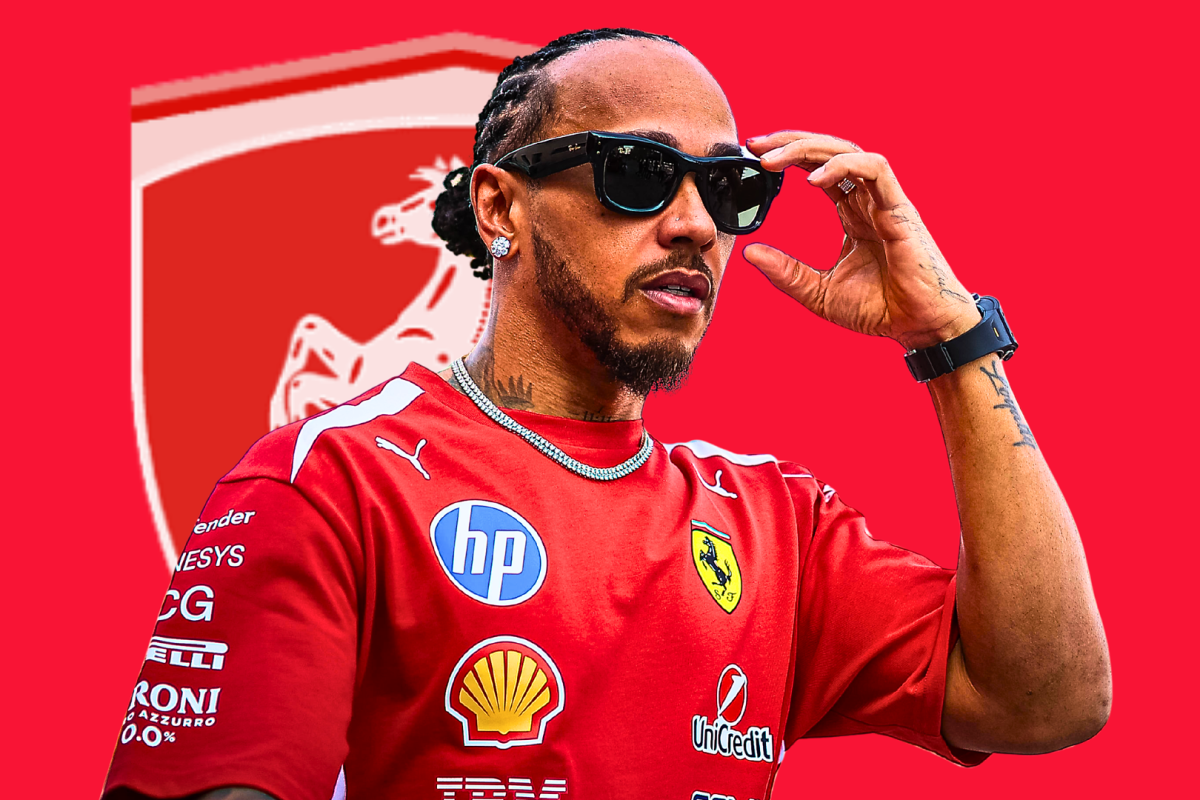
But here is the craziest part of the entire ordeal: Leclerc had absolutely no idea why it happened. On the live team radio, you could hear the raw, unfiltered frustration immediately bleeding through his voice. He was demanding to know what was happening to his car. The Ferrari pit wall did not have an answer for him right away, either. When both an elite driver and a team of brilliant engineers are left utterly bewildered in real time, you know that a much deeper, systemic issue is at play.
So, what was the actual culprit? Initially, anyone watching would naturally assume the problem originated in the sequence of corners directly preceding that long straight. Perhaps Leclerc failed to harvest enough electrical energy under braking, or maybe his exit trajectory was compromised, scrubbing off vital momentum. That is usually how physics dictate racing; what you do in one corner directly impacts your top speed on the following straight. But when the engineers finally analyzed the data traces, there was virtually no difference in his cornering performance. This meant the real cause was hiding somewhere else entirely.
This is where the story gets genuinely crazy. You have to rewind the tape further back into the lap to pinpoint a moment that looked completely, entirely harmless. Coming out of an earlier corner, Leclerc experienced a tiny, almost imperceptible snap of oversteer. It was nothing dramatic—just the kind of routine, micro-correction you see Formula 1 drivers seamlessly make a hundred times a weekend to keep the rear tires in check. To control this tiny slide, Leclerc instinctively lifted his foot off the throttle pedal ever so slightly. We are not talking about a massive, panicked lift; he merely dropped his throttle application to around 95 percent. That is it. A microscopic, five percent lift.
Somehow, that tiny, highly skilled human input triggered a catastrophic chain reaction deep inside the car’s energy management software. Under the highly convoluted 2026 regulations, there is a very specific, hard-coded threshold set around 98 percent throttle application. This arbitrary number controls exactly how the car deploys and manages its electrical battery reserves. If the driver keeps the pedal pinned above that 98 percent mark, the system behaves optimally, saving energy for the straights. But if the throttle dips below that magic number—even for a fraction of a second—the entire energy deployment algorithm aggressively resets.
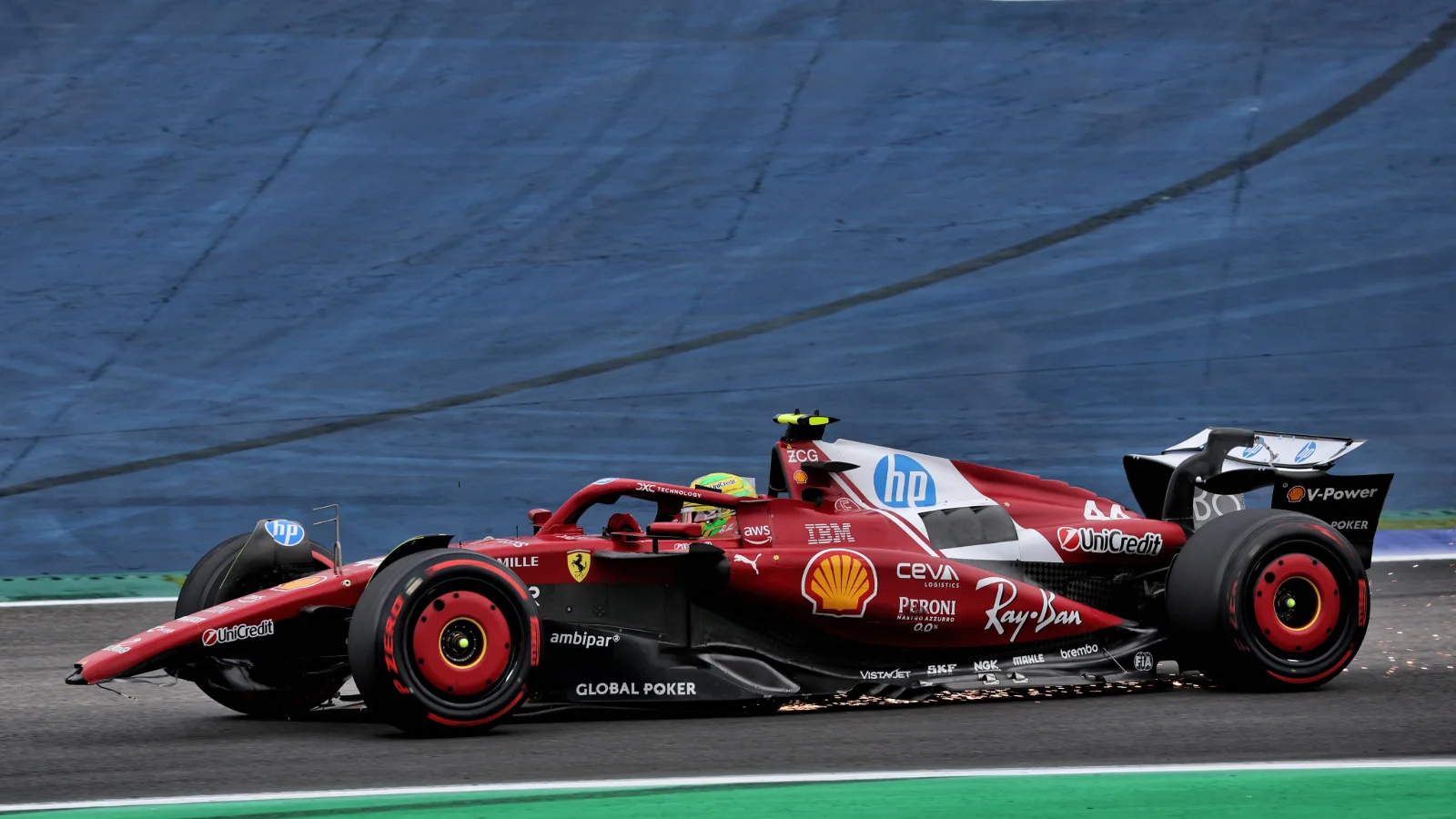
When Leclerc’s foot dipped to 95 percent to correct a slide, he unknowingly triggered a completely different, highly inefficient engine mode. Instead of strictly conserving electrical energy for the massive back straight where it actually matters, the car’s computer suddenly decided to start violently deploying full power in the completely wrong sector of the race track. It rapidly burned through the hybrid energy reserves when there was absolutely no lap time to be gained. By the time Leclerc actually reached the back straight—the single most important place on the circuit to have that electrical boost—his battery was completely drained. He was essentially running on empty. That is precisely why the speed difference was so dramatic, and that is why what should have been a magnificent qualifying lap simply fell apart in his hands.
The most alarming takeaway from this incident is that Leclerc did not lose time because he made a genuine driving error. He was actively punished by the rulebook because of a tiny, brilliant, almost invisible steering correction. This revelation absolutely shocked Ferrari, it deeply confused Leclerc, and honestly, it is starting to deeply worry everyone up and down the paddock. If a microscopic throttle variation—a physical movement so small that drivers wearing thick racing boots can barely even feel it—can completely ruin a lap thirty seconds later, then what exactly are these drivers controlling anymore?
Furthermore, this technological disease is spreading. Leclerc was not an isolated victim. Alpine’s Esteban Ocon fell into the exact same invisible trap, and his experience was arguably even more frustrating. During a flat-out qualifying run, Ocon had a minor moment through a corner and lifted his throttle just a fraction to keep the car stable. He dropped to around 97 percent throttle. That is a mere one percent below the critical threshold. Just like with the Ferrari, that microscopic lift was enough to knock the Alpine out of its optimal energy mode. The system reset, the electrical energy was dumped prematurely, and Ocon lost around three-tenths of a second on the subsequent straight. In modern Formula 1, three-tenths of a second is an eternity. It is the vast canyon between making it into the final shootout of Q3 or suffering an embarrassing early knockout in Q1.
Drivers are now openly admitting that physically feeling the difference between these tiny percentage drops is humanly impossible. Consequently, instead of aggressively attacking qualifying laps, instead of bravely pushing right to the very edge of disaster, drivers are being actively forced to hold back. They have to be smooth, careful, and obsessively controlled. If they push too hard and have even the smallest slide, they do not just lose time in that specific corner; they trigger a software penalty that ruins the rest of the lap.
This hidden flaw fundamentally changes the entire DNA of qualifying. Think about some of the greatest, most legendary laps in Formula 1 history. Ayrton Senna at Monaco, Michael Schumacher at Suzuka, Lewis Hamilton at Singapore. Those breathtaking moments where drivers are wrestling with a machine right on the ragged edge, making tiny, heroic corrections and finding grip where physics say there should be none. Under these new rules, those magical laps might not even be mathematically possible anymore. The current system no longer rewards bravery, instinct, and precision at the limit; instead, it aggressively rewards robotic caution. The burning question that remains is whether the FIA and the teams will step in to fix these convoluted rules before the sport permanently loses the very essence of what made it so incredibly special in the first place.