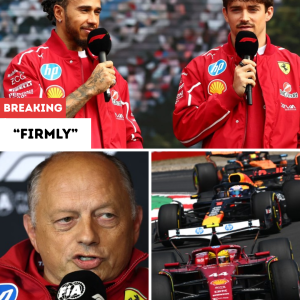
Lewis Hamilton has finally silenced months of doubt, frustration, and relentless scrutiny. After enduring one of the most difficult stretches of his legendary career, the seven-time world champion has at last secured his first podium finish with Ferrari—a breakthrough moment that feels less like a conclusion and more like the beginning of something far more intense.
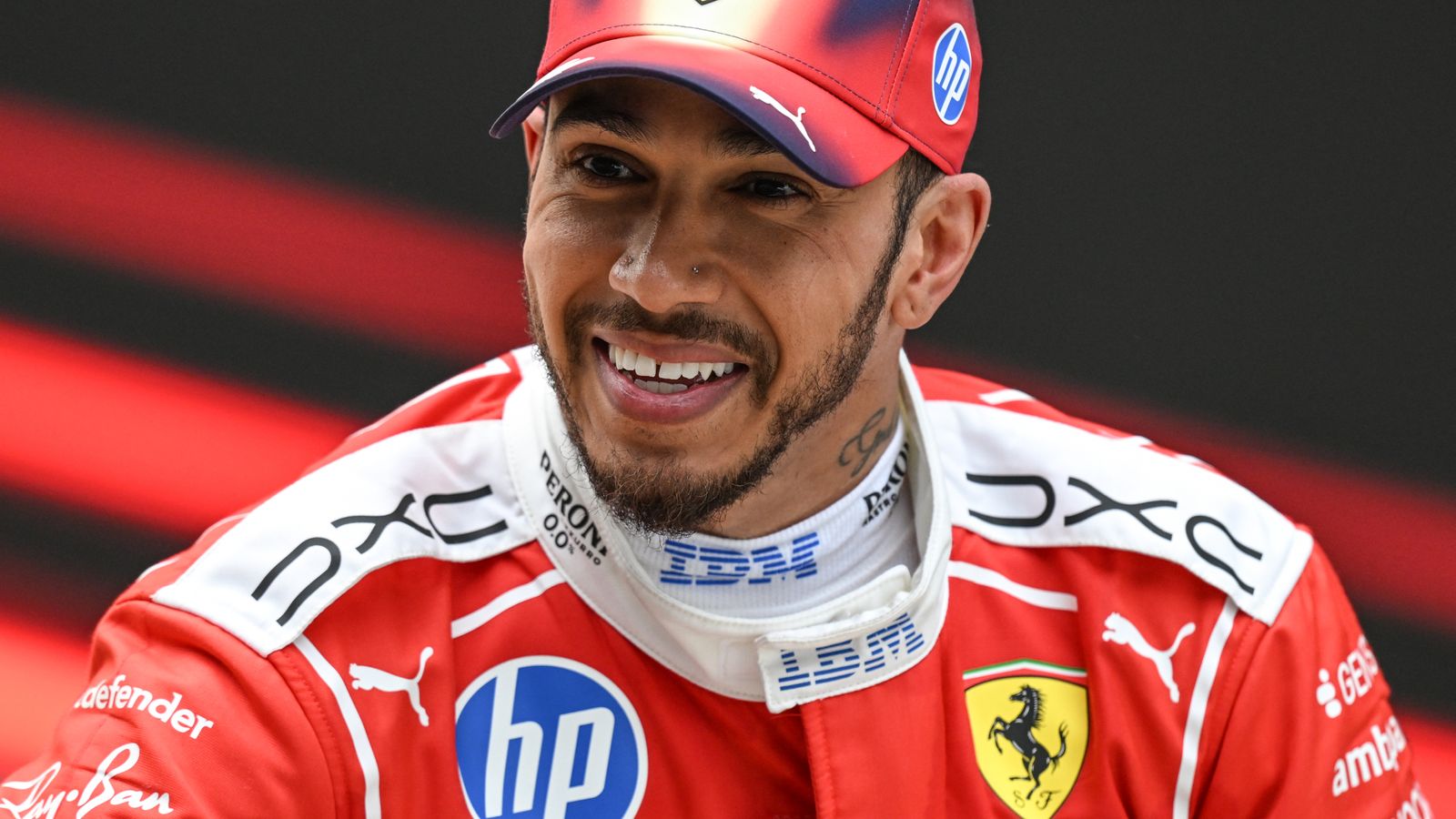
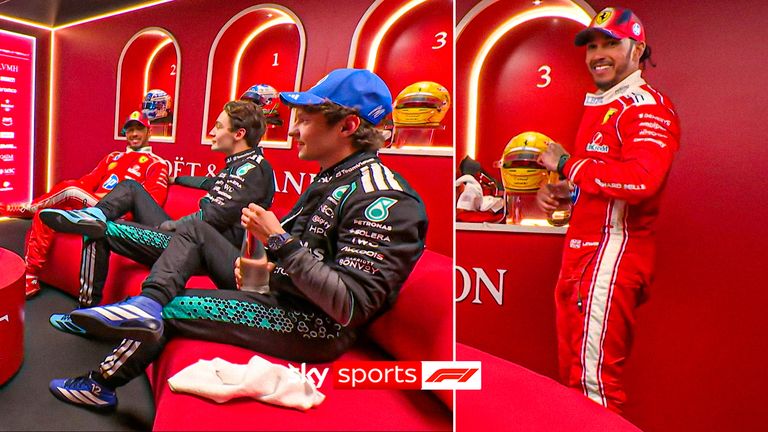
The result came during the Chinese Grand Prix, marking Hamilton’s 26th race weekend with Ferrari. For most drivers, a third-place finish might be routine. But for Hamilton, this podium carried enormous emotional weight. It ended a 16-month drought—the longest of his career—and symbolized a turning point after a turbulent 2025 season that had raised serious questions about whether his move to Ferrari had been the right decision.
Yet what made the moment even more compelling was not just the result itself, but the way it unfolded. Hamilton didn’t stumble into the podium through luck or chaos. He fought for it. Lap after lap, he pushed the car to its limits, holding off pressure while chasing down the leaders from Mercedes, who ultimately finished ahead. It was a performance that reminded the paddock—and perhaps even himself—of who he still is at his core.
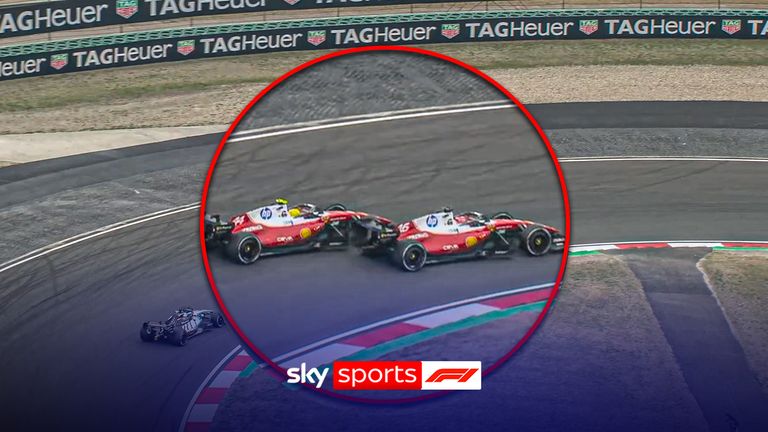
And now, as the Formula 1 circus heads toward the Japanese Grand Prix, the question has shifted dramatically. It’s no longer about whether Hamilton can succeed at Ferrari. It’s about how far he can go.
Hamilton himself has been candid about the transformation he’s experienced heading into the 2026 season. After a year of inconsistency, adaptation struggles, and visible frustration, he now speaks with renewed clarity and confidence. According to him, the biggest change isn’t just technical—it’s deeply personal.
He describes feeling “back to his best,” both mentally and physically. That statement alone carries weight, considering the psychological toll of his previous season. In 2025, Hamilton often appeared out of sync—not just with the car, but with the rhythm of competition itself. The Ferrari machine didn’t respond the way he expected, and week after week, he found himself chasing answers that never seemed to fully materialize.
Behind the scenes, however, a quiet shift was taking place.
Sources within the team suggest that Hamilton spent the off-season obsessively analyzing every detail of his performance. From telemetry data to energy deployment strategies, nothing was left untouched. He reportedly held multiple late-night sessions with engineers, challenging assumptions and pushing for a deeper understanding of how to extract performance from the car.
At times, those discussions grew tense.
Ferrari, a team steeped in tradition and pride, isn’t always known for rapid adaptation. Hamilton, on the other hand, thrives on precision and constant evolution. The clash of philosophies created friction—moments where voices were raised, where disagreements lingered longer than usual. But rather than fracture the relationship, those confrontations appear to have forged something stronger.
By the time pre-season testing began, there was a noticeable shift in the atmosphere.
Hamilton wasn’t just adapting to Ferrari anymore—he was beginning to shape it.
That influence is now visible on track. In the opening race in Melbourne, he secured a solid fourth-place finish, demonstrating consistency and control. Then came Shanghai, where everything seemed to click. His pace matched that of his teammate, Charles Leclerc—a crucial benchmark he had struggled to meet during his first year in red.
But perhaps the most intriguing aspect of Hamilton’s resurgence lies in what he admits he still doesn’t fully understand.
Despite the podium, despite the improved results, Hamilton openly acknowledges that he is still learning the intricacies of the Ferrari car—particularly its energy deployment system. In Formula 1, where margins are measured in milliseconds, mastering such details can mean the difference between winning and merely competing.
And that’s where the tension builds.
Because if Hamilton is already reaching the podium while still learning, what happens when he fully unlocks the car’s potential?
Inside the paddock, whispers are growing louder. Rivals are beginning to take notice. Mercedes, currently leading the early championship charge, is aware that Hamilton’s momentum could become a serious threat. Other teams, too, are watching closely, recognizing that a fully reinvigorated Hamilton is not someone to underestimate.
The Japanese Grand Prix now looms as a critical test.
Suzuka is a circuit that demands precision, bravery, and complete trust in the car—qualities that align perfectly with Hamilton’s strengths. But it’s also unforgiving. One mistake, one miscalculation, and the consequences can be severe.
For Ferrari, the stakes are equally high. Closing the gap to Mercedes requires not just consistency, but bold execution. Strategy calls, pit stops, and race pace must all align flawlessly. And with Hamilton pushing harder than ever, the pressure on the team is intensifying.
There’s also an undercurrent of urgency.
Hamilton is no longer the young driver chasing his first title. He is a veteran, a legend, someone acutely aware that opportunities at this level are finite. Every race, every lap, carries a sense of significance that goes beyond the immediate result.
That urgency has begun to manifest in subtle ways.
Observers have noted a sharper edge to his driving—more aggressive overtakes, more decisive positioning, a willingness to take calculated risks. It’s as if Hamilton understands that this phase of his career is about more than just proving he can still compete. It’s about leaving a final, defining mark.
And Ferrari, with all its history and expectation, provides the perfect stage.
Yet the path ahead is anything but straightforward.
Mercedes remains formidable. Other teams are closing in. And within Ferrari itself, the dynamic between Hamilton and Leclerc adds another layer of complexity. While both drivers share a common goal, internal competition is inevitable. Each race becomes not just a battle against rivals, but a test of hierarchy within the team.
So as the lights prepare to go out in Japan, the narrative surrounding Hamilton has transformed.
No longer is he the driver struggling to adapt, the champion searching for answers. Instead, he is a resurging force, armed with renewed confidence, deeper understanding, and a hunger that refuses to fade.
But perhaps the most compelling element of this story is the uncertainty.
Hamilton believes there is “more to come.” The data suggests it. The performances hint at it. The tension within the championship battle almost demands it.
The only question is when—and how explosively—it will arrive.

Because if the podium in China was the spark, the races ahead could very well become the fire that reignites one of Formula 1’s greatest careers.