Seven-time Formula One world champion Lewis Hamilton has candidly opened up about living with ADHD, revealing how the condition affects his daily life in ways that can be both overwhelming and frustrating. Speaking ahead of the season-opening race in Melbourne, Hamilton shared personal insights that offered fans a rare glimpse into his off-track habits and mental patterns.
During a light-hearted segment on Formula One’s official YouTube channel, where all 22 drivers were asked to reveal surprising facts about themselves, Hamilton chose to speak honestly about his experience with ADHD (Attention Deficit Hyperactivity Disorder). Rather than offering a trivial or humorous answer, he used the opportunity to shed light on a condition that shapes how he interacts with his surroundings.
Hamilton explained that one of the most noticeable ways ADHD manifests for him is through an intense need to fix or adjust things in his environment. He described how simply entering a room in his home can trigger a chain reaction of compulsive behavior. Instead of relaxing or settling in, he finds himself immediately drawn to objects that appear out of place.
For instance, something as minor as a lamp being slightly tilted or books not being perfectly aligned on a shelf can prompt him to start reorganizing. What begins as a small adjustment often escalates into a full sweep of the house, with Hamilton moving from room to room correcting anything that feels “off.” Before he realizes it, a significant amount of time has passed — sometimes up to an hour — without him accomplishing what he originally intended to do.
He admitted that this habit can be deeply frustrating. There is a sense of losing control over time, as he becomes absorbed in details that others might not even notice. The compulsion to create order overrides his initial plans, leaving him wondering how so much time slipped away.
This tendency doesn’t just affect how he organizes his living space — it also impacts his routine in other areas of life. Hamilton has previously spoken about similar challenges in the kitchen. Cooking, for example, becomes a much more complicated process than it might be for others. While preparing a simple meal like pasta, he feels the need to clean every utensil, surface, and dish immediately after using it, even before sitting down to eat.
This pattern turns what should be a straightforward task into a prolonged and sometimes exhausting routine. By the time he finishes cleaning, the enjoyment of the meal itself can feel secondary. It’s not that he chooses to do this — rather, it feels like an internal pressure that’s difficult to ignore.
Interestingly, the behaviors Hamilton described share similarities with traits commonly associated with obsessive-compulsive tendencies. The need for symmetry, order, and perfection — as well as the discomfort caused by disorder — are often linked to obsessive-compulsive patterns. While ADHD and OCD are distinct conditions, they can sometimes overlap in how they manifest in daily life.

This connection has drawn comparisons between Hamilton and former football superstar David Beckham, who has been open about his own struggles with obsessive-compulsive disorder. Beckham famously revealed that he feels compelled to keep everything in precise order, whether it’s arranging items in straight lines or ensuring objects are grouped in pairs.
In Beckham’s case, even something as simple as organizing drinks in a refrigerator becomes a meticulous task. If there is an odd number of items or something appears out of alignment, he feels the need to correct it immediately. Like Hamilton, this drive for perfection is not just a preference but a persistent urge that can be difficult to resist.
The comparison highlights how elite athletes, often admired for their discipline and precision, can also experience these traits in ways that extend beyond their professional lives. In some respects, the same attention to detail that contributes to their success on the field or track may also influence their personal habits.
For Hamilton, these characteristics may even play a role in his approach to racing. Formula One demands extreme focus, quick decision-making, and an ability to process vast amounts of information in real time. While ADHD is often associated with difficulties in concentration, many individuals with the condition also experience periods of intense focus — sometimes referred to as “hyperfocus” — especially when engaged in activities they are passionate about.
It is possible that this aspect of ADHD has contributed to Hamilton’s remarkable career. With a record-breaking 105 race victories and seven world championships, he has consistently demonstrated an ability to perform at the highest level under immense pressure. His attention to detail, combined with his relentless drive, has made him one of the most successful drivers in the history of the sport.
However, despite his past achievements, Hamilton enters the new season facing a different kind of challenge. The 2025 campaign marked a rare winless year for the British driver, signaling a period of transition in his career. For someone accustomed to fighting at the front, this dry spell represents both a professional and personal test.
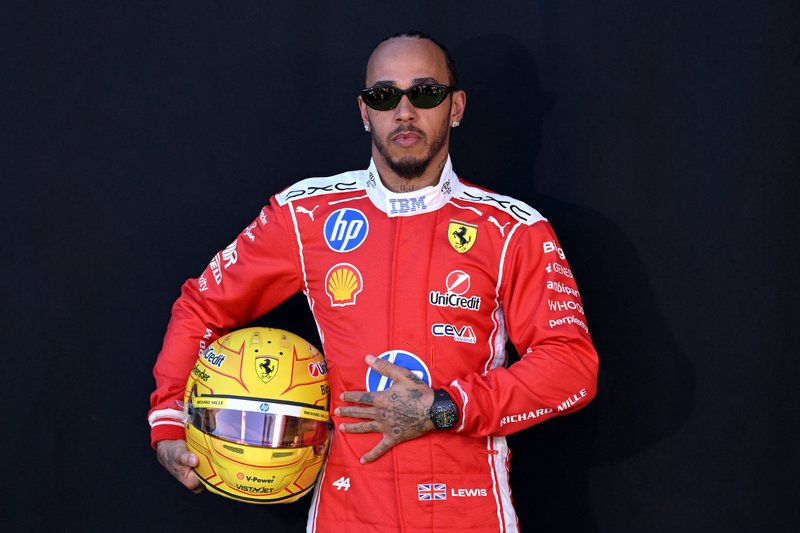
As he prepares for the upcoming season, Hamilton is clearly determined to bounce back. His openness about ADHD suggests a growing willingness to discuss mental health and personal struggles — topics that have historically been less visible in the world of elite motorsport.
By sharing his experiences, Hamilton not only humanizes himself but also helps to raise awareness about conditions that affect millions of people worldwide. His story serves as a reminder that even individuals at the peak of their professions face challenges behind the scenes.
Ultimately, Hamilton’s reflections reveal a complex balance between strength and vulnerability. On one hand, his habits can be a source of frustration, disrupting his daily routines and consuming valuable time. On the other, they may also be intertwined with the qualities that have driven his success — precision, focus, and an unrelenting desire for control.
As the new Formula One season begins, fans will be watching closely to see how Hamilton responds to the challenges ahead. Whether or not he returns to winning ways, his willingness to speak openly about his experiences adds another dimension to his legacy — one that extends beyond the racetrack and into the broader conversation about mental health and self-awareness.
In a sport defined by speed and competition, Hamilton’s honesty offers a moment of reflection: even the fastest drivers in the world sometimes have to slow down and confront the complexities of their own minds.
