While the rest of the Formula 1 paddock might be treating the unprecedented five-week gap between the Suzuka and Miami Grand Prix as a well-deserved breather, the atmosphere inside Maranello is anything but relaxed. For Ferrari, this break is not a vacation; it is a hard, unforgiving deadline. For the first time since the fiercely competitive 2026 season kicked off, the Scuderia has been gifted a golden opportunity to do something that frantic race weekends simply do not allow: test a massive, comprehensive upgrade package in the real world before unleashing it in competition.
In a sport where milliseconds dictate legacies, Ferrari is pulling out all the stops. They are utilizing one of their strictly allocated “filming days”—a promotional event capped at 200 kilometers on specific tires—to run a highly secretive, targeted test at the Autodromo Nazionale Monza.
But make no mistake, this isn’t about capturing glamorous footage of Lewis Hamilton and Charles Leclerc for sponsors. This is a vital intelligence-gathering mission. Monza was chosen with surgical precision. Known as the “Temple of Speed,” its iconic, sprawling straights and brutal, heavy braking zones perfectly replicate the exact energy management demands that have ruthlessly exposed Ferrari’s vulnerabilities against Mercedes across the opening three rounds.
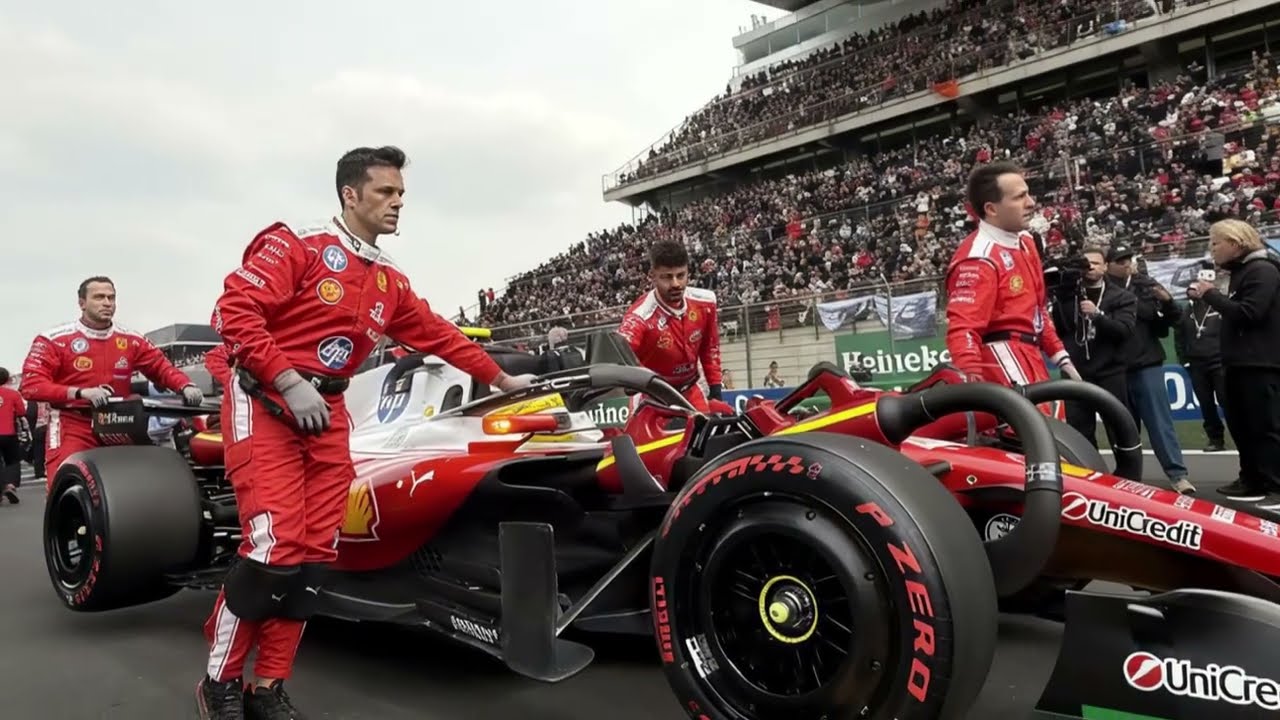
What Ferrari is bringing to this crucial test in Italy is far from a minor tweak. Insiders describe it as the most aggressive, significant development push the iconic Italian team has attempted all year. They are attacking their deficit on every conceivable front, deploying a three-pronged assault consisting of radical aerodynamics, entirely rewritten energy management software, and the promise of a monstrous new engine waiting in the wings.
The most pressing issue Ferrari hopes to fix immediately is their straight-line speed deficit. All season, fans have watched with bated breath—and immense frustration—as both Hamilton and Leclerc lost precious tenths of a second on the straights due to early battery clipping. To combat this invisible enemy, Ferrari is rolling out an entirely new software package. Instead of relying on the drivers to manually juggle settings while fighting wheel-to-wheel, these new algorithms are designed to overhaul energy management at the system level. The objective is incredibly clear: ensure the SF26 arrives at every heavy braking zone with significantly more electrical deployment available than before, effectively masking their top-end power disadvantage.
But software can only do so much without the right hardware to cut through the air. Enter the “Macarena wing,” arguably the most fascinating and contentious piece of engineering in the 2026 paddock. This highly complex aerodynamic system represents a massive leap in F1 design philosophy. In its final specification, the wing physically rotates approximately 270 degrees in straight-line mode. Instead of generating traditional downforce, it actually creates lift, drastically slashing drag. During pre-season testing in Bahrain, Team Principal Fred Vasseur confirmed that Hamilton gained a staggering 10 km/h in top speed with this system active.
However, innovation is rarely without its growing pains. The Macarena wing failed spectacularly during its debut in Shanghai due to a harrowing hydraulic synchronization issue. The front and rear wings failed to close at the same rate under heavy braking, resulting in severe aerodynamic instability that actually caused Hamilton to spin out. Monza’s violent braking zones—where cars decelerate from over 350 km/h down to second gear—provide the ultimate proving ground. If the engineers have truly solved the synchronization glitch, Monza will confirm it. If they haven’t, they still have a precious window of time to adjust the hardware before shipping the cars across the Atlantic to Florida.
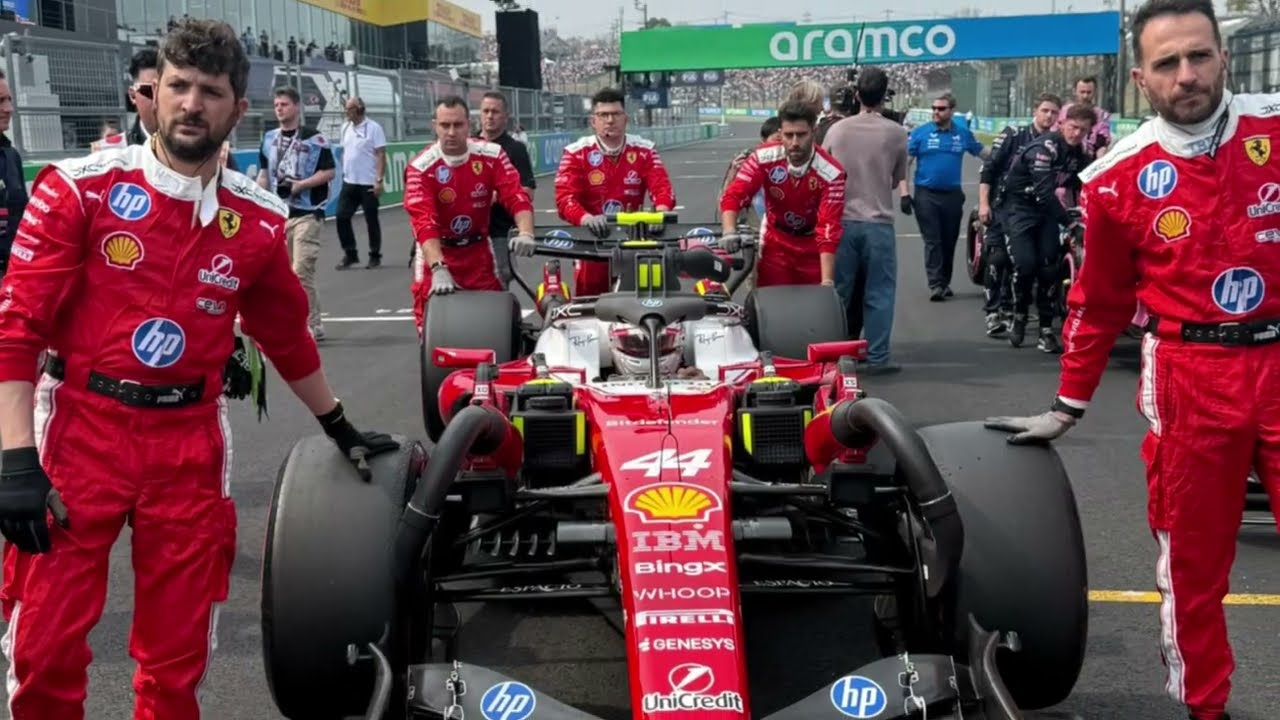
Adding to the aerodynamic wizardry is a relentless weight-loss program. When the SF26 launched back in January, it was a lean machine, sitting just two kilograms over the minimum weight limit. However, as updates were bolted on over three race weekends, the car inevitably gained mass. The Miami upgrade package includes completely redesigned components specifically engineered to strip that excess weight away. Technical sources suggest this diet could claw back more than a tenth of a second per lap—a margin that could absolutely mean the difference between pole position and the second row of the grid.
Yet, the most tantalizing part of Ferrari’s masterplan isn’t even going to the United States. Deep inside the sprawling Maranello facility, secured firmly on the dynamometer, roars a brand-new, redesigned power unit. The current specification engine that Hamilton and Leclerc are wrestling with carries an estimated 25-horsepower deficit to the mighty Mercedes power plant at high RPMs. Ferrari knows this is the anchor holding them back.
The catch? They cannot use it yet. The FIA’s stringent Allowed Development Unit (ADU) regulations act as a mid-season equalizer, evaluating manufacturer performance after the 6th, 12th, and 18th races. Because of their current deficit, Ferrari’s technical leadership is highly confident they will qualify for extra development tokens at that first checkpoint. Projections indicate this absolute game-changer of an engine will likely make its grand debut at the Canadian Grand Prix in mid-June.
This complex timeline places an immense, suffocating amount of pressure on the upcoming Miami Grand Prix. The street circuit winding around the Hard Rock Stadium is a track of two halves: featuring two incredibly long, punishing straights that will brutally expose any remaining horsepower deficit, countered by a tight, incredibly technical middle sector. This is where Ferrari must capitalize. The SF26 has proven to possess extraordinary mechanical grip, superior tire management, and exquisite balance in low-speed corners, comfortably outperforming both Mercedes and McLaren in those specific areas.

If the software update correctly manages the battery, and if the Macarena wing successfully sheds drag without throwing the car into the wall under braking, Ferrari can neutralize their straight-line weakness. Combined with their undeniable slow-corner supremacy and the famously spectacular race starts both Hamilton and Leclerc have executed this year, Ferrari has a genuine blueprint for victory in South Florida.
The stakes for this Italian operation have never been higher. Everyone on the grid will bring updates to Miami, but Ferrari is trying to execute a fundamental shift in the 2026 hierarchy. This five-week gap is the crucible where their championship dreams will either be forged into reality or shattered by the relentless pace of Mercedes. The eyes of the motorsport world are now locked on a private test at an empty track in Italy. If the data glows green, Hamilton and Leclerc might just have the weapons they need to ignite the championship fight of the decade.