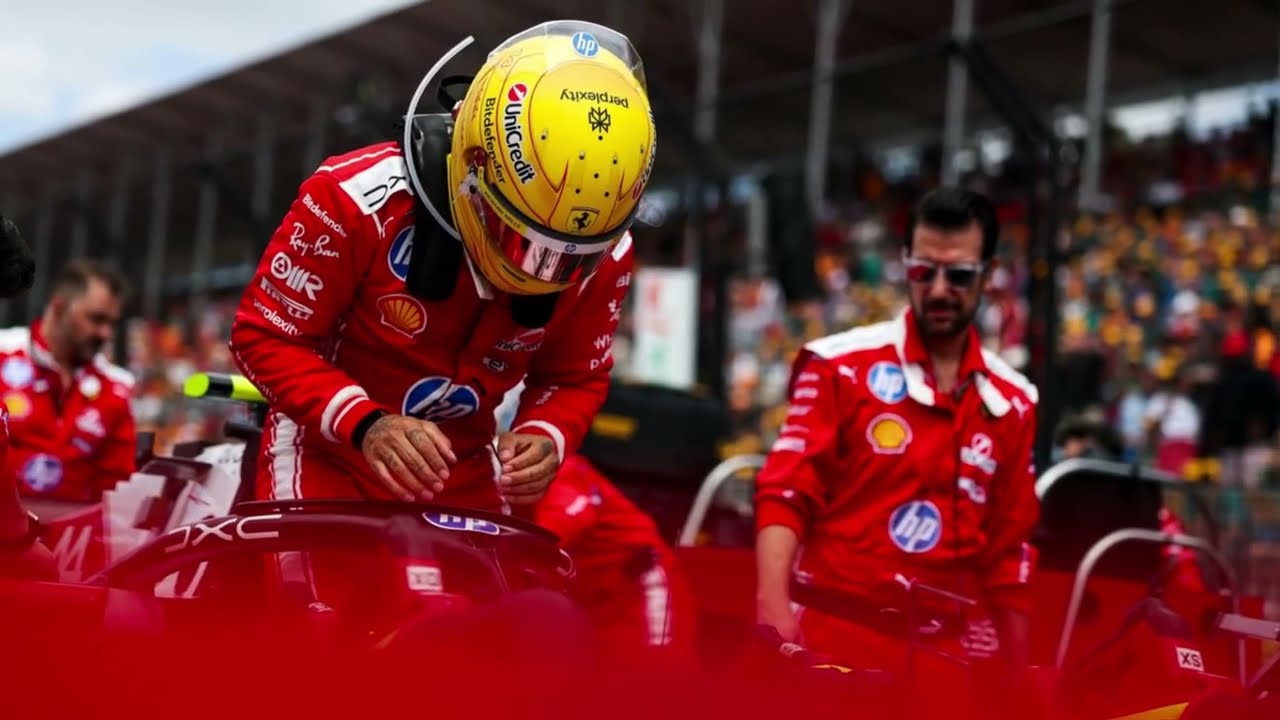
Formula 1 is a sport defined by margins so infinitesimally small that they can only be measured by computers, yet governed by human emotions that are entirely immeasurable. Following a deeply punishing Japanese Grand Prix, the emotional dam finally broke for Lewis Hamilton. The seven-time world champion stood before the global media and stated out loud what everyone in the paddock had already been whispering: he had no confidence. He had no confidence in the car during practice, no confidence during the race, and crucially, absolutely no confidence in the highly touted power unit that was supposed to finally close the performance gap to Mercedes. It was a raw, unfiltered moment of sheer frustration, and inside the hallowed halls of Maranello, it reportedly hit like a shockwave.
However, Formula 1 operates at a speed far faster than the news cycle. What makes Hamilton’s painful public admission so profoundly fascinating in hindsight is that while he was still speaking to the press, Ferrari’s elite engine and electronics departments were already frantically coding the answer. Deep within the Scuderia’s secretive headquarters, engineers were finalizing a revolutionary software package—a completely revised set of algorithms targeting battery management, energy harvesting, and deployment strategy. This isn’t just a minor technical tweak; it is a desperate, brilliant gambit to fix the exact aerodynamic and electrical nightmares that have been slowly bleeding the life out of the SF26 since the lights went out in Melbourne. The target destination for this massive upgrade is the Miami Grand Prix, and the timeline to get it there is brutally, almost impossibly tight.
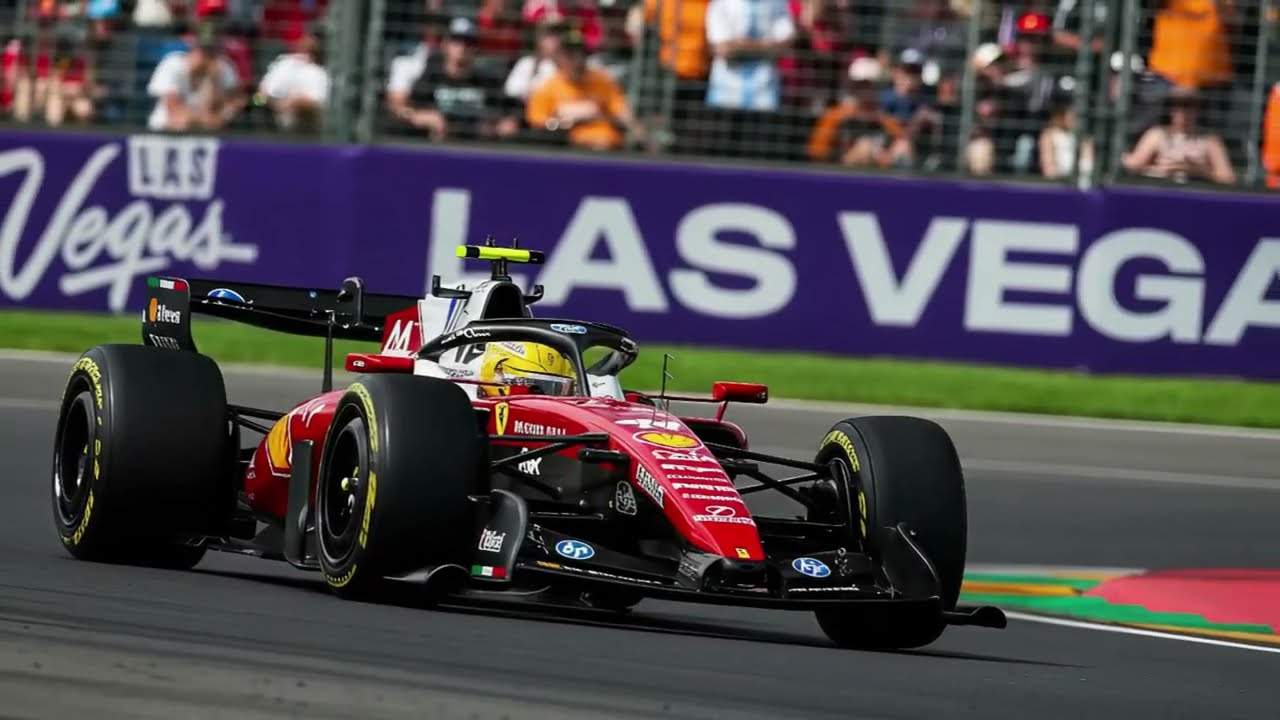
To truly comprehend why Ferrari’s impending Miami software update is the most critical storyline of the 2026 season, one must first understand the devastating phenomenon known as “super clipping.” Under the complex new engine regulations, super clipping has been the silent killer of Ferrari’s championship ambitions. Across the first three grueling races of the calendar, the SF26 has consistently reached the end of the longest straights and simply run out of electrical energy long before the crucial braking zones.
The mathematics of the problem are brutal. The MGUK—the highly advanced kinetic motor generator unit—delivers a staggering 350 kilowatts of pure electrical output. However, in the current Ferrari configuration, this massive surge of energy depletes far faster than the car’s intricate harvesting systems can successfully replenish it under braking. The horrifying result is visible on every single onboard camera feed. You can watch as the iconic red car accelerates with violent force out of a slow corner, reaches its absolute peak speed somewhere in the middle of the straight, and then visibly, agonizingly bogs down as the battery completely empties.
Top speed is being humiliatingly surrendered when the car should still be pulling hard. At Suzuka, reigning champion Lando Norris, driving a different machine, put a terrifying specific number on the visceral experience of super clipping from inside the cockpit: a sudden, heart-stopping 56 kilometer-per-hour drop in speed on a straight where the driver’s foot is flat to the floor. This is not a minor inconvenience or a slight aerodynamic drag issue; it is a fundamental, catastrophic performance limitation. It destroys optimal lap times, completely ruins race pace, and leaves the driver entirely defenseless against a rival car running a more efficient electrical energy cycle.
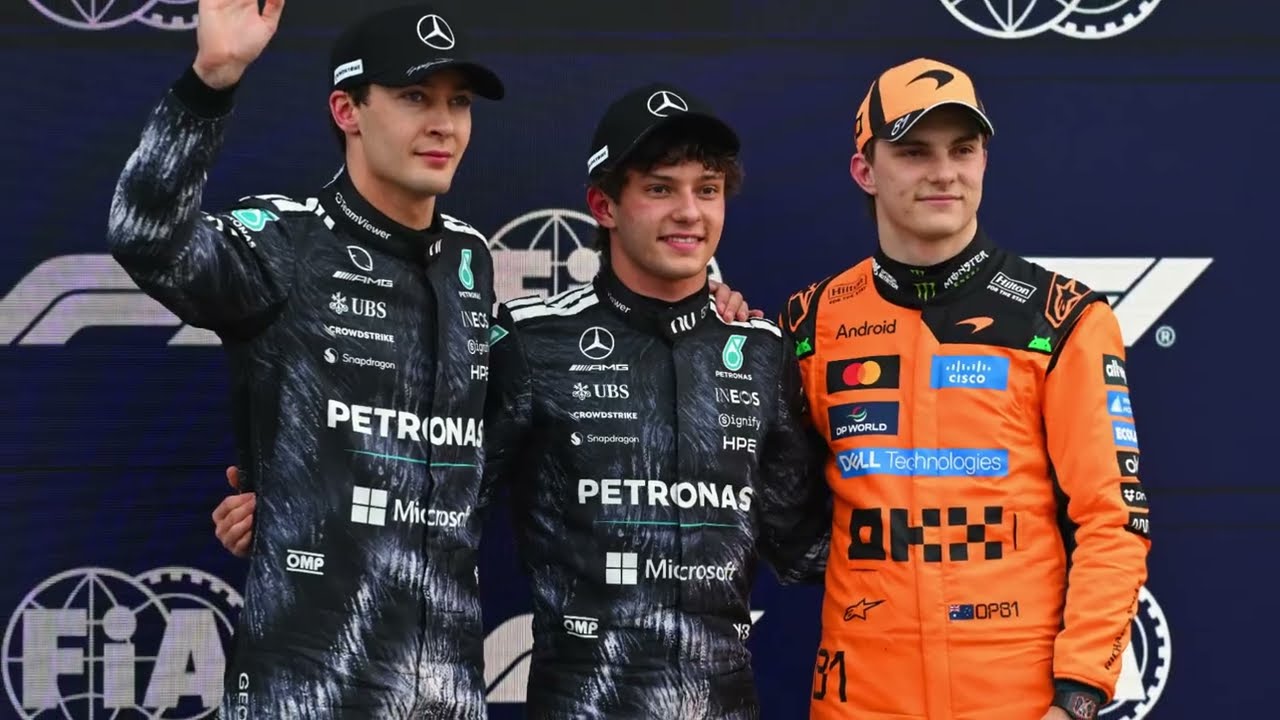
Currently, the Mercedes works team does not suffer from this problem at the same crippling severity. Their power unit has mastered the incredibly delicate relationship between deployment and harvesting, sustaining peak electrical output for significantly longer across each straight. But Ferrari did not arrive at their new algorithmic solution in total isolation. They found their inspiration by closely analyzing the shock resurgence of a fierce rival: McLaren.
As a Mercedes customer team, McLaren had been struggling with the exact same energy depletion issues affecting the non-Mercedes works cars. But at the Japanese Grand Prix, something dramatically shifted. Oscar Piastri sensationally led the race from the start, confidently holding off both Mercedes works drivers through the opening stint. Lando Norris was also massively more competitive than he had been in Melbourne or Shanghai. The shocking twist? McLaren did not bring a single significant new aerodynamic or hardware upgrade to Suzuka. Their sudden leap in performance came entirely from software. Their brilliant engineers had ruthlessly analyzed the energy management data from the first two rounds and successfully coded a way to extract consistent electrical deployment without the devastating cliff-edge depletion. The massive six-to-seven-tenths-of-a-second gap to Mercedes was violently compressed to a mere three-and-a-half tenths.
Ferrari’s brain trust watched this unfold and understood exactly what it meant. If McLaren, operating as a customer team without full, unrestricted access to the Mercedes power unit’s deepest architectural secrets, could find four-tenths of a second purely through software optimization, the potential ceiling for Ferrari—a full works team with absolute control over their own engine—was exponentially higher.
The software update Ferrari is now rushing to Miami is not a simple parameter adjustment. According to respected Italian motorsport journalist Paolo Filisetti, the package is a “profoundly revised and corrected software” that fundamentally alters electric charge management. The key phrase echoing out of Maranello is “new algorithms.” The Scuderia is introducing entirely new decision-making logic—fresh, highly complex code that dictates exactly how the SF26’s power unit thinks about the symbiotic relationship between harvesting kinetic energy and deploying electric power across a grueling qualifying lap.
In practical, track-side terms, these new algorithms target three highly specific, mission-critical areas. First is battery management: dictating exactly how much energy to selfishly store versus aggressively deploy at any given microsecond on the circuit. Second is the charging strategy: altering the rate and timing of energy recovery during the braking and lift-and-coast phases, ensuring the battery arrives at every major acceleration zone armed with maximum charge. Finally, it targets energy deployment: smoothing out the logic governing how the MGUK distributes its 350 kW of power across a long straight, desperately trying to extend that peak output for just a few crucial seconds longer before the depletion curve hits. The ultimate goal is simple but profound: to give Lewis Hamilton and Charles Leclerc the actual tools to fight, rather than forcing them to watch helplessly as their performance is “severely sacrificed” by systemic super clipping.
However, the most revealing and tense detail in this unfolding technical drama is the language surrounding the timeline. Internal Ferrari sources have nervously described the implementation of these new algorithms as the singular cause for extreme concern at the power unit level. They are not confidently declaring that the software is definitely racing in Miami; they are admitting they are working around the clock to ensure it can race in Miami.
Introducing entirely new, foundational algorithms to a Formula 1 power unit is incredibly dangerous. It is not like pushing a routine software update to a smartphone. The new code must be painstakingly written, aggressively simulated, fiercely validated against the telemetry data from the opening rounds, and tested endlessly in the Maranello simulator. Most importantly, it must be verified under raw, real-world track conditions before it can ever be trusted in the heat of a Grand Prix.
This absolute necessity for real-world validation makes the upcoming Monza filming day on April 22nd the most critical 100 kilometers of Ferrari’s season. Hamilton and Leclerc will run the SF26 around the legendary Temple of Speed—one of the most brutally demanding circuits on the planet for energy management. Monza’s endless, flat-out straits and minimal heavy braking zones perfectly replicate the exact conditions where super clipping has been destroying Ferrari’s lap times. If the new algorithms perform as beautifully on the track as they do in the simulator, they will be immediately packed for Miami. If they fail, or induce unexpected electrical gremlins, team principal Fred Vasseur faces an agonizing decision: whether to aggressively risk racing untested, experimental software during a high-pressure Sprint weekend that offers only one solitary practice session.
Yet, this massive software push is ultimately just a bridge. The algorithms are not Ferrari’s final form; they are the precursor to a massive, physical hardware upgrade—a new power unit specification currently being developed under the FIA’s ADU (Approved Development Upgrade) framework. This massive engine overhaul is targeted for somewhere between the races in Barcelona and Austria.
But hardware upgrades taking months to manufacture require incredibly precise data to ensure they actually work. By running these revised algorithms across a full Sprint weekend and Grand Prix race distance in Miami, Ferrari’s engineers will gather invaluable, real-world feedback. They will definitively learn exactly which specific characteristics of their power unit are costing them the most performance, feeding that precious data directly into the design of the ultimate ADU hardware.
Miami is no longer just a race for the Scuderia; it is a massive, high-stakes data collection exercise for the engine that will define the rest of their era. Ferrari hasn’t miraculously found a brand-new engine, nor have they discovered a magic aerodynamic bullet. What they have engineered is a dramatically smarter, more ruthless way to utilize the immense power they already possess. In a brutal championship decided by mere tenths of a second, software is the new kingmaker. When the lights go out in Miami, the entire motorsport world will finally discover if Ferrari’s secret algorithms can save Lewis Hamilton’s season, or if Mercedes will continue to reign supreme.