“The driver must drive the car alone and unaided.”
Nine simple words. That is all it takes. Those nine words, written decades ago into the sacred Formula 1 rulebook, have historically banned groundbreaking technology, thrown out world champions, and rewritten the destiny of the most expensive sport on Earth. And right now, highly respected motorsport voice Martin Brundle is pointing those exact nine words directly at every single car on the 2026 grid.
Formula 1 is facing a storm of unprecedented proportions. The question that nobody in the paddock wants to answer out loud is finally being forced into the spotlight: What happens when the world’s most advanced racing car is effectively driving itself? And, perhaps more importantly, what happens to Ferrari’s billion-dollar gamble on Lewis Hamilton if the entire grid is suddenly declared illegal?
The cracks in the system first became undeniable at Suzuka. Fans watched Lando Norris execute an overtake on Lewis Hamilton, but there was a chilling reality behind the maneuver. Norris didn’t actually choose to make the move. He didn’t brilliantly brake late into the corner, nor did he find an extra gear of hidden talent. Instead, his car’s battery system fired entirely on its own, forcefully pushing him past his rival, and then abruptly left him with absolutely nothing to defend with moments later. Lando Norris, one of the most elite athletes in the world, was reduced to a mere passenger in his own cockpit.
Brundle watched that unnatural moment and immediately reached for Article 27.1—the one regulation that has never lost a fight in thirty years of technological warfare. But Norris’s passive overtake was just the tip of a very dangerous iceberg.
To understand the crisis, you have to look under the hood of the deeply controversial 2026 regulations. The new power unit isn’t just an updated hybrid system; it is something Formula 1 has never seen before. The internal combustion petrol engine produces roughly 400 kW of power, while the electric motor produces nearly 350 kW. That is essentially a 50/50 power split, with the electric output nearly triple what the previous generation of cars delivered.
Here is where the engineering enters a dangerously gray area. The system that used to seamlessly keep batteries charged at all times—the complex MGU-H—has been completely removed from the 2026 rules. Because the car can now push energy out nearly twice as fast as it can take it back in, the FIA handed critical control to the onboard ECU computer. Consequently, most of the crucial power decisions—when to push, when to dramatically pull back, and at what rate—are now preset maps and automated targets.
The driver physically cannot override these systems in the heat of the moment. Think about the gravity of that shift. The fastest, most talented racing drivers on Earth are pressing the throttle pedal completely to the floor, but a computer is deciding how much power actually reaches the rear wheels. Sometimes it unleashes a violent 350 kW of electric boost; sometimes, it delivers absolutely nothing. The driver just has to wait and hold on.
What happened next transformed a philosophical debate into a terrifying safety hazard. Oliver Bearman’s horrifying crash at Suzuka was initially written off by some as a racing incident, but the telemetry told a much darker story. It was a direct consequence of this automated technology. Franco Colapinto’s car was locked in a forced “recharging mode,” traveling roughly 50 km/h slower on the exact same straight. They were on the same track, under the same rules, with the same tires—but operating in two completely different, computer-dictated speed classes. Bearman closed the gap so incredibly fast that the violent physics of the crash were already locked in before his human reflexes could even react.
He walked away from the 50G impact, but as Brundle sharply pointed out, walking away from a crash isn’t proof that the rules are safe; it is simply proof that the barriers at Suzuka are well-built. The Grand Prix Drivers’ Association (GPDA) had explicitly warned the FIA about exactly this high-speed delta scenario before the season even began, but nobody listened. Now, the FIA has been forced into emergency meetings. Six different “fixes” are reportedly on the table: software patches, power curve adjustments, throttle limit cleanups, and various engineering solutions.
But Brundle’s argument cuts much deeper. He insists this isn’t an engineering problem; it is a fundamental regulatory conflict. In 2019, Renault was famously thrown out of a Grand Prix for utilizing an automated brake balance system—a relatively minor assist that simply saved the drivers from manually adjusting a dial. If that was deemed illegal, how can the FIA possibly defend a power unit that dictates 350 kW of energy deployment against the driver’s direct wishes? You cannot patch a fundamental rules conflict with a simple software update.
While this legal and safety storm rages, Ferrari is fighting a desperate war on a second front. As the circus heads toward Miami, Charles Leclerc is laser-focused on one thing: survival. “In Miami, we will have, like everyone else, quite a new car. It will be crucial to start on the right foot,” Leclerc admitted after Suzuka. But he also dropped a revelation that lays bare Ferrari’s painful reality, noting that Mercedes currently possesses a massive engine advantage. Leclerc knows the power unit battle is completely lost for now, meaning Ferrari is forced to gamble their entire season on extreme chassis and aerodynamic development.
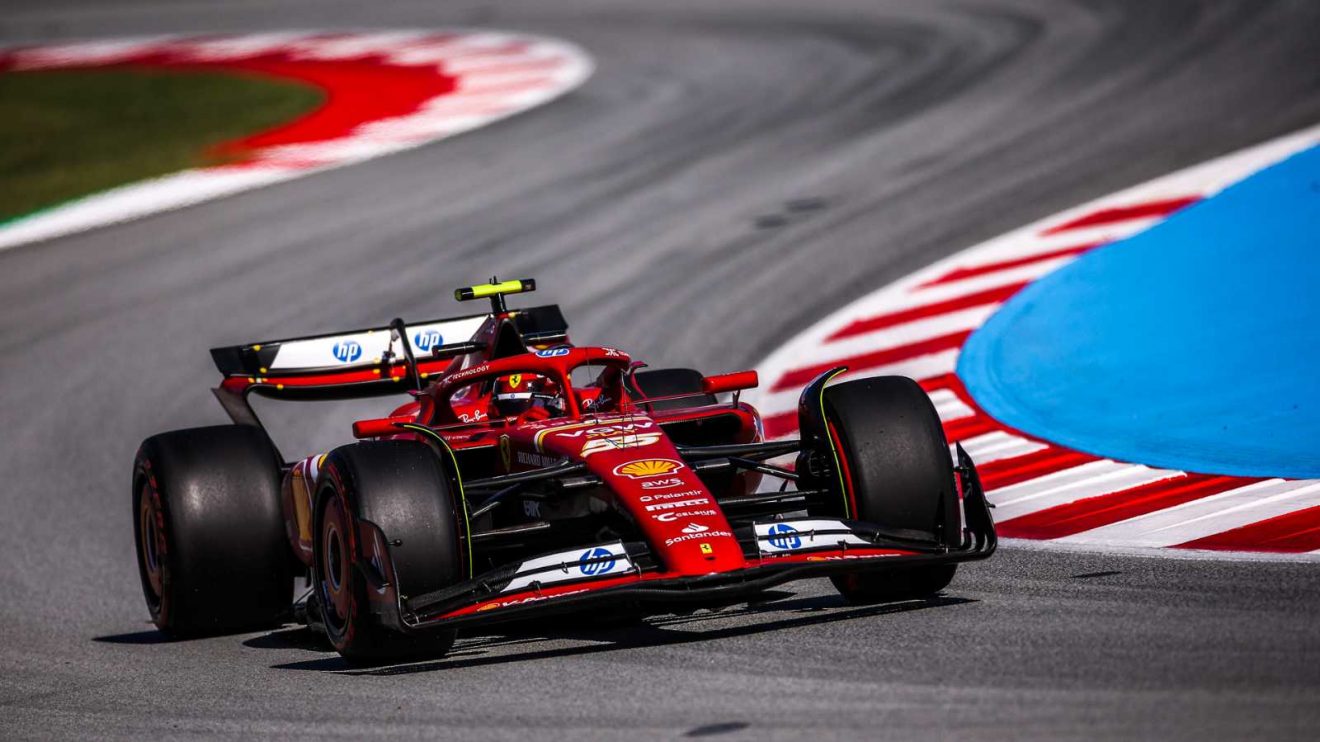
However, the real tragedy inside the Maranello camp is unfolding on the other side of the garage. Lewis Hamilton, the seven-time world champion and Ferrari’s billion-dollar marquee signing, finished a distant sixth at Suzuka. It wasn’t due to a lack of effort or a bungled pit strategy; it was born from something far more concerning. He had absolutely zero confidence in the car.
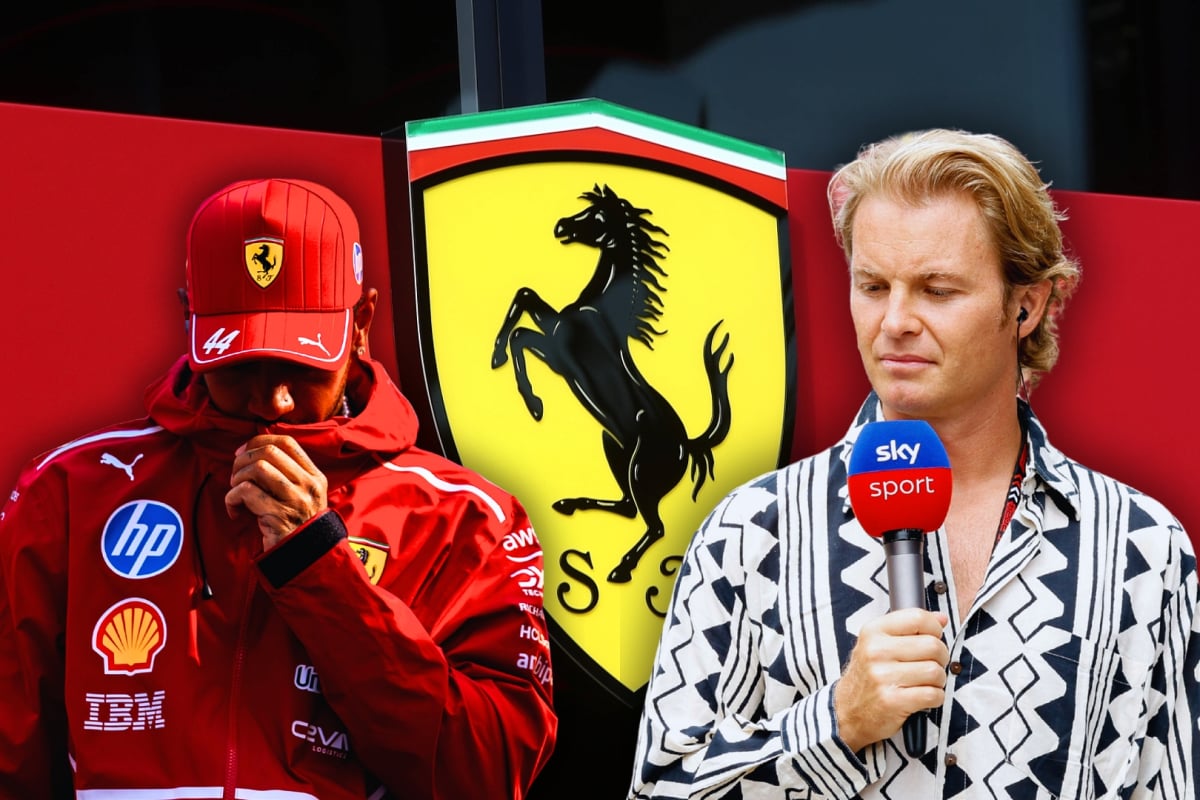
Nico Rosberg, the man who spent years engaging in psychological and physical warfare against Hamilton at Mercedes, recognized the troubling pattern immediately. This isn’t a minor setup issue or a track-specific anomaly. This is the exact downward spiral Rosberg warned the world about before Hamilton even turned his first wheel in Ferrari red. Charles Leclerc is already deeply in sync with the SF26, consistently finding the razor’s edge of its limits and bringing home podiums. Meanwhile, Hamilton is visibly lost, still frantically searching for a rhythm that refuses to come. When two elite drivers share the exact same machinery but produce wildly different results, the uncomfortable questions stop being about the car and start targeting the driver. Ferrari didn’t sign Lewis Hamilton to eventually adapt; they signed him to lead from day one.
Now, Formula 1 finds itself staring down the barrel of a multi-layered crisis. The championship picture is slipping away from Ferrari as Mercedes pulls ahead and McLaren takes massive strides forward. With the massive upgrade packages arriving in Miami, if Ferrari misses the mark, the gap will become insurmountable.
But the most dangerous threat to the sport isn’t Ferrari’s internal drama; it is the collapsing morale of the grid. Reigning champion Max Verstappen has begun publicly questioning whether Formula 1 is even worth racing in anymore. Veteran Fernando Alonso has mockingly dubbed the 2026 campaign the “Battery World Championship.” The GPDA group chats are reportedly overflowing with unprecedented anger and frustration. When the drivers themselves—the gladiators who risk their lives for our entertainment—start genuinely asking whether they even want to participate, that is no longer a technical hiccup. That is a full-blown identity crisis.
Can nine words written decades ago bring down the most technically advanced cars ever built? Can Ferrari somehow unlock Lewis Hamilton’s dormant brilliance before the championship gap becomes impossible to close? When the paddock arrives in Miami with heavily upgraded cars and everything on the line, we will finally see who this chaotic championship truly belongs to. Because one thing is absolutely certain: The 2026 season was never just about who has the fastest car. It is a brutal test of who can survive the politics, the pressure, and the deeply flawed rules.