In the high-stakes, deeply secretive world of Formula 1, championship-defining news rarely leaks out by accident. Usually, massive developments are carefully crafted PR statements delivered by team bosses or tightly worded press releases from the FIA. But this time, the entire landscape of the current Formula 1 season may have just been turned upside down by a rookie. Kimi Antonelli has just dropped an absolute bombshell, and if the paddock whispers he essentially confirmed turn out to be true, we are no longer looking at a predictable, Mercedes-dominated procession. Instead, we are staring down the barrel of a full-on, multi-team championship bloodbath. According to Antonelli, Ferrari is about to be handed the ultimate lifeline—a “secret weapon” that could instantly catapult them from mere podium contenders to outright championship favorites.
To understand why this is such a seismic shift, we have to look intimately at where the famous Italian team currently stands. Right now, Ferrari’s biggest weakness is not their star-studded driver lineup, nor is it their car’s aerodynamic performance in the corners. The brutal reality holding the Prancing Horse back is their engine. Insiders suggest that Ferrari is currently suffering from a severe power deficit, estimated to be somewhere in the region of 20 to 25 horsepower down compared to the class-leading Mercedes power unit.
In modern Formula 1, a 25-horsepower gap is practically a death sentence for a championship campaign. You can employ the most brilliant aerodynamicists in the world and design the most perfectly balanced chassis, but if you are bleeding precious tenths of a second on every single long straight, you simply cannot win consistently. It is the agonizing difference between being the hunter and being the hunted. Ferrari’s current engine architecture—specifically their turbocharger configuration—appears to be overly conservative. While a smaller turbo might aid in initial, punchy acceleration out of slow corners, it severely penalizes the car’s ultimate top speed and aerodynamic efficiency at the end of the straights.
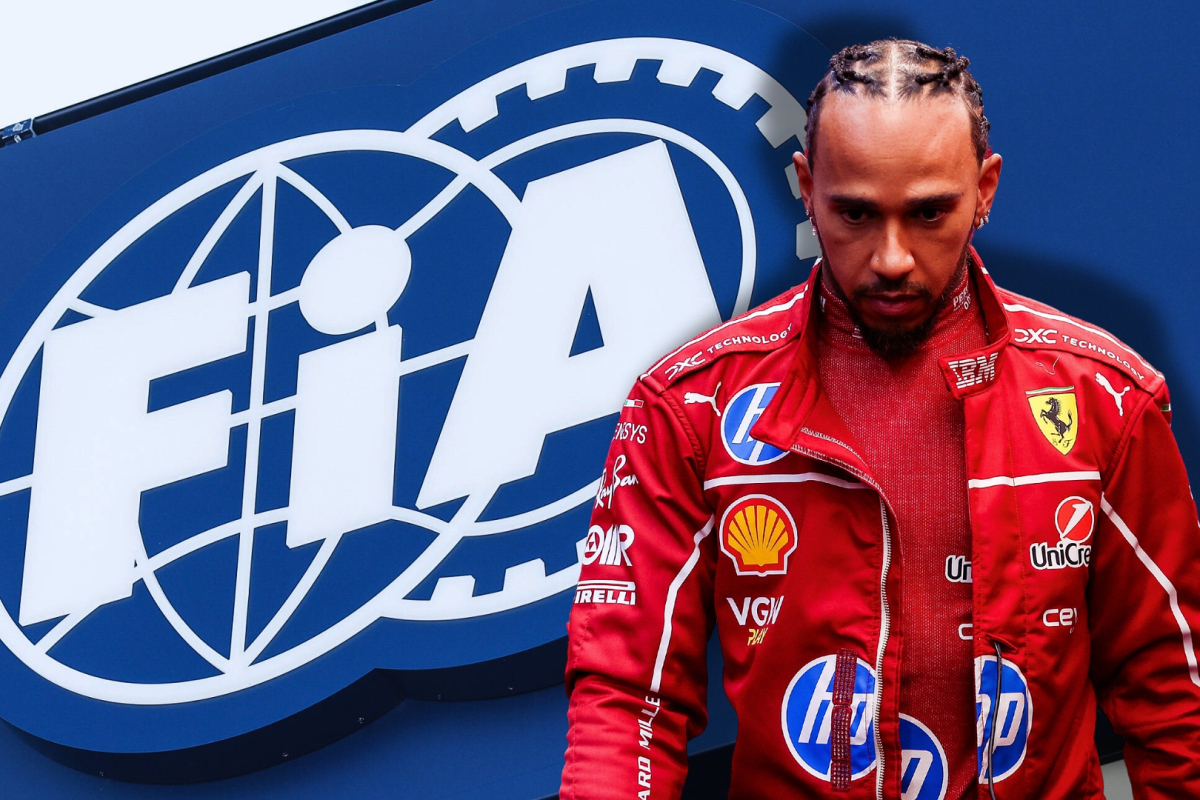
However, the FIA has a deeply controversial equalizer system currently in place to prevent the sport from becoming a one-horse race. If an engine manufacturer falls behind the leading power unit by a certain percentage—typically around the 2% mark or more—the governing body can step in and grant them emergency, additional development opportunities. If the deficit stretches beyond 4%, those allowances become even greater. This isn’t just a minor tweak; this is a manufacturer’s golden ticket. It means official permission to introduce major performance gains, new upgrades, and essentially, a desperately needed second chance. According to Antonelli’s stunningly confident remarks, Ferrari is on the verge of getting exactly that.
While this has not been officially stamped by the FIA just yet, the critical evaluation period is scheduled to occur right around the Miami Grand Prix. The fact that a highly connected rookie is already speaking about this as an inevitability tells you exactly what is going on behind the closed doors of Maranello. If Ferrari receives the green light to upgrade their power unit, they aren’t going to wait around. Rumors suggest that Ferrari’s engineers have been aggressively developing a heavily optimized engine concept in the background for months. We could see this upgraded power unit unleashed on the track as early as the beginning of the European leg, potentially at pivotal races like Barcelona or Austria.
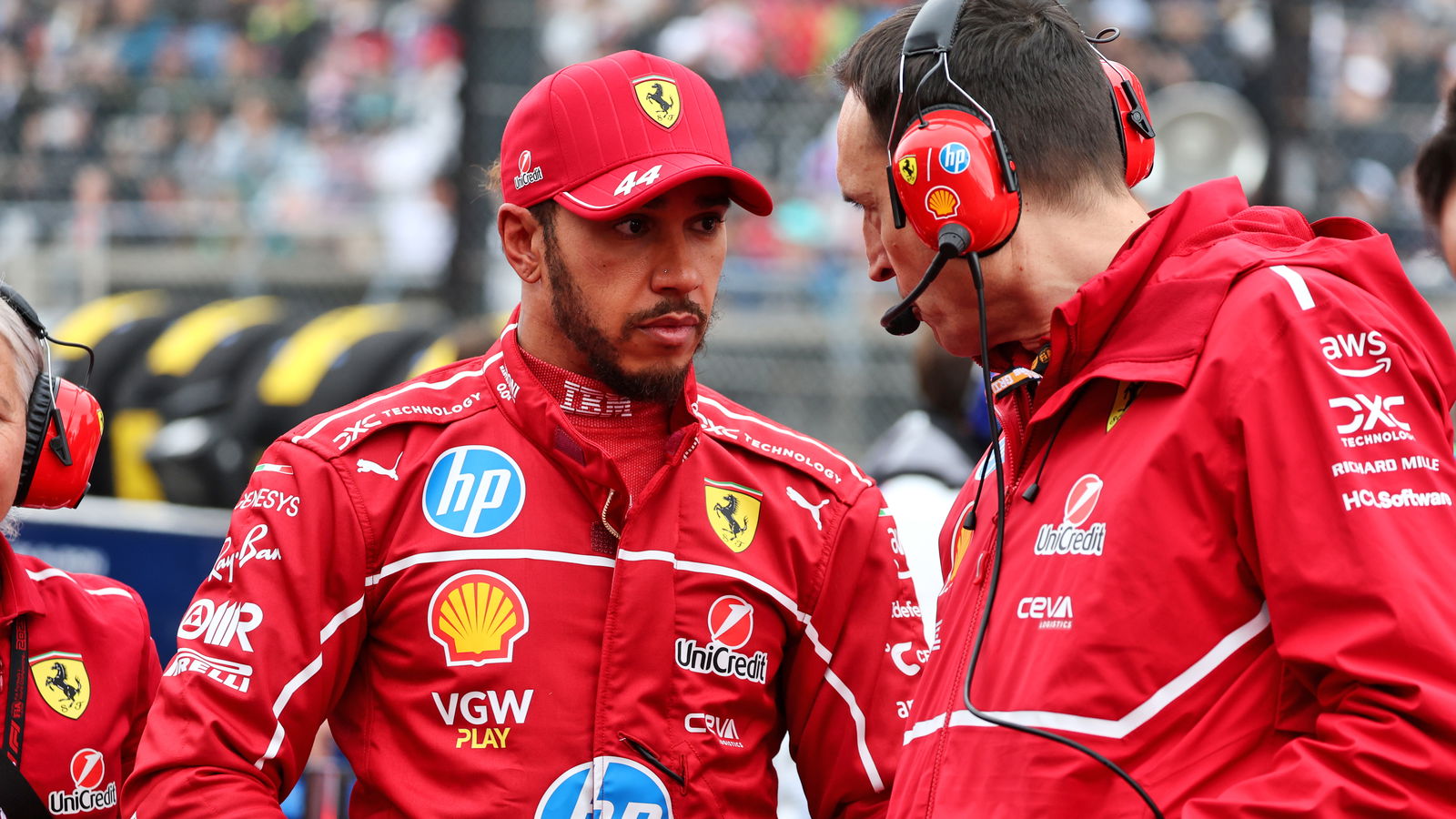
This presents a terrifying scenario for their rivals. Ferrari’s chassis is already exceptionally good. Their rear stability is rock solid, their cornering balance is exquisite, and their tire management has drastically improved. The only missing piece of the puzzle is that final, brutal punch of straight-line speed. If this FIA-approved engine upgrade even partially closes that 25-horsepower gap, Ferrari instantly transforms from a competitive nuisance into a deeply dangerous threat. They won’t just be fighting for opportunistic podiums; they will be hunting for dominant race wins. And once you start stacking up race victories, the World Championship is suddenly within grasping distance. The psychological momentum alone could be enough to force Mercedes into making uncharacteristic, high-risk strategic errors.
But the sheer drama of this Formula 1 season doesn’t stop with Ferrari’s miraculous resurgence. While the iconic red cars are seemingly on the verge of a massive breakthrough, another absolute titan of the sport is currently spiraling into a completely unexpected crisis. Coming into this season, almost everyone expected Red Bull Racing to be fighting tooth and nail at the very front of the grid. Instead, they are quietly battling one of the most severe, hidden technical crises in recent memory.
In a bizarre reversal of fortunes, Red Bull’s problem is not their engine. In fact, deep paddock analysis suggests that Red Bull actually possesses the second-best power unit on the entire grid. Considering their relatively fresh status as an in-house engine manufacturer, building a power unit that can go toe-to-toe with legendary builders is an incredible achievement. Yet, despite this raw horsepower advantage, they are simply not getting the results. Why? Because their chassis development has turned into an absolute nightmare.
There are glaring, undeniable signs emerging from within the Milton Keynes camp that the car is fundamentally flawed. It lacks speed in the corners, suffers from chronic instability, and worst of all, the expensive upgrades they have rushed to the track simply are not working. In the highly technical world of F1, there is nothing more terrifying than a lack of correlation between the wind tunnel and the actual racetrack. Reports indicate that one of Red Bull’s recent, highly anticipated upgrade packages actually made the car slower and harder to drive. While rival teams are finding crucial lap time, Red Bull’s engineers are essentially guessing, desperately trying to find a development direction that actually translates to the asphalt.

This is where the situation becomes critical for Red Bull. Unlike Ferrari, Red Bull’s engine is far too competitive to qualify for any of the FIA’s equalizer development allowances. They are effectively locked into their current power output. Therefore, every single fraction of a second they need to find must come entirely from fixing their broken chassis—the exact area where they are currently failing the hardest.
Add to this volatile mix the “Max Verstappen factor.” When a team employs a generational talent of Verstappen’s caliber, the expectations are astronomically high. Verstappen does not tolerate fighting for minor points; he expects utter dominance. When the machinery underneath him cannot deliver that dominance, the frustration is immediate and explosive. We are already seeing the cracks form—tense radio messages, pointed comments to the media, and an overall demeanor that suggests his patience is wearing dangerously thin. If Red Bull cannot quickly untangle this chassis disaster and provide Verstappen with a car worthy of his talent, serious questions will be asked about his long-term future with the team. In Formula 1, a frustrated superstar driver paired with a failing development program is a recipe for internal disaster.
What we are witnessing is the dawn of a massive, multi-front war that extends far beyond a simple rivalry. This is a full-scale engine and development war. Mercedes, currently sitting on the throne, is locked in place and cannot receive extra development time. Their customer teams—McLaren, Williams, and Alpine—are similarly tethered to that fixed performance level. Meanwhile, Ferrari, alongside other manufacturers like Honda and Audi, could massively benefit from the FIA’s equalization rules, allowing them to rapidly evolve and hunt down the leaders.
With so many gray areas in the regulations, teams will inevitably attempt to game the system, pushing the boundaries of what is legally permitted in the pursuit of power. The FIA insists their dyno testing and data monitoring are foolproof, but the history of Formula 1 is written by brilliant engineers finding loopholes in “foolproof” rules. As we hurtle toward the European season, the entire grid is on a knife-edge. If Ferrari’s secret weapon fires perfectly, and Red Bull continues to stumble in the dark, the 2026 World Championship is about to be blown wide open in the most spectacular way imaginable.