Formula 1 is fundamentally a sport of razor-thin margins, where championships are rarely won solely by the loudest team in the paddock, but rather by the one that perfectly synchronizes their engineering brilliance with flawless timing. As we look ahead to the next critical juncture of the racing calendar, the grid is resting on a knife’s edge. The upcoming Miami Grand Prix is not just another picturesque race weekend under the blistering Florida sun; it is shaping up to be the ultimate pressure cooker. Because this is a Sprint weekend, the stakes have been exponentially magnified. Teams are arriving with revolutionary upgrades, but with drastically reduced practice time, there is absolutely zero margin for error. You either hit the ground running, or you spend the rest of the weekend desperately trying to salvage your dignity.
In the grand theater of motorsport, McLaren is currently playing the role of the dangerous sleeper agent. They are one of those rare teams that can operate in relative silence just long enough for their rivals to momentarily forget how deeply lethal they can be. While Mercedes has dominated the headline acts and commanded the center of every conversational debate, McLaren has been diligently working in the shadows. Make no mistake: this is still the same powerhouse that knows exactly how to build momentum, win titles, and mercilessly capitalize the moment technical regulations leave a door slightly ajar.
Rumors are swirling furiously through the paddock that McLaren is preparing to unveil a monumental upgrade package in Miami. They are not merely throwing aerodynamic parts at the wall and hoping something sticks; they are bringing calculated, precise enhancements. They know exactly where their hidden lap time lies, and a significant portion of this confidence stems from their Mercedes power unit. By unlocking the latent potential within that engine and pairing it with a revamped chassis, McLaren truly believes they possess both the tools and the time to completely eradicate the gap to the frontrunners. If this Miami package works straight out of the box, McLaren will instantly transform from a team mentioned in passing to the team that every single competitor must nervously game-plan around.
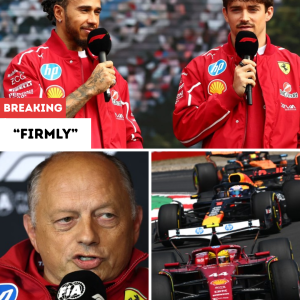
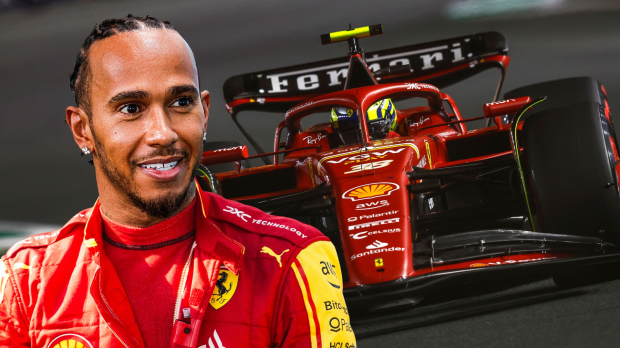
However, McLaren is far from the only giant plotting a seismic power play. Over in Maranello, Ferrari finds themselves in an incredibly fascinating, albeit slightly frustrating, position. If you analyze the telemetry closely, a very compelling argument can be made that Ferrari currently boasts one of the absolute best chassis on the entire grid. Through the medium and low-speed corners, their scarlet car looks remarkably planted, predictable, and genuinely capable of going toe-to-toe with Mercedes.
Yet, Formula 1 is a puzzle that requires every piece to fit perfectly, and Ferrari is currently missing one crucial element: top-end power. Their power unit deficit is the invisible chain holding them back from turning strong, competitive weekends into utterly dominant ones. But Ferrari is not standing still. They are unleashing a barrage of upgrades—ranging from intricate new floor concepts and subtle wing adjustments to completely revamped cooling solutions and airflow refinements around the halo. While McLaren is betting on one massive package, Ferrari is attempting to organically evolve a car that already possesses championship DNA. If they can extract even a modest step forward in engine performance to complement their stellar chassis, Ferrari will immediately become a relentless menace at the front of the pack.
The contrast between the frontrunners and the rest of the field becomes stark when you look at Aston Martin. Unlike Ferrari’s targeted refinements, Aston Martin is grappling with a profound lack of clarity. Their car demonstrates undeniable potential in the slower technical sections, but the moment it hits high-speed corners, the aerodynamic mask slips, revealing glaring weaknesses. The most terrifying issue for any F1 team is not just a lack of pace, but a lack of understanding. When your car behaves inconsistently, development transforms from an exciting journey into a grueling, frustrating maze. You are no longer just chasing lap times; you are desperately chasing answers. Despite this dark cloud, an unshakeable belief remains within the Aston Martin garage that a mid-season turnaround is entirely possible. If a simple reliability upgrade allows them to run their engine harder, it could theoretically unlock the hidden performance they so desperately crave. But time is running out.
As the chasing pack claws frantically for extra tenths of a second, the current kings of the hill are feeling the heat. Mercedes is operating from a commanding position of strength, a status that fundamentally alters the championship dynamic. When you are the hunted, you don’t just focus on your own car; you actively force your rivals to take massive, sometimes reckless risks just to stay in your slipstream. Their power unit is a masterpiece, the chassis is balanced, and the internal confidence that eroded during previous difficult seasons has been fully restored.
At the center of this Mercedes resurgence is George Russell. He has publicly declared his absolute trust in the team’s trajectory, fully expecting to be a constant fixture in the battle for race wins and the ultimate championship crown. However, sheer belief and flawless execution under immense pressure are two entirely different beasts. Russell’s season has been dotted with minor imperfections—setup gambles that backfired, and moments of bad luck. Compounding this pressure is the looming presence of Kimi Antonelli. Antonelli is not sitting in the Mercedes garage merely to observe and learn; he is there to fiercely compete. Having a teammate pushing that relentlessly hard from the other side of the garage changes a driver’s psychological approach to every single braking zone. The burning question remains whether Russell will need to adopt a hyper-aggressive stance to fend off this internal threat, or if he can rely on the measured consistency that elevated him to this top seat in the first place.
While the titans clash at the front, we cannot ignore the brewing storms elsewhere on the grid. Alpine is quietly piecing together a campaign that could turn them into major disruptors right after the summer break. Formula 1 history is deeply enriched by these slow-building underdog stories that suddenly erupt into relevance, and Alpine could soon become a massive headache for the likes of McLaren and Ferrari.
Conversely, the story unfolding at Red Bull is nothing short of deeply shocking. Just a short time ago, this team set the gold standard for modern Formula 1 engineering. Today, they are drowning in a sea of foundational crises. The issues run far deeper than a few botched pit stops or a single bad race. Red Bull is actively battling crippling infrastructure limitations, an aging wind tunnel, and a terrifying lack of correlation between their digital simulations and real-world track reality. In this sport, if your wind tunnel is lying to you, it does not matter if your engineers are drafting the most brilliant aerodynamic concepts on paper; they will ultimately fail on the asphalt.
This technical collapse is placing crushing pressure on Red Bull’s technical leadership. When the car fails to deliver, the corporate search for a scapegoat inevitably begins. Yet, the F1 paddock is a ruthless and opportunistic ecosystem. If Red Bull decides to make sweeping personnel changes, rival top teams are already waiting in the wings, checkbooks in hand, ready to poach that world-class talent. One team’s internal political disaster is instantly another team’s golden opportunity.
Ultimately, all of these intersecting narratives are on a violent collision course aimed squarely at Miami. The grid is far more fragile and unstable than the current points standings suggest. Mercedes is fast, but they are not immortal. Ferrari is tantalizingly close, yet fundamentally incomplete. McLaren is operating in the shadows, armed with a potentially devastating upgrade. Red Bull is scrambling for survival, and Aston Martin is lost in the data.
Miami is not just a race; it is a crucible. The unforgiving nature of the Sprint format means that whoever bolts on their upgrades, understands their complex data the fastest, and executes perfectly in the blistering heat will seize the momentum. And in Formula 1, momentum is the most powerful currency of all. The team that leaves Miami with the wind at their back will carry a massive psychological and mathematical advantage into the prestigious streets of Monaco. The entire championship narrative is about to be rewritten in a single weekend. The only question is: who will hold the pen?