Under the searing, unforgiving desert sun at the Bahrain Grand Prix preseason test, Ferrari did not just casually roll out a new race car; they unleashed a mechanical provocation that sent shockwaves through the Formula 1 paddock. The highly anticipated SF26 emerged from the storied Maranello garage sporting a rear wing unlike absolutely anything seen in the modern era of the sport.
This was not a subtle aerodynamic flex, nor was it a marginal, microscopic tweak designed to shave off a thousandth of a second. It was pure, unadulterated mechanical theater—a dramatic 180-degree rotating rear element specifically engineered to flatten out horizontally on the long straights and violently snap back upright for the demanding corners. It represented sky-high ambition and monumental risk. At the very center of this swirling storm of attention stood seven-time World Champion Lewis Hamilton. Clad in Ferrari red, he was visibly animated, smiling broadly, and clearly energized as he guided the scarlet machine down Bahrain’s massive straights, the colossal wing pivoting dramatically in his wake
However, not everyone in attendance was applauding this audacious display of engineering. Watching intently from the elevated commentary perch was the universally respected veteran broadcaster and former driver, Martin Brundle. His reaction was not one of wide-eyed wonder, but rather calculated disdain.
Brundle immediately questioned whether the paddock was witnessing a genuine aerodynamic revolution or a deeply concerning delusion. Hamilton’s extensive test runs were entirely meant to showcase Ferrari’s daring, out-of-the-box interpretation of the radically overhauled 2026 technical regulations. On the long straights, the wing confidently rotated, theoretically allowing massive amounts of unobstructed airflow and significantly reducing drag to promise blistering, untouchable top speeds. In a vacuum, it represented the pinnacle of aerodynamic bravery. In reality, according to Brundle’s scathing analysis, it exposed something far less flattering and infinitely more dangerous.
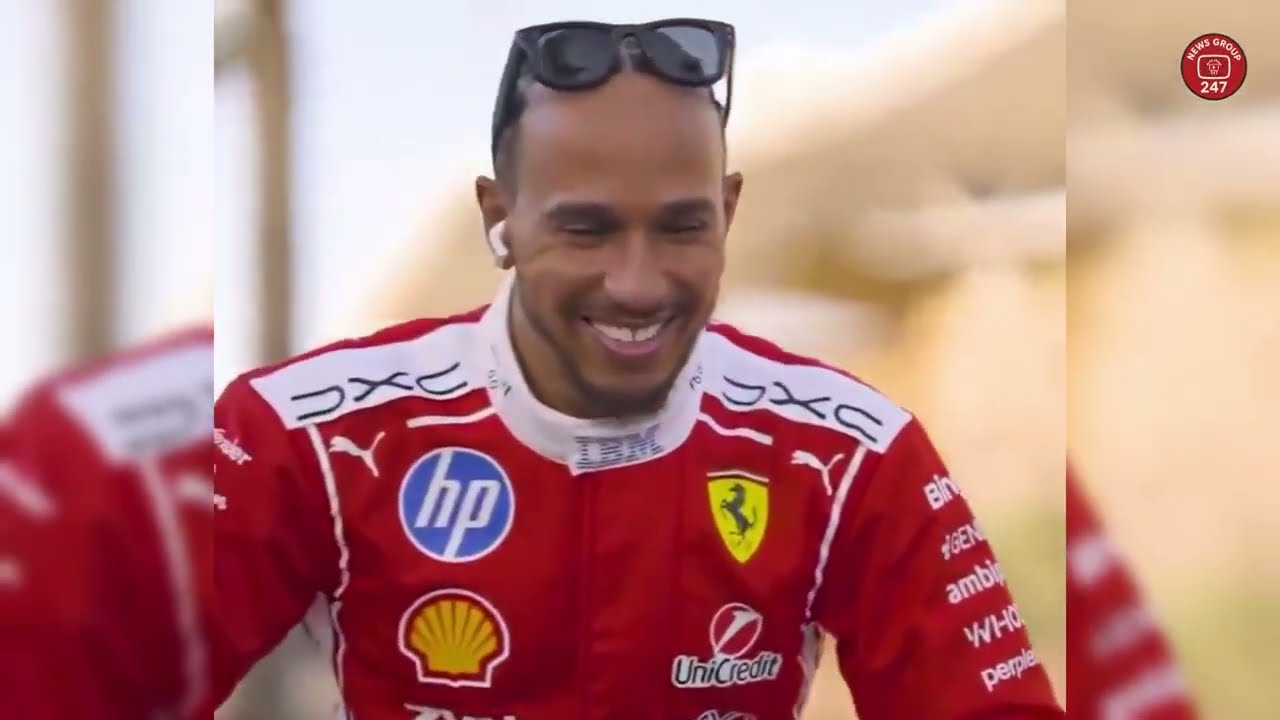
Brundle did not hold back, unleashing a cutting critique that instantly dominated the global racing conversation. He revealed to F1 media outlets that it is a well-known secret that several other top-tier teams in the pit lane had actively considered utilizing this exact solution during their simulation phases. However, those rival outfits decisively opted against dedicating crucial time, financial resources, and wind-tunnel hours to developing a mechanism they firmly concluded possessed fatal drawbacks. This was a calculated dismantling of Ferrari’s triumphant moment. The underlying implication from Brundle was absolutely devastating: Ferrari had not miraculously stumbled upon a hidden stroke of aerodynamic genius. Instead, they had recklessly ventured down a dead-end path that their fiercest competitors had already explored and wisely abandoned.
The crux of Brundle’s intense criticism lies in the highly complex physics of transition. In the hyper-advanced realm of modern Formula 1, aerodynamics is no longer simply about achieving maximum raw downforce or achieving minimal drag. The true battleground is the delicate, split-second transition between those two extreme states. The agonizing milliseconds when massive mechanical components physically move, and the fraction of a second when the invisible airflow violently shifts across the carbon fiber bodywork, are where cars are either planted or sent spinning into the barriers. Brundle passionately argued that Ferrari’s complex rotating rear wing intrinsically requires crucial, unavoidable time to open and close—time that more conventional, traditional active aero systems simply do not sacrifice. In the high-stakes, high-speed arena of elite motor racing, any mechanical delay equates to profound danger.
When the Ferrari wing aggressively rotates from its flattened, low-drag straight-line position back to its vertical, high-downforce cornering configuration, the entire car experiences a terrifying, momentary aerodynamic imbalance. For a fleeting but lethal heartbeat, both horizontal planes of the wing may stand near vertical simultaneously, catching the rushing air like the massive sail of a boat. Brundle’s vivid metaphor of a “sail” was both damning and frighteningly accurate. A Formula 1 car is supposed to act as a precision surgical instrument, executing a seamless aerodynamic ballet. It is not supposed to feature a mechanism that momentarily fights the ambient air like a struggling vessel, rather than elegantly slicing right through it.

The most uncomfortable and alarming evidence validating these fears came not from abstract design schematics or wind tunnel data, but from Hamilton’s actual laps on the blistering Bahrain tarmac. Astute trackside observers quickly noted several terrifying moments where the SF26 appeared deeply unsettled during the crucial corner entry phase. The rear end of the car stepped slightly out of line, twitching and shaking violently under immense braking load. In total isolation, such microscopic movements might be easily dismissed by optimistic fans as standard early-test instability. But Brundle, with his decades of trackside experience, saw something significantly more troubling. He pointed to highly specific, high-speed cornering sequences where Hamilton appeared to desperately wrestle the rear axle back into submission. This was a dangerous, visible oscillation that, under the intense, unpredictable conditions of a live race, could easily escalate into a catastrophic full loss of vehicle control. The car did not look planted or confident; it looked undeniably nervous. And for a driver routinely pushing the absolute physical limit at over 300 kilometers per hour, a nervous rear end is absolute poison.
Brundle did not attempt to hide his deep skepticism regarding the overarching philosophy of the design. In his expert view, the rotating wing inherently risks creating a brief but terrifying aerodynamic vacuum—a terrifying window where the rear end of the car is neither fully stabilized by downforce nor fully freed from drag. That transitional void, he ominously suggested, is precisely the unseen trap where World Championships are tragically lost.
The wider reaction throughout the famously cutthroat Formula 1 paddock further compounded Ferrari’s misery. The initial unveiling was clearly designed to send a powerful psychological message to the grid: Ferrari is bold, Ferrari is fearless, and Ferrari is revolutionary. Instead, the dramatic reveal appears to have sparked a wave of quiet, mocking disbelief. James Vowles, the highly analytical team principal of Williams Racing, politely but brutally confirmed that such a bizarre concept was “never on our radar” during their rigorous 2026 design phase. The phrasing was exceptionally loaded. Vowles did not claim they couldn’t make it work, nor did he say they lacked the budget; he simply stated it wasn’t even worth consideration.
Brundle boldly amplified this exact sentiment, arguing that Ferrari’s 180-degree rotating wing functions less as a genuine engineering breakthrough and significantly more as a theatrical distraction. He sensationally labeled the entire mechanism a “gimmick” that deeply risks masking the car’s fundamental structural inefficiencies. Perhaps his most cutting and controversial assertion was that the wing essentially functions as an elaborate psychological prop—a flashy device that artificially fuels Lewis Hamilton’s internal belief while offering virtually zero actual competitive lap-time gain. To publicly call a multi-million-dollar Ferrari innovation a mere gimmick is exceptionally bold; to imply that it actively risks misleading a seven-time World Champion heavily borders on motorsport heresy. Yet, Brundle stood his ground, noting that Hamilton’s visible, beaming enthusiasm during the test unfortunately bordered on dangerous overconfidence completely detached from cold, hard aerodynamic reality.
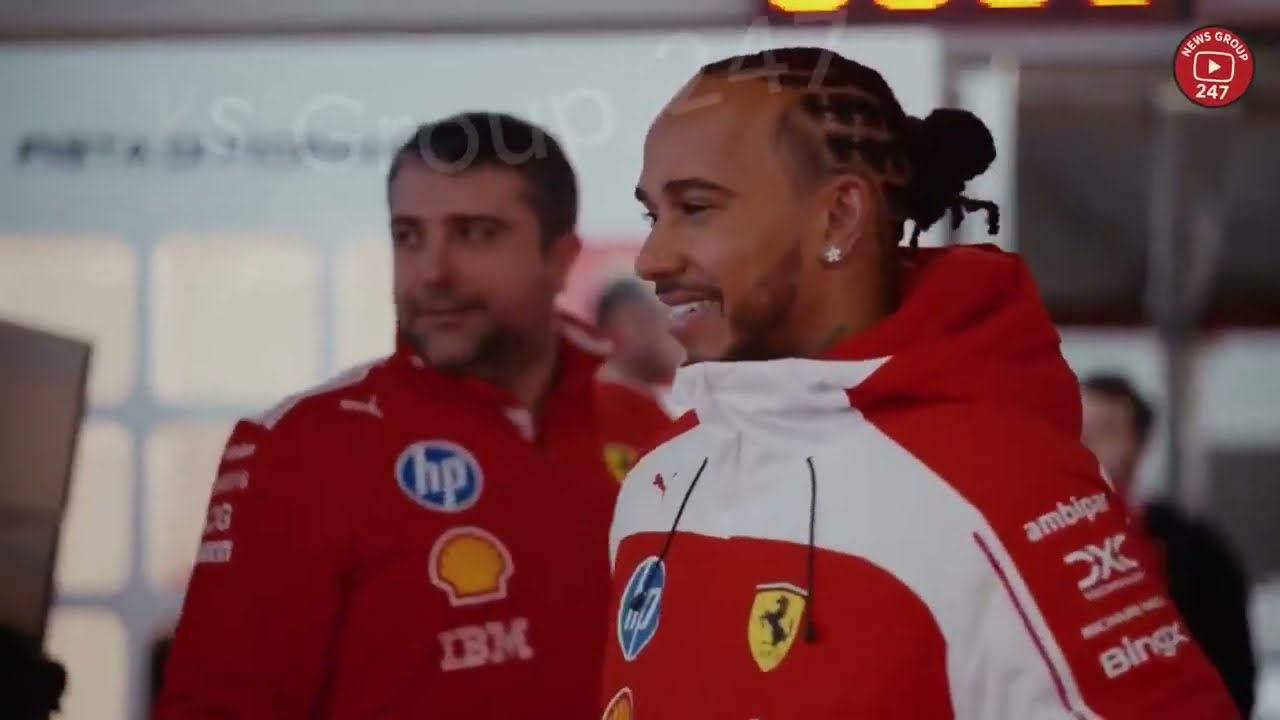
The weakness of this system, according to a growing chorus of aerodynamic critics, lies squarely in variability. A conventional Formula 1 rear wing operates within strictly predictable mechanical limits, allowing engineers to extensively model airflow patterns with pinpoint accuracy. Conversely, Ferrari’s violently rotating system introduces chaotic mechanical complexity and massive airflow turbulence precisely when the driver commits to heavy braking. If that sudden spike in drag destabilizes the rear axle entering a hairpin, the consequences are disastrous. In testing, this kind of inherent instability merely costs a few tenths of a second on the stopwatch; in the chaotic heat of a Grand Prix, it can cost a driver everything.
The intense debate has now fractured the motorsport community into two distinct camps: those who view the wing as pure innovation, and those who see it as a desperate illusion. To the passionate, flag-waving Ferrari supporters, the SF26 perfectly embodies the romantic spirit of Formula 1—audacious engineering, a stubborn refusal to conform to the status quo, and the relentless, obsessive pursuit of marginal gains. They rightly point out that legendary innovations like the double diffuser and active suspension were heavily mocked and fiercely protested before they went on to thoroughly dominate the sport. However, Brundle and his analytical allies correctly note that the history books are equally littered with brilliant-looking, highly complex ideas that spectacularly collapsed under the brutal stress of real-world racing.
Even Ferrari’s own leadership seems to be feeling the immense pressure of the glaring spotlight. Team Principal Fred Vasseur has already begun significantly downplaying the vital importance of the radical upgrade. In a surprising press conference, Vasseur stated there is absolutely no concrete guarantee that the team will even run the highly controversial wing at the upcoming season opener in Melbourne, or the following race in China. He actively attempted to minimize the buzz, claiming the visibly massive innovation does not actually create a massive difference in performance compared to their rivals’ standard designs.
As the dust settles over the Bahrain circuit and teams frantically pack up their freight for Australia, the haunting images remain incredibly fresh. The sight of Lewis Hamilton violently accelerating down the main straight, the massive wing flattening out dramatically, followed immediately by the terrifying twitch in the heavy braking zone and the desperate, lightning-fast steering correction to save the car. The 2026 regulation reset was designed to encourage bold, sweeping experimentation, and Ferrari has certainly answered that call louder than anyone else. However, absolute boldness without a foundation of aerodynamic balance rapidly transforms into a massive liability. The desert air carried much more than just sand this week; it carried profound, lingering doubt. And as the world prepares for the ultimate test in Melbourne, Martin Brundle has firmly ensured that this doubt is heard loud, clear, and unmistakable.
