The world of Formula 1 is arguably the most brutal, high-stakes environment in professional sports. It is a crucible where milliseconds separate heroism from redundancy, and where talent, opportunity, and sheer luck collide with devastating consequences. The F1 season, rich with narrative tension and competitive upheaval, proved to be a particularly unforgiving gauntlet for several drivers. As the dust settles on what many consider one of the most volatile championships in recent memory, the inevitable question arises: who buckled under the relentless pressure?
This ranking of the five most underperforming drivers is not a simple declaration of “bad drivers,” but rather a forensic examination of who failed to meet the critical expectations set by their experience, their equipment, or the raw potential of their teammates. From seasoned veterans struggling against the specter of age to young prodigies caught in the political crossfire, the stories of these five individuals paint a vivid and often heartbreaking picture of F1’s cruel cuts. The burden of the F1 seat is heavy, and for these five, the weight proved too much.
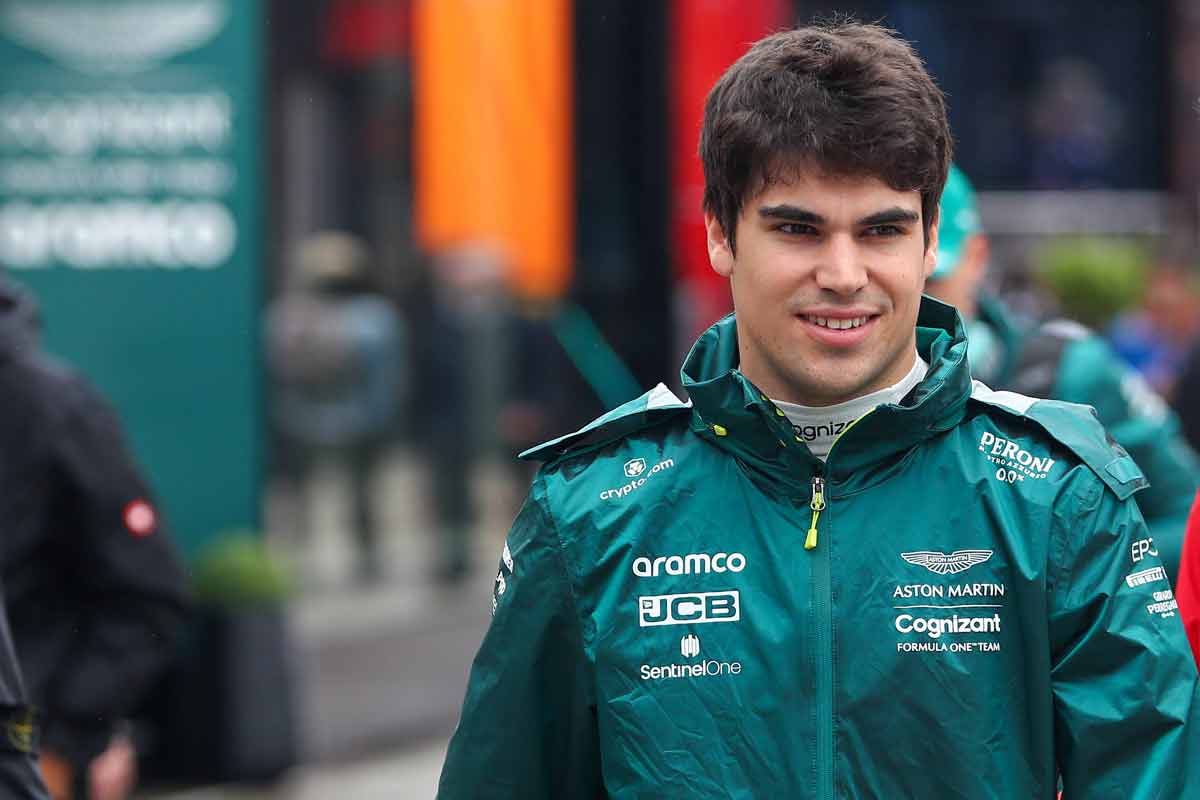
#5 Lance Stroll (Aston Martin): The Experienced Disappointment
Coming in at number five is a name that has become almost perennial on lists critiquing underperformance: Lance Stroll. While it is fair to note that Stroll’s campaign was, relatively speaking, better than some of his past efforts, the assessment must be contextualized by one damning, immovable benchmark: his teammate, Fernando Alonso.
Lance Stroll is one of the most experienced drivers in Formula 1 history, having made his debut many seasons ago. This is not a rookie we are talking about; this is a highly established driver in a factory team—a team, it must be stressed, that harbors genuine ambitions to challenge for championships in the foreseeable future. Yet, when placed side-by-side with a driver in his early forties like Alonso, the Canadian’s performance was simply indefensible.
The statistical chasm between the two Aston Martin drivers tells a story of consistent domination. Although Stroll managed to score a decent amount of points, this equated to only 37% of the team’s total tally for the campaign. In a championship-contending team, the second driver is expected to provide significantly more support.
However, the true embarrassment lies in the head-to-head qualifying battle. Lance Stroll was whitewashed 0-24 by Fernando Alonso. He never, for a single Grand Prix, managed to out-qualify his Spanish teammate. This is not a marginal loss; it is a statistical obliteration. The average gap between them—nearly four-tenths of a second (4/10ths)—is one of the largest disparities between full-time teammates on the entire grid. For a driver of Stroll’s seniority, this level of comprehensive defeat against an older driver, no matter how skilled Alonso remains, raises serious, existential questions about his long-term tenure at the pinnacle of motorsport. His inability to close the gap is a primary reason why the team remains a tier below the elite.
#4 Liam Lawson (Red Bull/RB): The Rookie Beaten by a Rookie
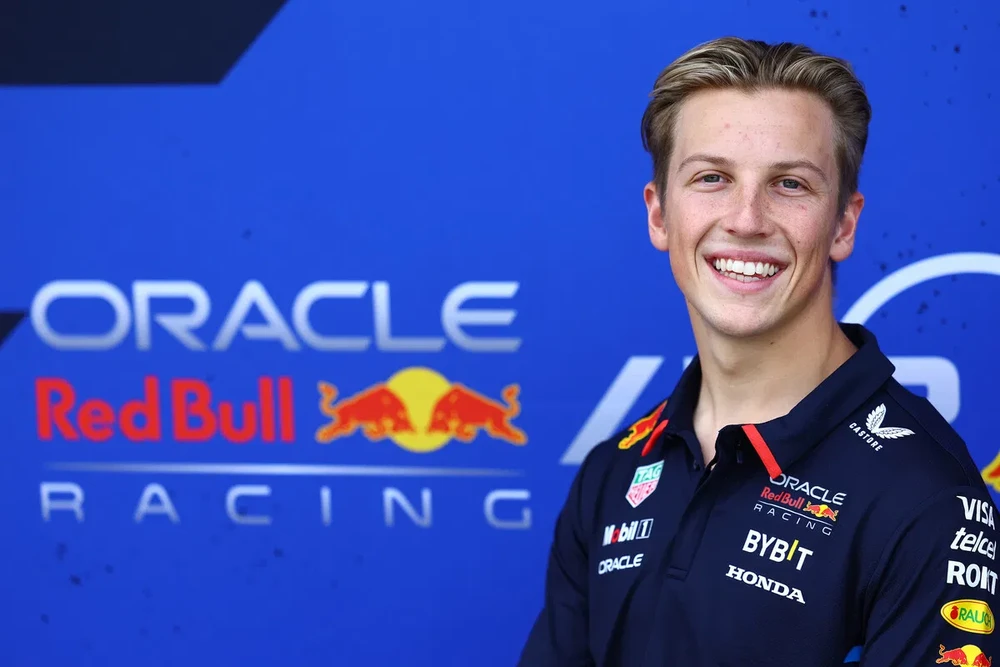
Liam Lawson’s campaign was a study in unfortunate starts and underperformance in a car he should have dominated. His year can be split into two dramatically different, yet equally disappointing, chapters.
The first was his brief, ill-advised stint at Red Bull, where, as the commentator rightly pointed out, placing him up against the reigning champion Max Verstappen was “scary” and a “mistake.” The less said about that high-pressure, low-reward venture, the better.
The true problem emerged when Lawson returned to the RB (formerly AlphaTauri) team. The RB was undeniably a very good car, one that proved to be much more drivable and accessible than the notoriously temperamental Red Bull machine. Evidence of the car’s quality came in the form of Isack Hadjar, who, as an actual rookie, managed to score a podium and was arguably the rookie of the season.
Lawson, who had history with the team and was extremely familiar with their operations, was soundly beaten by the true newcomer, Hadjar. Lawson was on average just under two-tenths slower in qualifying than his teammate. Despite scoring points (41% of the team’s total, which wasn’t terrible), the fact that he was outperformed by a less-experienced driver in equipment he knew intimately is highly worrying. The tricky start at Red Bull would have been mentally taxing, but F1 demands mental fortitude. For a driver who many viewed as having huge potential, Lawson simply failed to convert the clear opportunity presented by the competitive RB chassis, leading to his place on this list.
#3 Franco Colapinto (Alpine): A Victim of Circumstance
The ranking of Franco Colapinto requires the most careful nuance, as his placement reflects less a total lack of talent and more a catastrophic clash with the worst machinery on the grid. The Alpine was undeniably awful. The team was clearly focused on a future power unit switch, leaving the current car development woefully behind.
Colapinto, who arrived mid-season—a disruptive, non-ideal entry point—was brought in under politically charged circumstances by Flavio Briatore. He didn’t have the benefit of a preseason and was thrown into an unfamiliar car during the height of its struggle.
He failed to score points, which, given the equipment, is understandable. However, Colapinto showed clear and positive progression as the season developed. After a shaky start marked by a few crashes, he visibly got closer to his more experienced teammate, Pierre Gasly. His qualifying gap to Gasly averaged just over three-tenths, which, while not great, is a testament to his ability to adapt quickly under pressure, especially considering his minimal preparation time.
He secures this ranking not because of egregious errors, but because in a list that must find five names, Colapinto’s total statistical contribution was zero points, and the initial inconsistencies were impossible to overlook. His story, however, offers a beacon of hope: he did enough to secure his seat for the following campaign, demonstrating that even in failure, there were clear sparks of F1-caliber speed and resilience. His failure was Alpine’s failure as much as his own, yet the harsh metrics of F1 compel his inclusion here.
#2 Yuki Tsunoda (Red Bull): The Enigma of Total Incompetence
For his many fans, Yuki Tsunoda’s campaign was a painful, repeated history. A driver of clear raw speed and charisma, he nonetheless found himself at the epicenter of a rinse-and-repeat disaster that has haunted multiple drivers in the Red Bull system.
The statistics are horrific:
Points: He scored a mere 33 points.
Team Contribution: He contributed only 7% of the total points scored by the car he drove (initially the RB, which finished a mere two points behind the World Champion team).
Performance: The head-to-head metrics against both Isaac Hadjar and Liam Lawson were severely unfavorable.
The performances were, as the commentator stated, “inexcusable.” Tsunoda suffered too many early Q1 and Q2 exits and simply did not score enough points, especially given the car’s competitive package. The argument that the Red Bull car is notoriously difficult to drive holds weight, having challenged drivers like Gasly, Albon, and Perez before him, but the results demanded more.
However, the narrative is complicated by an undeniable factor: Red Bull’s inexplicable, almost total incompetence on Tsunoda’s side of the garage. While Max Verstappen’s operation is described as “perfect,” Tsunoda’s campaign was actively sabotaged by a bizarre series of team errors:
A failure to send him out in time for a final lap in Austin qualifying.
A race-ruining 10-second pit stop during his best performance in Mexico.
Incorrect tire pressures set in Vegas.
These operational disasters compounded his own mistakes and technical setbacks (like delayed upgrades due to his own crashes). While his driving performance deserved critique, the pattern of team negligence around him is shocking and casts a dark shadow over Red Bull’s ability to manage its non-Max drivers. In the end, his combined struggles—self-inflicted and team-inflicted—made his campaign one of the most frustrating and disappointing of the year, ultimately costing him his seat and solidifying his place as the second worst performer.
#1 Jack Doohan (Alpine): The Tragic Setup to Fail

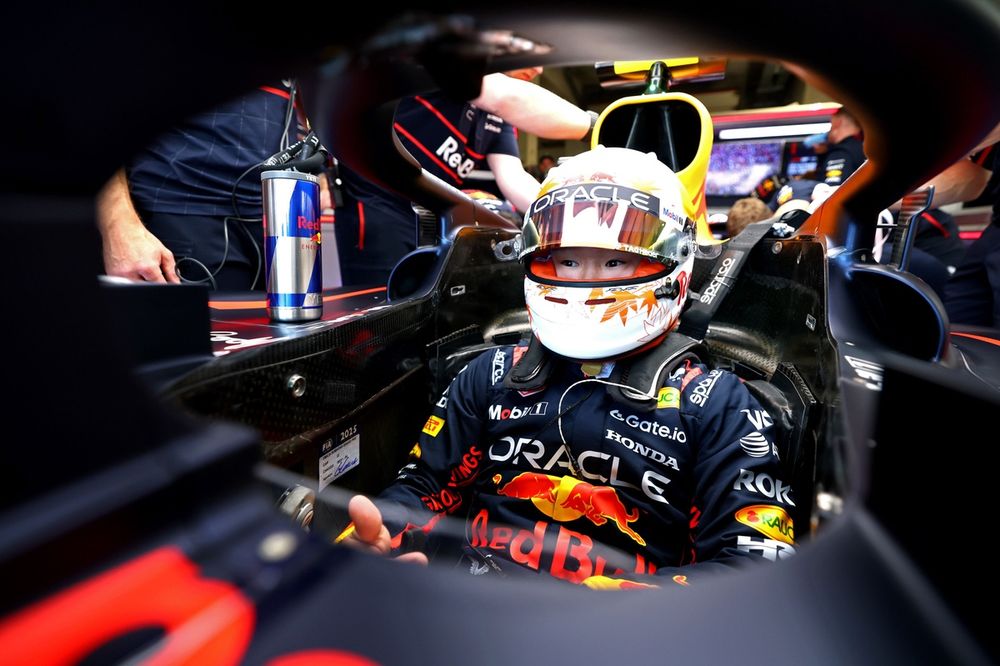
The designation of the absolute worst-performing driver falls to Jack Doohan, a talented rookie whose F1 career was arguably over before it began, making his failure a tragic and infuriating story of political maneuvering.
Doohan only raced six times, a tiny sample size that makes definitive judgment difficult. Yet, his circumstances place him at the top of this list as the ultimate victim. As the pre-season consensus suggested, Doohan was “set up to fail from the very beginning.”
He was immediately placed in the worst car on the grid, the struggling Alpine, giving him zero chance of scoring points. More damningly, he was not even guaranteed his seat for the future; the team, led by Flavio Briatore, was already eyeing Franco Colapinto, essentially making Doohan an expendable placeholder. The moment he was dropped, he was not just out of the seat; he was out of Alpine completely, no longer even in contention for the future.
In his six-race tenure, he failed to score any points and had two DNFs. His Suzuka crash, where he failed to turn off his DRS during practice, exemplified the rookie mistakes that pressure can induce and which gave his political opponents the ammunition they needed.
While the numbers are sparse, Doohan’s gap to Gasly during his short tenure was not entirely disastrous, suggesting that, given a full campaign and a functional environment, he might have rivaled Colapinto’s later performance. However, the reality is that he had the shortest, most unproductive run in F1, was undermined politically, and made high-profile errors in the worst possible car.
Jack Doohan’s campaign is the ultimate cautionary tale: a gifted young driver dealt “really bad cards,” proving that in Formula 1, talent alone is often insufficient when faced with an incompetent car and a ruthless political agenda. His complete failure to achieve anything tangible in his six races, coupled with the systemic reasons behind it, makes him the single most underperforming driver of the tumultuous season.
This ranking of the underperformers is a stark reminder that F1 success is a perfect cocktail of skill, team support, and pure opportunity. For Lance Stroll, it was a failure of experience; for Liam Lawson and Yuki Tsunoda, a clash of speed versus consistency and operational chaos; and for Franco Colapinto and Jack Doohan, it was the crushing weight of driving the worst car on the grid while navigating treacherous paddock politics. As F1 looks ahead, the fate of these five drivers serves as a powerful, emotionally charged narrative on the razor-thin margin between enduring success and brutal professional disappointment.
