In the fiercely competitive, high-stakes world of Formula 1, silence from Maranello often speaks volumes. But today, the silence has been shattered by a resounding leak, one that paints a picture of a team not just evolving, but staging a full-blown revolution. Ferrari, the most storied name in racing, is reportedly preparing to throw away 15 years of design philosophy in a desperate, high-stakes gamble for its 2026 car.
This isn’t just a new front wing or a redesigned sidepod. This is a fundamental betrayal of their own engineering doctrine. And it’s all because they’ve finally been forced to admit one painful truth: their rivals were right all along.
The leak, which is sending shockwaves through the Tifosi, centers on Ferrari’s 2026 challenger, codenamed “Project 678.” The bombshell report claims that Ferrari’s new chassis technical director, Loic Serra, poached from the once-dominant Mercedes team, is making his first major move. He is allegedly killing Ferrari’s long-standing pull-rod rear suspension, a design they have stubbornly clung to for a decade and a half.

In its place? A push-rod rear suspension.
To the casual fan, this sounds like technical jargon. To an F1 engineer, this is heresy. It is a public and profound admission of failure. For the entirety of the current ground-effect era, which began in 2022, Red Bull Racing and its design guru, Adrian Newey, have dominated. A key component of their success has been a push-rod rear suspension, a design Newey himself obsessed over, recognizing it as critical to managing the car’s ride height and stabilizing the aerodynamic platform. A stable platform is the holy grail of ground-effect cars.
Ferrari, meanwhile, stuck to its guns. They championed the pull-rod rear suspension, a design that, in theory, offers better aerodynamic packaging. Their engineers insisted they could make it work, that their path was the smarter one. For three seasons, they have been proven devastatingly wrong. Their cars have been unpredictable, hard to set up, and, most damningly, slow.
This leak confirms that the internal belief in that 15-year-old philosophy is dead. Serra has apparently walked into Maranello, taken one look at the team’s conceptual direction, and pointed directly at the dominant Red Bull, declaring, “We are doing that.” It is a 15-year step backward to, they hope, take one giant leap forward.
This decision cannot be overstated. This is not a simple parts swap. A car’s suspension geometry is intrinsically linked to its chassis, its gearbox, and its entire aerodynamic concept. Changing from pull-rod to push-rod fundamentally alters the DNA of the car. It means that years of data, development, and institutional knowledge built up around the pull-rod system are now effectively obsolete. Ferrari is willingly wiping its own hard drive, choosing to start from a baseline defined by its greatest competitor.
It is a monumental risk. They are now on the back foot, trying to learn the secrets of a system that Newey and Red Bull have spent years perfecting. But perhaps this is the very reason for hope. For years, Ferrari has been accused of arrogance, of believing in a “Ferrari way” that was no longer yielding results. This move, this “copying” of a rival’s core concept, is the ultimate act of humility. It is an admission that talent and new ideas must trump dogma.
Loic Serra is the man at the center of this storm. This is, in essence, his first “real” car. Having arrived from Mercedes too late to have a significant impact on the 2025 machine, Project 678 is his statement of intent. He is signaling that there are no more sacred cows at Maranello. If a design isn’t winning, it will be thrown out, no matter how long it has been part of the team’s identity.
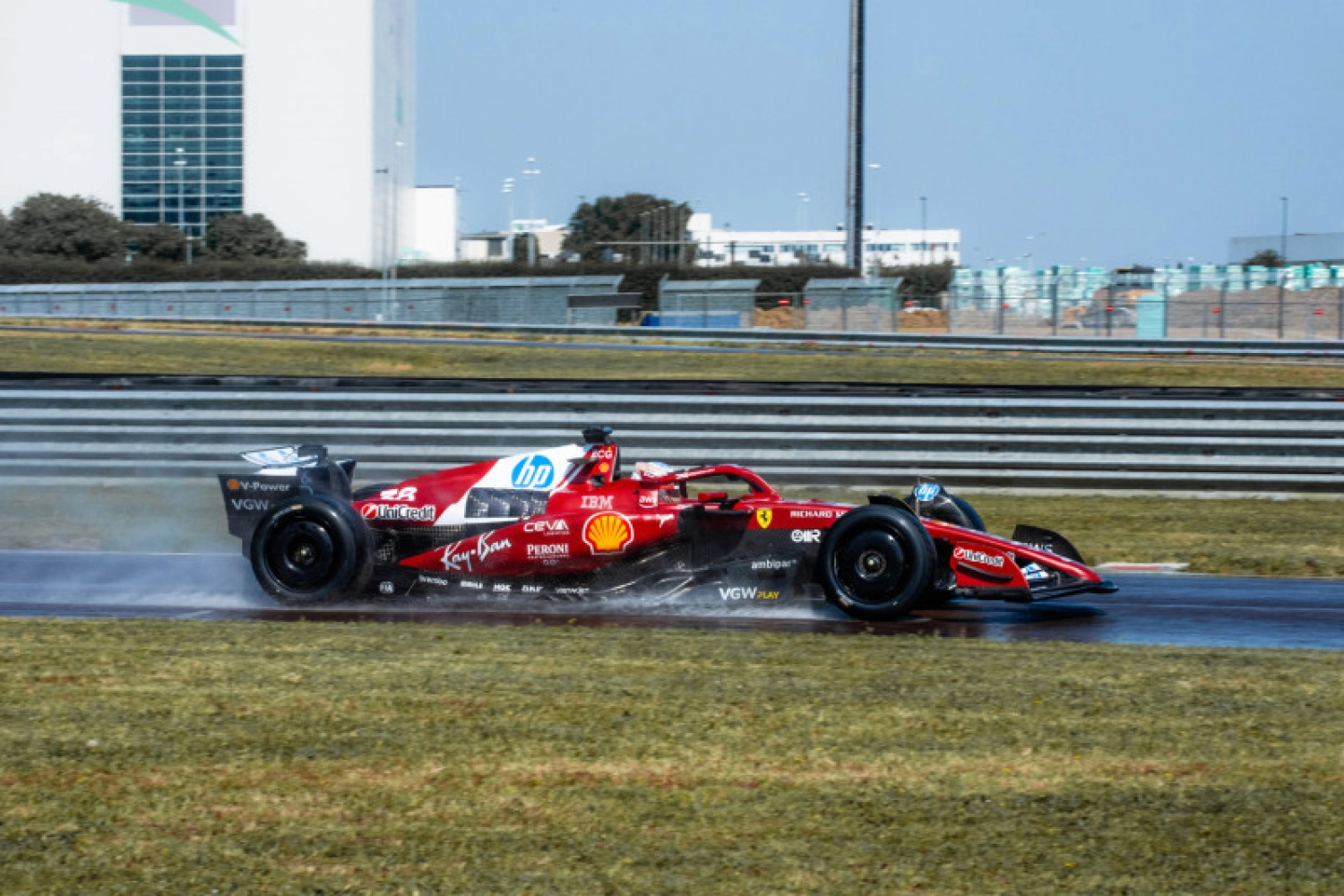
But the gamble doesn’t even stop there. Further whispers suggest that Ferrari may also be reverting to a push-rod front suspension. After a brief, failed experiment with a pull-rod front, the team is rumored to be pairing its new push-rod rear with a push-rod front. This “push-rod-push-rod” setup is a complete departure from their recent past, a “back to basics” approach that screams of a team that has lost its way and is desperately trying to find a solid foundation.
The last time Ferrari ran a push-rod rear suspension was on the F10, way back in 2010. Think about that. A decade and a half ago. Lewis Hamilton had only one world championship. The drivers who will pilot the 2026 car, Charles Leclerc and Lewis Hamilton himself, were in entirely different stages of their lives. An entire generation of Ferrari engineers has known nothing but the pull-rod rear. Now, they must unlearn their trade and master their rival’s.
This is the kind of seismic shift that can either save a dynasty or shatter it completely. For the Tifosi, the long-suffering fans who pack the grandstands in a sea of red, this news is both terrifying and exhilarating. It is terrifying because it confirms their deepest fear: that the team has been conceptually lost for years. But it is exhilarating because it is the first tangible sign of the radical, no-excuses change they have been screaming for. It is, finally, an end to the madness of doing the same thing over and over and expecting a different result.
This drama isn’t happening in a vacuum. The 2026 regulations are a hard reset for the entire grid. Other teams are making their own bold moves. The historic Williams team, now “Atlassian Williams Formula 1 team,” just launched a major rebrand, complete with a new heritage-inspired logo. It’s all part of a massive push for 2026, a push so convincing it snagged them Ferrari’s own Carlos Sainz, a driver who believes in their resurgence.
In this new era, there is no room for half-measures. Ferrari’s decision, if true, is the opposite of a half-measure. It is a full-scale demolition of the old guard. It is a bet-the-house gamble, driven by new blood and the painful lessons of defeat. It is a tacit admission that to beat a genius like Adrian Newey, you must first understand his work, even if it means copying it.
Will this be the move that finally puts Ferrari back on top? Or will they be exposed as amateurs, fumbling with a concept they don’t truly understand? We won’t know the answer for more than a year. But one thing is certain: the Ferrari of 2026 will be a Ferrari we have not seen in 15 years. Whether that is a good thing or a bad thing will define the future of the greatest name in racing.
