In the high-stakes world of Formula 1, nothing is ever as it seems. Pre-season testing in Bahrain is usually a theater of illusions, where teams run light on fuel to grab headlines or heavy to hide their true pace. But this year, as the sport enters the radical new era of 2026 regulations, Ferrari isn’t just playing the usual games. They are rewriting the rulebook entirely.
While the timing screens show Charles Leclerc topping the charts with a blistering 1:34.273—half a second clear of the field—the real story isn’t about speed. It’s about a fundamental shift in philosophy, a daring engineering gamble, and a “sandbagging” strategy so deep that it has rivals questioning everything they thought they knew.

The “Steel” Revolution: A Risky Bet Paying Off
To understand why this Ferrari SF26 is different, you have to look inside the engine. For decades, the standard in F1 has been aluminum cylinder heads—light, proven, and safe. Every other manufacturer on the 2026 grid followed this consensus.
Ferrari said “No.”
In a move that stunned technical observers, Maranello chose to build their cylinder heads out of a steel alloy, incorporating copper and ceramic components. On paper, it sounds backward; steel is heavier than aluminum. But in the new era of sustainable fuels and massive electrical reliance, it might be a stroke of genius.
Steel can withstand significantly higher combustion pressures and temperatures than aluminum. This allows Ferrari to run “unprecedented ignition conditions,” extracting more energy from every drop of fuel without cracking the engine block. While Mercedes and Red Bull chase weight savings, Ferrari has bet on bulletproof durability to unlock higher power modes.
And the evidence from Bahrain suggests it’s working. The Ferrari power unit team, led by Enrico Gualtieri, reportedly achieved a major durability breakthrough in late 2025. In Bahrain, this translated to a staggering 271 laps across two days without a single mechanical issue for the works team.
The Le Mans Connection: Battery Tricks Rivals Can’t Copy
The innovation doesn’t stop at the combustion engine. The 2026 regulations demand a massive increase in electrical power, with a 350 kW MGU-K. This is where Ferrari has played its ace card: the 499P Hypercar.
Ferrari’s dominance in the World Endurance Championship (WEC), including their victory at Le Mans, has given them a unique advantage. They have been racing with high-performance hybrid systems in endurance conditions for years. The data on minimizing battery pack weight and managing energy over long stints has been transferred directly to the F1 team.
Crucially, Mercedes—arguably their biggest engine rival—does not compete in the WEC Hypercar class. They don’t have this real-world data. Ferrari has effectively walked into 2026 with a head start in battery technology that money can’t buy.
The “Sandbagging” Masterclass
So, if the car is so good, why is everyone calling it a bluff? Because Ferrari is practically shouting that they aren’t trying yet.
Team Principal Fred Vasseur made it clear even before the cars arrived: the car in Bahrain is “not the real car.” It’s a base specification designed for learning, not winning. The front wing is basic, the floor is an early iteration, and the team is openly saving their advanced aerodynamic parts for the second test or the first race in Melbourne.
Furthermore, Leclerc’s headline lap time was set on C3 soft tires, while Lando Norris’s second-place time was on the harder C2 mediums. Corrected for tire difference, the McLaren might actually be faster. Ferrari used their entire allocation of soft tires, focusing on peak grip and short runs, deliberately avoiding the race simulations that would reveal their true tire degradation and race pace.
They are showing the world a fast lap to keep the Tifosi happy, while hiding the race-winning data in a vault in Maranello.
The “First Gear” Bluff
One of the most talked-about techniques in Bahrain was Max Verstappen’s “first gear trick.” The Red Bull driver was seen downshifting all the way to first gear in slow corners to spike engine revs and charge the battery faster. It gave him a visible speed advantage on the straights.
Drivers from Alpine, Williams, and McLaren immediately tried to copy it. But Ferrari? They barely touched it.
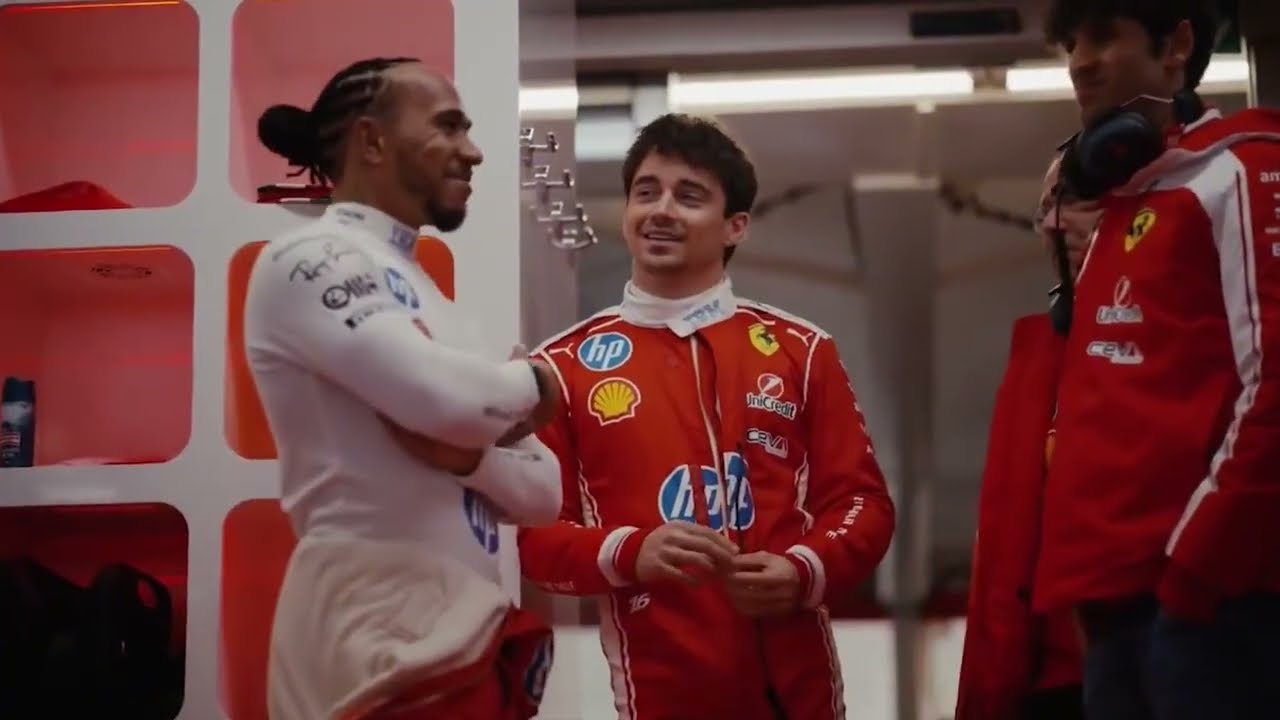
Leclerc and teammate Lewis Hamilton stuck to second gear, using a smoother, less aggressive driving style. Telemetry showed Leclerc was even avoiding eighth gear on the straights, opting for “lift and coast” strategies instead.
This is terrifying for rivals. It implies that Ferrari’s energy recovery system (thanks to that Le Mans tech) is already so efficient that they don’t need to abuse the gearbox with aggressive downshifts to keep the battery full. They have performance in reserve that they haven’t even unlocked yet.
Chaos in the Rival Garages
While Ferrari clocked miles with metronomic precision, their rivals were imploding.
Red Bull’s new RB22 suffered a hydraulic leak that cost Isack Hadjar almost the entire morning session on Day Two. This follows a crash in Barcelona that caused $500,000 in damage. The “bulletproof” image of Red Bull is showing cracks.
Mercedes had it even worse. Rookie Kimi Antonelli managed just three laps before a critical power unit failure forced a complete engine change, wiping out their morning. For a team that prides itself on reliability, this was a disaster.
Aston Martin, despite the hype, looked lost. Lance Stroll managed only 36 laps due to engine issues, and Fernando Alonso finished nearly 5 seconds off the pace, with the team admitting they are heavily constrained.
In a sport where mileage equals data, and data equals speed, Ferrari’s reliability is their biggest weapon. The Ferrari-powered Haas and Cadillac teams also ran flawlessly, bringing the total count for Ferrari engines to over 730 laps in two days. Mercedes and Honda-powered teams couldn’t come close.
The Political War: The Compression Ratio Loophole
As if the on-track dominance wasn’t enough, Ferrari is also leading a political charge against Mercedes. A controversy has erupted regarding a potential loophole Mercedes is exploiting with “thermal expansion.”
Allegedly, Mercedes is using connecting rods that expand when hot, increasing the compression ratio beyond the legal 16:1 limit during the race. This could be worth 10-15 horsepower. Ferrari, along with Honda, Audi, and Red Bull, is lobbying the FIA to close this loophole before Melbourne.
If the rule is changed, Mercedes loses a key advantage. If it stays, Ferrari has to overcome a power deficit. It’s a high-stakes game of poker, and the deadline is the Australian Grand Prix on March 8th.
A Word of Caution
History warns us to be careful. Ferrari has topped pre-season testing five times in the last decade (2016, 2017, 2018, 2019, 2024) and failed to win the title every single time. The “Winter Champions” curse is real.
But 2026 feels different. This isn’t just about a fast car on low fuel. It’s about a brave technical direction—steel over aluminum, endurance tech over sprint tech—that seems to be paying off while others falter.
The Scuderia is hiding its true pace, hiding its best parts, and hiding its full engine modes. If this is what they look like while “sandbagging,” the rest of the grid should be very, very afraid of what happens when they finally take the bags off.
