In the high-octane world of Formula 1, silence is rarely a good sign. It usually indicates defeat, confusion, or a team in crisis. For the better part of a year, the Ferrari garage has been a place of heavy, suffocating silence. The Tifosi watched in collective agony as the 2025 season unraveled into a slow-motion disaster, seeing the legendary red cars slip to a lonely fourth in the standings. There were no podium champagne sprays, no anthems ringing out for the Scuderia—only the grim reality of a team that appeared to have lost its way.
But today, that silence has been broken, not by a press release, but by a shockwave of leaked data that is rattling the foundations of the sport from Brackley to Milton Keynes. While the world mocked Ferrari for a “surrendered” season, something radical was happening behind the fortified walls of Maranello. The team wasn’t giving up; they were loading a weapon.
Known only by the code name “Project 678,” Ferrari’s 2026 challenger is not merely an update. It is a technological monster born from a gamble so massive it could either define a new era of dominance or bury the team for a decade. As the launch date of January 23rd approaches, insiders are whispering that the Prancing Horse hasn’t just built a new car—they’ve rewritten the laws of physics to suit their ambition.
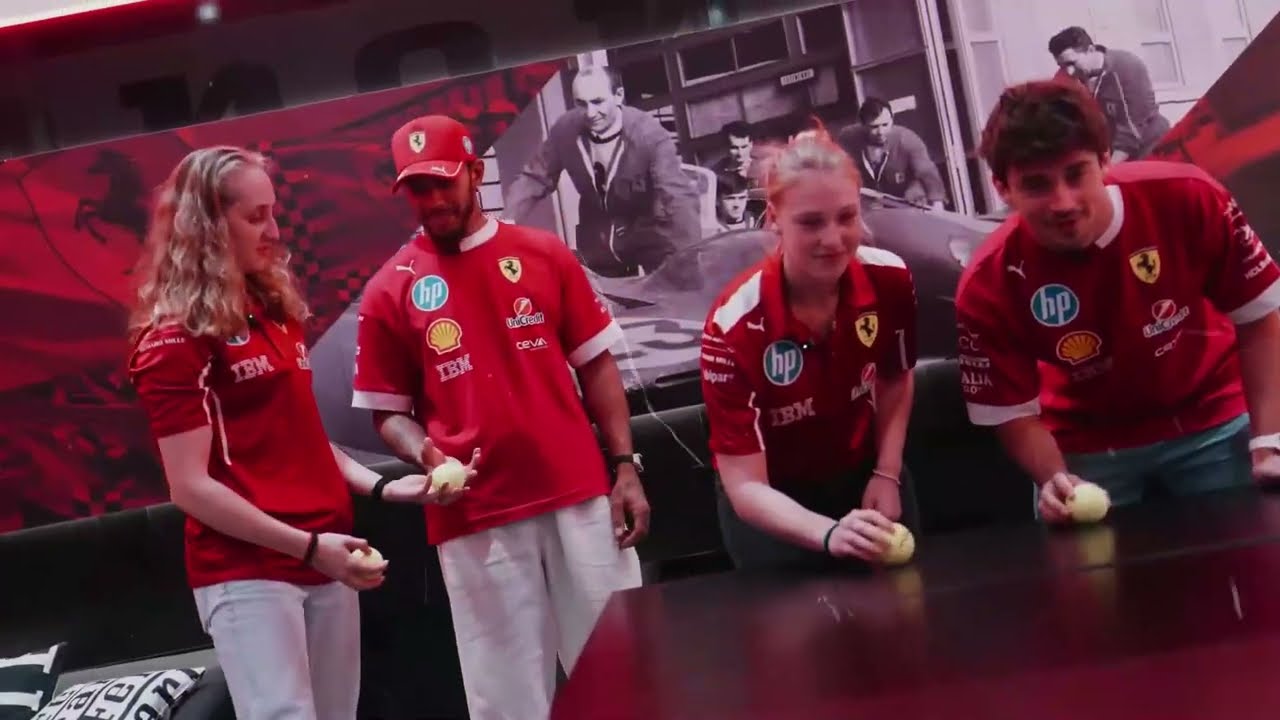
The “Burn the Blueprints” Moment
To understand the magnitude of this breakthrough, we must rewind to the darkest days of early 2025. The SF-25 was a failure—slow, unreliable, and painful to watch. Lewis Hamilton and Charles Leclerc, two of the greatest talents of their generation, were reduced to nursing dying machines to the checkered flag, lifting and coasting just to survive.
It was in April 2025 that Team Principal Fred Vasseur made a decision that many in the paddock labeled as insanity. He didn’t just pivot; he pulled the plug. Vasseur effectively burned the blueprints for the ongoing season, diverting every engineer, every dollar, and every ounce of computing power toward one singular goal: the SF26.
It was an “all-in” bet. By sacrificing the 2025 campaign, Ferrari accepted short-term humiliation for the chance of long-term glory. It was a strategy of immense risk. If the simulations for the new car had returned mediocre numbers, Ferrari would have thrown away a year for nothing. But as the data from the Maranello simulators began to trickle in, the mood in the factory shifted from anxiety to electrifying confidence. The sacrifice, it seems, was the smartest move they have made in twenty years.
The Steel Revolution: Breaking the Aluminum Dogma
The crown jewel of the SF26—and the source of the paddock’s sudden panic—is the engine. For decades, the gospel of Formula 1 engineering has been lightweight construction. Aluminum has been the material of choice for engine blocks and cylinder heads because in racing, weight is the enemy.
Ferrari, in partnership with engineering firm AVL, has taken that rulebook and thrown it into the trash.
In a move that initially baffled onlookers, Ferrari has perfected a secret steel alloy for their cylinder heads. To the layman, using steel in a race car sounds counterintuitive; it is significantly heavier than aluminum. However, Ferrari’s engineers spotted a genius loophole in the 2026 regulations. The new rules raised the minimum weight of the power unit to 150kg. Ferrari realized that if the engine had to be heavier by law, they might as well use that mass to use a stronger material.
This decision has unlocked a realm of performance that aluminum simply cannot handle. Aluminum has a thermal limit; push it too hard, and it warps or melts. Steel, however, is a tank. By utilizing this robust alloy, Ferrari can run “unprecedented combustion pressures.” In simple terms, they can make the engine explode with vastly more violence and force than any competitor, generating raw horsepower figures that would turn an aluminum engine into molten slag. The simulation data suggests this “heavy” engine is actually a massive competitive advantage, offering bulletproof reliability at power levels that Mercedes and Red Bull may struggle to match.

The Chemistry War and the Le Mans Connection
Raw power is useless without the energy to feed it, and here lies Ferrari’s second masterstroke. The 2026 regulations mandate 100% sustainable fuels, a challenge that has sent most teams scrambling to laboratories to synthesize e-fuels. Ferrari, leveraging their decades-long partnership with Shell, took a different path.
They have developed a highly advanced biofuel that behaves unlike anything else on the grid. The leaked reports indicate that this specific chemical formula burns faster and cleaner, perfectly complementing the high-pressure environment of their new steel engine. It is a “chemistry war” that Ferrari seems to be winning before a wheel has even turned.
Furthermore, the SF26 benefits from a “cheat code” that no other F1 team possesses: a winning endurance racing pedigree. While the F1 team floundered in 2025, Ferrari’s Hypercar team was busy dominating at Le Mans. The engineers have transferred that championship-winning battery technology directly to the F1 project.
The 2026 cars are effectively giant hybrids, requiring a massive 350 kW electric boost. This usually necessitates a heavy, bulky battery. However, thanks to their Le Mans experience, Ferrari has produced a battery pack that is lighter and more compact than industry standards. This allows the SF26 to deploy its electrical fury without the weight penalty that is likely keeping rival engineers awake at night.
Stunned Drivers and a New “Office”
The true test of any machine is the feedback from the humans strapped into it. Lewis Hamilton, who left Mercedes seeking a final championship crusade, reportedly spent the 2025 season searching for answers. According to sources close to the simulator program, he has finally found them.
Hamilton is said to be “revitalized” and genuinely “stunned” by the data coming out of the simulator runs. After months of driving a car that felt restricted and lethargic, the raw, violent power delivery of the SF26 has reignited his belief in an eighth world title. Charles Leclerc, too, senses the shift. The Monegasque driver knows that a rules reset of this magnitude is the great equalizer, and for the first time in years, he feels the wind is at his back.
To help the drivers tame this 15,000 RPM beast, the cockpit has undergone a radical redesign. The complex management of electric energy and active aerodynamics required a new interface. Based on direct feedback from Hamilton and Leclerc, the steering wheel has been stripped of its clutter. The confusing array of six rotary switches has been streamlined down to three primary dials, positioned instinctively for the thumbs. It is a cleaner, smarter “office” designed to let the drivers focus on racing at 200 mph rather than solving equations on a screen.

The Final Countdown
Despite the optimism, the atmosphere in Maranello remains incredibly tense. The project is running on a knife-edge timeline. Fred Vasseur has openly admitted that they are cutting it dangerously close. The final assembly of the SF26 is scheduled to conclude on January 22nd—just 24 hours before the global launch on January 23rd.
There is no safety net. No buffer for manufacturing errors. The car will be bolted together, revealed to the world, and immediately sent to the track for a shakedown. It is a race against the clock that epitomizes the new spirit of the team: aggressive, brave, and unwilling to compromise speed for comfort.
Ferrari has abandoned its conservative traditions. They have walked away from a season, embraced a heavy metal engine, and bet their legacy on a simulation. As the cover prepares to come off the SF26, the question on everyone’s lips is whether we are witnessing the end of the Mercedes-Red Bull hegemony and the birth of a new Red Renaissance.
In the world of Formula 1, you do not win by being cautious. You win by being bold. And for the first time in a long time, Ferrari looks ready to be the bravest team on the grid.