The Formula 1 paddock is no stranger to high-stakes drama, but the unfolding saga surrounding Lewis Hamilton’s debut season at Ferrari has transcended mere sport to become a narrative of legacy, aging, and the brutal reality of competition. As the 2025 season grinds toward its conclusion, what began as a fairytale union between the sport’s most successful driver and its most iconic team has curdled into what many are calling a “nightmare.” The situation reached a fever pitch this week when Max Verstappen, Hamilton’s arch-rival from the incandescent 2021 season, delivered a scathing assessment of the Briton’s struggles, reigniting a war of words that has left fans and insiders reeling.
The Verdict That Shook the Paddock
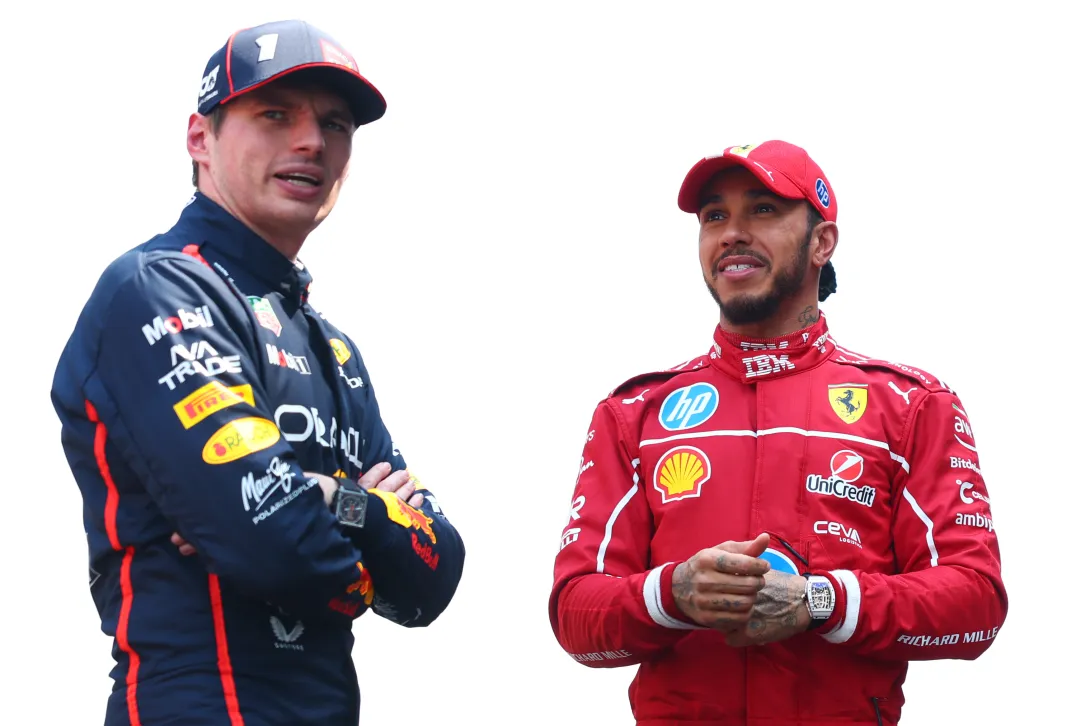
It was a comment delivered with the chilling transparency that has become Max Verstappen’s trademark. In an interview with the Press Association, the reigning world champion did not mince words regarding Hamilton’s inability to match teammate Charles Leclerc in the SF25.
“At 40, you’re not going to get any faster,” Verstappen stated bluntly. “You might not slow down drastically, but younger drivers are definitely getting stronger.”
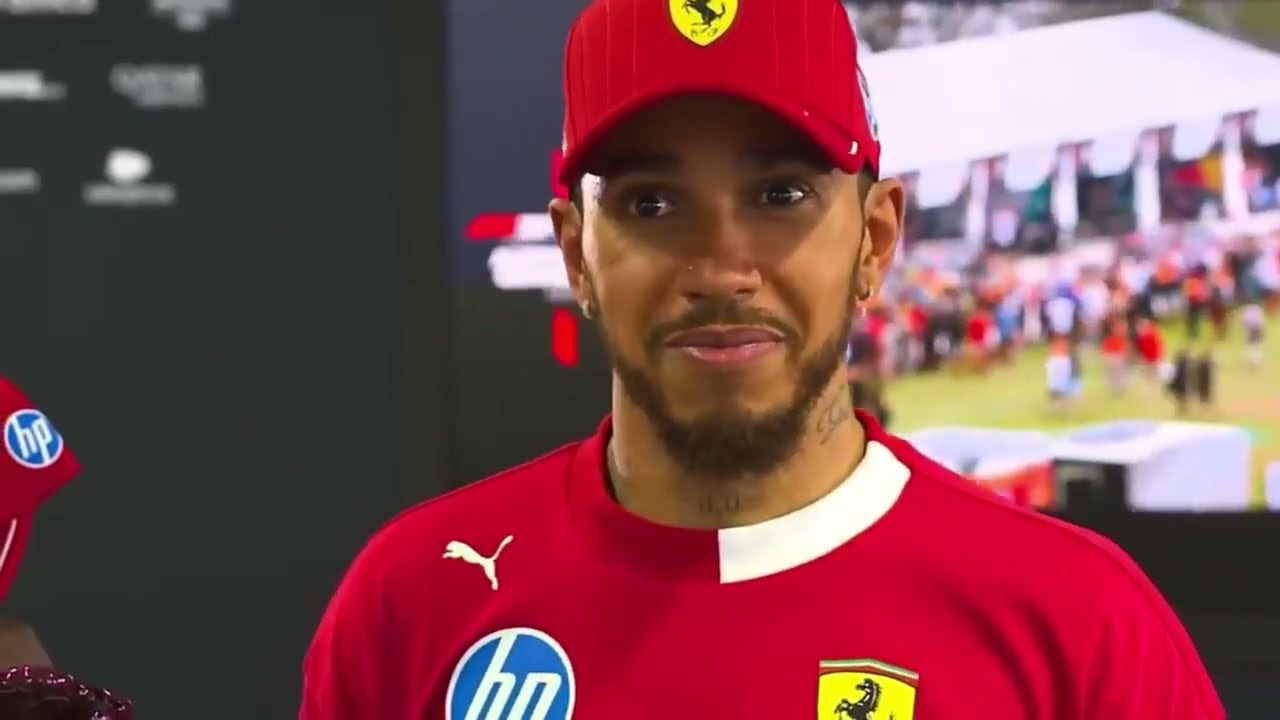
The statement hit the F1 community like a thunderclap. For years, Hamilton has defied the conventional wisdom regarding an athlete’s shelf life, maintaining a physical regimen and mental sharpness that seemed to pause the clock. However, Verstappen’s critique went deeper than just physical age; he dismantled the romantic notion of the Ferrari move itself. He noted that Hamilton walked into an environment built around Leclerc—a driver who has grown with the team, understands its culture, and speaks its technical language fluently.
“Leaving an environment that has given you stability and dominance is certainly not easy,” Verstappen added, referencing Hamilton’s exit from the Mercedes dynasty. “But Charles makes things more difficult for Lewis.”
A Season of Silence and Struggle
Verstappen’s comments might have been dismissed as psychological warfare if the results on the track didn’t lend them such uncomfortable weight. The statistics for Hamilton’s 2025 campaign are stark. The seven-time world champion has failed to secure a single Grand Prix podium finish for more than half the season. His solitary moment of glory—a victory in the sprint race at the Chinese Grand Prix—is now viewed by pundits not as a sign of hope, but as a cruel anomaly.
For the majority of the year, Hamilton has been seen fighting the car just to break into the top five. Sources from within the Scuderia have leaked reports suggesting a fundamental disconnect between driver and machine. The Ferrari SF25 is a complex beast, possessing handling characteristics vastly different from the Mercedes “W” series cars that Hamilton piloted for over a decade.
“Hamilton needs a car that speaks to his racing style,” one Ferrari engineer reportedly confided. “So far, our car speaks a different language.”
This technical mismatch has manifested in a way that is painful for Hamilton fans to watch. Where he once danced on the edge of adhesion with a fluid, seamless style, he now appears to be wrestling with the steering wheel, trying to force a square peg into a round hole.

The Chorus of Critics
Verstappen is not a lone voice in this chorus of doubt. His comments have emboldened other figures in the paddock to speak their minds, stripping away the protective aura that usually surrounds a legend of Hamilton’s stature.
Karun Chandhok, the senior Sky Sports analyst, emphasized that the era of reputation masking performance deficits is over. “It wasn’t about legend or experience; it was about pure speed,” Chandhok analyzed. “So far, Leclerc is faster.”
Even harsher criticism came from former driver Ralf Schumacher, known for his unfiltered takes. Schumacher warned that Ferrari, a team desperate for a championship, cannot afford the luxury of patience. “Ferrari can’t afford to wait for Hamilton to adapt,” he said, suggesting that the team needs concrete results immediately to stay relevant in the constructors’ battle.
Hamilton Strikes Back
After days of intense speculation and media frenzy, Hamilton finally broke his silence. In an interview with Sky Sports Italia, he responded to Verstappen’s jabs with characteristic elegance, yet there was a steely undertone to his words that suggested the “Knight” was far from ready to lay down his sword.
“I’ve heard Max’s comments. I respect his opinion, but I don’t feel like I’ve slowed down,” Hamilton declared. “The team data shows that my speed is still the same as in previous years.”
Hamilton shifted the narrative away from biological decline to technical adaptation. He insisted that the struggle is about integrating with a unique car philosophy, not a fading of his reflexes. “I chose Ferrari because I wanted a new challenge. I didn’t expect an easy road, and I’m here for the long haul,” he affirmed, dismissing the notion that he is looking for an exit strategy.
This defense was bolstered by Ferrari Team Principal Frédéric Vasseur, who emphatically stated, “Lewis hasn’t lost any speed.” The engineering department’s telemetry reportedly backs this up, showing that Hamilton’s pace inputs are competitive, but the car’s setup window is simply not complying with his driving style.
Internal Fractures in Maranello
Despite the public show of unity, the atmosphere within the Ferrari garage is reportedly becoming toxic. The “honeymoon phase” is long dead. Insiders claim that Hamilton’s persistent requests for significant setup changes are causing friction with the engineering team. These changes, intended to make the car more compliant to his smooth style, are allegedly slowing down the overall development path of the car, which was originally designed around Leclerc’s aggressive, sharp-turn-in preference.
Charles Leclerc himself has been caught in the crossfire. While he publicly defends his teammate, saying “It’s unfair for all the negative attention to be directed at him,” he has admitted that the changing atmosphere in the garage is uncomfortable. The internal reports of Hamilton’s relationship with Vasseur souring—sparked by questionable strategic decisions—add another layer of complexity to the drama.
The Twilight of a Legend?
The most haunting aspect of this entire saga is the open-ended question about Hamilton’s future. Verstappen, when asked about the possibility of Hamilton retiring, hinted that it might be the logical next step if the suffering continues. “It’s hard to end something that’s been the center of your life,” Max said. “However, if he had other projects, perhaps the decision would be easier.”
This has fueled rampant speculation that Hamilton might pivot to his interests in fashion or entertainment sooner than expected. The pressure is mounting with every race weekend. Can Hamilton rediscover the magic that made him the sport’s greatest winner? Can Ferrari engineer a bridge between their car’s DNA and their star driver’s needs? Or are we witnessing the slow, painful twilight of the Hamilton era, narrated by the brutal honesty of his greatest rival?
As the paddock packs up for the next round, one thing is certain: the eyes of the world are no longer just watching a race; they are watching a legend fight for his survival.
