The glittering lights of the Lusail International Circuit in Qatar usually serve as a backdrop for high-speed drama and championship battles. But this weekend, they illuminated something far more somber: the visible unraveling of a Formula 1 legend.
For Lewis Hamilton, what was meant to be a glorious new chapter with Ferrari has descended into a saga of frustration, confusion, and despair. The seven-time world champion is not just losing races; he looks like he is losing his faith in the machinery underneath him.
The frustration has reached a breaking point, and it is written all over his face. It is heard in every clipped, sarcastic answer given to the media, and it is painfully visible in a scarlet car that even the slowest teams on the grid can see is fighting its driver at every turn.
What was supposed to be a chance to bounce back after a difficult Las Vegas weekend has instead turned into one of the most painful episodes of Hamilton’s debut season with the Scuderia.
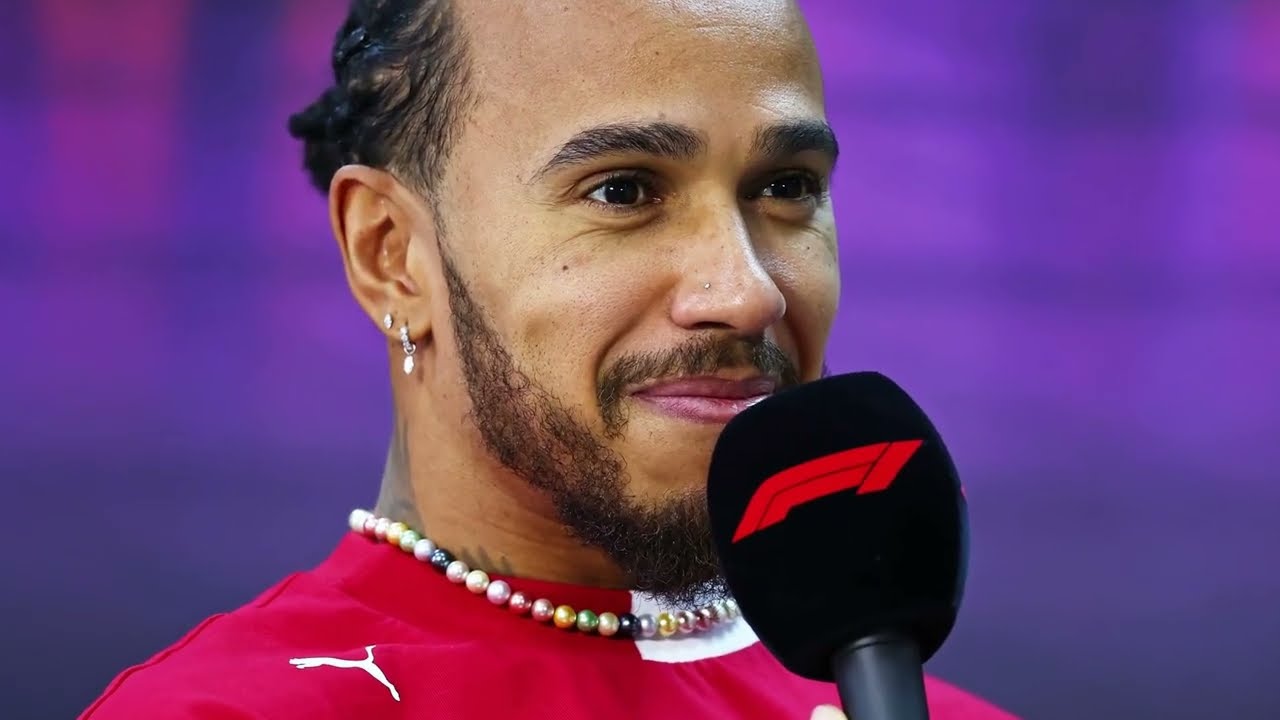
A Historic Low Point
The numbers paint a grim and undeniable picture of the situation. Hamilton qualified 18th for the Qatar Grand Prix on Friday evening, marking his third consecutive elimination in the first qualifying session (Q1) across the last two race weekends. For a driver of his caliber—a man who holds the record for the most pole positions in the history of the sport—such a streak would have seemed impossible just months ago.
In Las Vegas, Hamilton qualified dead last in 20th place, the first time in his entire illustrious career that he finished a qualifying session slowest on pure pace. Then came Qatar’s sprint qualifying on Thursday, where he was knocked out in 18th. Friday’s Grand Prix qualifying brought more of the same misery. This marks the first time Hamilton has suffered consecutive first-session eliminations in Grand Prix qualifying since 2009—a span of 16 years. The consistency of the failure is what is most alarming; it suggests deep-rooted issues that go far beyond bad luck or traffic.
The Leclerc Factor: A Painful Contrast
Perhaps what makes this weekend particularly stinging is not just the raw result, but how Hamilton’s teammate, Charles Leclerc, has fared in comparison. In Formula 1, your teammate is your first and most important benchmark, and currently, that benchmark is miles down the road.
In sprint qualifying, Leclerc managed to squeeze through to the second session in 13th place, four-tenths of a second faster than Hamilton. In the main Grand Prix qualifying, the gap widened significantly: Leclerc made it to the final session (Q3) and qualified eighth, a full three-and-a-half tenths faster than Hamilton in the exact same machinery. Over the last four qualifying sessions where both drivers have been classified, Leclerc has beaten Hamilton by a combined 33 grid positions. It is a brutal statistic that has reportedly sparked concern within the Ferrari garage, raising legitimate questions about why Hamilton seems unable to extract the same performance from the SF-25 as his younger teammate.
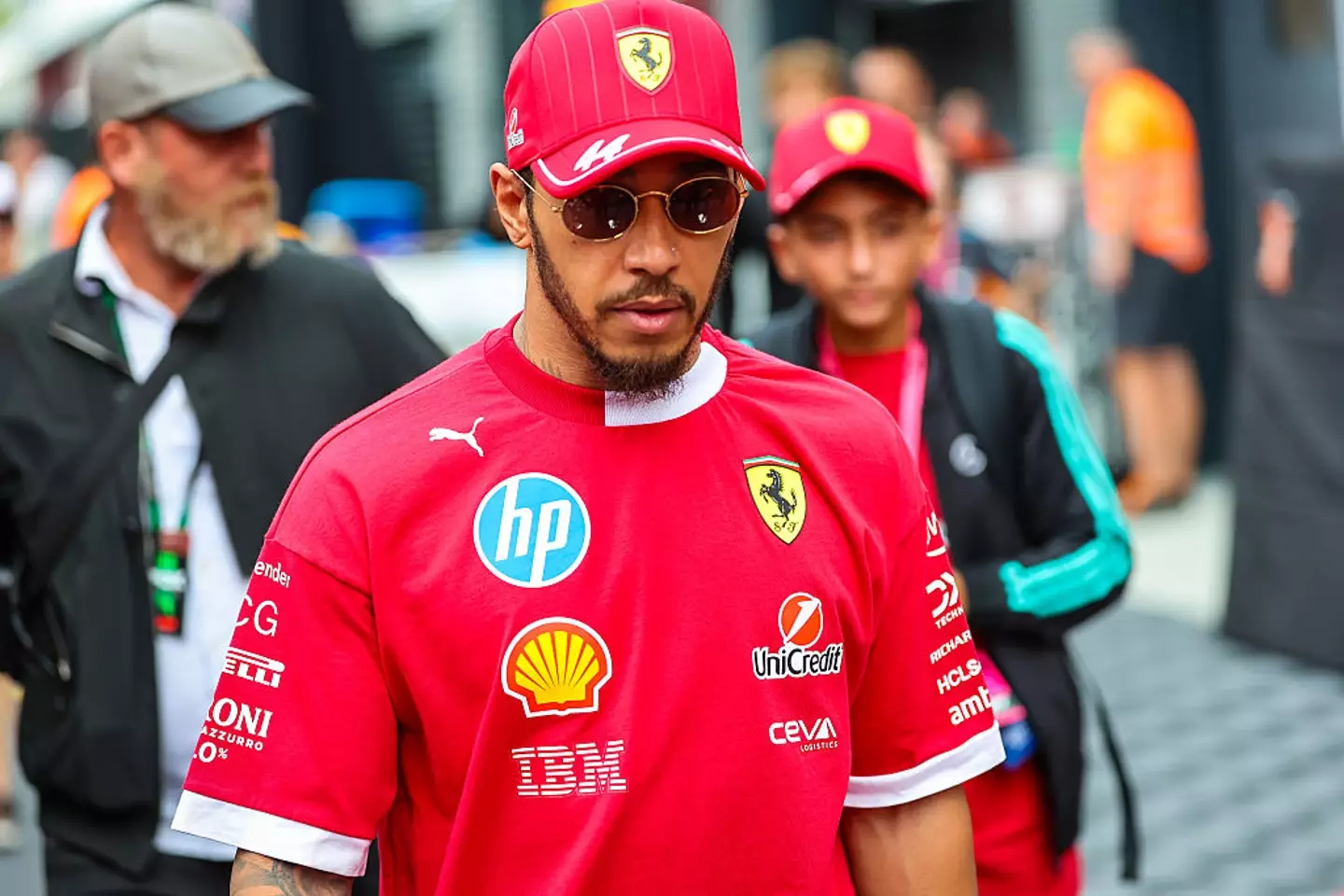
The “New” Hamilton: Sarcasm Replacing Diplomacy
Hamilton’s media appearances this weekend have been unlike anything we’ve seen from him before. Gone is the diplomatic statesman who carefully chooses his words, protects the team, and maintains a professional front even in the darkest moments. In his place sits a driver who appears defeated, resigned, and openly sarcastic.
When asked to explain his 18th place finish in sprint qualifying, his response was a curt, three-word dismissal: “Same as always.” When pressed on whether the new higher-downforce wing Ferrari brought to Qatar had helped resolve the car’s issues, he replied simply, “No, clearly not.”
But the moment that truly captured the zeitgeist of his current mental state came when a reporter asked if there were any positives to take from the session. Hamilton paused, looked around, and delivered a line that has since gone viral: “The weather’s nice.”
It is the kind of sarcastic, defeated response that speaks volumes. He isn’t shouting, he isn’t throwing helmets, and he isn’t making elaborate excuses. He has simply run out of things to say. What else is there to say when nothing is working, and you are being comprehensively beaten week after week?
A “Fight Like You Couldn’t Believe”
The problems with the Ferrari aren’t subtle, and Hamilton has been brutally honest about the terrifying experience of driving it. After the sprint race, where he finished a lowly 17th having started from the pit lane due to setup changes, he described a car that is unpredictable and dangerous.
“We just don’t have any stability,” he explained to the press. “The rear end is not planted, so it’s sliding, snapping a lot. Then we have bouncing. When you’re going into corners like Turn 10, the thing starts bouncing. We have a lot of mid-corner understeer, and then you apply the steering and then it snaps and you try and catch it.”
He summarized the experience with a chilling phrase: “It’s a fight like you couldn’t believe.”
Ferrari attempted to fix these issues with overnight setup changes between sprint qualifying and the sprint race, implementing findings from simulator work done back at the factory. Hamilton started from the pit lane specifically to take these changes, hoping they would provide some relief. Instead, the reality was even worse. As he told his team over the radio while crossing the finish line, “I don’t know how, but we’ve made the car worse.”
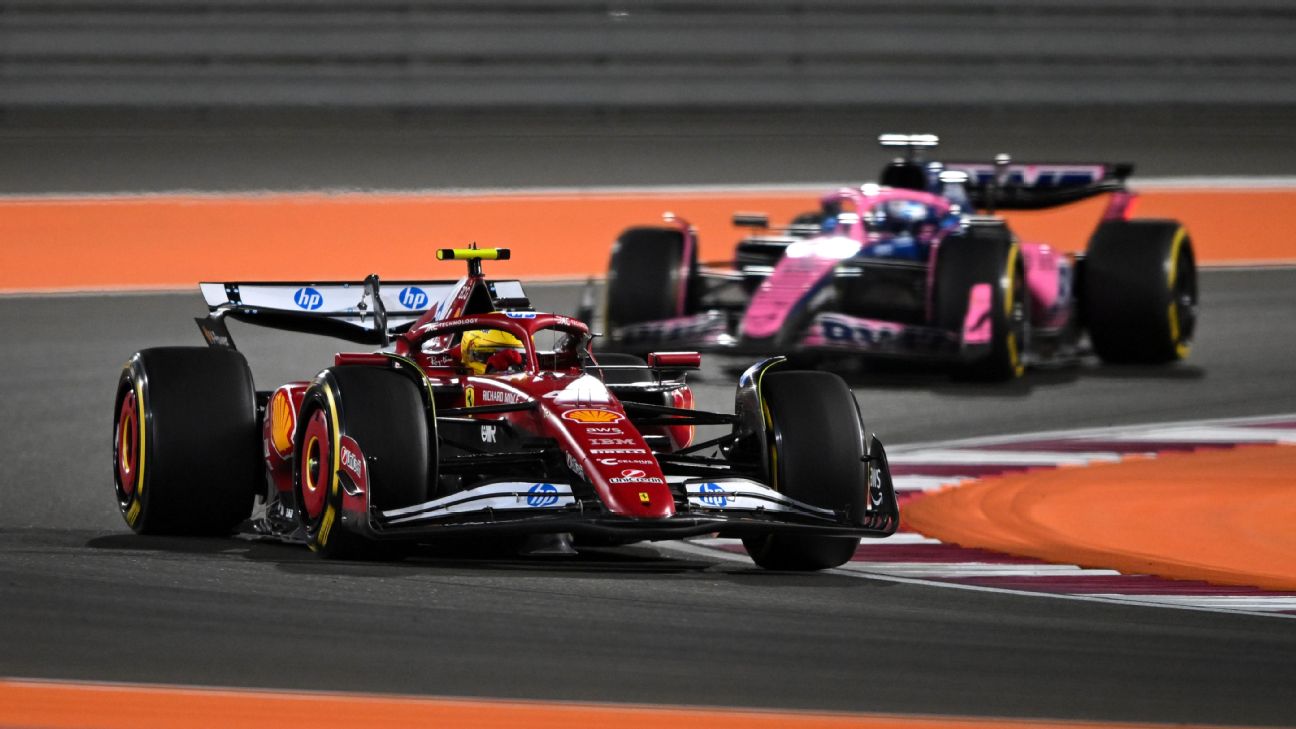
Validation from the Back of the Grid
The extent of Ferrari’s struggles became clear in an unexpected and somewhat humiliating interaction after the sprint race. Pierre Gasly, who drives for Alpine—a team that has struggled mightily this season—approached Hamilton to share his observations.
“Pierre came up to me afterwards,” Hamilton recounted. “He was like, ‘Yo, you look so bad.’ Think about that for a moment.”
The driver from one of the worst-performing teams on the grid felt compelled to tell a seven-time champion that his Ferrari looked terrible. When even the midfield and backmarker teams can spot the instability of your car from their own cockpits, you know the situation is critical.
Rumors, Criticism, and the Future
The timing of this collapse couldn’t be worse for Hamilton’s relationship with Ferrari. Reports from Motorsport Italy suggest there is now genuine concern in the Ferrari hierarchy. While the team acknowledges the car has fundamental flaws, they are worried about the performance gap between their two drivers.
The rumor mill is now spinning at full speed. There are whispers about “exit clauses” believed to exist in his contract for 2026. Reports describe Hamilton as anxiously awaiting the end of the season so he can begin what is being called a “crucial reset phase.” Some sources even suggest that if the regulations were staying the same for next year, Hamilton might have considered walking away entirely.
Critics are also circling. Former Formula 1 driver Ralf Schumacher hasn’t held back, criticizing Hamilton’s demeanor. “He’s old, mature, and successful enough to conduct an interview differently than that,” Schumacher told Sky Deutschland. It’s harsh commentary, especially coming so soon after Ferrari chairman John Elkann reportedly urged Hamilton to talk less in media appearances.
Conclusion: A Legend at the Crossroads
As Hamilton prepares to start 17th for the Qatar Grand Prix, surrounded by cars he should be comfortably ahead of on pure talent, the Formula 1 world is left wondering: Is this just a slump, or is it the beginning of the end?
The Ferrari is fast enough to score points when everything comes together, as Leclerc has shown. But Hamilton seems unable to find that sweet spot. Every change pushes the car in the wrong direction; every session brings more disappointment.
The weather in Qatar really is nice—warm, clear skies, perfect for racing. But for Lewis Hamilton, sitting in a cockpit that snaps, bounces, and refuses to yield, the weather is about the only thing going right. And that, more than any technical analysis, tells you everything you need to know about the state of the dream that was Hamilton to Ferrari.
