The headlines following the Barcelona pre-season test were ecstatic: “Hamilton Flies,” “Ferrari Sets Best Time,” “SF-26 Surprises Everyone.” But behind the glossy PR and the cheering Tifosi, a much darker reality is brewing in Maranello.
Is it possible that Lewis Hamilton is already regretting his historic move to Ferrari before a single championship point has been awarded? The data suggests the answer might be an uncomfortable “yes.”
While the seven-time world champion did indeed top the timing sheets with an impressive 1:16.348 on the final day, that number is a dangerous mirage. It was set on soft C5 tires, in a perfect window of track evolution, with a setup designed for glory runs rather than race reality. It was a lap for the newspapers, not for the engineers.

The Hidden Flaw: Instability Where It Hurts
What truly matters in Formula 1 is not the stopwatch, but the behavior of the car in the deep, complex corners where races are won and lost. And this is where the SF-26 is sounding alarm bells.
For five days, Ferrari racked up 440 laps, a respectable number that suggests reliability. But quantity is not quality. Internally, Maranello engineers are scrambling to fix a “systemic” issue that has plagued the car from the wind tunnel to the track: severe rear-axle instability.
In Barcelona’s Turn 10—a critical medium-speed corner that demands a smooth transition from braking to acceleration—Hamilton was fighting the car. Telemetry revealed multiple “critical moments” of oversteer, and fans even captured a 360-degree spin that wasn’t just a driver error; it was a symptom of a car that doesn’t know how to behave.
A Concept in Crisis?
The root of the problem seems to lie in Ferrari’s ambitious new active aerodynamic strategy. The SF-26 attempts to adjust the front and rear wings in a complex sequence to redistribute load during corner entry. On paper, it’s a cutting-edge solution to cure Ferrari’s historic understeer. In practice, it’s a mess.
The system is creating sudden, unpredictable shifts in aerodynamic balance just when the driver needs stability the most. For Hamilton, who spent a decade mastering the predictable, planted rear end of a Mercedes, this is a nightmare. A car that changes its personality from corner to corner—and even within the same corner depending on the hybrid charging mode—is not just difficult to drive; it destroys confidence.
Rival teams have smelled blood. Sky Sports analysts and engineers from Red Bull and Mercedes have been spotted viewing Ferrari’s sector times with skepticism. One rival engineer brutally summarized the situation: “Ferrari is fast but not constant. The car moves too much, and that cannot be fixed with engine maps.”
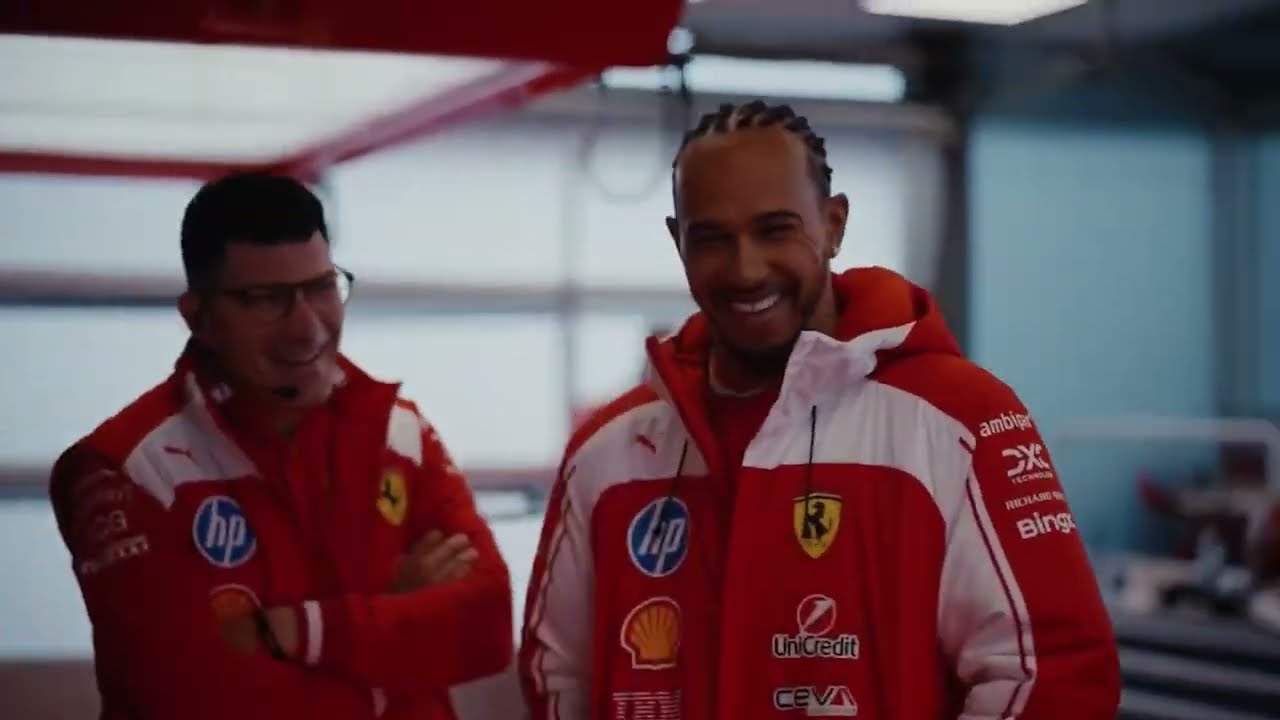
The Desperate Search for a Fix
The panic behind the scenes was palpable. In just three days, Ferrari burned through more than 14 different setup combinations—changing everything from rake angles to suspension geometry—in a desperate attempt to find a stable window. Nothing worked. The car was fast when everything clicked perfectly, but fragile and snappy the moment conditions changed.
This begs the terrifying question that no one at Ferrari wants to answer: What if this isn’t a setup problem? What if the base concept of the SF-26 is fundamentally flawed?
Bahrain: The “All or Nothing” Gamble
This brings us to the upcoming Bahrain test, which is shaping up to be the most critical week in Ferrari’s recent history. It is no longer just a test; it is a “technical, strategic, and emotional watershed.”
Ferrari is doubling down with a high-stakes plan. The test will be split into two phases. First, a validation of the current unstable “Spec A” car to stress-test the cooling and hybrid systems in the 40°C heat. Then, from February 18th to 20th, they will unveil “Spec B.”
This isn’t just a few new parts. It is described as the “most aggressive upgrade package ever introduced by Maranello so early in a preseason.” We are talking about a significant floor redesign, new side profiles, a modified beam wing, and an evolution of the active aero system intended to finally sync the front and rear axles.
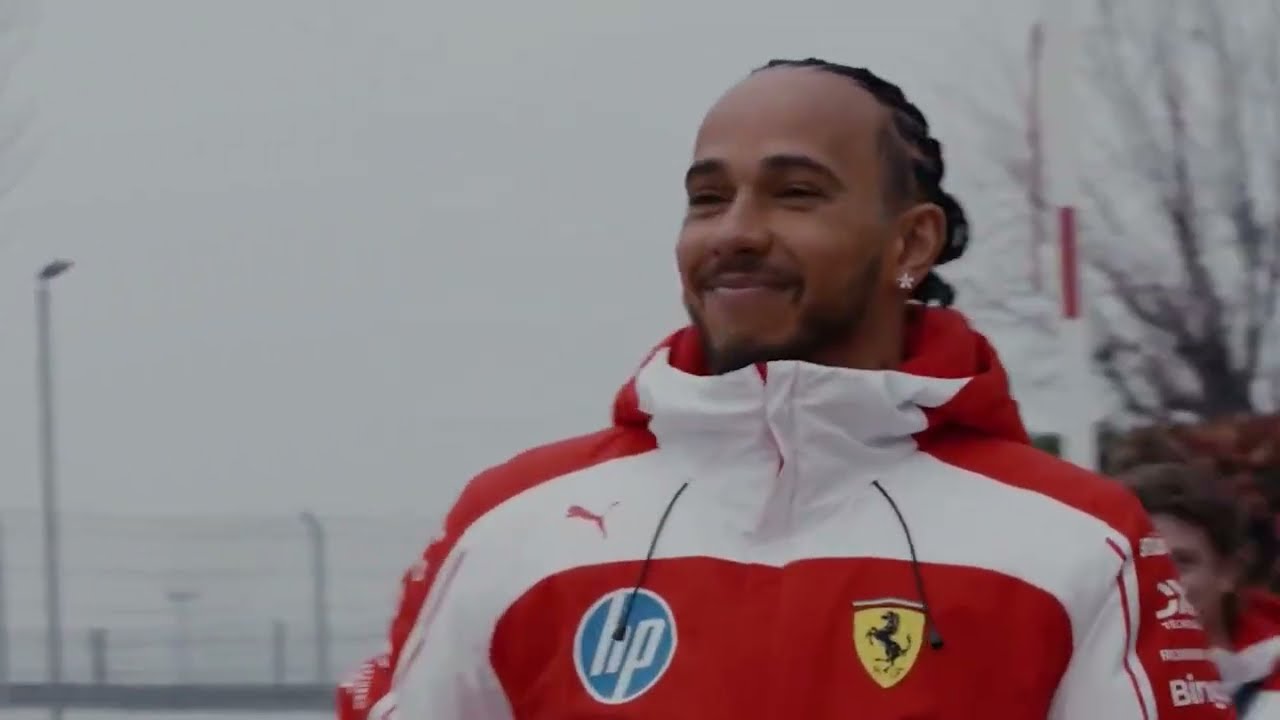
Hamilton’s Leadership Test
This “Spec B” was reportedly planned since December, revealing that Ferrari has been developing two parallel cars all along—a conservative one for data, and a radical one for performance. It is a risky, expensive strategy that leaves no room for error.
For Hamilton, the pressure is immense. He must not only adapt his driving style to a car that will fundamentally change halfway through the test, but he must also lead the engineering feedback without clashing with Charles Leclerc. If their driving styles demand different things from this new package, it could split the team’s development direction right down the middle.
The Verdict
If the “Spec B” works, Ferrari could emerge as a true title contender, validating Vasseur’s leadership and Hamilton’s gamble. But if it fails? If the balance issues remain?
Then the narrative turns dark very quickly. In Maranello, patience is short, and crises are inevitable. A failed test in Bahrain means the season could be over before it starts, leaving Hamilton trapped in a “technical Frankenstein” while his former team and Red Bull disappear into the distance.
The clock is ticking. The stopwatch in Barcelona lied. Now, the asphalt in Bahrain must tell the truth.