In the high-stakes world of Formula 1, where split-second decisions define careers and relationships are often discarded at the first sign of failure, Lewis Hamilton has just made a move that has left pundits and fans bewildered.
After a debut season with Ferrari that can only be described as a catastrophe—zero wins, zero podiums, and a humiliating defeat by teammate Charles Leclerc—the writing was on the wall. The paddock whispered it, the experts demanded it, and the fans expected it: Lewis Hamilton was going to fire his race engineer, Riccardo Adami.
Reports emerging from Italy confirm that Hamilton has made his final decision for the 2026 season. He is keeping Adami.
The decision, born from a private dinner and a long-term vision, contradicts the visible friction that defined their 2025 campaign. To understand why the seven-time world champion is doubling down on a partnership that seemed broken, we have to look past the angry radio messages and into the heart of what makes Ferrari tick.
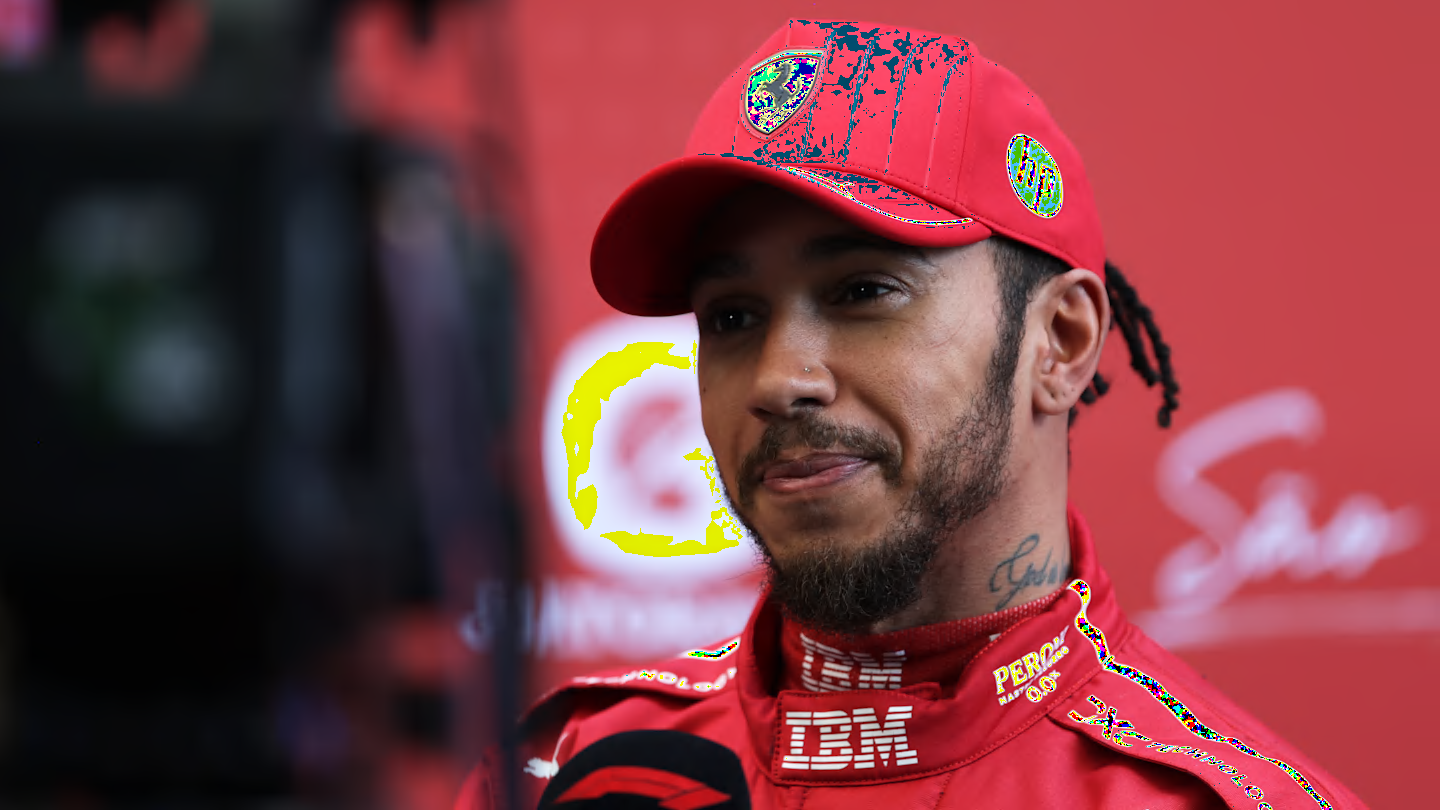
The Season of Discontent
By every measurable standard, Lewis Hamilton’s 2025 arrival at Maranello was a disaster. Finishing sixth in the Drivers’ Championship with just 156 points, he languished 86 points behind his teammate, Charles Leclerc. For a man who had never gone a single season without a podium in his 19-year career, the statistic was sobering.
The frustration wasn’t just in the lap times; it was broadcast to the world. The radio exchanges between Hamilton and Adami became a spectator sport in themselves. In Miami, amidst strategy disagreements, Hamilton sarcastically suggested Adami take a “tea break.” In Monaco, a confused Hamilton asked into the void, “Are you upset with me?” only to be met with silence.
Former drivers and pundits were quick to declare the relationship dead on arrival. Robert Doornbos claimed there was “no chemistry,” while Juan Pablo Montoya urged Hamilton to demand a change. Even the respected Martin Brundle noted that Hamilton was “terribly missing” the nuances he shared with his former Mercedes engineer, Peter “Bono” Bonington.
Everyone assumed the axe would fall after Abu Dhabi. Instead, Hamilton and Adami went to dinner.
The Dinner That Changed Everything
According to reports from Italian publication AutoRacer, Hamilton and Adami shared a private meal after the season finale in Abu Dhabi. The meeting was described as “very positive,” a stark contrast to the public spats. It was here that the decision was cemented: Adami would remain the voice in Hamilton’s ear for the critical 2026 regulation reset.
Why would Hamilton keep the man who presided over his worst statistical season? The answer lies in history, institutional knowledge, and a phone call made before Hamilton even wore the red suit.
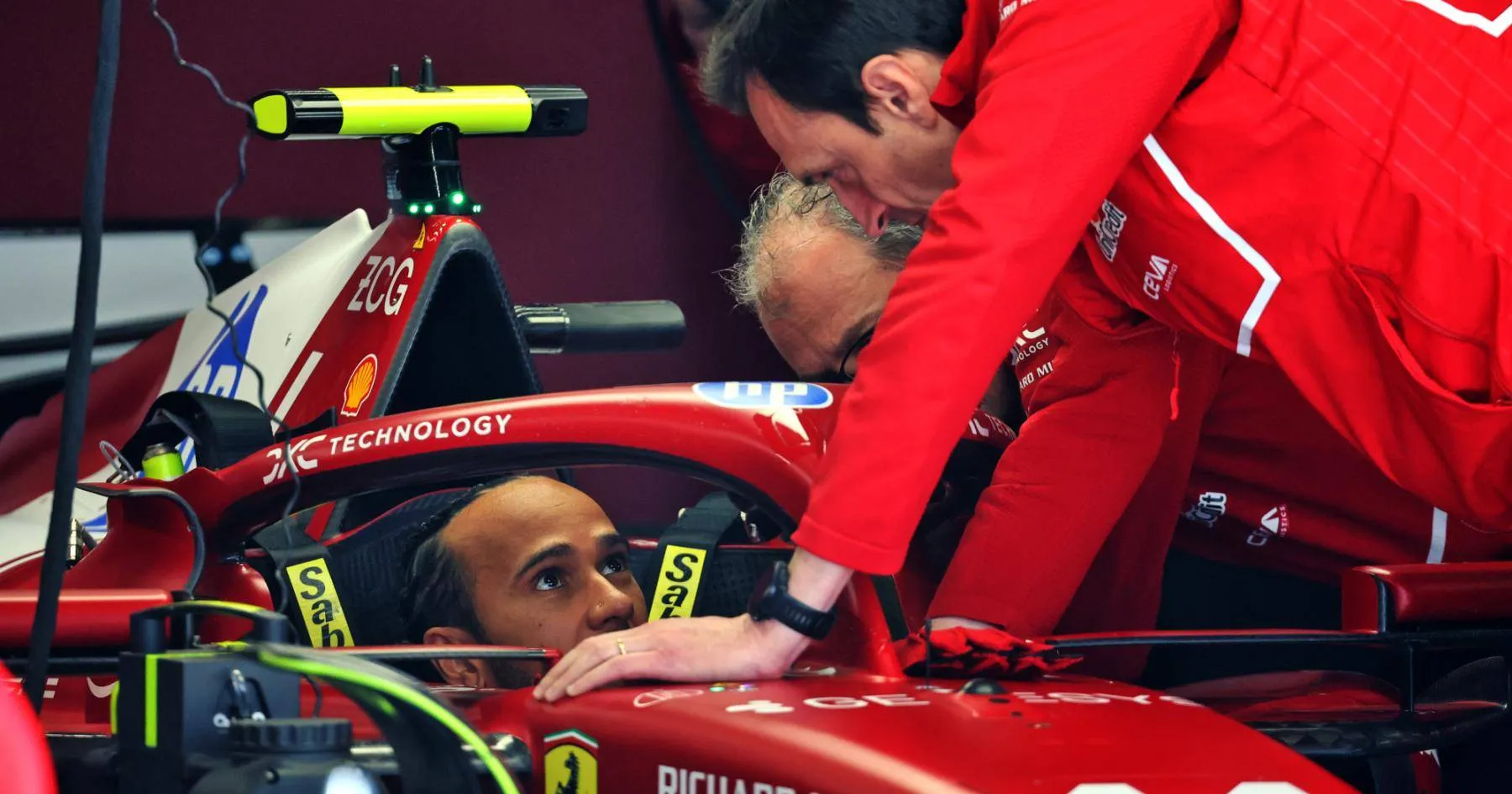
The Vettel Connection and the “Maranello Fabric”
Riccardo Adami is not just another engineer. He is a survivor and a winner who knows the “Maranello fabric”—the complex web of politics, tradition, and passion that defines Ferrari—better than almost anyone.
His résumé is formidable. He engineered Sebastian Vettel’s miracle victory at Monza in 2008 for Toro Rosso, a win that remains the team’s only triumph. He guided Vettel to 14 victories at Ferrari and helped Carlos Sainz secure four wins. When Hamilton signed with Ferrari, he reportedly called Sebastian Vettel for advice. Vettel’s assessment of Adami was glowing: “He’s a friend… he’s one of those who represents the values of Ferrari.”
Hamilton, an outsider at 40 years old, realized that firing Adami would mean losing his translator to the unique culture of Ferrari. Sainz had credited Adami with introducing him to the “key people” and how the team actually works. In a team where strategy decisions are often centralized and bureaucratic, having an insider who knows where the bodies are buried is invaluable.
The 2026 Reset
The decision is also a strategic bet on the future. The 2025 car, the SF25, was a carryover concept built for Sainz and Leclerc. Hamilton struggled to adapt to a machine that didn’t suit his driving style. However, 2026 brings the biggest regulation change in over a decade—new engines, new aerodynamics, and a completely new philosophy.
Hamilton and Adami are already working on “Project 678,” the internal code for the 2026 challenger. By keeping Adami, Hamilton ensures continuity where it matters most: the development phase.
Ferrari is also bolstering the support around them. Reports indicate the addition of Bayu Hab, a dedicated ERS (Energy Recovery System) engineer, to Hamilton’s side of the garage. This suggests Ferrari is addressing the communication and technical gaps without blowing up the foundation. They are giving Hamilton more support, not a new start.
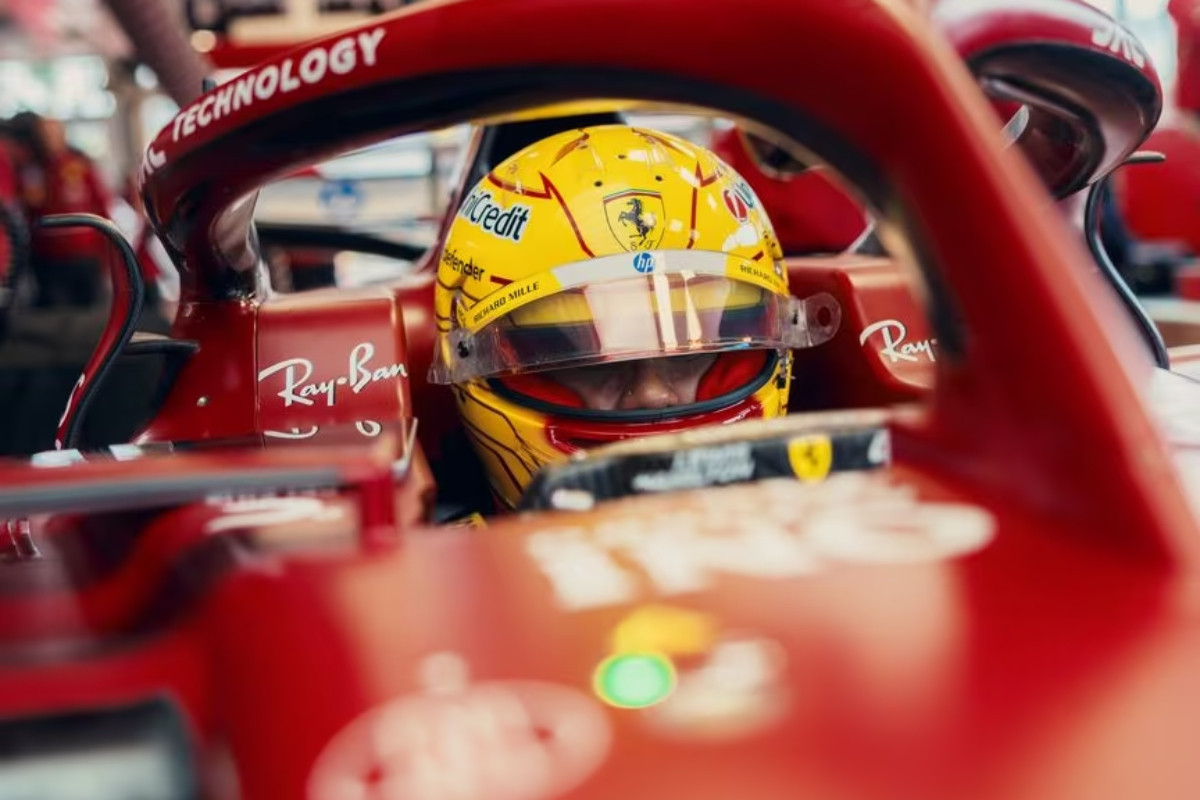
A Game of Patience
In an era of instant reaction, Hamilton’s choice demonstrates a profound maturity. He understands that the telepathic bond he had with Bono at Mercedes took 12 years to build. Expecting that level of synergy with Adami in 10 months, especially with a non-competitive car, was unrealistic.
“Most of the speculation was BS,” Hamilton said earlier in the season, hinting that the relationship behind closed doors was far stronger than the radio snippets suggested.
Lewis Hamilton is betting that the friction of 2025 was the heat of forging a new weapon, not the sign of a broken tool. He is trusting the man who guided Vettel and Sainz to victory, trusting the advice of his old rival, and trusting that when the lights go out in 2026, the voice in his ear will be the one that leads him to his record-breaking eighth title.
The tea breaks are over. It’s time to work.