The allure of the prancing horse is undeniable. For decades, it has been the ultimate romantic destination for Formula 1 drivers—a scarlet dream that promises immortality.
When Lewis Hamilton, the sport’s most successful driver, announced his move to Ferrari for the 2025 season, it was heralded as the fairytale ending to an illustrious career.
The expectation was sky-high: the greatest driver of his generation uniting with the most iconic team in history to return the Scuderia to glory.
Fast forward to December 2025, and that fairytale has curdled into a bitter, unmitigated disaster. The reality of the situation is stark, painful, and for the Tifosi, utterly unacceptable. As the season draws to a close, the statistics paint a grim picture of a partnership that promised the world but delivered absolutely nothing.
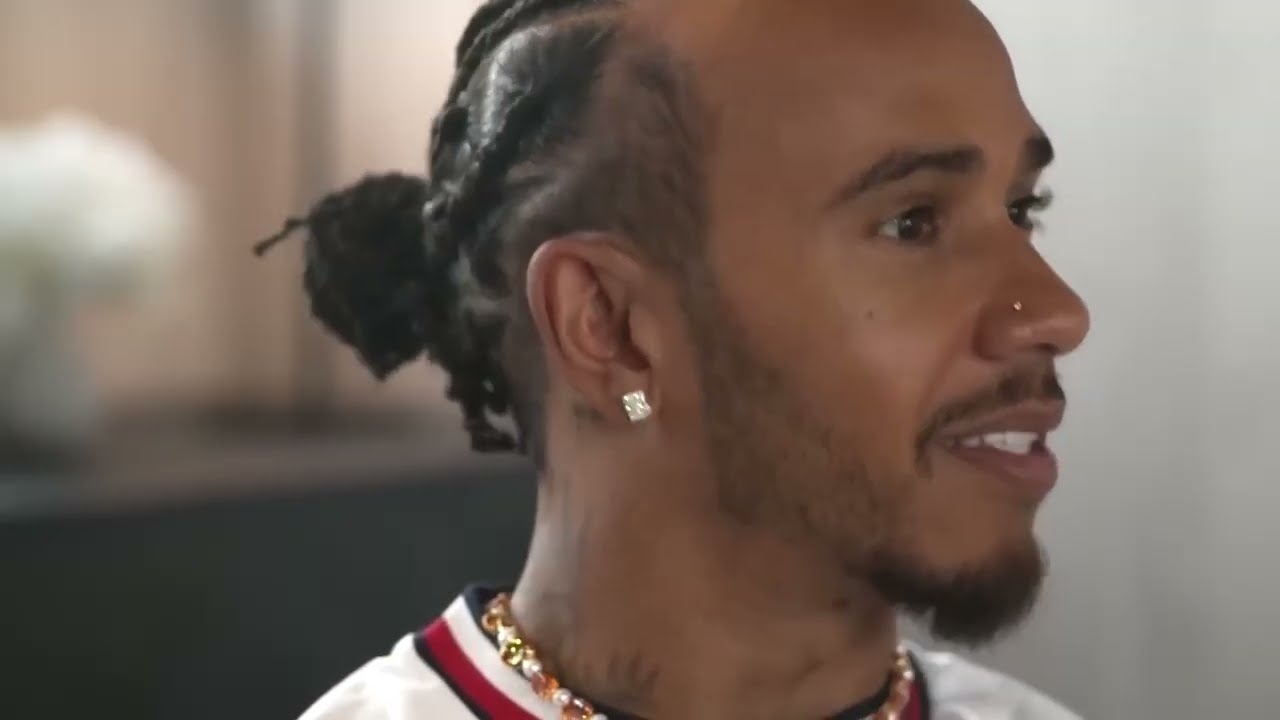
A Season of Unprecedented Failure
To understand the magnitude of this collapse, one must look at the cold, hard numbers. Ferrari entered the 2025 season with momentum, coming off a competitive end to the previous year. Yet, ten months later, the team finds itself languishing in fourth place in the Constructors’ Championship. But the most shocking statistic concerns Lewis Hamilton himself.
For the first time in his entire Formula 1 career, Hamilton has failed to stand on the podium in a single season. Not a win, not a second place, not even a lucky third. It is a statistic that was once unthinkable for a man who made winning look routine. To make matters worse, the indignity is compounded by the performance of his peers. Hamilton is set to finish sixth in the Drivers’ Championship, beaten by Andrea Kimi Antonelli—the young rookie who replaced him at Mercedes.
Perhaps the sharpest twist of the knife comes from Carlos Sainz. The man Hamilton replaced at Ferrari was unceremoniously pushed out to make way for the seven-time champion. Now driving for Williams, a team that has spent years in the wilderness, Sainz has managed to secure two podium finishes this season. The contrast is blinding: the discarded driver is spraying champagne while the chosen savior struggles to even crack the top five.
The “Embarrassing” Excuse
Why has it gone so wrong? According to Ferrari Team Principal Frédéric Vasseur, the failure is by design—a calculated sacrifice. Vasseur has openly admitted that the team effectively ceased development of the 2025 car, the SF-25, as early as April. The rationale was to pour every ounce of resource and manpower into the revolutionary regulations coming in 2026.
“When we decided to move on ’26, it means that we were not confident to be able to catch McLaren before the end,” Vasseur explained. He insists it was a rational decision, a case of short-term pain for long-term gain.
However, this explanation has not sat well with everyone. Jean Alesi, a beloved former Ferrari driver known for his passion and heart, has launched a scathing attack on this strategy. Alesi labeled the decision to halt development as a “weak excuse” for a dismal campaign.
“Ferrari’s attitude is an embarrassing attempt to protect this failure,” Alesi reportedly told Corriere della Sera. His frustration echoes the sentiments of many fans. In a sport where standing still is moving backward, giving up on a season after just a few months is seen by many not as a strategy, but as a surrender. Alesi pointed out that every team is working on two cars; Red Bull, for instance, continued to upgrade their machine to help Max Verstappen fight for the title. Ferrari, in his eyes, simply dropped the ball and used 2026 as a convenient shield to hide behind.
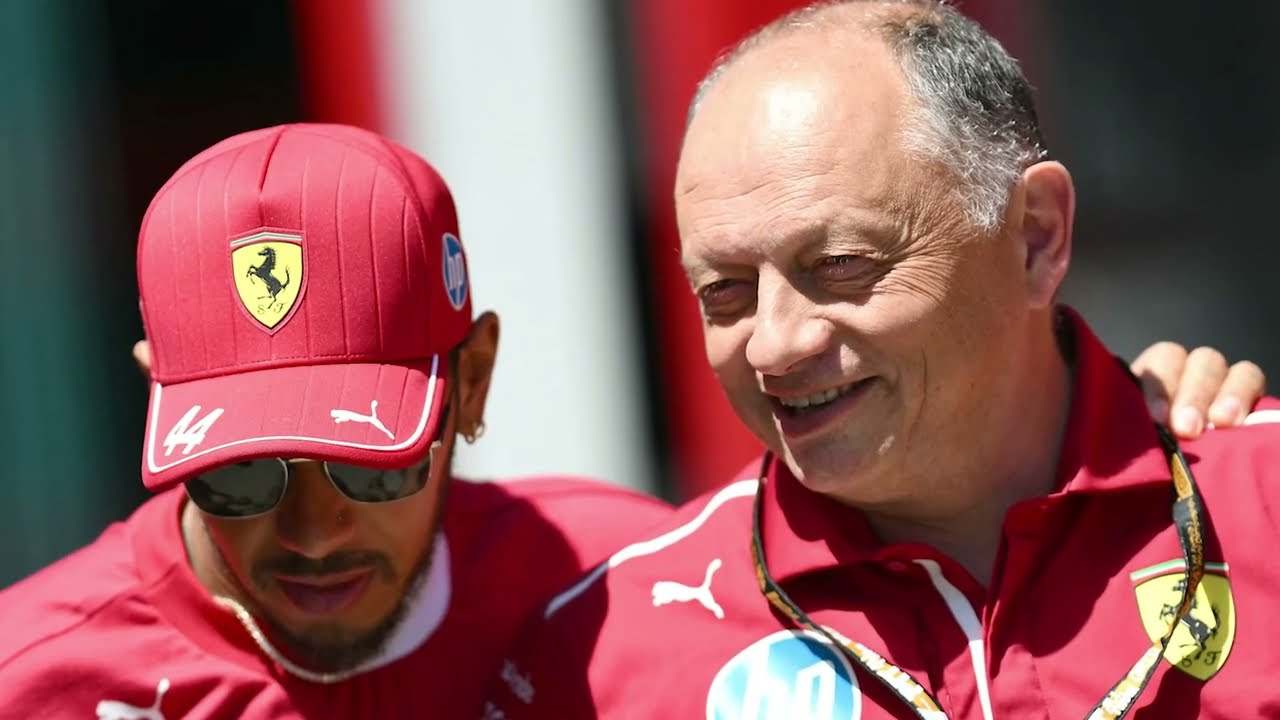
Hamilton vs. The Media: The War of Words
The tension isn’t just on the track; it has spilled over into the media pen. Ferrari is more than a racing team in Italy; it is a national religion. When the team fails, the scrutiny is intense, relentless, and often personal.
Lewis Hamilton recently spoke out against this “constant negativity,” highlighting the human cost of the media’s attacks. He painted a sympathetic picture of team members going home to their families, only to face questions from their wives and children about the scathing reports in the newspapers.
“The negativity that’s constantly within the media… that affects them,” Hamilton said. “They get home to their wives and their wives say, ‘They’ve been saying this about where you work,’ and I’m sure that’s tough.”
While Hamilton’s defense of his team is noble, it creates a complex paradox. The British champion has not been silent about his own frustrations. Throughout the season, his post-race interviews have been peppered with negative comments about the car’s performance and the team’s execution. He knows better than anyone that his words carry immense weight. When Lewis Hamilton criticizes the car on Sunday, it dominates the global headlines on Monday.
Critics argue that you cannot feed the beast and then complain when it bites. By publicly venting his frustrations, Hamilton has inadvertently fueled the very negativity he now decries. The Italian media, essentially waiting for a positive story that never comes, has had nothing to feed on but failure and complaints.
The Gamble of a Lifetime
What makes this situation even more intricate is Hamilton’s own role in the strategic “failure.” Vasseur revealed that the decision to abandon the 2025 car wasn’t made in a vacuum. Hamilton himself admitted, “I wanted them to move to next year’s car. I wanted to make sure we started early.”
If Hamilton pushed for the early switch, can he justifiably complain about the uncompetitive machinery that resulted from it? It is a question that hovers over the paddock. The seven-time world champion knowingly signed up for a transition period, but perhaps he underestimated just how deep the valley would be before reaching the next peak.
Vasseur acknowledged the difficulty of keeping a team—and two champion drivers—motivated when they know the tool in their hands will not get any better. “I underestimated probably personally… the fact that when you know that you won’t develop the car, it’s more difficult to keep everybody motivated,” Vasseur confessed. It is a rare admission of miscalculation from a team boss, acknowledging that the human element is just as critical as the aerodynamic one.

The Long Road Ahead
As the 2025 season mercifully concludes, Ferrari and Hamilton are left with nothing but hope. They have mortgaged their present for a future that is far from guaranteed. The “pain before the gain” strategy is a high-stakes gamble. If Ferrari comes out of the gates in 2026 with a dominant car that delivers Hamilton his record-breaking eighth world title, this disastrous year will be reduced to a footnote—a necessary sacrifice in a grander narrative.
However, if 2026 arrives and the Scuderia is still chasing McLaren or Red Bull, the narrative will shift instantly. The “embarrassing” excuses of 2025 will be seen as the warning signs of a team that has forgotten how to win. Jean Alesi’s words will ring prophetic, and the pressure on Vasseur and Hamilton will become suffocating.
For now, the honeymoon is over. The dream move has hit the harsh tarmac of reality. Lewis Hamilton is a winner who has found himself in a team that decided not to compete. Whether this is the darkness before the dawn or simply the twilight of a legend remains to be seen. But one thing is certain: the Tifosi do not have infinite patience, and neither does Lewis Hamilton. The 2026 season isn’t just another year; it is the verdict on a gamble that has cost them everything in 2025.
